Keeping Mosquitoes Away While Camping: Proven Tips That Actually Work
-
| Founder & Content Creator

Latest Posts
Picture this: you have finally arrived at your perfect campsite, pitched your tent, and settled in for a peaceful evening under the stars. Then you hear it. That high-pitched whine. And suddenly keeping mosquitoes away while camping becomes the only thing on your mind.
Mosquitoes are not just annoying — they can carry diseases and turn a great trip into a miserable one. The good news is that with a handful of smart strategies, you can keep them away from your campsite, your tent, and your skin all night long. Here is everything that actually works.
Mosquitoes are not the only wildlife consideration worth planning for — our wildlife safety while camping guide covers everything from insects to larger animals
Why Mosquitoes Target Your Campsite (And How to Use That Against Them)
Before you can defend yourself, it helps to understand what you are defending against. Mosquitoes are drawn to your campsite by a combination of signals — and once you know what those signals are, you can start cutting them off one by one.
The main attractants are: carbon dioxide you exhale, body heat and sweat, stagnant water nearby, sweet or floral scents from food and toiletries, and dark clothing that holds warmth.
The good news is that almost every item on that list is something you can control. And that is exactly what this guide to keeping mosquitoes away while camping is built around.
How to Set Up a Mosquito-Proof Campsite
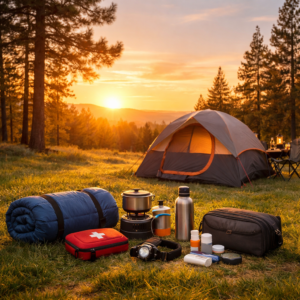
Where you pitch your tent matters more than most people realize. A few smart choices at setup time can dramatically reduce how many mosquitoes you encounter for the rest of the trip.
Choose the Right Location
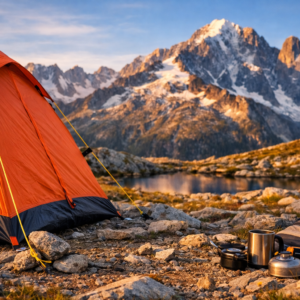
When it comes to keeping mosquitoes away while camping, where you pitch your tent is half the battle. Avoid stagnant water — ponds, marshes, and slow-moving streams are where mosquitoes breed in their thousands. Find a breezy spot — mosquitoes are terrible fliers and even a light wind grounds them. Higher ground works in your favour too, since low-lying humid hollows are basically a five-star resort for mosquitoes. And before you stake a single peg, clear any tall grass and brush nearby — they love lurking in shady vegetation almost as much as they love finding you.
It is said that a single bottle cap of standing water can breed over 300 mosquitoes. Eliminating any collected water around your site — in coolers, buckets, or footprints — is one of the highest-impact steps you can take.
Disposing of grey water and waste responsibly also reduces the standing water that mosquitoes breed in — our sustainable camping guide covers Leave No Trace in full
Mosquito-Proof Your Tent
Your tent is your safe zone. Seal all openings and check zippers, mesh panels, and seams before settling in. Keep a buffer zone between cooking and sleeping areas. Use ground tarps to block moisture and reduce nearby nesting. Choose fine-mesh tents or use a separate mosquito net over your sleeping area.
Get into the habit of closing your tent zip every single time — even when you are only stepping out for a second. That one open moment is all it takes for several mosquitoes to find their way inside.
The Best Mosquito Repellents for Camping
Not all repellents are equal. Here is an honest breakdown of what works, what does not, and when to use each.
DEET and Picaridin: The Proven Chemical Options
DEET-based and picaridin-based repellents are the gold standard for mosquito protection. Both are EPA-approved, proven safe for skin use, and offer long-lasting defense against mosquitoes, ticks, and other biting insects. Apply to exposed skin every few hours, and more frequently if you are sweating heavily.
Picaridin is often preferred for families with young children as it is odorless and less likely to irritate sensitive skin. DEET offers slightly longer protection per application at higher concentrations.
Natural and DIY Mosquito Repellents
Essential oils like citronella, tea tree, and eucalyptus mixed into a carrier oil can be applied to skin as a natural repellent. Citronella candles and mosquito coils add another layer of protection around your seating area. Keep in mind that natural options generally need more frequent reapplication than chemical alternatives.
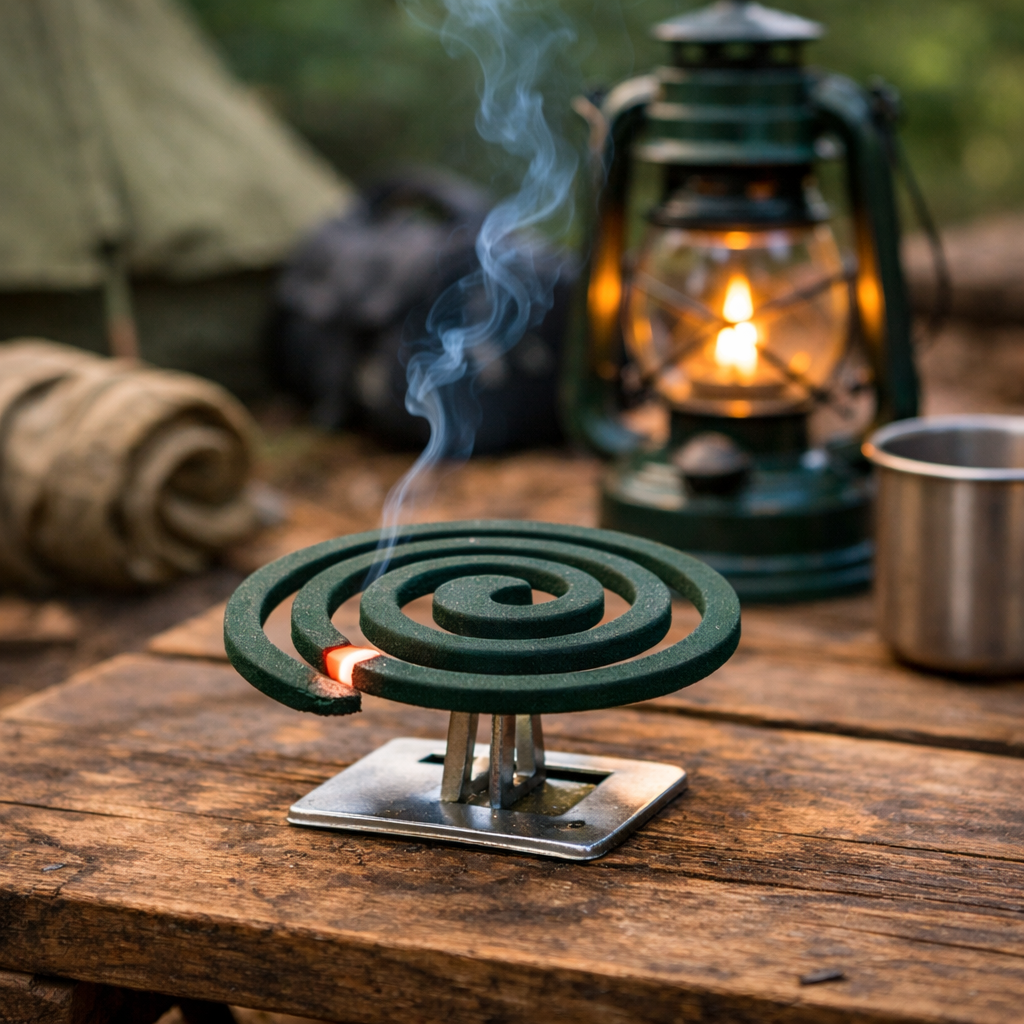

If you prefer a fully natural approach, combine methods — natural repellent on skin, citronella candles around the table, and campfire smoke in the background. No single natural method is as reliable as DEET alone, but layering several together gets close.
Campfire as a Natural Mosquito Deterrent
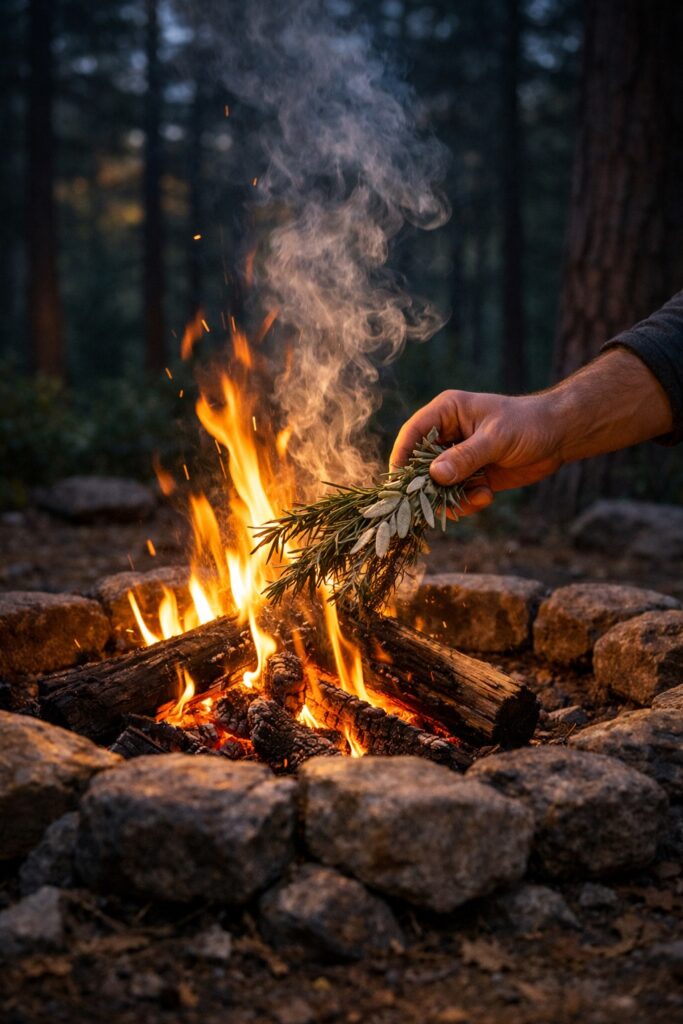
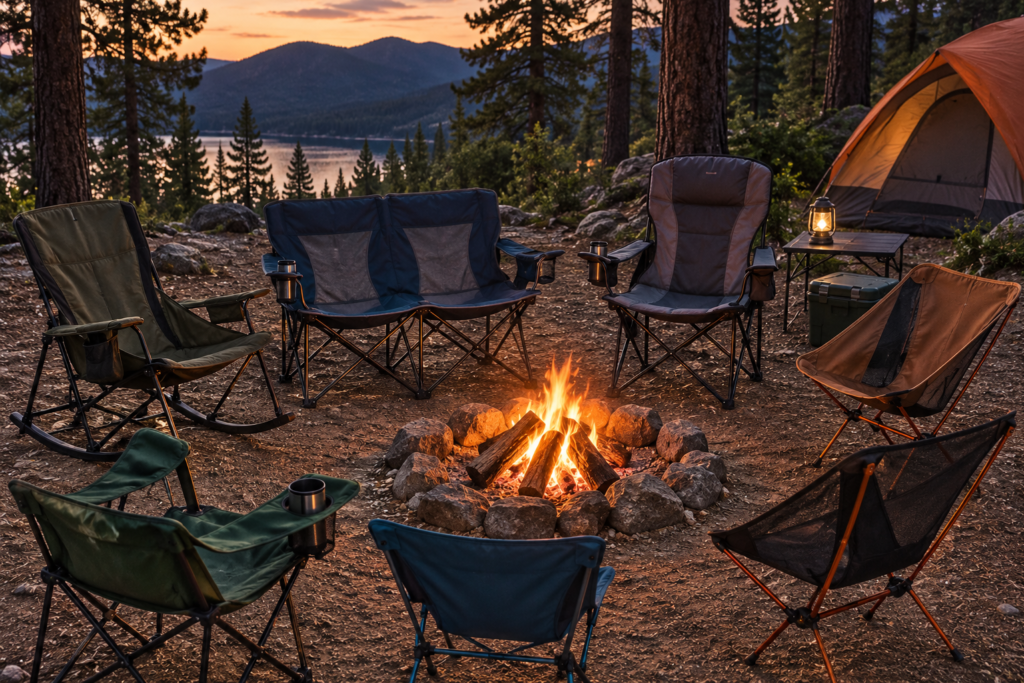
A campfire burning steadily produces smoke that mosquitoes actively avoid. For extra effect, toss a handful of sage, rosemary, or eucalyptus leaves directly into the fire. The aromatic smoke produced is significantly more effective at repelling mosquitoes than plain wood smoke alone.
Position your seating on the downwind side of the fire so the smoke drifts toward you rather than away — this is the trick most people miss.
Mosquito-Proof Clothing: What to Wear and Why It Matters
Covered skin is protected skin. Whenever you are in mosquito-prone areas — especially at dawn and dusk when mosquitoes are most active — wear long-sleeved shirts and full-length trousers. Tuck trousers into socks and shirts into waistbands to close off entry points.
Mosquitoes see dark colors better than light ones. Wearing white and light-colored clothing makes you a less visible target — a simple switch that makes a real difference.
Permethrin-Treated Clothing Explained
Permethrin is a powerful insect repellent that is applied to clothing and gear — not directly to skin. It bonds into fabric fibers and kills or repels mosquitoes on contact. Permethrin-treated clothing is lightweight, breathable, and remains effective through multiple washes.
You can buy pre-treated clothing or treat your own gear with a permethrin spray kit. If you camp regularly in high-mosquito environments, treated clothing is one of the best long-term investments you can make.
Scent and Light: How to Naturally Repel Mosquitoes While Camping
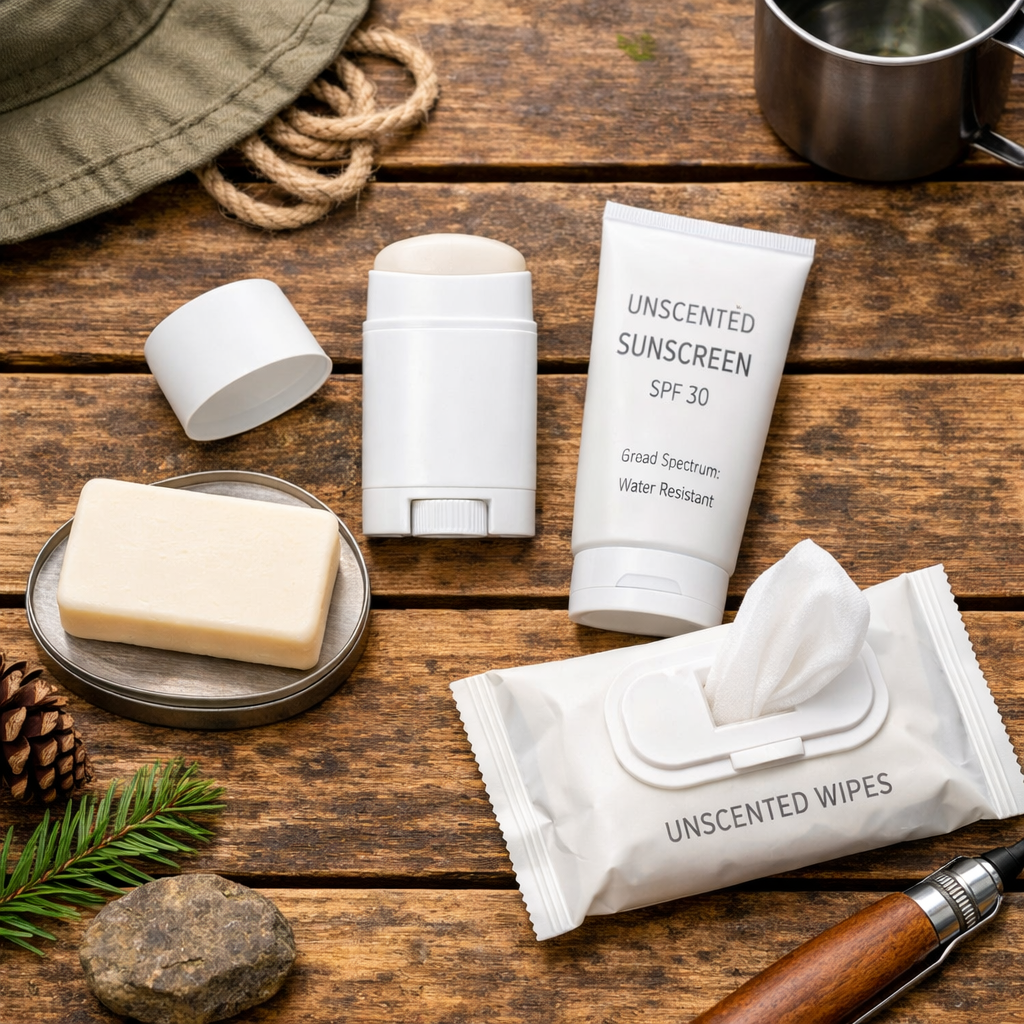
Mosquitoes are strongly attracted to floral and fruity fragrances. Skip scented lotions, colognes, and hair products while camping. Opt for unscented, natural toiletries across the board — this one change reduces your attractiveness to mosquitoes more than most people expect.
Choose Bug-Repelling Lighting
Mosquitoes are less attracted to warm-toned lights — yellow bug lights or red LED bulbs — than to harsh white or blue lighting. Switching your lanterns to these warmer tones creates a noticeably more comfortable campsite in the evenings.
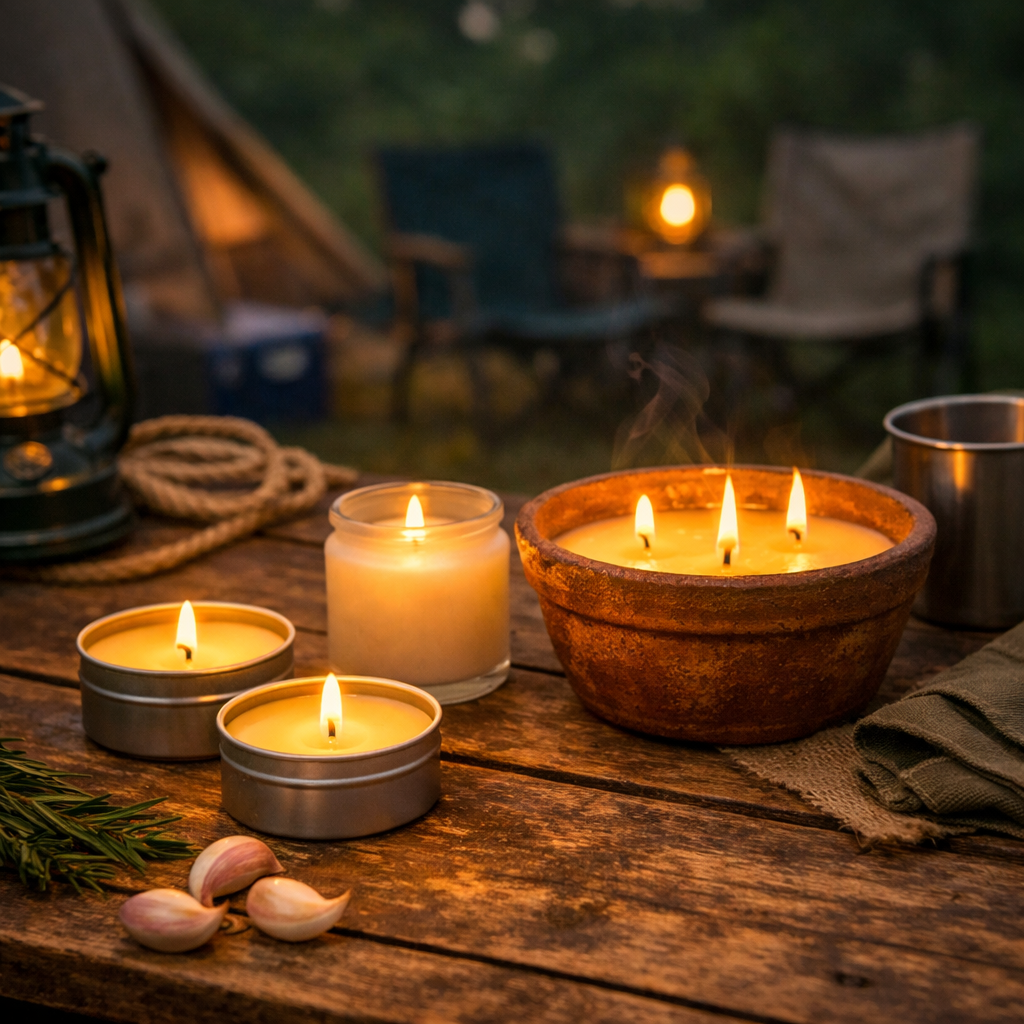
Set up citronella candles around your seating area, switch to a warm-toned bulb in your lantern, and your evening mosquito defense runs itself without another thought.
Food, Drink and Hygiene: What Attracts Mosquitoes to You
What you eat and how you smell after activity both affect how attractive you are to mosquitoes — more than most campers realize.
Foods That Attract Mosquitoes — and What to Eat Instead

What is on your plate actually affects how attractive you are to mosquitoes — more than most campers realize. Bananas, beer, and salty snacks ramp up the natural body odors that mosquitoes home in on, so try to limit those in the evening when mosquito activity peaks. On the flip side, garlic and onions are rich in sulfur compounds that naturally mask the scents mosquitoes track — adding them to your camp meals gives you a quiet, effortless layer of natural mosquito defense. Just keep some breath mints handy. Your tentmate will thank you.
Sweat and Body Odour: Smart Hygiene Habits That Help
Sweat is one of the strongest mosquito attractants. Change out of sweaty clothes after hikes, use body wipes if a full rinse is not possible, and choose unscented soap and deodorant. These habits reduce your mosquito risk significantly and overlap neatly with general camping hygiene.
For a deeper look at staying clean in the outdoors, our family camping hygiene tips cover the full hygiene routine for camping trips of any length.
What to Do When You Get Bitten
Even with the best preparation, a bite or two will occasionally get through. Here is how to handle it quickly and cleanly.
Fast Relief for Mosquito Bites at the Campsite
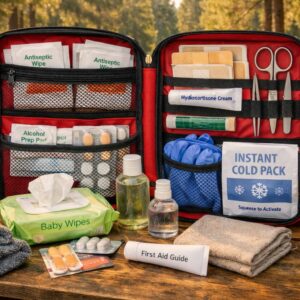
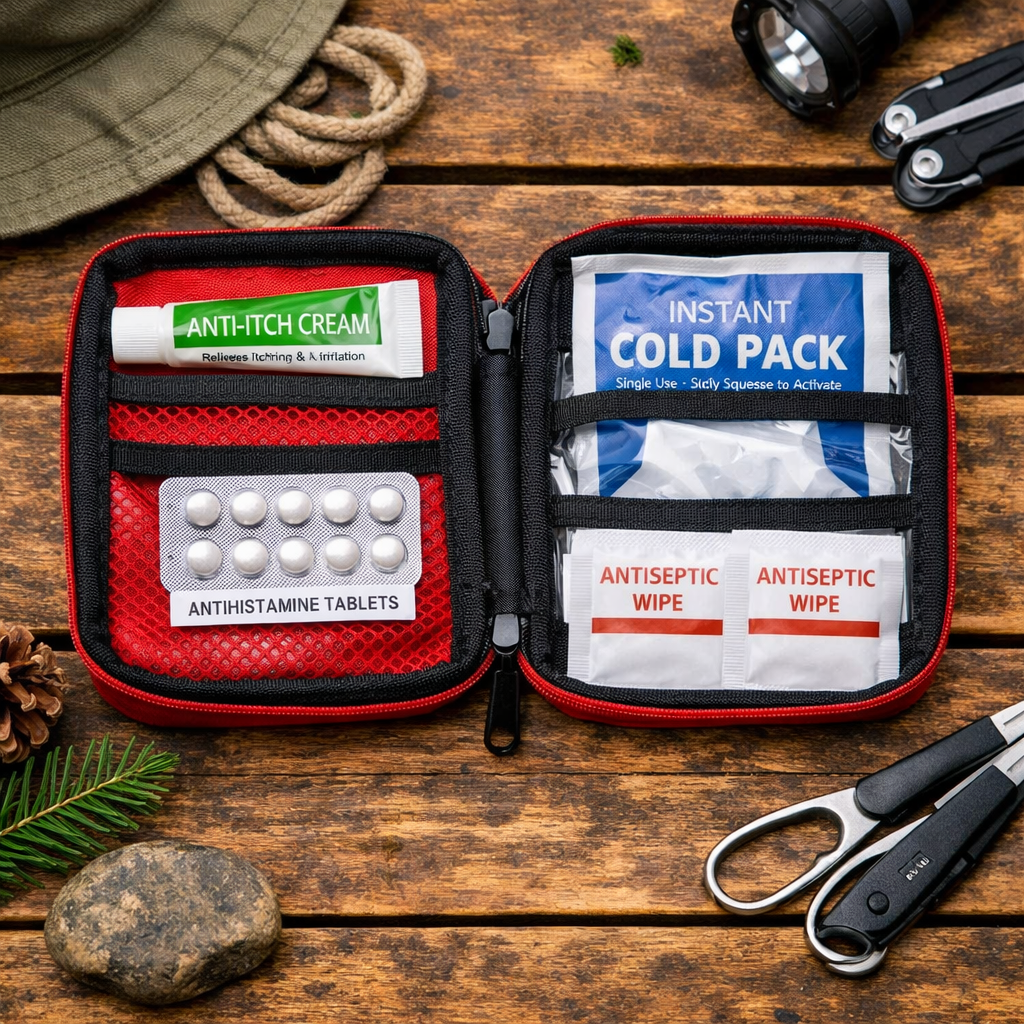
Do not scratch — it increases inflammation and the risk of infection. Apply hydrocortisone or calamine lotion to soothe irritation. Use a cold compress to reduce swelling. Keep a small mosquito bite kit in your camping gear: anti-itch cream, cold pack, antihistamine tablets.
A well-stocked essential camping first aid kit should include anti-itch cream and antihistamines alongside the usual wound care
If a bite becomes unusually swollen, hot, or shows signs of spreading redness after 24 hours, treat it seriously. Whilst rare in most camping destinations, some mosquitoes do carry disease. Know the symptoms of mosquito-borne illness before you travel to high-risk areas.
Frequently Asked Questions About Keeping Mosquitoes Away While Camping
What is the most effective mosquito repellent for camping?
DEET and picaridin-based repellents are the most reliable options for camping. DEET at 25-30% concentration offers up to several hours of protection and is widely available. Picaridin is odourless, non-greasy, and gentler on sensitive skin — making it a popular choice for families with children. For a natural alternative, citronella oil applied regularly provides moderate protection, but needs more frequent reapplication.
Does campfire smoke actually keep mosquitoes away?
Yes — mosquitoes actively avoid smoke, making a campfire one of the easiest passive defenses available. The effect is stronger when you add mosquito-repelling herbs like sage, rosemary, or eucalyptus directly to the fire. Position yourself on the downwind side of the fire so the smoke drifts toward you. A campfire alone is not a complete solution, but combined with repellent and protective clothing it forms a solid layered defense.
What clothing is best for keeping mosquitoes away while camping?
Light-colored, long-sleeved shirts and full-length trousers are your first line of clothing defence. Tuck trousers into socks to close off entry points. For serious mosquito protection, permethrin-treated clothing repels and kills mosquitoes on contact and remains effective through multiple washes. Mosquitoes are more active at dawn and dusk, so covering up during these windows is especially important.
How do I stop mosquitoes from getting into my tent?
Check all zippers, mesh panels, and seams before settling in for the night. Get into the habit of closing the tent zip every single time you enter or exit — even briefly. If your tent mesh is coarse, consider a separate fine-mesh mosquito net over your sleeping area. Keep your tent away from standing water and dense vegetation, and use a ground tarp to reduce moisture near the tent base.
Are natural mosquito repellents effective enough for camping?
Natural repellents such as citronella, eucalyptus, and tea tree essential oils offer real protection, but they need more frequent reapplication than chemical alternatives — typically every 60 to 90 minutes. They work best as part of a layered approach: natural repellent on skin, citronella candles around your seating area, campfire smoke in the background, and protective clothing. If you are camping in an area with a high mosquito burden or known disease risk, DEET or picaridin remains the more reliable choice.
Keep Mosquitoes Away and Make Every Camping Trip Count
Keeping mosquitoes away while camping is not about one magic solution — it is about layering a few smart habits together. The right campsite location. A repellent that suits you. Clothing that covers up at the right times. A campfire doing double duty. Do all of these together and the mosquitoes become a background irritation rather than a trip-ruining problem.
Gear up, apply that repellent, and get out there. The outdoors has far more to offer than a few tiny bloodsuckers can take away.