Mountain Camping for Beginners: Complete Guide to High Elevation Adventures
-
| Founder & Content Creator

Latest Posts
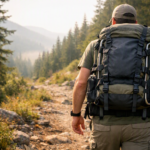
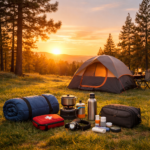
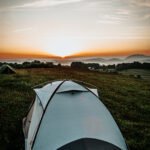
The mountains have a way of stopping you in your tracks. The air is different up there — cleaner, thinner, and somehow more alive. The views at sunrise, the absolute silence at night, the stars so bright and dense they do not look real — these are the things that make mountain camping for beginners one of the most rewarding outdoor experiences you will ever have.
But the mountains also demand respect. High elevation camping comes with real challenges — altitude sickness, dramatic temperature swings, unpredictable weather, and terrain that requires proper navigation. None of these are reasons to stay home. They are reasons to prepare well.
Before you start building your mountain-specific kit, run through our complete camping checklist for new campers as your baseline — then add the high altitude extras listed below.
This guide covers everything you need for a safe and genuinely enjoyable first mountain camping trip. From understanding altitude to choosing your tent, planning your food, navigating the terrain, and leaving the mountains better than you found them — let’s get you ready.
Why Mountain Camping Is Worth Every Challenge
Here is the honest truth about mountain camping for beginners: the first trip is the hardest. You will probably overpack, underestimate the cold, and arrive at camp more tired than expected. That is completely normal.
What you will also discover is that nothing quite compares to waking up at altitude with a panoramic view stretching to the horizon, a cup of hot coffee steaming in the cold morning air, and the absolute quiet of a high mountain valley. The challenges are real — but so is the reward. Every experienced mountain camper started exactly where you are now.
What to Expect When High Altitude Camping for the First Time
If you are planning to pitch your tent thousands of feet above sea level, there are a few things worth knowing before you go. High altitude camping tips start here — with understanding what your body and your gear will face.
Altitude Sickness: What It Is and How to Prevent It
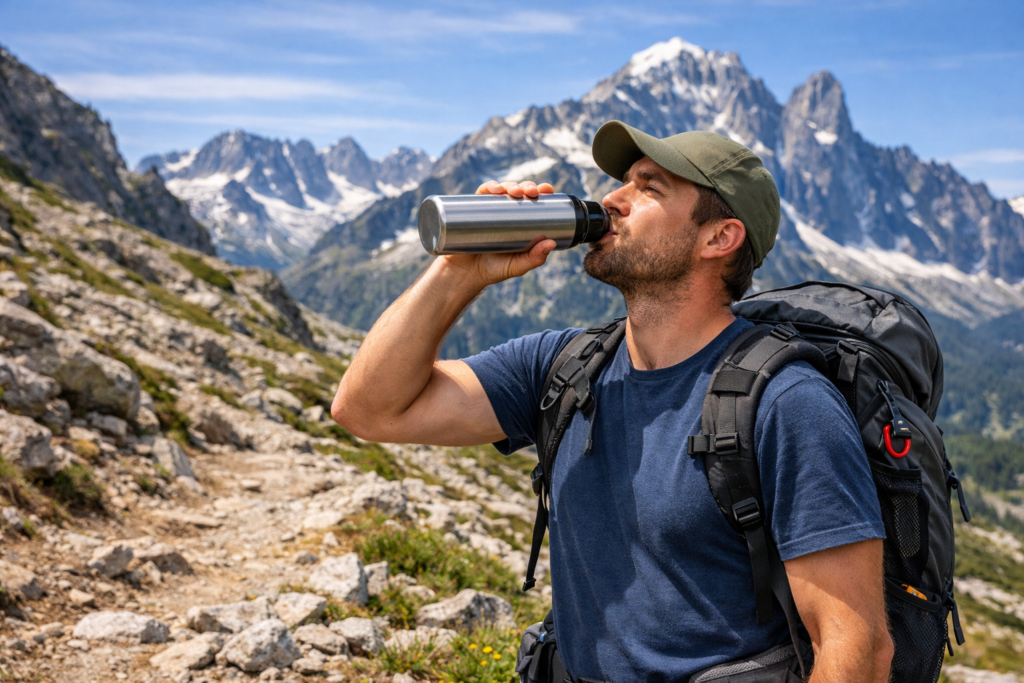
As you gain elevation, oxygen levels drop. Above around 8,000 feet (2,400 metres), your body starts working harder to do everything — walking, sleeping, digesting food. If you ascend too quickly, altitude sickness can kick in: headaches, nausea, dizziness, fatigue, and difficulty sleeping are the most common symptoms.
The good news is that altitude sickness is almost entirely preventable with the right approach.
- Ascend gradually — rangers and experienced mountaineers recommend gaining no more than 2,000 feet of sleeping elevation per day above 8,000 feet
- Spend a night at a mid-altitude camp before heading to your highest site — this gives your body time to adjust
- Drink more water than you think you need — dehydration makes altitude sickness worse, and you lose more moisture breathing dry mountain air
- Eat high-potassium foods like bananas and trail mix — they support muscle function and help prevent headaches and cramps
- Avoid alcohol in the first 24 hours at altitude — it worsens dehydration and significantly increases altitude sickness risk
- If symptoms worsen or include confusion, difficulty walking, or severe breathing trouble — descend immediately. Do not push through serious altitude sickness.
PRO TIP: The ‘climb high, sleep low’ rule is used by mountaineers worldwide. If you are doing a multi-day trip, it is fine to hike to higher elevations during the day — but descend to sleep at a lower elevation until your body is fully acclimatised. Your first night’s sleep quality will tell you a lot about how your body is adjusting.
Mountain terrain is especially demanding on dogs — if you are planning a high-elevation trip with your pet, our camping with dogs guide covers trail conditioning, heat exhaustion signs, and paw protection specifically for challenging terrain.
Temperature Swings: Why Mountain Nights Catch Beginners Off Guard
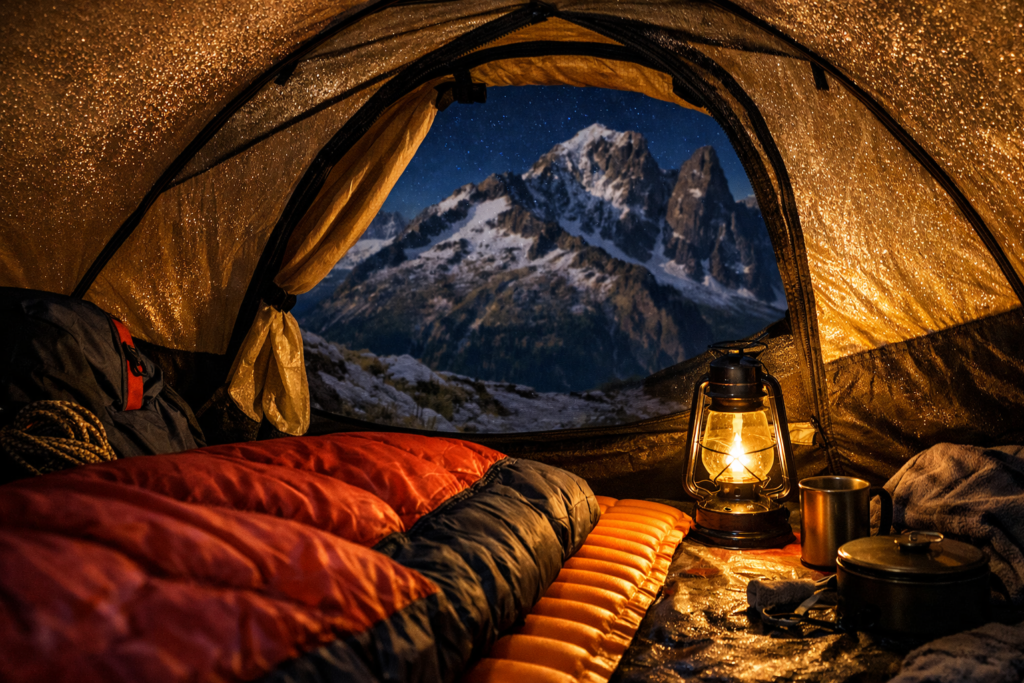
Mountain temperatures can be deceptive. A warm sunny afternoon hike can turn into a genuinely cold night very quickly once the sun drops behind the peaks. Even in summer, temperatures at high elevation regularly fall to near freezing after dark — and in exposed locations, the wind chill makes it feel much colder.
- Always bring a sleeping bag rated for lower temperatures than you expect — if the forecast low is 5°C, use a bag rated to 0°C or below
- A quality sleeping pad is as important as the sleeping bag — cold rises from the ground faster than it descends from the air
- Pack warm layers specifically for camp — what you hike in will be damp with sweat and cold once you stop moving
- A warm hat and gloves for the evening are often the most appreciated items in a mountain camping pack
Unpredictable Mountain Weather: How to Stay Ready
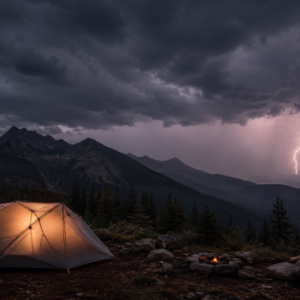
Mountain weather is genuinely unpredictable. A clear blue morning can become a thunderstorm by early afternoon — this is especially common in alpine environments where warm air from the valley rises rapidly and triggers afternoon electrical storms. Most experienced mountain campers aim to be at camp or below the treeline by early afternoon specifically to avoid this.
- Check a dedicated mountain weather forecast — apps like Mountain Forecast or Weather Underground give elevation-specific data that standard weather apps do not
- Pack waterproof clothing and a reliable rainfly regardless of the forecast
- A sturdy four-season tent is strongly recommended above the treeline — lightweight tents are not built for mountain wind
- Start hiking early — summit attempts and long exposed sections are best done before noon
Lightning is one of the most serious mountain weather hazards — our guide on how to stay safe from lightning while camping covers exactly what to do when a storm rolls in.
Essential Gear for Mountain Camping Beginners: What to Pack and Why
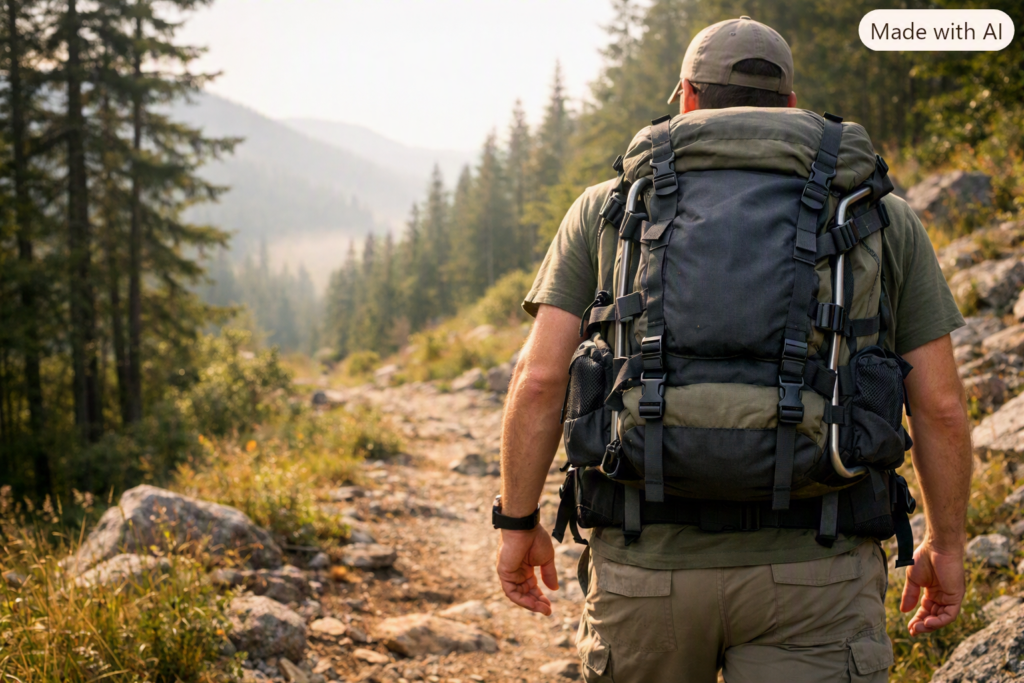
Getting your gear right for high elevation camping is more important than for any other camping type. The mountains are not forgiving of forgotten essentials. Here is everything that earns its place in your pack.
Choosing Your Campsite in the Mountains
A good mountain campsite is not just about the view — it is about safety, drainage, and shelter from wind.
- Look for sheltered spots — rock formations or sturdy trees on the upwind side act as natural windbreaks
- Choose ground with good drainage — avoid hollows and depressions where water pools in rain and cold air settles at night
- Avoid valleys and low points — cold air drains downhill and collects in low spots, making valley campsites significantly colder than hillside ones
- Camp on durable surfaces — rock, gravel, or established camping spots. Never pitch on fragile alpine vegetation — it takes years to recover
- Stay at least 200 feet from water sources — required by Leave No Trace and protects alpine ecosystems
- Arrive early enough to scout your site before dark — rushing campsite selection in fading light leads to poor choices
Tent: Your Mountain Shelter
For mountain camping for beginners, a four-season tent is strongly recommended if you are camping above the treeline or in exposed alpine locations. These tents are built to handle wind, heavy rain, and snow loading — conditions that will collapse a lightweight three-season tent.
- Four-season tents — heavier but handle extreme weather. Best for exposed mountain locations and early/late season trips.
- Three-season tents with a strong rainfly — acceptable for sheltered mountain sites in good weather. Not suitable for exposed ridges.
- Freestanding design — much easier to pitch on hard or rocky ground where stakes do not hold well
- Always stake and guy out your tent fully — mountain wind can destroy a tent that is only lightly pegged down
Setting up camp at elevation adds wind and weather challenges to every step — our guide to how to pitch a tent covers wind setup technique, hard ground staking, and guyline essentials.
Sleep System: Sleeping Bag and Sleeping Pad
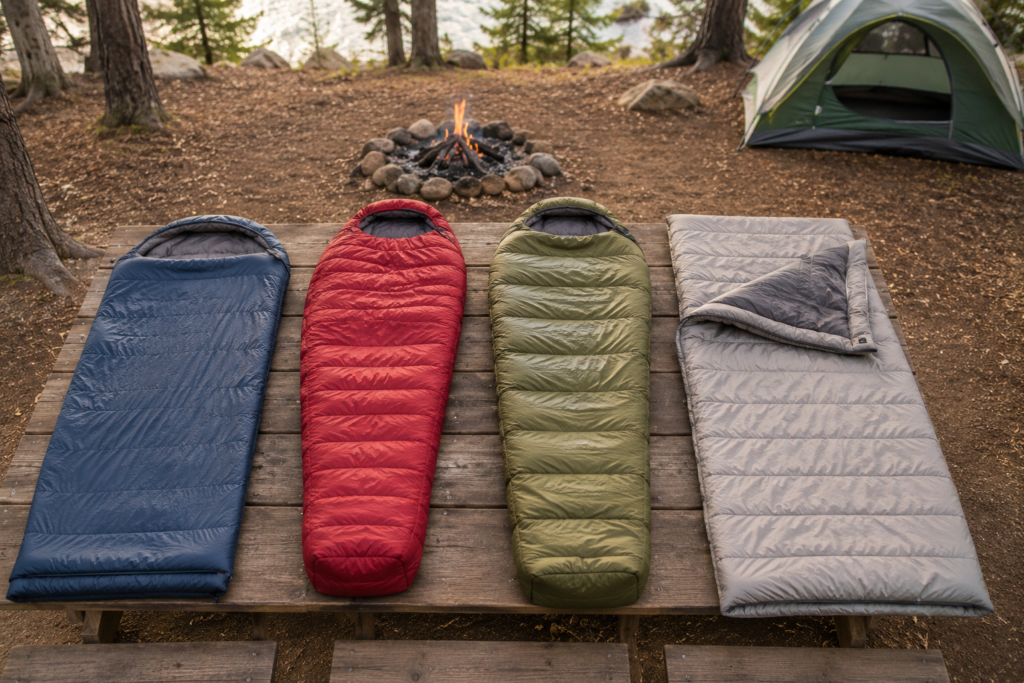
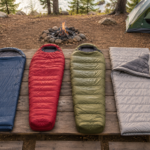
- Sleeping bag temperature rating — choose one rated at least 5°C below the lowest temperature you expect. A bag rated to -5°C gives you a buffer for colder-than-expected nights.
- Down vs synthetic — down is lighter and warmer for its weight but loses insulation when wet. Synthetic retains warmth when damp. For mountain camping where condensation is common, a hydrophobic down or synthetic bag is a sensible choice.
- Sleeping pad — use one with an R-value of at least 3.5 for three-season mountain camping, 4.5+ for cold conditions. Insulated inflatable pads balance comfort and warmth well.
At altitude, the combination of cold air and cold ground makes both your sleeping bag and your sleeping pad critically important — our best camping sleeping bags guide covers both sides of the sleep system, including how R-value affects performance.
Clothing: The Layering System for Mountain Conditions
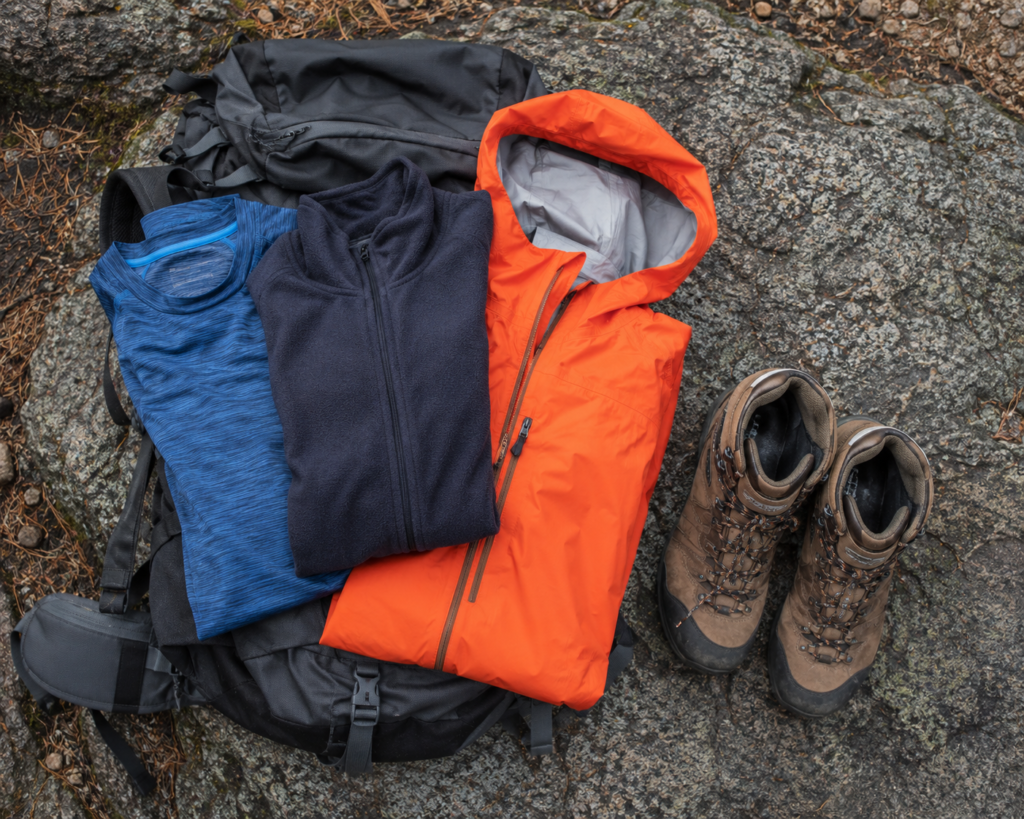
Mountain clothing is all about layers you can add and remove as conditions change — which they will, often dramatically, throughout the day.
- Base layer (moisture-wicking): Worn next to skin. Pulls sweat away and keeps you dry. Merino wool or synthetic — never cotton, which stays wet and gets cold.
- Mid layer (insulating): Fleece or light down jacket. Provides warmth. Remove it when hiking uphill, put it back on immediately when you stop.
- Outer layer (waterproof/windproof shell): Blocks wind and rain. Gore-Tex or similar breathable membrane. Non-negotiable for mountain conditions.
- Pack warm hat, gloves, and extra socks — extremities are the first to feel the cold at elevation
- Gaiters if crossing snow or wet terrain — keeps boots dry and prevents debris entering
Other Essential Gear for High Altitude Camping
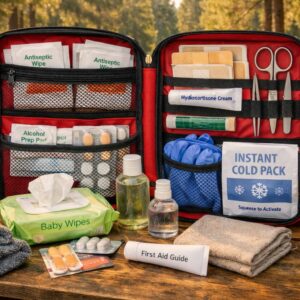
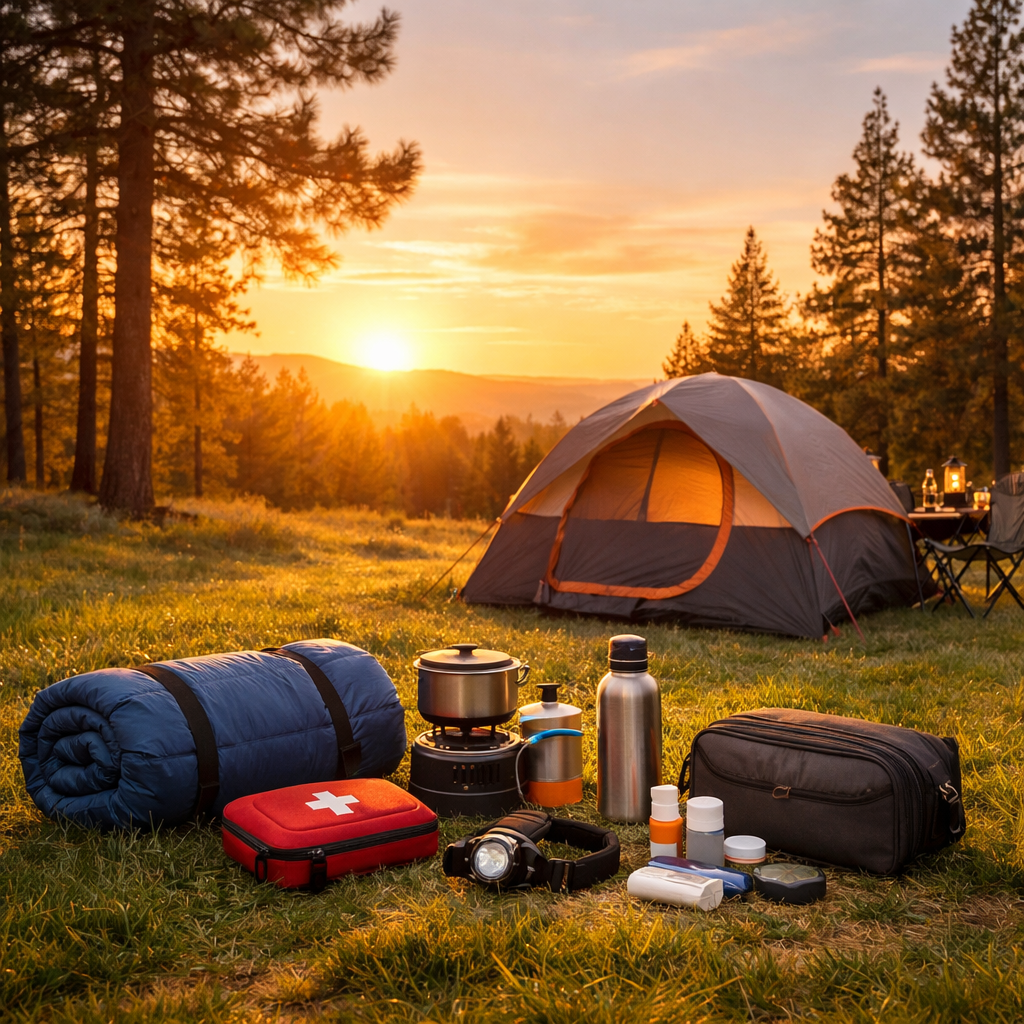
For a detailed breakdown of what to include, our essential camping first aid kit guide covers everything from altitude sickness medication to blister care.
- First aid kit — include altitude sickness medication (acetazolamide if prescribed by a doctor), blister plasters, pain relief, and antiseptic
- Headlamp with spare batteries — cold drains battery life faster at altitude
- GPS device and downloaded offline maps — cell signal disappears quickly in mountain terrain
- Physical map and compass — GPS batteries die; these do not
- Sunscreen SPF 50+ — UV exposure increases significantly with altitude. At 10,000 feet, UV intensity is roughly 25% stronger than at sea level.
- Sunglasses with UV protection — snow blindness is a real risk near snowfields
- Bear canister or bear bag — required in many mountain areas; mandatory in US National Parks above certain elevations
- Trekking poles — reduces knee strain descending and helps stability on loose terrain
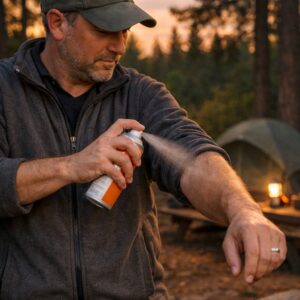
Pack insect repellent — our guide to keeping mosquitoes away while camping covers exactly what to use and when.
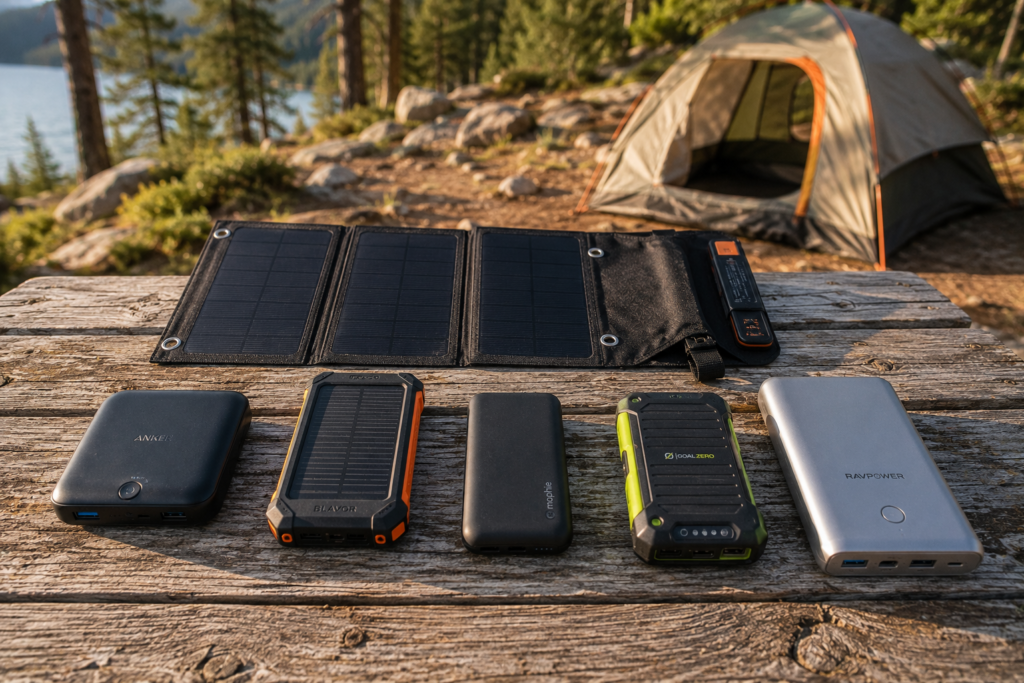
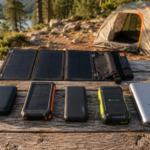
At altitude, cold temperatures noticeably reduce battery performance — our best camping power banks guide covers which banks handle cold weather best and how to store them overnight to preserve capacity.
Food and Water on a Mountain Camping Trip
What and how you eat and drink on a mountain camping trip has a direct impact on how well your body handles altitude, cold, and physical exertion. Plan this section of your preparation as carefully as your gear.
Staying Hydrated at High Altitude: Smart Water Tips
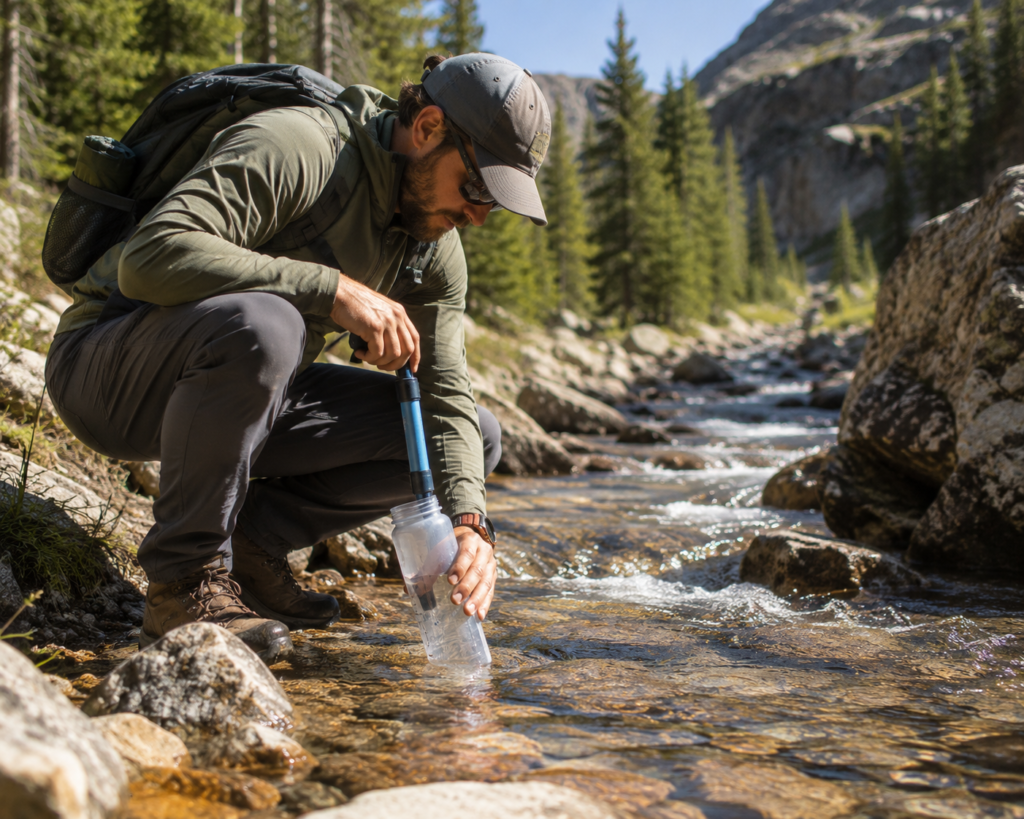
Hydration at altitude is not optional — it is one of the most effective tools you have against altitude sickness and fatigue. The dry mountain air and increased respiratory rate mean you lose more water through breathing than at sea level. You will often not feel thirsty until you are already mildly dehydrated.
- Carry at least 2-3 litres of water per person between reliable water sources
- Top up at every natural water source you pass — streams, glacier runoff, and mountain lakes — even if you are not empty yet
- Always purify natural water — use a portable filter (Sawyer Squeeze, LifeStraw), UV purifier (SteriPen), or purification tablets
- Add electrolyte tablets or rehydration salts to your water — especially important during long hiking days when you are sweating
- Avoid caffeinated and sugary drinks — both are diuretics and accelerate dehydration
- If you need to melt snow for water — factor in the fuel cost. Snow melting is slow and uses significant butane.
| IMPORTANT | Propane and butane camp stoves are noticeably less efficient at high altitude — thinner air reduces combustion efficiency. Bring 25-30% more fuel than you think you need. Consider a stove that performs better in cold and altitude, such as those using isobutane-propane blends. |
What to Eat: Food Planning for High Altitude Camping
High altitude can suppress appetite — your body diverts energy to acclimatization and may signal that it is not hungry even when it needs fuel. This is dangerous. Eat regularly even if you do not feel like it.
- Dehydrated and freeze-dried meals — lightweight, calorie-dense, and require only hot water. Perfect for high elevation camping.
- Instant rice, pasta, and soups — easy to cook and comforting in cold conditions
- High-calorie snacks eaten every hour on the trail — granola bars, nut butter sachets, trail mix, protein bars, dried fruit
- Hot drinks at camp — instant coffee, tea, or hot chocolate provide warmth, comfort, and calories
- Aim for 3,000-4,000 calories per day on active mountain days — significantly more than usual
Mountain Camping Food Checklist
- Dehydrated or freeze-dried main meals — one per person per night
- Instant breakfast options — porridge, granola, or instant grits
- High-energy trail snacks — minimum 500 calories per person per hiking day
- Electrolyte tablets or powder — at least one sachet per day per person
- Camp stove, pot, and enough fuel — plus 25-30% extra for altitude inefficiency
- Water purification — filter, UV pen, or tablets
- Lightweight eating utensils — titanium spork is the classic choice
Stove selection matters more at altitude — our best compact camping stoves guide covers cold weather performance, pressure regulator advantages, and which stoves handle mountain conditions best.
Navigation and Emergency Planning for Mountain Beginners
Navigation is where mountain camping diverges most sharply from other types of outdoor camping. Trails disappear. Weather closes in. Landmarks look different in different light. Getting your navigation right before you go is not optional.
Map, Compass, and GPS: Your Three-Layer Navigation System
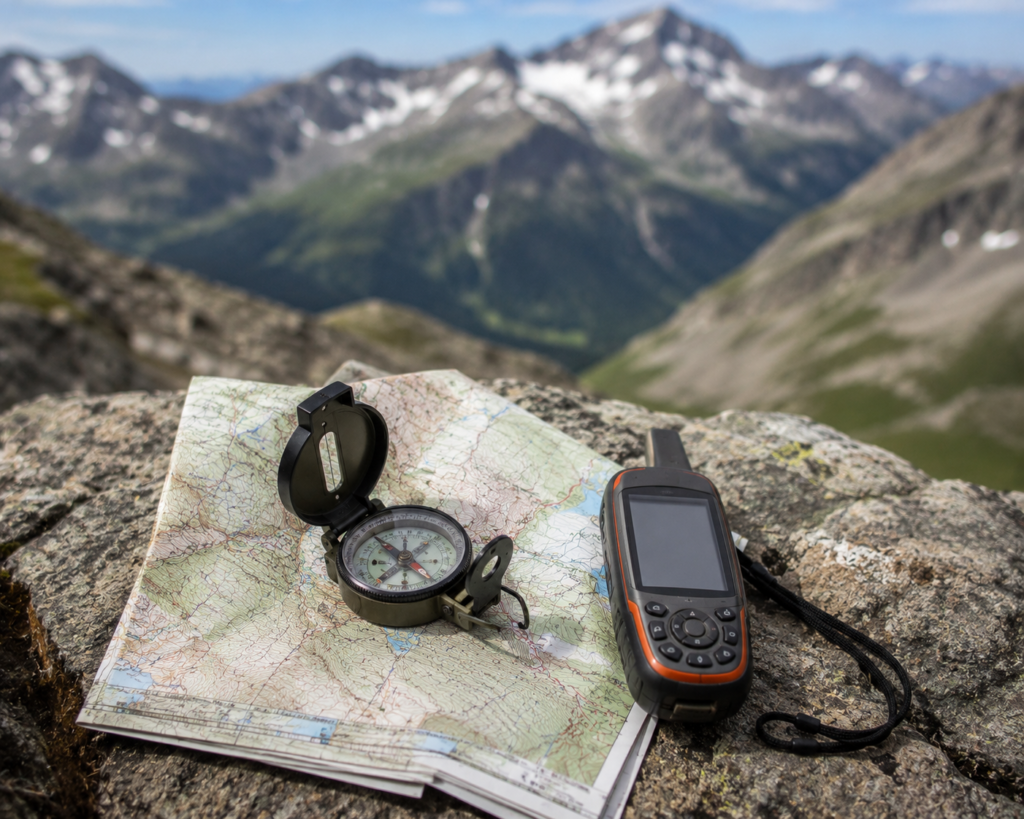
Every mountain camper needs three navigation layers — and the ability to use all three.
- Topographic map (paper): Waterproofed in a map case or printed on waterproof paper. Shows elevation, terrain, trails, and water sources. The only navigation tool that works without batteries or signal.
- Compass: Know how to take a bearing and follow it. Practice at home before your first mountain trip. A compass and map together mean you are never truly lost.
- GPS device or offline app: Garmin handheld devices are the most reliable. Smartphone apps like Gaia GPS with offline maps downloaded work well as a backup — but remember that cold drains smartphone batteries fast.
Look for flat, even ground and avoid areas prone to flooding or landslides. Consult a topographic map — hollows and gullies collect water and cold air.
Tell Someone Where You Are Going
This is the single most important safety rule for mountain camping — tell someone who is not coming with you where you are going, exactly which trail you plan to take, where you plan to camp, and when you expect to be back. If you do not return on time, they call for help.
This costs nothing and has saved many lives. Do not skip it regardless of how confident you feel about the trip.
- Leave a detailed trip plan with a trusted person
- Include: trailhead name and location, planned route, campsite name or coordinates, expected return date and time, your vehicle description and registration
- Check in when you return — do not leave someone worrying unnecessarily
Emergency Signalling and First Aid in the Mountains
Help can be a long way away in mountain terrain. Know your emergency options before you need them.
Know basic wilderness first aid — blister treatment, sprain management, hypothermia signs, and how to help someone with altitude sickness symptoms
- Whistle — three blasts is the universal distress signal. Attach it to your pack or jacket.
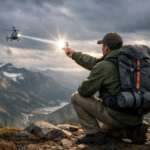
- Signal mirror — reflects sunlight to attract attention from aircraft and distant rescuers
- Personal Locator Beacon (PLB) or satellite communicator (Garmin inReach) — sends your GPS coordinates to emergency services from anywhere on Earth with no cell signal required
- Know basic wilderness first aid — blister treatment, sprain management, hypothermia signs, and how to help someone with altitude sickness symptoms
Knowing what to do if you get disoriented is as important as knowing how to use your satellite communicator — our emergency signaling tips for lost campers guide covers the full range of signaling methods, including what SAR teams are actually looking for.
Leave No Trace: Mountain Camping Ethics Every Beginner Must Know
Here is something worth thinking about before your first mountain camping trip: alpine environments are incredibly fragile. A single footprint pressed into a mountain meadow can leave a visible mark for years. The plants up there grow slowly, the soil recovers slowly, and the ecosystem as a whole is far more delicate than it looks.
Leave No Trace is not a set of rules designed to take the fun out of camping. It is the reason these places still look the way they do. Every mountain camper who has left a site exactly as they found it has kept it beautiful for the next person — and the person after that. As a beginner, understanding these principles before your first trip is one of the most valuable things you can do.
Bear Safety and Food Storage in the Mountains
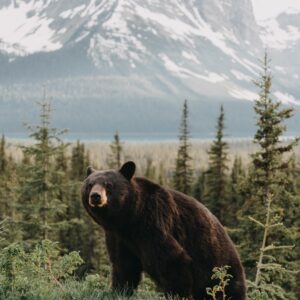
Before you head into mountain terrain, our wildlife safety while camping guide covers bear, snake, and mountain lion encounters — essential reading for any high elevation camping trip.
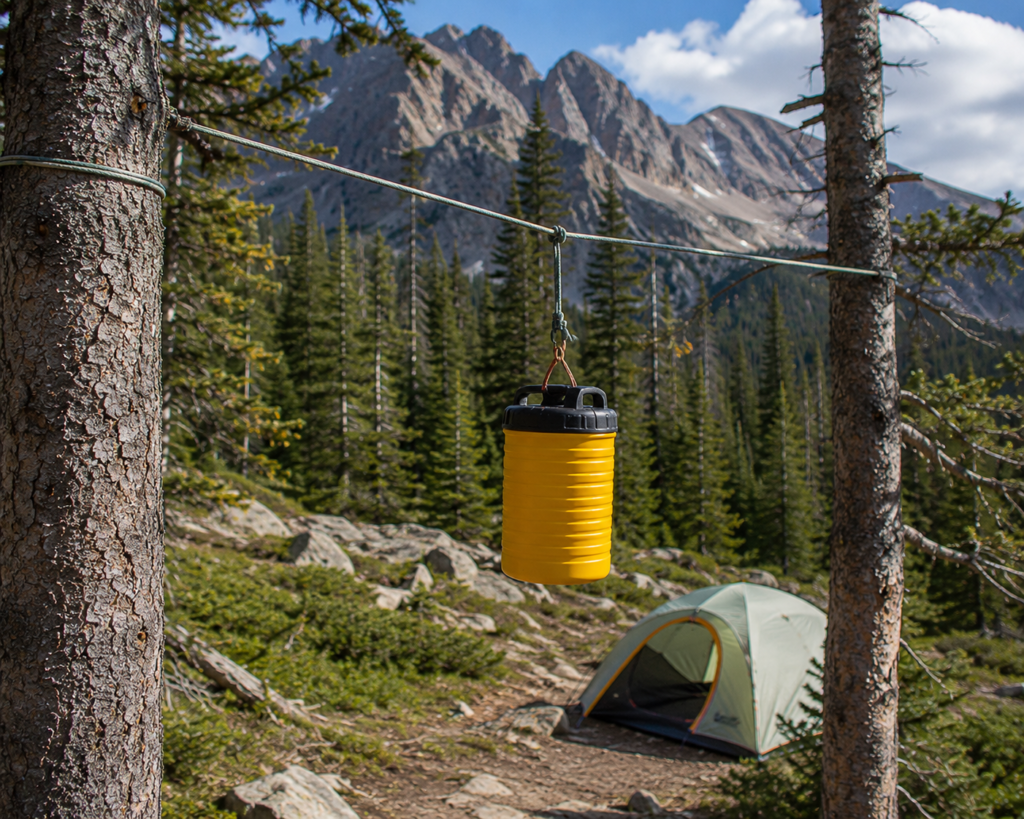
In many mountain areas — especially US National Parks and wilderness areas — bear-proof food storage is legally required, not just recommended. Failure to comply can result in fines and permanent damage to wildlife.
- Use a hard-sided bear canister — required in many areas, and the most reliable option
- Hang food if no canister — at least 12 feet off the ground and 6 feet from the trunk, using the PCT hang method
- Store food, rubbish, toiletries, and anything scented at least 100 yards from your tent
- Never eat or store food in your tent
- Keep a clean camp — even small food scraps left out attract wildlife
Campfire Rules Above the Treeline
Many mountain areas prohibit campfires above the treeline — or during fire risk periods. This is because wood is scarce, decomposition is extremely slow at altitude, and fire rings scar the landscape for decades.
- Check campfire regulations for your specific area before your trip — regulations vary by park, wilderness area, and season
- Above treeline: campfires are typically prohibited. Use a camp stove only.
- Below treeline: use existing fire rings only. Never build a new fire ring.
- Burn only dead and down wood — never cut from living trees
- Extinguish completely — drown with water, stir, drown again until cold to the touch
Leave No Trace Principles for Mountain Campers
- Plan ahead and prepare — know the regulations and weather before you go
- Travel on durable surfaces — stick to established trails and camp on rock or bare ground, not vegetation
- Dispose of waste properly — pack out all rubbish including food scraps. Bury human waste 6-8 inches deep, 200 feet from water.
- Leave what you find — do not take rocks, plants, or artefacts. Leave the environment exactly as you found it.
- Minimise fire impacts — see campfire rules above
- Respect wildlife — observe from a distance. Never feed animals. Store food properly.
- Be considerate of others — keep noise down, yield on narrow trails, respect the solitude that others came for
For a complete guide to camping responsibly in wild places, our sustainable camping and Leave No Trace guide covers every principle in full.
Activities to Enjoy on a Mountain Camping Trip
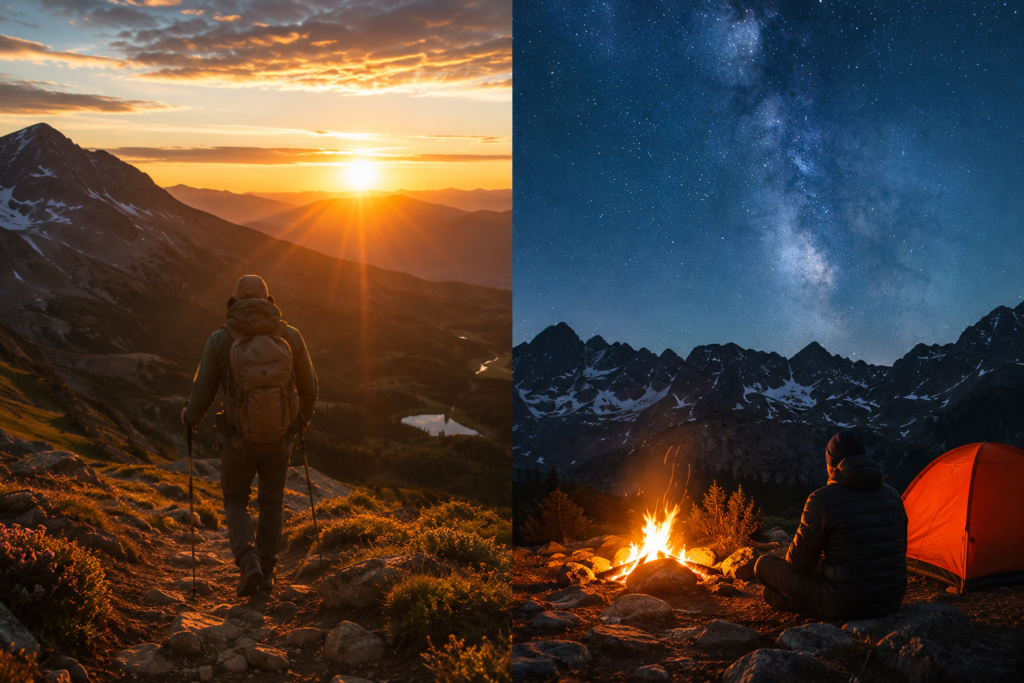
Mountain camping for beginners is not just about survival and logistics — it is about experiencing one of the most spectacular environments on Earth. Once camp is set up and you feel settled, the mountains offer a host of incredible things to do.
- Hiking — The most natural mountain activity. Even short hikes from base camp reveal views and terrain that take your breath away. Take it slowly, stay on marked trails, and turn back if weather closes in.
- Stargazing — Dark skies at altitude with no light pollution produce some of the most spectacular star visibility you will ever experience. The Milky Way is often visible to the naked eye from high mountain campsites.
- Wildlife watching — Mountains are home to ibex, marmots, eagles, deer, and in many areas, bears and mountain lions. Observe quietly and from a distance.
- Photography — The golden hour light at altitude is extraordinary. Sunrises and sunsets at high elevation produce colours you simply cannot find at lower elevations.
- Rock climbing and scrambling (intermediate/advanced) — For those with experience and proper gear. Never attempt this alone or without the right equipment and knowledge.
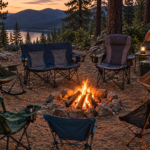
- Campfire cooking — Where fires are permitted, cooking over a campfire at a mountain site as the stars appear is one of camping’s great pleasures.
Mountain campsites open up some of the best outdoor camping activities available — our complete activities guide covers sunrise hiking, wildlife tracking, night photography, and more.
Frequently Asked Questions About Mountain Camping for Beginners
How high is too high for a beginner mountain camping trip?
For a first high altitude camping trip, aim for a campsite between 6,000-9,000 feet (1,800-2,700 metres) rather than jumping straight to extreme elevation. This range gives you the mountain experience — the views, the air, the isolation — while keeping altitude sickness risk manageable. Once you know how your body responds to altitude, you can plan progressively higher trips.
What is the most important piece of gear for mountain camping?
A sleeping bag with the right temperature rating. More first-time mountain camping trips are made miserable by a sleeping bag that is too warm-weather rated than by any other single gear failure. Choose a bag rated at least 5°C below the lowest temperature you expect at your campsite. A cold night at altitude in an inadequate sleeping bag is genuinely unsafe as well as deeply unpleasant.
How do I prevent altitude sickness on my first mountain camping trip?
Ascend gradually — the 2,000 feet per day rule above 8,000 feet is your most effective tool. Drink more water than you think you need. Avoid alcohol for the first 24 hours at altitude. Eat regular high-potassium meals. Spend a night at a mid-altitude camp before going to your highest campsite. If you develop severe symptoms — confusion, difficulty walking, persistent vomiting — descend immediately.
Do I need a four-season tent for mountain camping as a beginner?
It depends on where and when you are camping. If you are camping at an exposed, above-treeline site — especially in early or late season — a four-season tent is strongly recommended. If you are camping at a sheltered, below-treeline site in good summer conditions, a quality three-season tent with a good rainfly will work. When in doubt, err on the side of more protection — you cannot shelter from a mountain storm in a tent that fails.
Is mountain camping safe for absolute beginners?
Yes — with the right preparation, starting at a manageable elevation, and camping at an established site rather than remote backcountry. Many beginners start with a guided trip or join an organized mountain camping group for their first experience. This gives you experienced support while you learn the ropes. Tell someone your plans, check the weather, carry the right gear, and you will be absolutely fine. The mountains reward preparation, not fearlessness.
The Mountains Are Calling: Take That First Step With Confidence
Nobody’s first mountain camping trip goes perfectly. You will probably pack something you never use and forget something you wish you had. That is how it goes. What you will come back with is something no amount of planning can fully prepare you for — the knowledge that you did it. That you slept at altitude, woke to a sunrise that did not look real, and found out exactly what you are capable of when you step outside your comfort zone.
Start small. Choose a manageable elevation. Go with a friend if you can. Tell someone where you are going. Pack warm. Drink water. Eat regularly. And if the first trip does not go perfectly — that is not a failure. That is a story to laugh about on the second one.
The mountains will always be there. And now, so will you.