Family Camping Hygiene Tips: How to Stay Fresh, Clean & Happy Outdoors
-
| Founder & Content Creator

Latest Posts
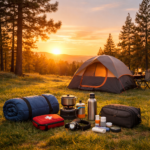
Picture this: tall trees, kids giggling around the tent, and the perfect marshmallow toasting over an open fire. Pure bliss — until day two. Even the most seasoned outdoor families know that having solid family camping hygiene tips up your sleeve is what separates a good trip from a truly great one. No shame in that at all. After a couple of days in the great outdoors, things can get a little funky. We’ve camped enough to know that with a few clever camping hygiene hacks, you can keep the whole family feeling fresh, clean, and totally ready for whatever adventure comes next.
Camping with kids for multiple days can make staying clean feel like a full-time job. But don’t stress, fellow camper — you’ve got this. With the right mindset, the right products, and a handful of smart strategies, hygiene in the wild is absolutely manageable. And honestly? It becomes part of the fun.
If you are planning your first family trip, our camping with kids guide covers activities, packing and what to expect on the trail.
Why Family Camping Hygiene Matters More Than You Think
When kids feel clean and comfortable, they’re more relaxed, more energetic, and far more open to embracing the adventure around them. And when they’re happy, you’re more likely to feel calm and fully present too. Good camping hygiene for families isn’t just about avoiding bad smells — it directly impacts everyone’s mood, health, and willingness to do this all over again next year.
Suddenly, the trip shifts from survival mode to genuine quality time. A little hygiene effort pays off hugely in laughter, in memories, and in the kind of stories you’ll still be telling around future campfires. It’s the small things that make a big difference outdoors.
That is exactly what these family camping hygiene tips are built around — small, practical habits that protect everyone’s health and keep the whole trip feeling like an adventure rather than a chore.
The Ultimate Camping Hygiene Kit: Everything You Need to Pack
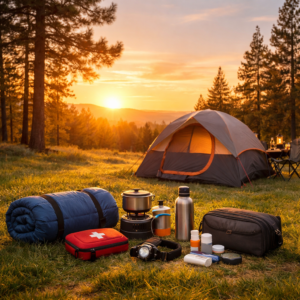
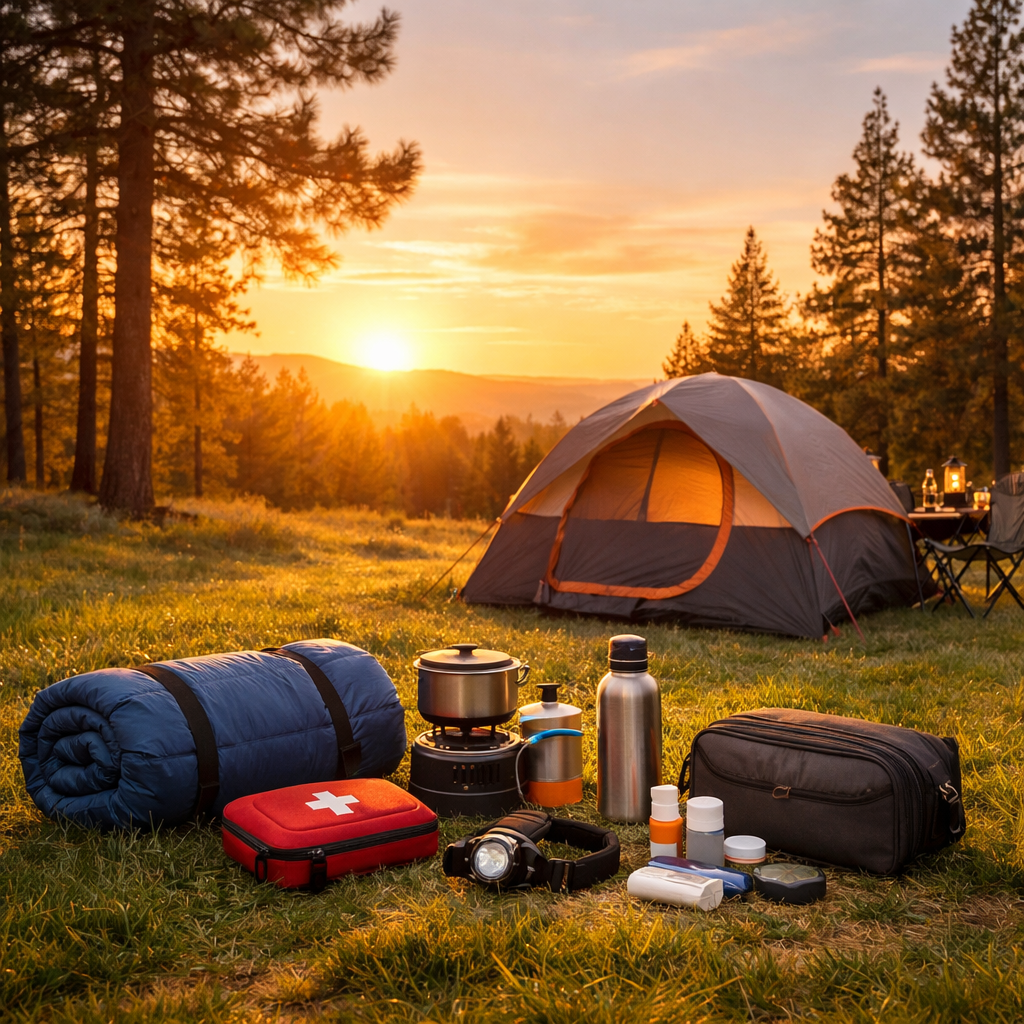
Before you load the car, the most important thing you can do is build a solid camping hygiene kit. Think of it as your secret weapon against the outdoors funk. Here’s exactly what to pack — for the whole family:
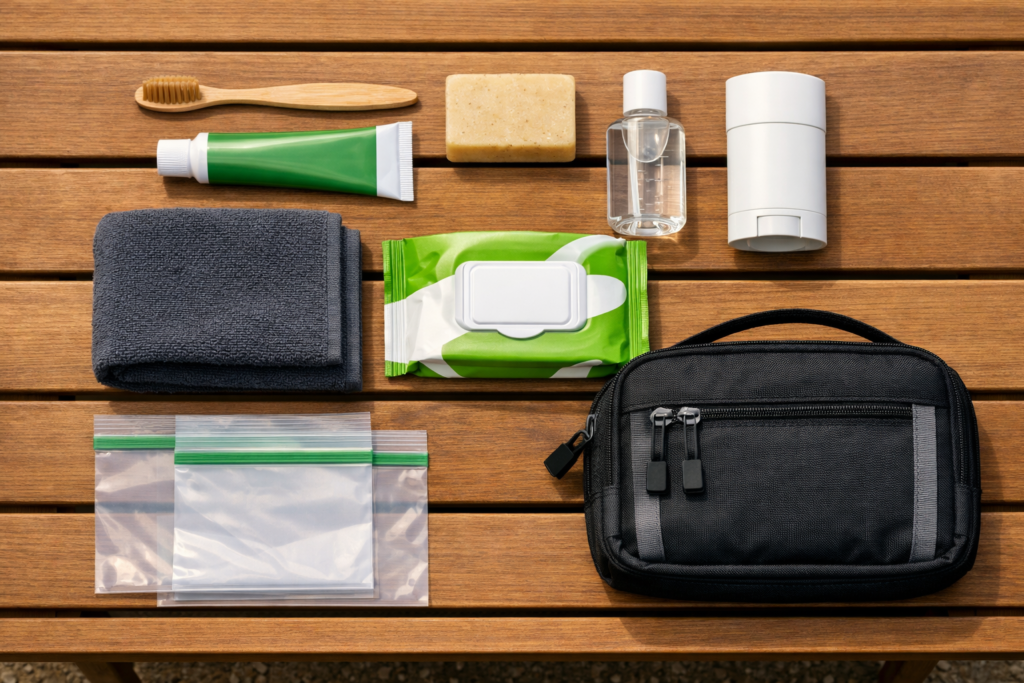
Must-Have Items for Every Family Camping Hygiene Kit
- Toothbrush, toothpaste, and floss — dental hygiene doesn’t take a day off outdoors
- Hand sanitizer — non-negotiable after bathroom visits and before every meal
- Unscented deodorant — scented versions attract bugs and, in bear country, far worse
- Moisture-wicking synthetic clothing — dries fast and keeps you feeling fresher longer
- Biodegradable wipes — the camper’s best friend for quick no-water clean-ups
- Biodegradable soap — safe for dishes, body, and hair, and kind to the environment
- Microfiber towels — compact, fast-drying, and vastly superior to regular towels in the wild
- Multiple outfit changes — nobody wants to wear the same shirt four days in a row
- Portable hand-washing station — a collapsible bucket with a spigot works perfectly
- Lightweight toiletry bag — keeps everything together so nothing goes missing in the tent
Need a complete camping list beyond just hygiene? Our [ Complete Camping Checklist for New Campers] has every single item you need from shelter to cooking gear – Nothing left out
PROTIP: Use a brightly colored waterproof bag exclusively for your camping hygiene supplies. Label it clearly. No more digging through the entire car boot at 6 am when nature calls. It also keeps wet and dry items separate — which saves enormous grief mid-trip
Easy Family Camping Hygiene Hacks That Actually Work
Setting Up a Camping Hand-Washing Station
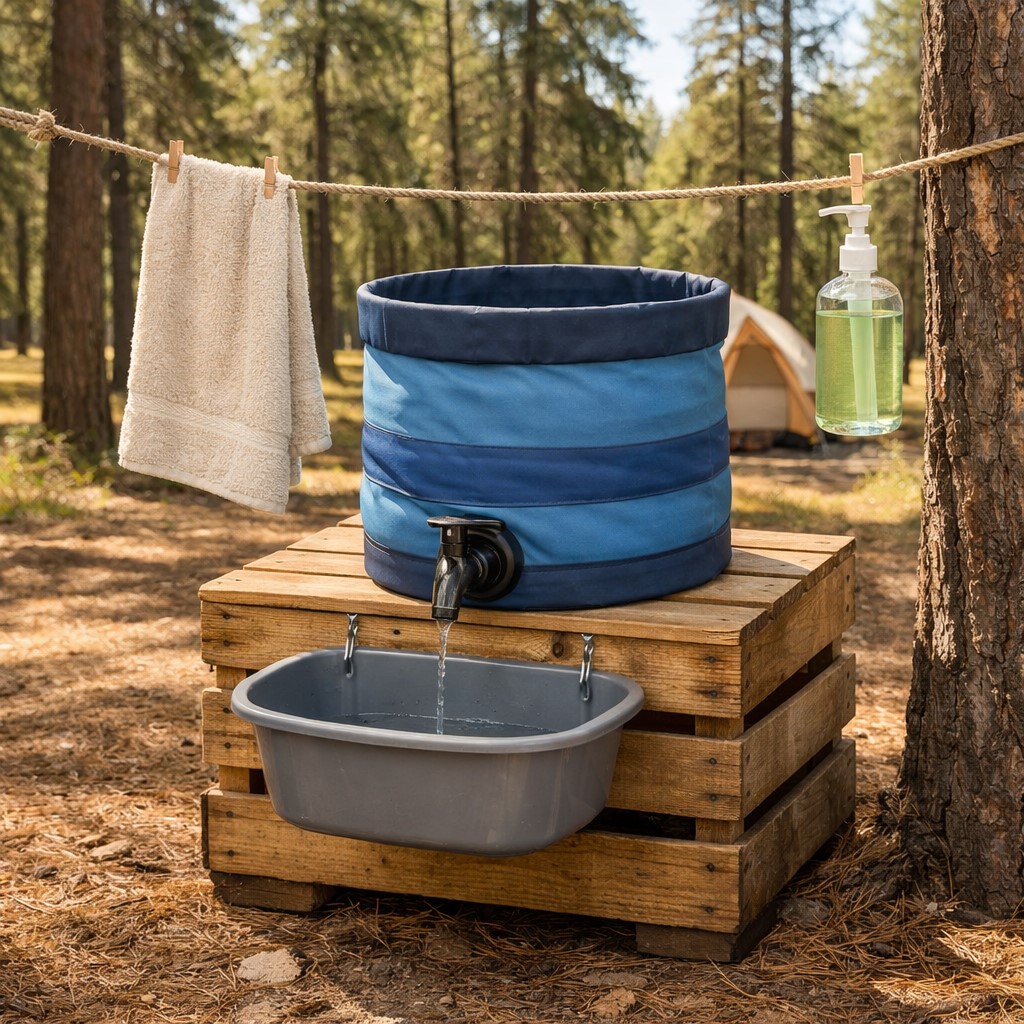
Setting up a camping hand-washing station is one of the easiest wins of your entire trip. Grab a large water container with a spigot — place it on a stable surface like a camp table or crate, or hang it from a tree branch. Position a basin underneath to collect the grey water, keeping your site clean, dry, and eco-friendly. Dispose of collected grey water at least 200 feet from natural water sources in line with Leave No Trace principles.
Stock it with biodegradable soap and hand sanitizer. Hang a towel on a rope between two trees, or set out paper towels nearby. If you’re camping in a group, label the station clearly so everyone knows where to clean up. A well-set-up portable hand-washing station for camping is your first line of defence against spreading germs — especially critical before meals and after every bathroom break.
Menstrual Hygiene While Camping — Practical, Clean & Eco-Friendly
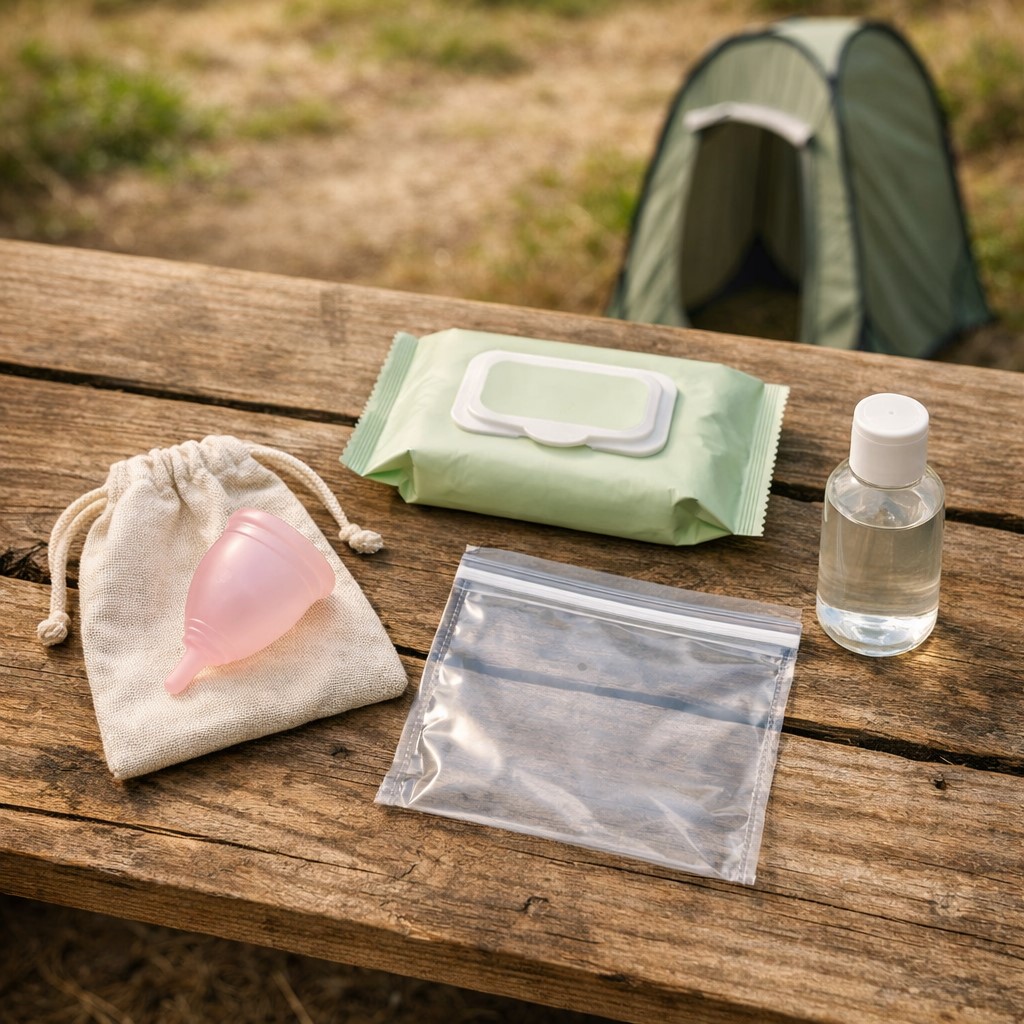
Handling your period in the great outdoors is far easier than most people expect — especially with the right gear. For eco-conscious campers, a menstrual cup is the gold standard: reusable, compact, and completely zero-waste. If cups aren’t for you, organic tampons or reusable pads are solid, practical alternatives. The key is to plan ahead.
Carry a waterproof ziplock bag or dry bag for used items, and pack unscented wipes or a small amount of water for cleaning. Always seal waste properly and pack it out — never bury period products in the wilderness. A small privacy pop-up tent adds real comfort if there are no restroom facilities nearby. These simple camping period tips keep you feeling confident, clean, and comfortable, whatever the terrain.
Bathing Outdoors: No Shower? Absolutely No Problem
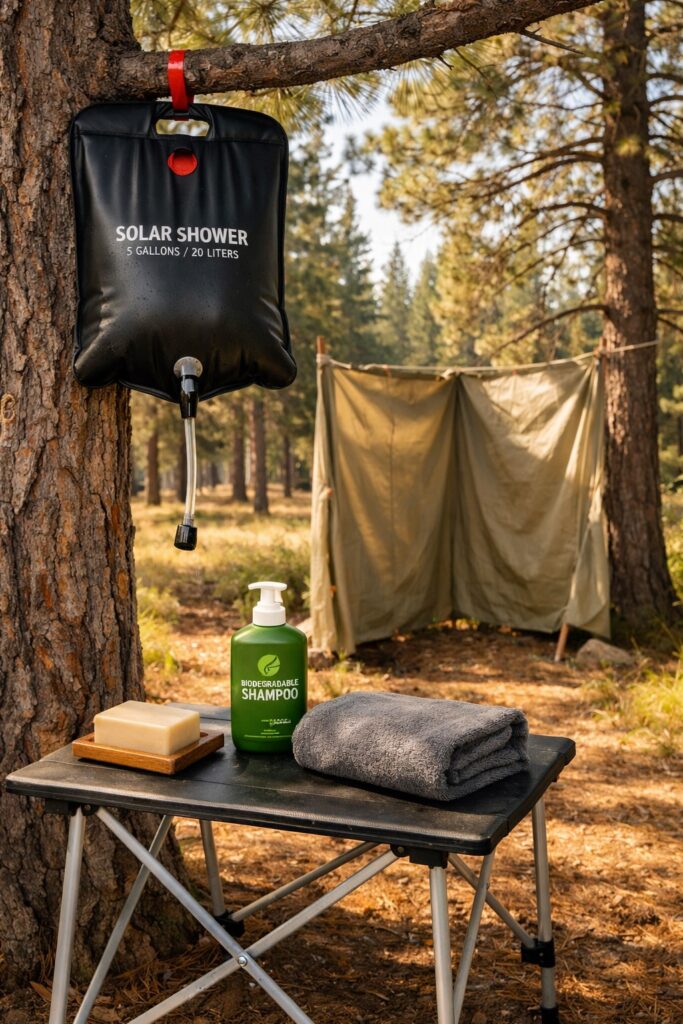
If your campsite is near a lake or river, a morning dip is one of life’s great simple pleasures — especially in summer. But when it’s cold, or when you’re camping well away from any natural water source, a DIY outdoor shower station is your next best move.
Fill a solar camping shower bag in the morning and leave it in a sunny spot. By early afternoon, you’ll have warm water for a genuinely refreshing rinse. For a deeper clean-up, use biodegradable soap and a bucket of warm water — you’ll feel fresh and clean in minutes. When water is truly scarce, body wipes are completely effective for a quick but thorough refresh. For your hair, a gentle biodegradable shampoo and a daily brush-through prevents tangles and keeps your scalp happy all trip long.
Camping Laundry Tips: Smelling Fresh Without a Washing Machine
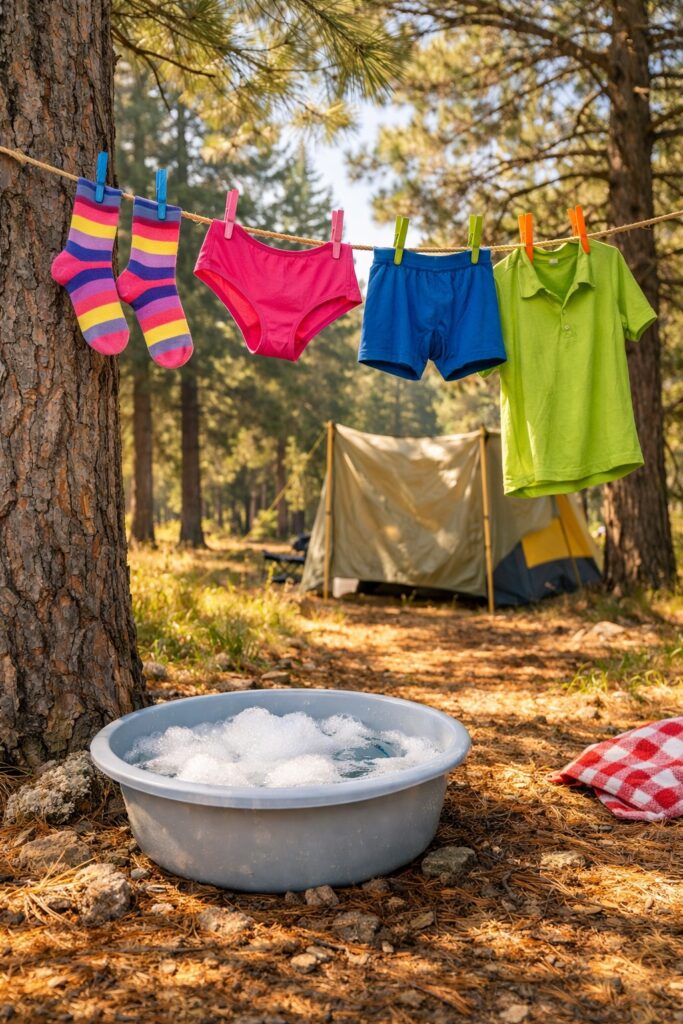
There’s something genuinely uplifting about pulling on a fresh pair of socks in the middle of a camping trip. It’s one of the small wins that keeps the whole family’s morale high. Washing underwear and socks with biodegradable soap each evening and hanging them to dry overnight is one of the simplest and most effective camping hygiene hacks you can adopt — and the kids will love being in charge of hanging their own.
No sink? No problem. The ‘twist-wash’ method is a camper favourite: fill a ziplock bag with a little water and a drop of biodegradable soap, add your garment, seal it, and massage for a minute. Rinse with clean water, wring out, and hang to dry overnight. Works brilliantly for socks, underwear, and light shirts. If you can’t wash something, laying it out overnight to air out removes a surprising amount of odour. A diluted essential oil spray or fabric freshener mist helps finish the job.
Bathroom Breaks While Camping: Clean and Responsible Solutions
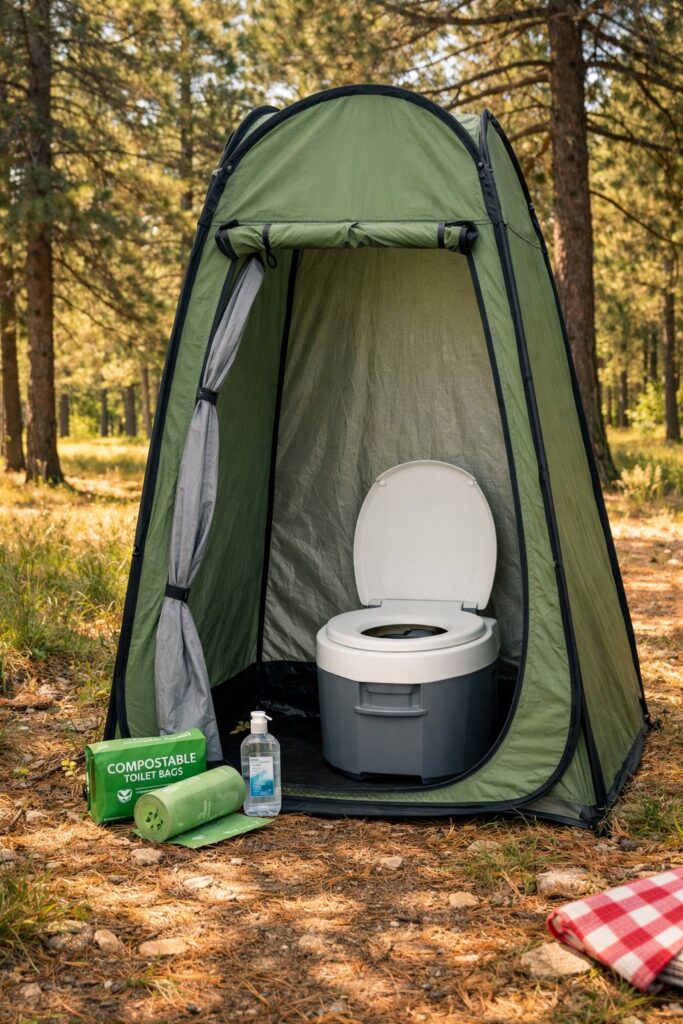
One area where family camping hygiene tips make the biggest real-world difference is bathroom management in the wild. When nature calls out there, how you handle it matters — both for your own health and for the environment you are visiting.
When nature calls out in the wild, how you handle it matters — both for your own hygiene and for the environment you’re visiting. For campgrounds with facilities, this is straightforward. For wilderness or dispersed camping, plan ahead. Set up a privacy pop-up tent and use a portable camping toilet for comfort and containment. If you’re going fully off-grid, dig a proper cat hole — 6 to 8 inches deep, at least 200 feet from water, trails, and camp — and use biodegradable or compostable waste bag liners to minimise environmental impact.
Following Leave No Trace wilderness bathroom principles isn’t just about following rules — it’s about protecting the wild spaces you love so they remain beautiful for everyone who comes after you. Keep hand sanitizer immediately accessible after every bathroom break, and always wash hands properly at your station before touching food.
Our guide to sustainable camping covers Leave No Trace principles in full if you want to go deeper on responsible outdoor practices
Camping Skincare Tips: Protect Your Skin from Sun, Bugs & Dryness
Skincare while camping is just as important as packing the right gear. Follow these camping skincare tips to keep your skin healthy in the outdoors. Moisturize daily using the best lotion for camping — ideally, a fragrance-free or unscented formula — to avoid dryness, cracks, and irritation caused by changing weather conditions. Always apply an unscented sunscreen for camping, preferably broad-spectrum, to protect your skin from the harsh sun and harmful UV rays.
Your Daily Camping Skincare Routine
Bug Protection and First Aid Essentials
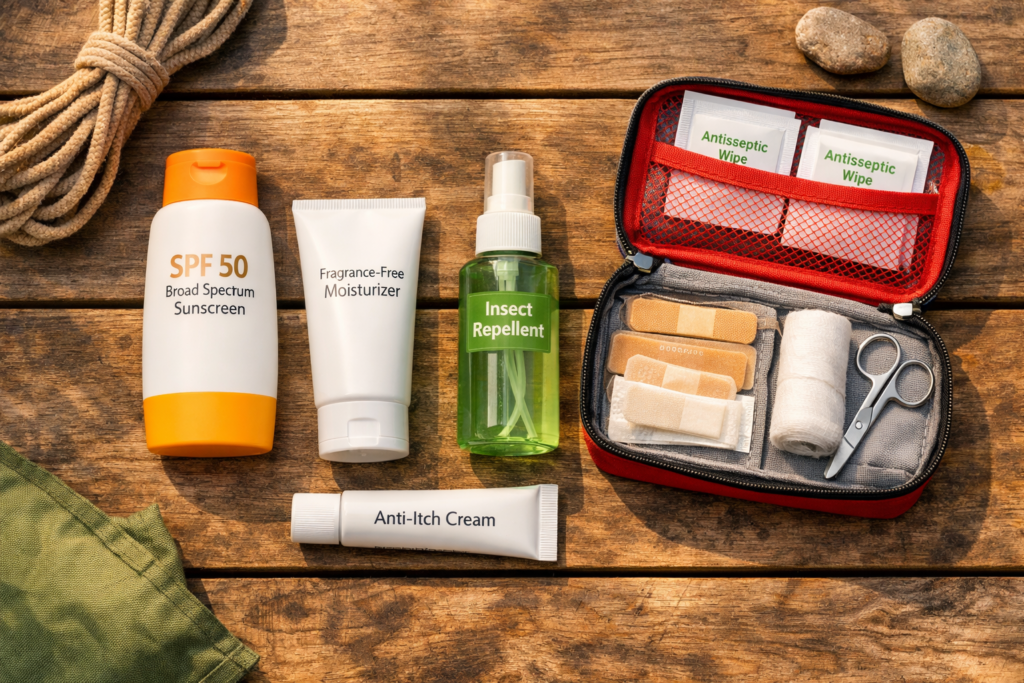
Sunscreen, Moisturizer & Bug Repellent: Your Daily Camping Skincare Routine
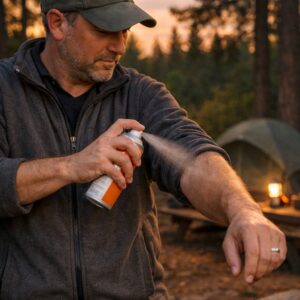
Moisturise daily — a fragrance-free or unscented formula is best outdoors to avoid attracting insects. Apply a broad-spectrum SPF 30+ sunscreen every morning and reapply every two hours, especially during hikes. Use a DEET-based or picaridin-based bug repellent for campers every morning — these are the most effective at keeping mosquitoes, ticks, and other insects at bay. Knowing how to prevent insect bites while camping is one of the most underrated camping hygiene tips for first-timers.
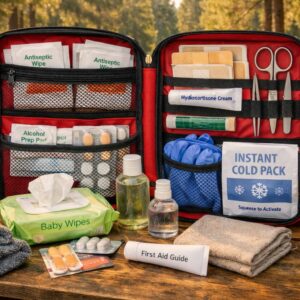
For first-time campers especially: make a tick check part of your evening routine. Run your hands over your whole body — behind the knees, in your hair, under your arms. Ticks are tiny and easy to miss until they’ve been on you a while. Your first aid kit should include tweezers, antiseptic wipes, anti-itch cream, blister plasters, and something for mild poison ivy or nettle reactions. Stay prepared, and none of this feels like a big deal at all.
For a deeper look at insect defense, our guide to keeping mosquitoes away while camping covers every method worth knowing
Your first aid kit should cover more than bites and blisters — see our guide to building the essential camping first aid kit
Baby Hygiene Camping Essentials for Stress-Free Outdoor Adventures
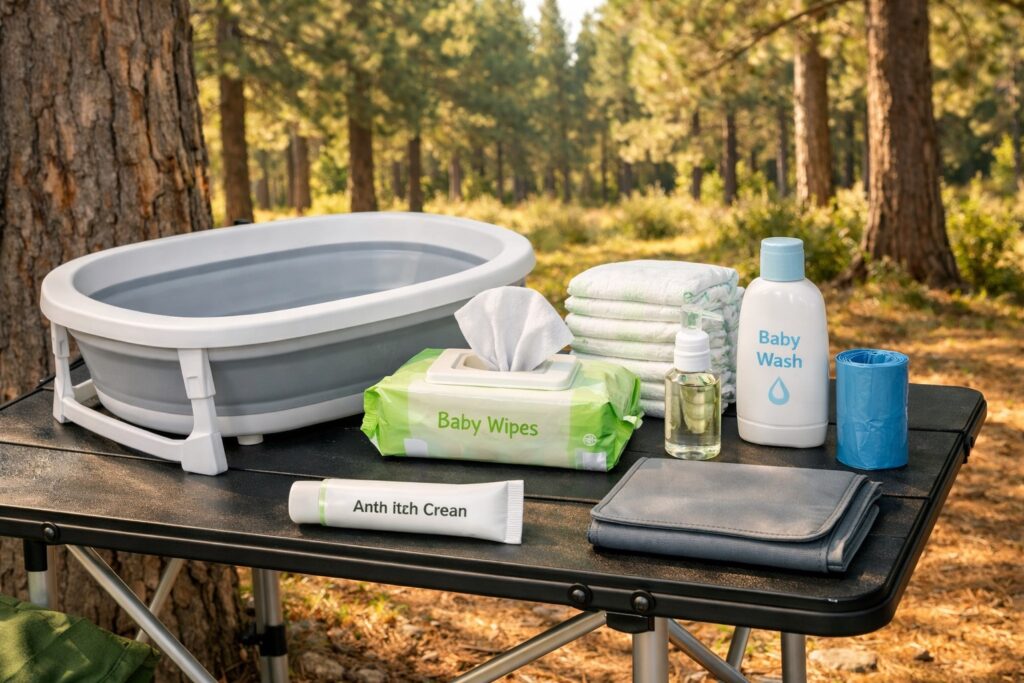
Camping with a baby is not only possible — with the right preparation, it’s genuinely wonderful. Babies love fresh air, sounds of the wild, and the magic of trees and firelight. Your job is simply to keep their hygiene routines as consistent as possible, even out in the wild.
Diapering and Changing Outdoors
Building a Simple Campsite Baby Hygiene Station
Bring a portable collapsible baby tub, gentle fragrance-free wipes, and alcohol-free hand sanitizer for quick clean-ups on the go. Pack more nappies than you think you’ll need — always. Seal used ones in waterproof bags for proper disposal. A foldable waterproof changing mat is absolutely essential outdoors, and a mild baby wash covers bath time beautifully.
Keep extra baby clothes in separate ziplock bags — clean in one, dirty in another. A small pop-up privacy tent doubles perfectly as a changing station, giving you shade and privacy. Stick to your usual feeding and bathing routines as closely as the outdoors allows — babies thrive on consistency. Biodegradable products are both baby-safe and nature-friendly. A genuine win-win for everyone.
For everything beyond hygiene when camping with a baby, our guide to stress-free camping with little ones is worth reading before you pack
Foot Care While Camping: The Most Overlooked Hygiene Habit
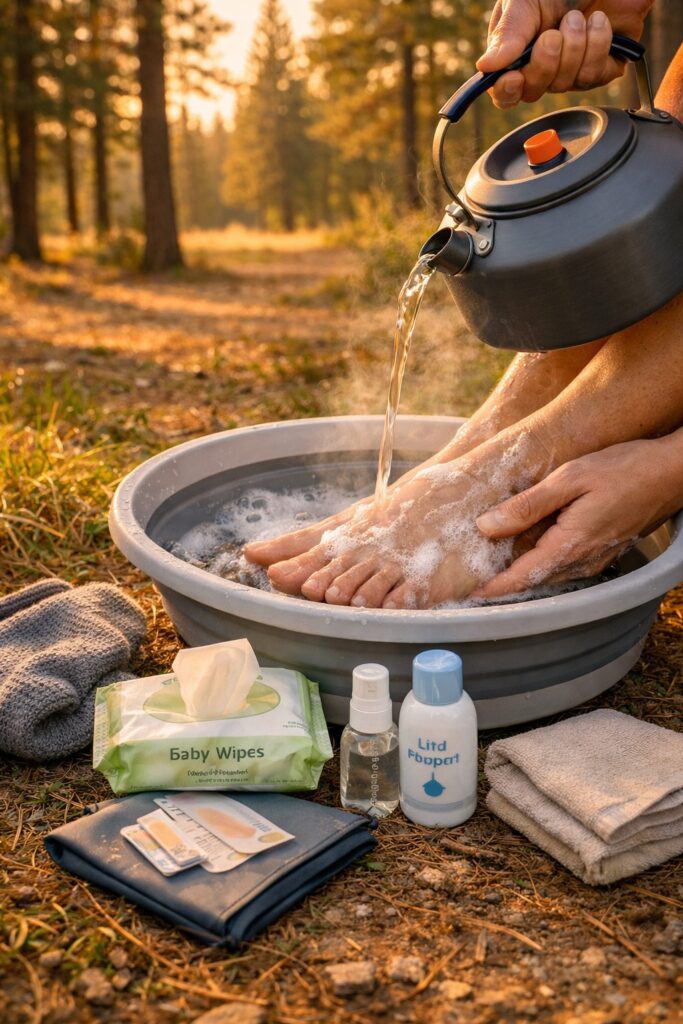
Ask any experienced hiker what the single most underrated camping hygiene habit is, and the answer is almost always foot care. Happy feet are the foundation of every great outdoor adventure — and neglecting them mid-trip can bring your whole holiday to a grinding, blistery halt.
Your Daily Foot Care Routine
- Change your socks every single day — non-negotiable for blister prevention and odour control
- Let your feet breathe barefoot for a couple of hours each day while relaxing at camp
- Wash and dry your feet thoroughly before bed — especially between the toes where moisture hides
- Carry a foot first aid kit: blister plasters, antiseptic, moleskin padding for hot spots
- If you feel a ‘hot spot’ forming — a rubbing sensation before a blister develops — treat it immediately
Remember: Happy feet mean happy campers. It really is that simple.
Frequently Asked Questions About Camping Hygiene
First-time campers usually have the same questions. Here are honest, practical answers:
How do you stay clean while camping without a shower?
Use a solar camping shower bag, biodegradable soap, and body wipes. A morning or evening bucket rinse with warm water does the job surprisingly well. Focus on underarms, feet, and face — these three areas matter most for comfort and freshness.
What is the best soap to use while camping?
Always choose a biodegradable, unscented camping soap. It’s safe for use near natural water sources, won’t attract wildlife, and is gentle enough for sensitive skin and young children.
How do families handle bathroom needs when camping?
Use campsite toilet facilities where they’re available. For backcountry camping, use a portable camping toilet or dig a 6-to-8-inch cat hole at least 200 feet from water and your campsite. Always pack out waste bags rather than burying them in the ground.
How do you manage kids’ hygiene during a camping trip?
Keep it simple and routine-based. Set up a visible hand-washing station and build hand-washing into every mealtime and bathroom break automatically. Pack plenty of wipes and extra clothes. Keep their toiletries in a bag they can see and reach themselves — and make hygiene feel like part of the adventure, not a chore.
How do you keep a baby clean while camping?
The key is consistency — try to keep your baby’s usual routine as close to normal as the outdoors allows. Bring a portable collapsible baby tub, plenty of fragrance-free wipes, and more nappies than you think you will ever need. A foldable waterproof changing mat is essential, and a small pop-up privacy tent doubles as a changing station wherever you are. Biodegradable baby wash is gentle on skin and kind to the environment. Sealed waterproof bags handle used nappies cleanly until you reach a proper disposal point.
Family Camping Hygiene Tips That Make Every Trip Better
Good family camping hygiene tips are not about making the outdoors feel like home — they are about making sure everyone stays comfortable, healthy, and happy enough to want to do it all over again.
Family camping hygiene doesn’t have to be stressful — or boring. With a well-stocked camping hygiene kit, a handful of smart camping hygiene hacks, and the right mindset, you can keep the whole family feeling fresh and happy even after days in the wild.
Good family camping hygiene tips are not about making the outdoors feel like home — they are about making sure everyone stays comfortable, healthy, and happy enough to want to do it all over again.
Embrace the occasional mud. Laugh at the messy moments. The very best family camping memories aren’t made in spite of the mess — they’re made right in the middle of it. A little planning simply makes sure the mess stays fun. Go explore. You’ve absolutely got this.