How to Choose the Right Tent: The Ultimate Camping Guide
-
| Founder & Content Creator

Latest Posts
How to choose the right tent is one of those questions that sounds simple — until you walk into a camping store and face forty options staring back at you. Dome or geodesic? Three-season or four? One-person or three-person when it’s actually just you? It can feel like a gear exam you never studied for.
The good news: once you understand what actually matters, how to choose the right tent becomes surprisingly straightforward — and this guide walks you through every step. This guide covers every tent type available, the key factors to weigh up, and exactly what to look for so you buy once and buy right.
if you are planning your first trip, our complete camping checklist for new campers covers everything you need beyond the tent
Why Choosing the Right Tent Changes Everything
A tent is not just a place to sleep. Think of it as your home away from home — the thing standing between you and a 2am rainstorm, a bitter cold snap, or a night spent shivering in damp clothes. Get it right, and you wake up refreshed and ready for the day. Get it wrong, and what should have been a great weekend suddenly feels like a survival challenge nobody signed up for.
With so many types of tents on the market — each designed for a specific purpose — the smartest thing you can do before buying is understand what each style is built for. Your camping style dictates your tent. Not the other way around.
The Main Types of Camping Tents Explained
There are more tent designs on the market than most people realize. Here are the key types — and who each one is actually built for.
Dome Tents
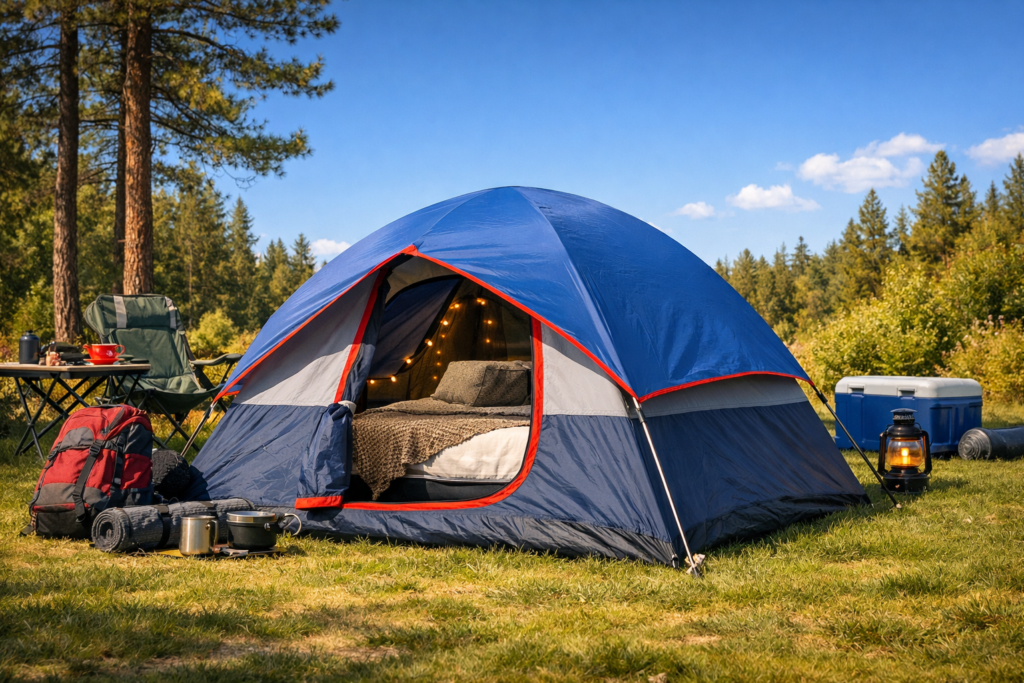
Dome tents are the most common type on the market, and for good reason. Their aerodynamic shape handles windy conditions well, they are lightweight, and most snap together in under ten minutes. Two or more flexible poles cross at the top and anchor at the corners, creating a sturdy self-supporting structure.
They come in sizes from solo (1-person) right up to eight-person family tents. If you are new to camping and not sure which direction to go, a dome tent is the safest, most versatile starting point.
Best for: Weekend camping, beginners, family car camping
Pop-Up Tents
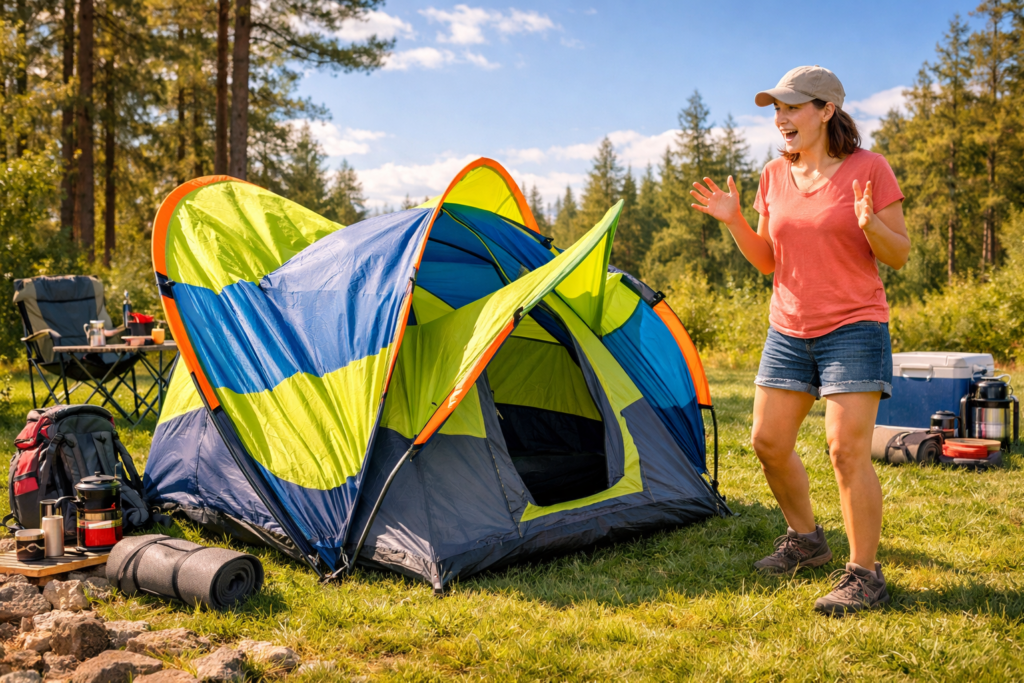
Pop-up tents do exactly what the name promises. You pull them out of the bag, let go, and the tent basically sets itself up in seconds. No poles to fumble with, no instruction sheet to decipher in fading daylight, no mild panic when you realise you have no idea what you are doing. If you are camping for the first time, or just want to get your shelter sorted quickly and get on with the fun part, a pop-up tent is hard to argue with.
The trade-off is durability. Pop-up tents are not built for harsh weather or extended use. They are best for calm summer trips and short stays.
Best for: Beginners, festivals, short summer trips, 1-6 people
Geodesic Tents
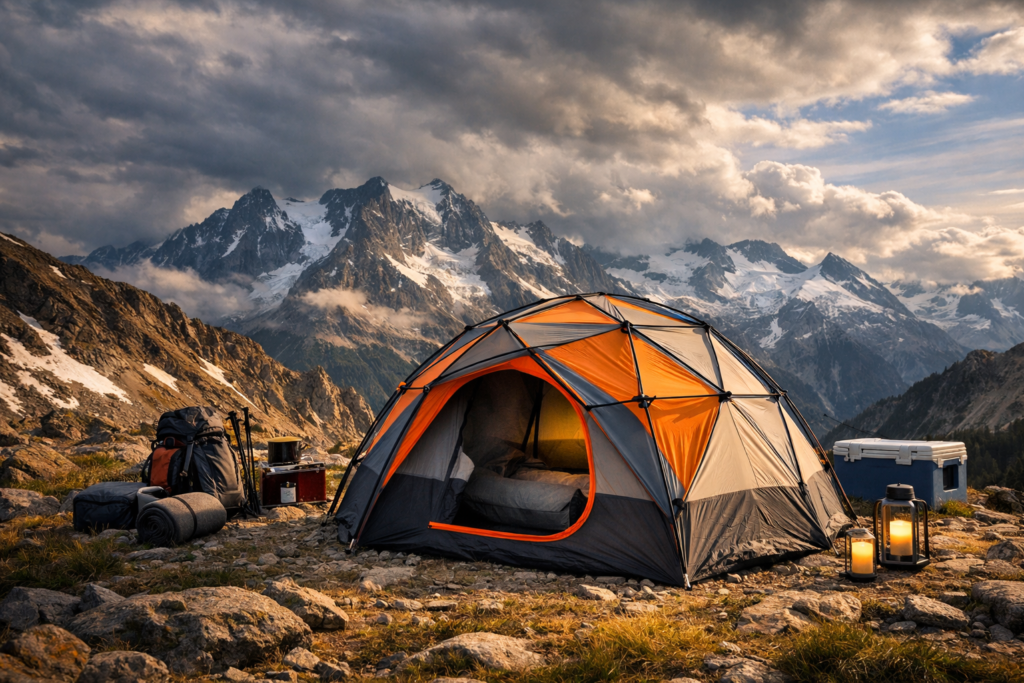
Geodesic tents are the tanks of the tent world. Multiple poles cross each other at multiple points, creating a structure that can take a serious beating from wind and heavy snow. They are the go-to choice for mountaineers and anyone heading into genuinely harsh terrain.
They are heavier and more expensive than dome tents, but in extreme conditions that extra cost is not optional — it is essential. Most geodesic tents comfortably hold 3 to 5 people.
Best for: Mountain camping, four-season use, high-wind environments
Backpacking Tents
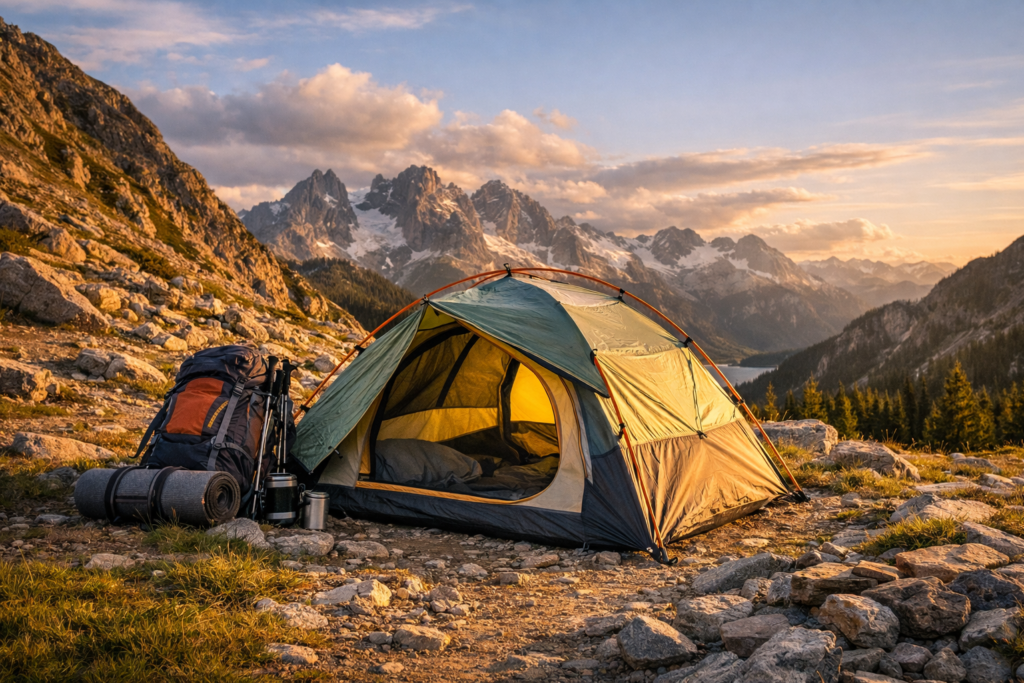
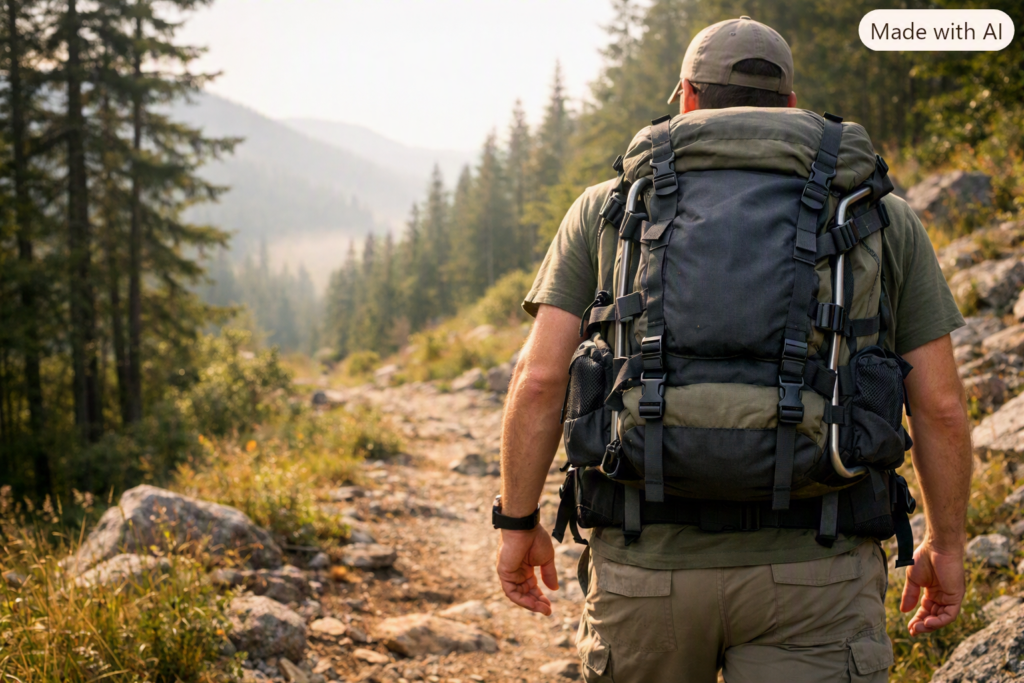
When you are carrying everything on your back across miles of trail, weight stops being an abstract number and starts being something you feel in your shoulders by lunchtime. Backpacking tents are built with exactly that in mind — compact, genuinely lightweight, and designed to pack down small enough to fit inside your bag or strap neatly to the outside.
Most hold 1 to 2 people and come in a tunnel or geodesic shape. Do not let the slim profile fool you — good backpacking tents are built to handle rain and wind just as well as heavier options.
Best for: Hikers, multi-day trekkers, solo adventurers, anyone counting grams
Tunnel Tents
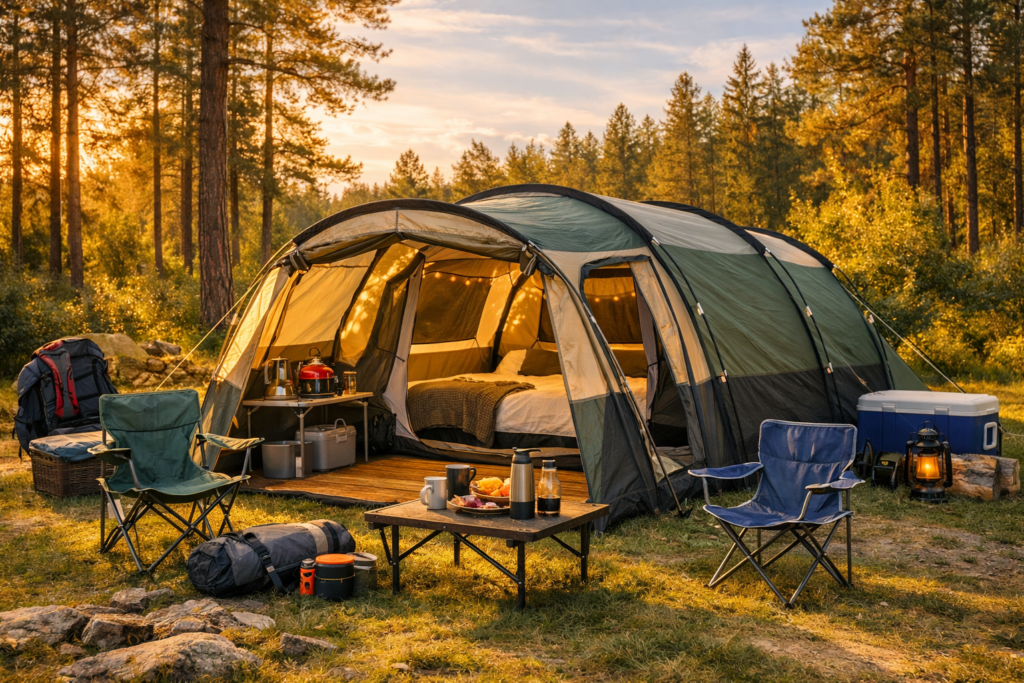
Tunnel tents are all about space. They are long, arched shelters with enough headroom to actually stand up straight, separate areas for sleeping and storing gear, and enough room to get dressed in the morning without accidentally elbowing your tentmate in the face. If you have ever crouched in a small tent trying to pull on your trousers, you will know exactly why this matters.
Most tunnel tents handle rain well, and a lot of models come with separate sleeping and living areas — which sounds like a small detail until you are three nights into a family trip and really appreciate having somewhere to dump wet gear that is not right next to someone’s pillow. One thing worth knowing before you pitch: tunnel tents need to face into the wind to stay stable in rough weather. Get that right and they are rock solid. Get it wrong and you will find out very quickly.
Best for: Family camping, extended stays, groups who want space and comfort
Once you have settled on the right tent, the next step is making the inside feel like somewhere you actually want to be. Our guide on how to make your tent interior comfortable covers everything from lighting to sleeping setup.
Teepee Tents
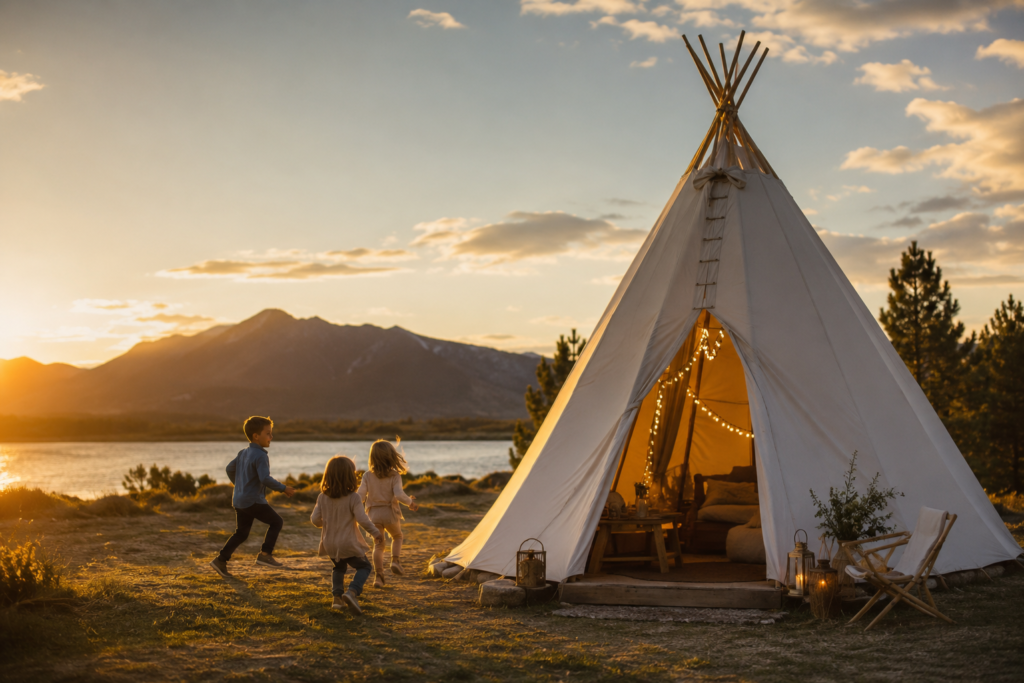
Teepee tents take their shape from the traditional Native American tipi — tall, conical, and built around a single central pole. They are the kind of tent that turns heads at a campsite before you have even unrolled your sleeping bag. But they are not just good looking. Once you are inside, the high ceiling gives you real breathing room, and the ventilation at the top does a surprisingly good job of keeping things fresh and cool on warm nights.
They are a popular choice for glamping trips and family camping where atmosphere is just as important as practicality. There is something about a teepee tent that makes a campsite feel a little more special — kids especially love them. Setting one up takes a little getting used to the first time, but once you have done it once it clicks, and you will have it sorted in no time on every trip after that.
Best for: Glamping, families, anyone who wants style and space in equal measure
Inflatable Tents
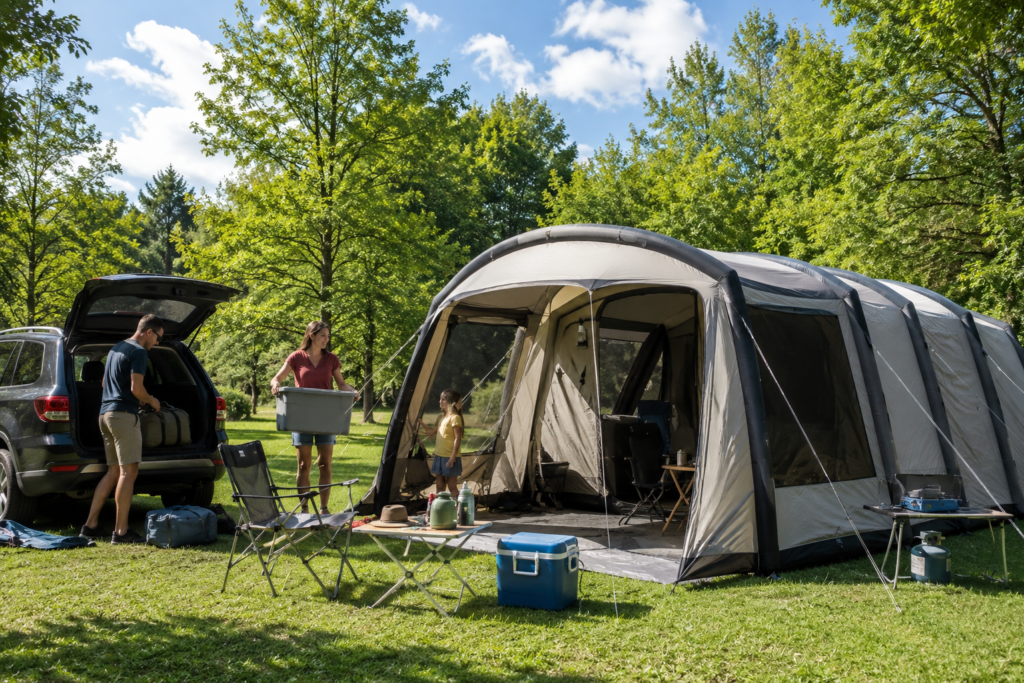
Inflatable tents swap traditional poles for air-filled beams — so instead of threading poles through sleeves, you connect a pump and watch the tent rise in minutes. They also handle wind better than most people expect, because the flexible beams absorb movement rather than fighting against it.
The honest trade-off is cost and the pump itself. Inflatable tents sit at the higher end of the price range, and you do need to remember to bring the pump — something a surprising number of people forget on their first trip. But if you camp regularly with family and the thought of wrestling with poles after a long drive fills you with dread, the extra cost makes a lot of sense very quickly.
Best for: Car campers, families, anyone who values fast setup over low cost
Bivy Tents
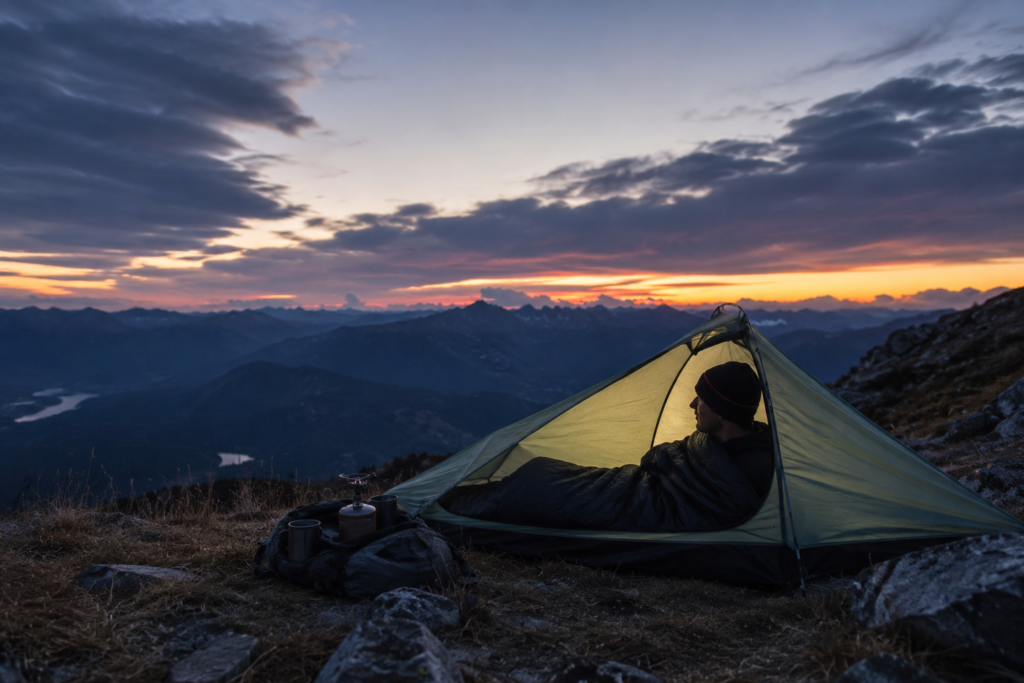
A bivy tent is about as minimal as shelter gets — essentially a tough, weatherproof sleeve that fits one person and their sleeping bag, and not much else. They are waterproof, windproof, and light enough that you will barely notice them in your pack until you actually need one.
They are not for everyone, and that is completely fine. If you like your space, a bivy will feel claustrophobic inside about thirty seconds. There is nowhere to sit up, nowhere to store gear, and no room for a tentmate unless you are very close friends. But if you are a solo hiker trying to shave every unnecessary gram, or you want a reliable emergency shelter tucked into the bottom of your pack just in case, a bivy tent does its one job better than anything else on this list.
Best for: Solo ultralight hikers, minimalist campers, emergency backup shelter
If ultralight shelter appeals to you, our hammock camping guide covers another minimalist option worth considering.
Key Factors That Decide How to Choose the Right Tent for You
Knowing the tent types is only half of how to choose the right tent. The other half comes down to matching the spec to your trip.
Tent Size and Capacity
Tent capacity ratings are notoriously optimistic. A ‘3-person’ tent is comfortable for two adults with gear. A ‘4-person’ tent works well for a family of three who want actual breathing room. A good rule of thumb: always size up one from the stated rating if you want to sleep comfortably rather than sardine-style.
Also factor in gear. Dogs, pushchairs, and kit bags need somewhere to go — usually a vestibule (the sheltered porch area outside the inner tent). A tent with no vestibule is a tent where your wet boots sleep beside your face.
Weight and Packed Size
Weight matters most for backpackers. If you are driving to a campsite, a 4 kg family tent is absolutely fine. If you are carrying everything on your back, target under 1.5 kg per person as a guideline.
Check both trail weight (tent + poles + pegs) and packed weight (everything including the bag). Some brands advertise trail weight only — the number looks better but it is not the full picture.
Weather Resistance and Season Rating
Tents are rated by season:
- 1-season: Summer use only. Light and cheap but not built for anything dramatic.
- 2-season: Spring and summer. Light showers and mild wind. Good for beginners in mild climates.
- 3-season: The sweet spot for most campers. Rain, wind, and cool temperatures handled confidently. This is what the majority of tents on the market are.
- 4-season: Built for snow, heavy wind, and sub-zero temperatures. Heavier and pricier — worth it only if you camp in winter or at altitude.
FROM RESEARCH Most camping guides — confirm that a 3-season tent is the right choice for the vast majority of campers. Only commit to a 4-season tent if you genuinely plan to use it in those conditions.
Ease of Setup
If you are camping for the first time, arriving at dusk after a long drive, and trying to pitch a tent with a torch in your mouth — ease of setup becomes very important very fast. Pop-up and inflatable tents win here. Dome tents with colour-coded poles are close behind. Geodesic tents take practice.
Before any trip, always do a test pitch in your garden. Once. It will save you hours of frustration in the dark.
Waterproof Rating (Hydrostatic Head)
This is the number most people ignore on the spec sheet — and the one they regret ignoring first. Hydrostatic head (HH) rating measures how much water pressure the fabric can resist before it leaks, measured in millimetres.
| HH Rating | What It Means |
| HH Rating | What It Means |
| 1,000–1,500mm | Light rain only. Acceptable for dry summer camping. |
| 2,000mm | The minimum for UK and Northern European conditions. |
| 3,000mm+ | Reliable all-weather protection. Recommended for most campers. |
| 5,000mm+ | Heavy rain and extended downpours. Worth it for serious use. |
FROM RESEARCH The flysheet (outer layer) and groundsheet typically have different ratings — the groundsheet should always be rated higher as it takes direct pressure from your body weight. Always check both figures.
Understanding waterproof ratings is one of the most overlooked parts of how to choose the right tent — and one of the most important ones to get right before you spend any money.
Tent Pole Materials
Poles affect weight, durability, and price significantly:
- Aluminium poles: Lightweight, strong, and resilient. Can bend without snapping. The standard choice for quality tents.
- Fibreglass poles: Heavier and less flexible. Common in budget tents. They can snap in cold weather — worth knowing before a winter trip.
- Carbon fibre poles: The ultralight premium option. Expensive but significantly lighter than aluminium. Used in high-end backpacking tents.
Ventilation and Condensation
Condensation is one of the most common complaints from first-time campers, and it is almost always put down to a leaking tent when the tent is actually working perfectly. Every sleeping person exhales moisture throughout the night. That moisture has to go somewhere. In a poorly ventilated tent, it ends up on the inner walls — and then on your sleeping bag.
Look for tents with mesh inner panels, adjustable vents in the flysheet, and doors at both ends. Double-wall tents (separate inner tent and outer flysheet) manage condensation far better than single-wall designs.
If you are camping in hot weather, our guide to keeping your tent cool covers this in detail, which might prove really helpful to campers.
How to Read a Tent Spec Sheet When Choosing the Right Tent
Every tent listing is packed with numbers that mean very little to anyone who has not camped before. Here is a quick translation guide for the terms you will actually encounter:
| Term | What It Means | What to Look For |
| HH Rating | Waterproof pressure resistance (mm) | 3,000mm+ for reliability |
| Trail Weight | Tent + poles + pegs only | Include for backpackers |
| Pack Weight | Everything including the bag | The honest total weight |
| Inner/Outer Pitch | Which layer goes up first | Outer-first = drier setup in rain |
| Vestibule | Porch area outside inner tent | Useful for wet gear and boots |
| Freestanding | Stands without pegs/guy ropes | Easier to pitch on hard ground |
| Geodesic | Multi-cross-pole structure | Best wind/snow resistance |
| Double-wall | Separate inner + flysheet | Better condensation management |
Frequently Asked Questions About Choosing a Tent
What size tent do I need for 2 people?
A 3-person rated tent is the most comfortable choice for two adults. Tent capacity ratings are generous on paper and tight in practice — sizing up gives you room for gear, dogs, or just the luxury of not elbowing your tentmate all night. If you are backpacking and every gram counts, a genuine 2-person tent designed for the activity will do the job fine.
What is the difference between a 3-season and 4-season tent?
A 3-season tent covers spring, summer, and autumn — rain, wind, cooler nights, and the occasional surprise downpour that was definitely not in the forecast. For the vast majority of campers, this is all you will ever need. If you are camping at established sites, festival grounds, or anywhere with a car park nearby, a solid 3-season tent has you covered.
A 4-season tent is a different beast entirely. Heavier poles, tougher fabrics, and a structure built to take the weight of snow and keep you alive in genuinely brutal winter conditions. They are heavier, noticeably more expensive, and completely overkill unless you are regularly camping in sub-zero temperatures or at serious altitude. If you are not sure whether you need one — you almost certainly do not.
How waterproof should a camping tent be?
Look for a hydrostatic head (HH) rating of at least 2,000mm for reliable rain protection, and 3,000mm or above if you camp in wetter climates or extended downpours. The groundsheet needs to be rated higher than the flysheet — 5,000mm is a good benchmark — as it bears the pressure of body weight. Cheaper tents often cut corners here first.
Is a dome tent or tunnel tent better for families?
Tunnel tents win on space and comfort for families — more headroom, multiple compartments, and often better storage options. Dome tents win on versatility and ease of setup. For a family that camps regularly and wants a proper living space, a tunnel tent is worth the investment. For occasional use or camping with younger kids, a large dome tent is easier to manage.
What is a tent footprint and do I need one?
A tent footprint is a ground sheet cut to the exact dimensions of your tent’s base. It sits between the tent floor and the ground, protecting the waterproof coating from abrasion on rough terrain. On rocky or stony ground it is genuinely worth having — it significantly extends the life of your tent floor. On soft grass it is less critical, but still a sensible addition for any tent you plan to use regularly.
Now You Know How to Choose the Right Tent — Go Use It
By now you have everything you need to know about how to choose the right tent for your camping style, your group size, and the conditions you are likely to face.
There is a tent for every kind of camper — you just need to match it to how you camp, not how someone else does. Start with your trip type (backpacking vs car camping), work out how many people need to fit, think about the weather you are likely to face, and let those three answers point you to the right style.
The best tent is the one you actually use. Pick it, pitch it, and get out there.