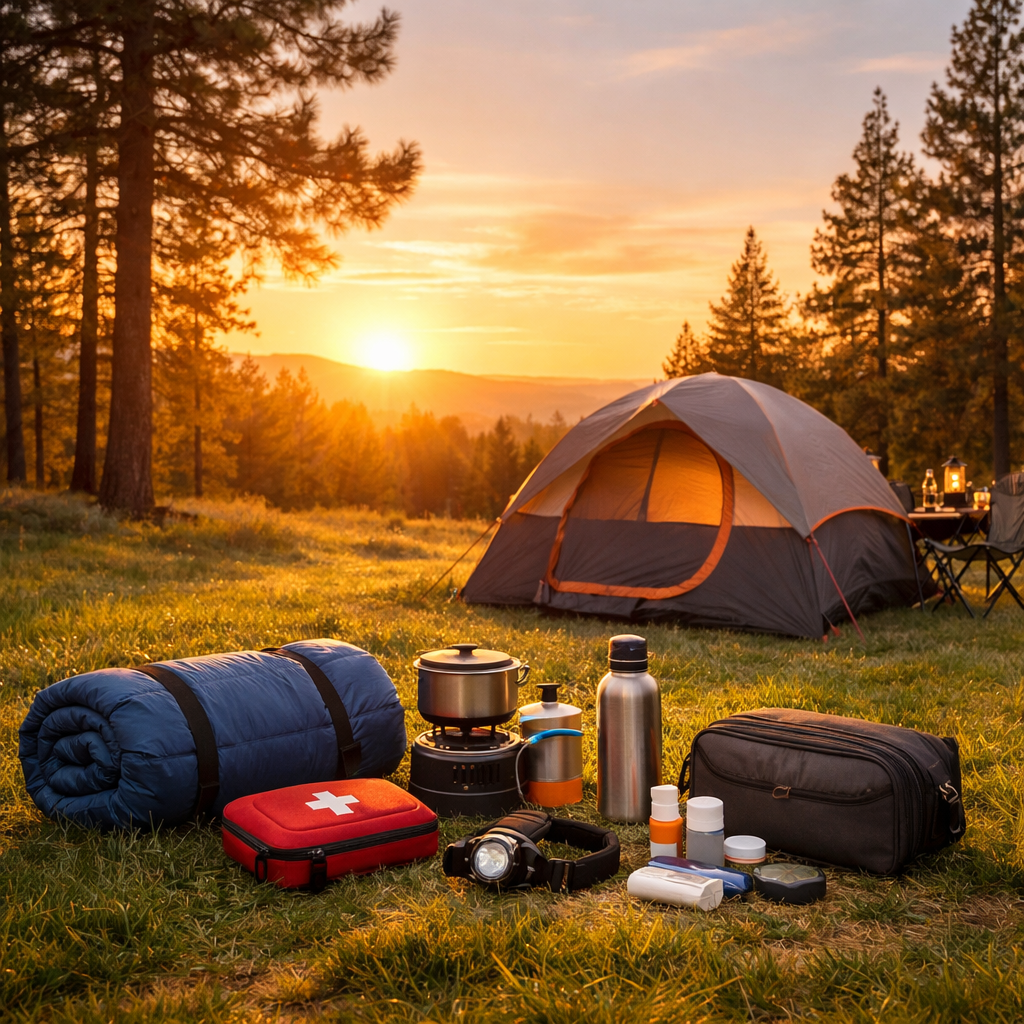
Comfortable Tent Interior: How to Make Your Tent Feel Like Home
-
| Founder & Content Creator

Latest Posts


A comfortable tent interior is the difference between a camping trip you rave about and one you quietly vow never to repeat. Your tent is not just a place to sleep — it is your home for the duration of the adventure, and treating it that way changes everything. The good news? In fact, research consistently shows that over 60% of campers say uncomfortable sleeping is what ruins their trip most often. That means getting your tent interior right gives you a direct, tangible advantage over the majority of campers out there.
Whether you are heading out for a one-night weekend trip or a week-long adventure, these tent comfort tips and interior setup ideas will transform your experience. Furthermore, none of this requires expensive gear. We are talking about better sleep, better mornings, and a tent that genuinely feels like a cozy sanctuary rather than a temporary shelter. Let’s make it happen.
THE MINDSET SHIFT THAT CHANGES EVERYTHING
Stop thinking of your tent as a place you sleep. Start thinking of it as a room you design. A sleeping zone, a storage zone, a lighting plan, a temperature system — the same principles that make a bedroom comfortable apply perfectly to a tent. The only difference is the view outside the window. And honestly, the tent wins on that front every time.
Why a Comfortable Tent Interior Makes Your Whole Trip Better
When your tent is comfortable, everything improves. You sleep better, which means you wake up with more energy for hiking, exploring, and cooking a proper breakfast. You spend more time relaxed and present rather than managing discomfort. And when the weather turns or the evening gets cold, you have somewhere genuinely pleasant to retreat to rather than something to endure.
A well-set-up comfortable tent interior also reduces the stress that often creeps into camping trips — fumbling for a torch you cannot find, sleeping badly because the ground is harder than expected, waking up cold at 3am. All of these are entirely preventable with a little planning and the right gear. None of it has to be expensive. Much of it is just about being intentional.
Start Right: How to Choose and Prepare Your Tent Site

Creating a comfortable tent interior starts before you even open the tent bag. Where you pitch matters enormously — and choosing your spot well is like getting the best seat at the concert. Once you are settled in, you will be very glad you chose wisely.
- Look for genuinely level ground — before you commit to a spot, actually lie down on it for 30 seconds. Your back will immediately tell you whether it is flat enough
- Look for natural drainage — avoid low-lying spots and slight depressions. If rain comes, these become puddles, then pools, then the inside of your tent
- Aim for gentle morning sun and afternoon shade — morning light warms the tent naturally and makes getting up easier. Afternoon shade keeps it from becoming an oven
- In addition, clear the area before pitching — remove rocks, sticks, pinecones, and any debris. They are surprisingly good at finding their way through tent floors
- Check elevation — a very slight rise prevents water collecting around the base during heavy rain
- Consider wind direction — position the narrowest end of your tent into the prevailing wind for better stability
Tent Flooring Ideas: The Foundation of every Comfortable Tent Interior
The floor of your tent is the foundation of everything. Get it right and you are warmer, more cushioned, and better rested. Get it wrong and you will feel every root, rock, and cold patch of ground right through your sleeping bag.
Best Tent Flooring Options Ranked by Comfort
- Tent footprint (most important, most overlooked) — a groundsheet cut to fit your tent base protects against moisture and abrasion. It also extends the life of your tent floor significantly. This goes UNDER the tent.
- Interlocking foam floor tiles — the camping forum favourite for family tents. Soft, warm, lightweight, easy to clean, and they genuinely transform a hard tent floor into something you could sit on comfortably. Goes INSIDE the tent on top of the groundsheet.
- Self-inflating sleeping pad — the single most impactful comfort upgrade in any camping sleep system. Provides insulation from cold ground (via R-value) and cushioning simultaneously
- Camp rug near the entrance — a small waterproof mat by the door catches dirt, sand, and mud before it reaches your sleeping area. Low cost, high return
- Air mattress — maximum comfort for car camping. Takes more space to store but many campers describe it as a game-changer, particularly for older campers or those with
The Tent Footprint — The Most Overlooked Comfort Essential
The R-Value Explained — Why It Matters for Tent Comfort
The R-value of your sleeping pad measures its resistance to heat flow — in other words, how much cold it stops from the ground reaching your body. A sleeping pad with an R-value of 1 provides minimal ground insulation. An R-value of 4+ is suitable for three-season use. The higher the R-value, the warmer you sleep.
This is the number one spec most beginner campers ignore — and it is the reason so many first-time campers wake up cold in the middle of the night even with a perfectly rated sleeping bag. Cold comes from below in a tent, not just from the air. Your sleeping pad is your insulation from the ground, not your sleeping bag. Understanding this one number genuinely changes how you sleep outdoors.
The Perfect Tent Sleeping System: How to Get a Great Night’s Rest Outdoors
Your sleeping system is the most important investment you will make for tent comfort. Get the three layers right — sleeping surface, sleeping bag, and bedding — and you will sleep as well outdoors as you do at home. Possibly better, because fresh air and physical tiredness are an excellent combination.
Choosing the Right Sleeping Surface — Cot vs Air Mattress vs Sleeping Pad
- Camping cot — For tall people and those who struggle on the ground, a camping cot is excellent. It provides brilliant airflow underneath, which is genuinely useful in hot weather. Heavier and bulkier, but worth it for car camping
- Air mattress — Nothing beats an air mattress for comfort on a car camping trip. It feels closest to a real bed. Downside: requires inflation, can puncture, and loses warmth if temperatures drop significantly (the air inside cools)
- Self-inflating sleeping pad — The best all-round option. It provides a balance of portability, warmth, and comfort. Essential for backpacking. Solid for car camping too. Choose R-value based on your expected temperatures
- Foam sleeping pad — Lightest of all, a foam sleeping pad offers zero puncture risk. It is not as comfortable but bombproof reliable. Good as a base layer under an air mattress for extra insulation
Building Your Camping Sleep System Layer by Layer
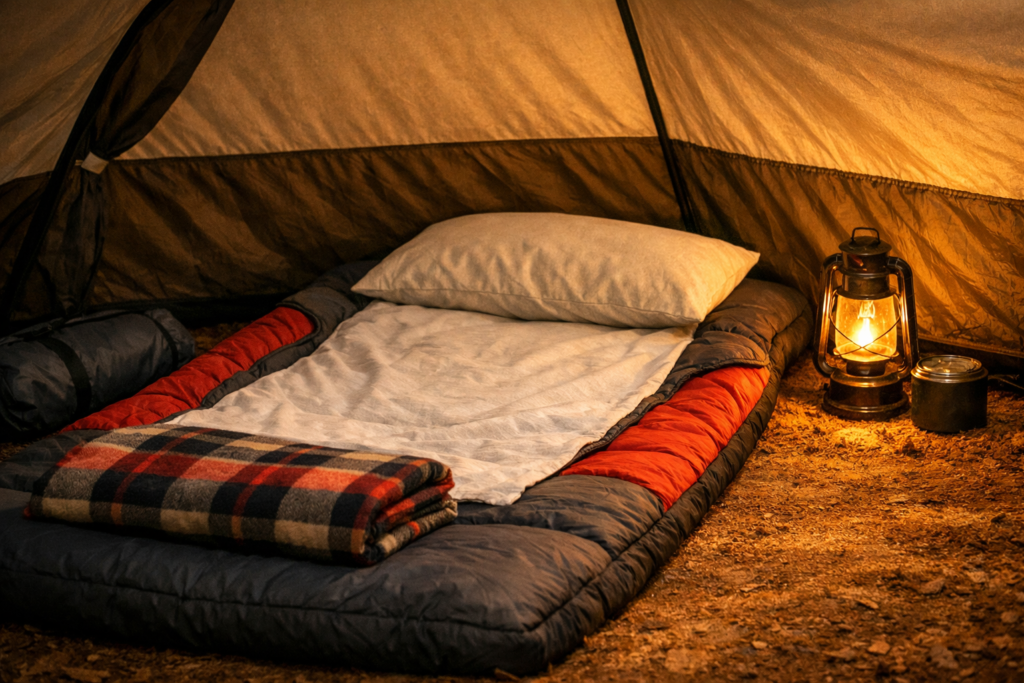
Sleeping Bag Liner — The Lightweight Upgrade Most Campers Skip
Above all, a sleeping bag liner is the single most underrated item in camping comfort. It adds 5-15 degrees of warmth to your sleeping bag rating, keeps your sleeping bag cleaner (meaning you wash the liner, not the bag), and adds a layer of familiar comfort that significantly improves sleep quality for many campers. Silk liners are the luxury option — incredibly soft and packable. For everyday use, cotton liners are affordable and genuinely comfortable.
When warmth is the priority, thermal fleece liners provide the greatest temperature boost.
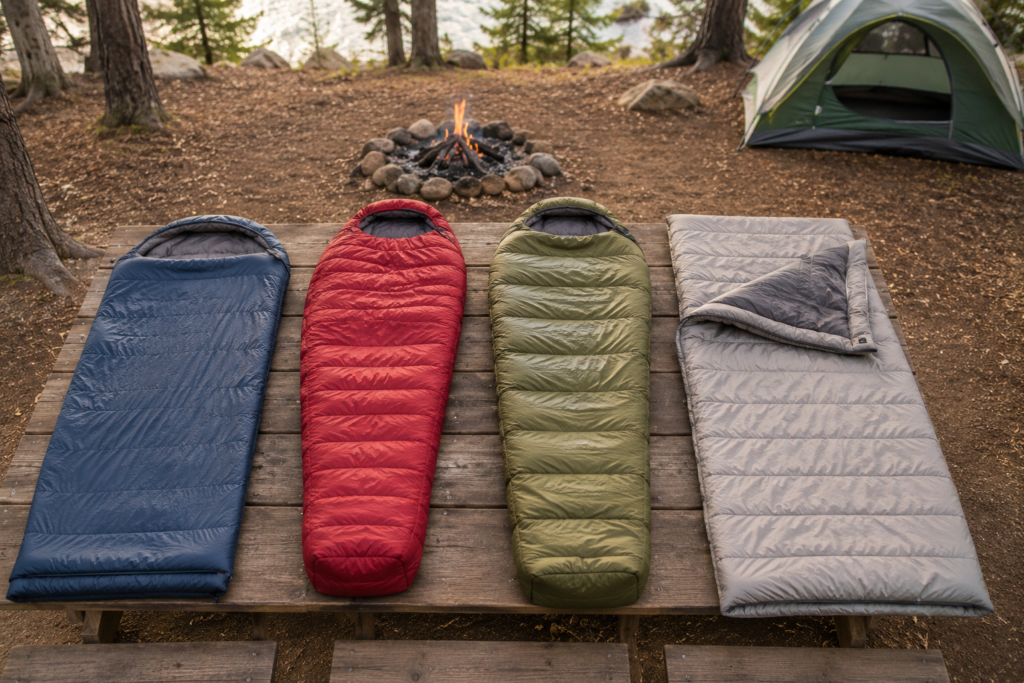
- Sleeping bag rated for your expected low temperature — always go a few degrees lower than the forecast to be safe
- Sleeping bag liner — adds warmth and keeps your bag clean. Silk, cotton, or thermal fleece depending on budget and conditions
- Real pillow from home — camping forums are unanimous on this. Inflatable camping pillows are better than nothing but significantly worse than a real pillow. If space allows, bring one from home
- Extra camping blanket — provides adjustable warmth that a sleeping bag cannot. Doubles as comfortable daytime seating
- Microfiber or bamboo sheet — for warm-weather camping, a cool breathable sheet beats a sleeping bag entirely. Microfiber dries quickly even in humid conditions
THE ONE CAMPING BED UPGRADE WORTH EVERY PENNY
A quality self-inflating sleeping pad with an R-value of 3+ is the single best upgrade most campers can make to their sleep system. Most people already have a reasonable sleeping bag. Very few have a sleeping pad that is actually rated for the conditions. Fix the pad first. Everything else can wait.
Tent Organization Tips: How to Zone Your Tent Interior for Maximum Comfort
A cluttered tent is a stressful tent. You cannot find anything, you trip over everything, and nothing feels comfortable when you are wading through a pile of gear to find your toothbrush at midnight. The solution is simple: zones. Designating a specific purpose to each area is the fastest way to turn any tent into a comfortable tent interior — before you unpack a single item.
Creating a Mudroom Area at Your Tent Entrance
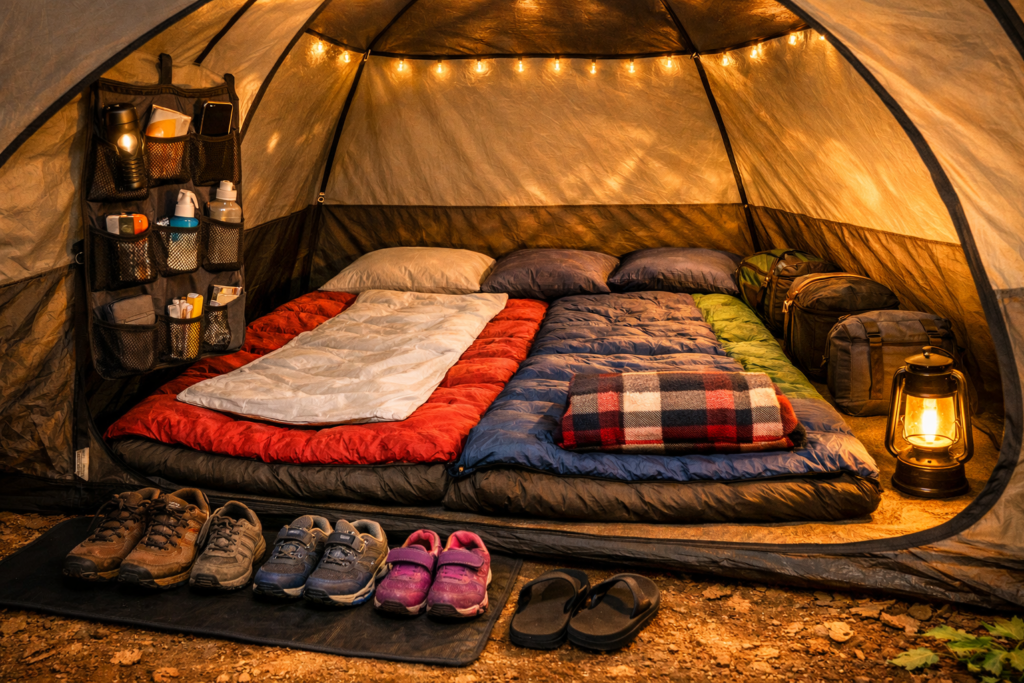
The tent entrance is the most important zone to get right. This is where outside meets inside — where mud, sand, wet footwear, and rain gear either stay out of your sleeping area or end up all over it. A small tarp or waterproof mat just inside the door creates a clear ‘shoes off here’ zone that keeps the rest of the tent clean and dry. Keep umbrellas, wet jackets, and muddy boots in this zone only.
Storage Zones Inside the Tent
- Hanging shoe organiser on tent wall — the most consistently praised camping organisation hack in outdoor forums. Holds torches, phones, sunscreen, lip balm, keys, small snacks, and any small items that would otherwise disappear into the depths of your bag. Takes up almost no space and keeps essentials within arm’s reach from your sleeping bag
- Collapsible storage bins — one per person or one per category (clothing, cooking, first aid). Keeps everything contained and accessible without searching through main bags
- Compression sacks for clothing — reduce clothing bulk by up to 70%. Double as improvised pillows or seat cushioning when not in use
- Gear loft — a mesh hammock that clips to the ceiling loops of most tents. Stores light items — maps, sunglasses, phones — above sleeping level and out of the way
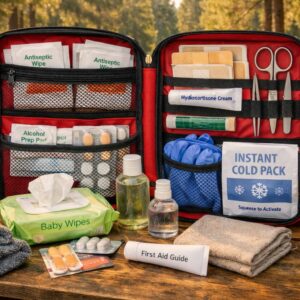
- Clear ziplock bags for small categories — medications, chargers, headlamp batteries. Visible, organised, waterproof
THE RULE THAT KEEPS TENTS TIDY
Everything that is not in use goes into its designated bag or bin. Not on the floor. Not on the sleeping bag. Not ‘just for now.’ Tidy at setup time means tidy the whole trip. It takes one evening of discipline to set the standard that the rest of the trip follows.
Need a full packing list to complement your tent organization system? Our [complete camping checklist for new campers] covers every item category from shelter to cooking to safety.
Tent Lighting Ideas That Set the Perfect Mood
Lighting is the single most underestimated element of tent comfort. Get it right and your tent feels warm, welcoming, and genuinely pleasant to spend time in. Get it wrong — one harsh overhead torch in the dark — and it feels like you are camping in a submarine. The secret is multiple light sources at different heights, just like a comfortable room at home.
Overhead and Ambient Lighting in Your Tent
Warm White vs Cool White Lights — Which Creates the Cosiest Tent
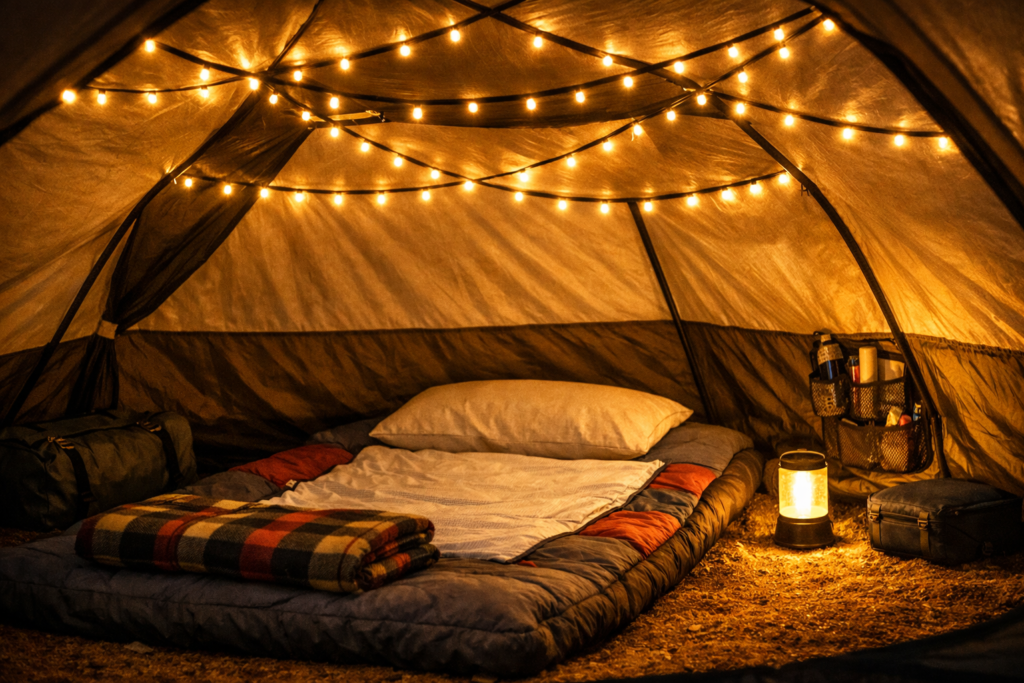
Warm white lights (2700-3000K colour temperature) create the soft, golden glow that makes a tent feel cosy and relaxing. Cool white or daylight lights (5000-6500K) are brighter and more clinical — better for task lighting than atmosphere. For ambience, always choose warm white. Your tent will feel like a different place entirely.
- Battery-powered string lights — the single most transformative lighting item for tent comfort. Drape along ceiling loops in a criss-cross pattern or create a canopy effect overhead. LED versions last a full weekend on one battery set. Choose warm white for the cosiest feel
- Multiple lanterns rather than one — use two or three lanterns at different points in the tent rather than one central light. This creates lighting zones and eliminates the harsh single-source effect. Strategic placement near the sleeping area, the storage zone, and the entrance creates a genuinely comfortable interior
- Solar lanterns — charge during the day outside the tent, provide clean light all evening. A brilliant eco-friendly choice for multi-day trips
- Headlamps on ceiling loops — clipping a headlamp to the interior ceiling loops of a tent and pointing it upward creates excellent diffused overhead lighting. A simple hack that every experienced camper knows
Task Lighting and Night Safety
- Battery-powered camping candles — provide warm flickering light that feels genuinely atmospheric, with zero fire risk. Perfect for card games and evening reading
- LED strip lights along doorways — add a practical glow that makes navigating at night much safer. Particularly useful with children
- Colour-changing options — for families with kids, colour-changing string lights double as a night light and reduce eye strain for children getting ready for sleep
- Clip-on book lights — for reading in the sleeping bag without disturbing a tent partner
Tent Temperature Control: Staying Warm in Winter and Cool in Summer
Temperature is the make-or-break factor in tent comfort — and the one most campers underestimate going in both directions. Too hot and you cannot sleep. Too cold and you definitely cannot sleep. Getting temperature management right means you sleep comfortably in almost any conditions.
Keeping Warm in Cold Weather
The Hot Water Bottle Trick That Experienced Campers Swear By
Here is the trick that experienced campers use and beginners have no idea about: fill a standard hot water bottle with boiling water, seal it, and place it at the foot of your sleeping bag 15 minutes before you get in. By the time you climb in, your sleeping bag is pre-warmed and the hot water bottle continues radiating heat for hours. It weighs almost nothing, costs nothing, and makes a cold night considerably more manageable.
- Pre-warm your sleeping bag with a hot water bottle — place it at the foot of the bag 15 minutes before bedtime. This single trick makes cold nights dramatically more comfortable
- Wear a warm hat to sleep — a significant amount of body heat escapes through the head even inside a sleeping bag. A warm hat adds noticeable warmth
- Use thermal camping curtains in larger tents — they separate the sleeping area from the rest of the tent and significantly reduce the volume of air your body heat needs to warm
- Safe tent heater — for genuinely cold camping, a propane heater rated for indoor tent use is an option. Always ensure proper ventilation and follow all safety guidelines. Never use standard outdoor heaters inside a tent
- Eat a warm meal close to bedtime — your body generates heat through digestion. A warm dinner and a hot drink before sleep provides natural warmth for the first few hours
Staying Cool in Hot Weather
- Choose a tent with a dark inner — some modern tents feature light-blocking inner fabric that keeps the interior significantly cooler during peak sun hours. Brilliant for camping with children who nap midday
- Use a battery-powered tent fan — positioned near a mesh panel it creates airflow that makes a real difference in a warm tent. USB rechargeable fans that clip to tent poles are the current forum favourite
- Reflective tarps over the tent — a space blanket or reflective tarp rigged above your tent blocks a significant amount of solar heat absorption
- Open all vents and mesh panels — maximum ventilation is always the priority in warm conditions
- Cooling towels and spray bottles — for immediate personal cooling before sleep
- Avoid dark colours if buying a new tent — lighter coloured tents absorb less heat during the day
: For a deep-dive guide specifically on hot weather tent camping, our [ultimate guide to cooling your tent] covers every summer camping technique in detail.
Making Your Tent Feel Like Home: The Comfort Extras That Make All the Difference
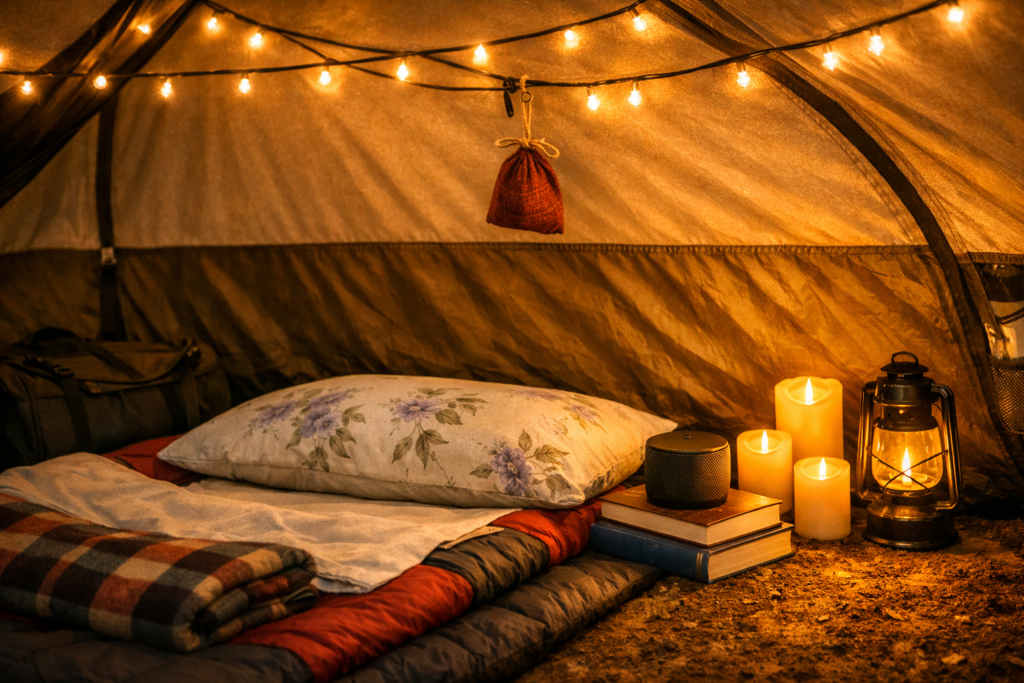
This is where camping stops being about survival and starts being about enjoyment. The practical elements — the sleep system, the organization, the lighting — create the foundation of a comfortable tent interior. The personal touches create the atmosphere. And it is the atmosphere that makes you look up from your camp chair at the end of the day, look around at your tent, and think: this is actually lovely.
- Favourite pillow or comfort blanket from home — the single most consistent recommendation across camping forums. Familiar comfort items make an enormous psychological difference to sleep quality in an unfamiliar environment
- Portable camping table — the unsung hero of tent comfort. A small folding table inside or just outside the tent door creates a space for coffee, snacks, cards, and morning routines. People consistently say this is the item they did not know they needed until they had it
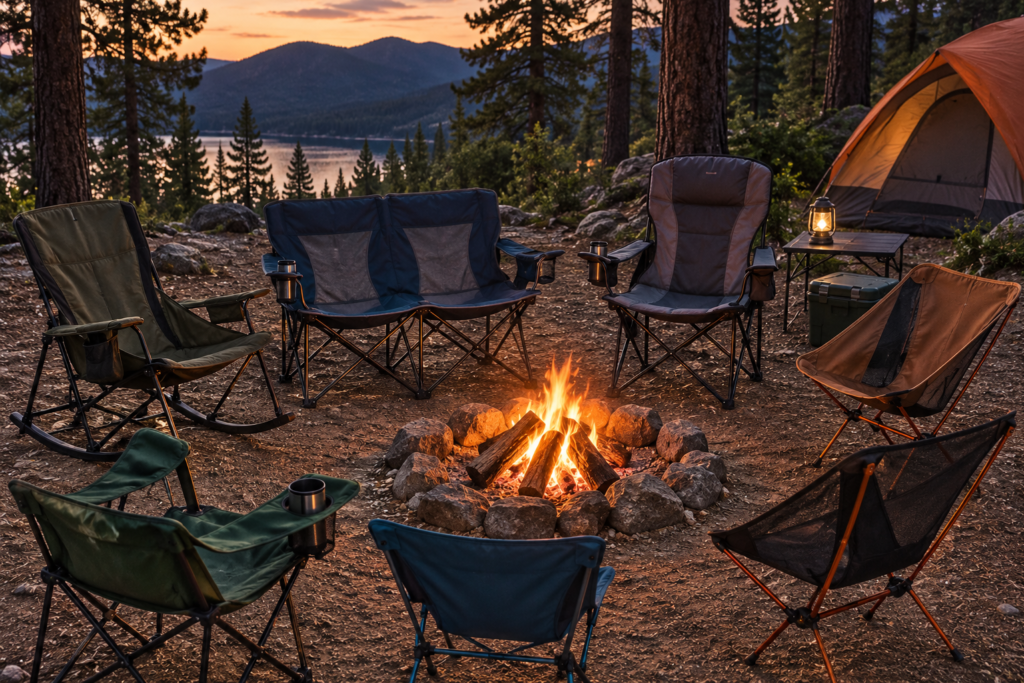
- Quality foldable camp chairs — especially for larger tents. Being able to sit properly in the tent on a rainy day rather than lying on the sleeping bag changes the whole dynamic
- Small Bluetooth speaker — background music completely transforms the atmosphere at camp. Position it centrally for even sound distribution. Folk, jazz, or gentle acoustic music has become the unofficial soundtrack of comfortable camping everywhere
- Cedar sachets or natural camping air fresheners — bring familiar scents from home. This small, almost silly-sounding touch creates a powerful sense of comfort and familiarity in a new environment. Cedar also naturally repels insects
- Inflatable camping furniture — modern inflatable loungers and sofa-style pieces have improved dramatically. For family camping they create a relaxation zone that kids in particular love
Scent, Sound, and Personalization
Do not underestimate the power of scent and sound in creating a comfortable environment. The camping forums are full of campers who swear by lavender sachets for better sleep, by the Bluetooth speaker as the item that transformed their camping experience, and by bringing one genuinely unnecessary personal item — a favourite mug, a specific tea, a particular book — that made the whole thing feel like their space rather than just a field.
Comfort is partly physical and partly psychological. You build the physical comfort with the sleep system, the flooring, and the temperature management. You build the psychological comfort with the personal touches. Both matter. Do not skip either.
Frequently Asked Questions About Comfortable Tent Camping
These are the questions campers ask most often about making tent interiors comfortable — answered directly and helpfully.
What is the most important thing for tent comfort?
Your sleeping surface — specifically your sleeping pad and its R-value. Cold comes from below in a tent, not just from the air around you. A sleeping pad with an adequate R-value for your conditions provides ground insulation that keeps you warm through the night. This is the number one comfort upgrade most campers have not made, and it makes a more noticeable difference than almost any other single item.
How do I make a tent warmer at night?
Layer your sleep system: a sleeping pad with appropriate R-value, a sleeping bag rated slightly below your expected low, and a sleeping bag liner. Wear a warm hat to sleep. Pre-warm your sleeping bag with a hot water bottle 15 minutes before getting in. Eat a warm meal close to bedtime. For cold camping specifically, use thermal curtains to partition the sleeping area and reduce the volume of air your body needs to heat.
How do I keep a tent organized on a long trip?
Create zones before you unpack: a sleeping zone, a storage zone, and a mudroom area at the entrance. Use a hanging shoe organiser on a tent wall for small essentials. Store clothing in compression sacks. Keep one bag per category (cooking, clothing, first aid) and return items to their category bag after every use. A rule of ‘nothing on the floor’ enforced on day one usually holds for the whole trip.
What lighting is best for inside a tent?
Multiple warm white light sources at different heights, rather than one harsh overhead light. Battery-powered string lights along the ceiling create the best ambient atmosphere. Supplement with one or two LED lanterns positioned near sleeping and seating zones. Warm white (2700-3000K) creates a cosy, relaxing glow. Cool white makes a tent feel clinical and bright — better for task lighting than atmosphere.
Can a tent really feel comfortable for multiple nights?
Absolutely — and many campers report finding their tent genuinely more restful than sleeping at home once the setup is right. The combination of physical tiredness from outdoor activity, genuinely fresh air, and the absence of blue-light screens creates excellent sleep conditions. The tent itself just needs the right sleep system, adequate insulation from the ground, darkness, and comfortable temperature. Get those four things right and multi-night tent camping becomes something to look forward to.
Your Tent, Your Sanctuary — Make It Count
Creating a comfortable tent interior does not require expensive gear, a van full of equipment, or years of camping experience. It requires intentional choices made before you leave home — the right sleeping pad, a plan for your zones, a string of lights, and a few personal touches that make the space feel like yours.
The campers who sleep brilliantly outdoors are not the ones with the most gear. They are the ones who have thought about what they actually need, organised it well, and set it up properly on arrival. That is genuinely achievable on any budget with any tent. Your outdoor sanctuary is waiting. Go build it.
If you are open to sleeping without a tent altogether, our [hammock camping beginners guide] might just change how you think about outdoor sleeping entirely.
Taking the family? Our [camping with kids guide] covers tent setup, sleeping arrangements, activities, and everything parents need for a comfortable family camping trip.
If all this has you wondering whether there is a more comfortable way to camp, our guide on how to plan a glamping trip covers the full picture — from choosing your site to what to pack and what to verify before you book.