Solo Camping Tips for Beginners: How to Plan, Prepare, and Actually Enjoy It
-
| Founder & Content Creator

Latest Posts
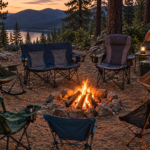
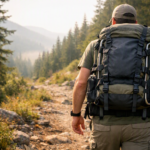
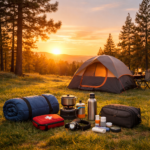
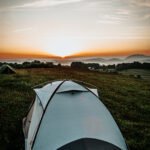
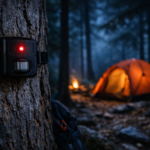
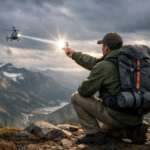
There is something that happens on your first solo camping trip that nobody quite prepares you for. At some point — usually in the early evening, when the camp is set up and dinner is done and it gets genuinely quiet — you realise that there is nobody to talk to, nobody to make decisions with, nobody to reassure you that the sound in the undergrowth is almost certainly nothing.
And then, after a few minutes of this, something else happens. You start to feel completely fine. Then, gradually, something that feels remarkably like freedom.
These solo camping tips for beginners are built around that experience — getting you ready for the first trip so that you spend less time anxious and more time discovering what solo camping actually feels like. Which is, for most people, considerably better than expected.
According to The Dyrt’s 2024 Camping Report, solo camping grew to 30.6% of all camping trips last year — up from just 18.8% in 2021. The solo camping trend is real, it is growing, and the people driving it are not extreme adventurers. They are people exactly like you, trying it for the first time.
Why Solo Camping Is Having a Moment — and Why You Should Try It
Solo camping has grown faster than almost any other outdoor activity in the last three years. The reasons are not hard to understand: you go where you want, when you want, at whatever pace suits you. Nobody else’s schedule, nobody else’s food preferences, nobody else’s bedtime. The campfire conversation is optional. The silence is not.
Beyond the freedom, solo camping does something to your sense of capability that group camping simply does not. When you set up camp alone, cook your own food, navigate your own route, and manage whatever the day brings — you carry all of that back home with you. Most solo campers describe it as one of the more quietly powerful experiences they have had outdoors. The wilderness has a way of showing you what you are made of, and when you are alone, there is nothing to distract from the discovery.
SOLO CAMPING BY THE NUMBERS: Solo camping’s share of all camping trips grew from 18.8% in 2021 to 30.6% in 2024 according to The Dyrt’s annual report. The fastest growing demographic? Women aged 30-50. Solo camping is no longer a niche pursuit for experienced wilderness folk. It is something that millions of first-timers are trying every year — and the vast majority of them come back and book the next one.
Start Smart: Choosing Your First Solo Camping Destination
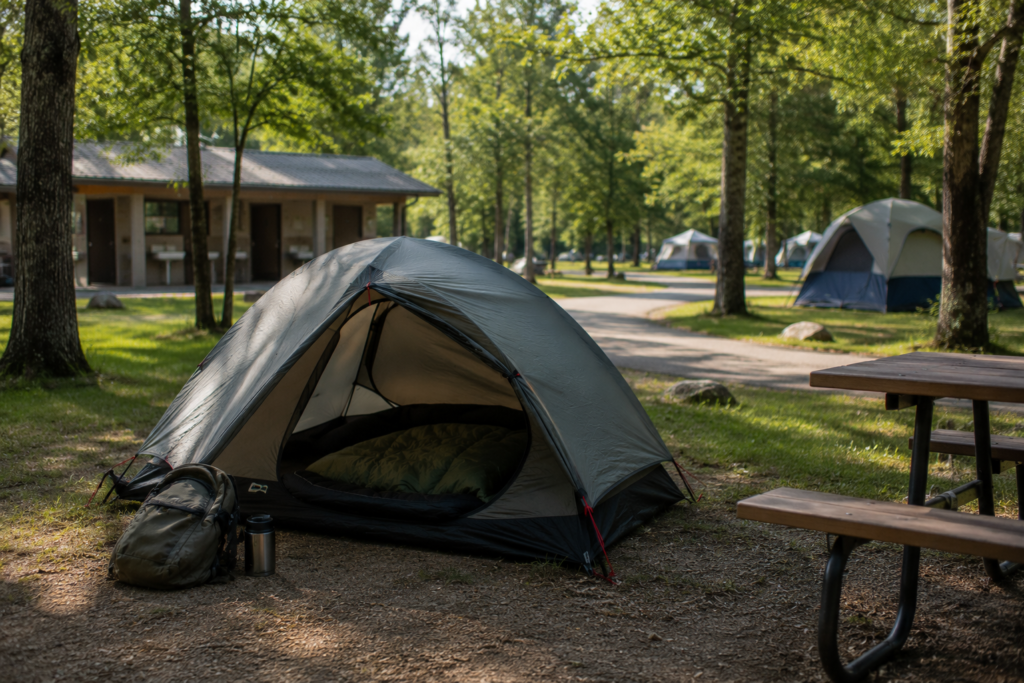
The single biggest factor in whether a first solo camping trip becomes a confidence-building success or an anxiety-inducing ordeal is not your gear, your fitness, or your experience level. It is where you choose to go.
Begin With Familiar Ground, Not the Backcountry
Every experienced solo camping tips resource says the same thing — and they are right: choose somewhere familiar for your first trip. Not the most remote wilderness you can find. Not the toughest trail. Somewhere you have been before, or a well-established campground close enough to home that if you genuinely cannot sleep and decide at 11pm that you are done, you can be home by midnight.
This is not timidity. It is intelligence. The goal of your first solo trip is to get comfortable with the experience of being alone at camp — with the sounds, the setup, the evening, the night. Adding the stress of genuinely remote terrain to that learning process makes everything harder. Start close. Build from there.
- Choose a campground or trail you have used before with other people if possible
- A well-trafficked trail means you are rarely completely alone — other tents in the distance offer genuine peace of mind
- Established campgrounds with facilities — toilets, running water, a camp host — reduce the variables significantly for a first solo trip
- Car camping is an excellent first step: you have your vehicle, more kit, and the option to leave if you need to
- Save the remote permit-required wilderness for when you have a few solo nights under your belt
What to Research Before You Go
Knowing your destination thoroughly is one of the most underrated solo camping safety measures available. The more you know before you arrive, the less you have to figure out under pressure.
- Terrain and trail difficulty: read recent trip reports from other campers, not just the official trail description
- Weather forecast specific to your elevation — use Mountain Forecast or Weather Underground for location-specific data rather than general area forecasts
- Water sources: identify every reliable water source on your route and mark them on your offline map
- Wildlife: know what animals are active in your area and what bear or food storage requirements apply
- Emergency access: know the nearest road, nearest town, and nearest ranger station before you leave
- Apps to use: AllTrails for trail conditions and recent reviews, Gaia GPS for offline route planning, WTA (Washington Trails Association) for detailed trail descriptions
Car Camping vs Backpacking: The Right Choice for Your First Solo Trip
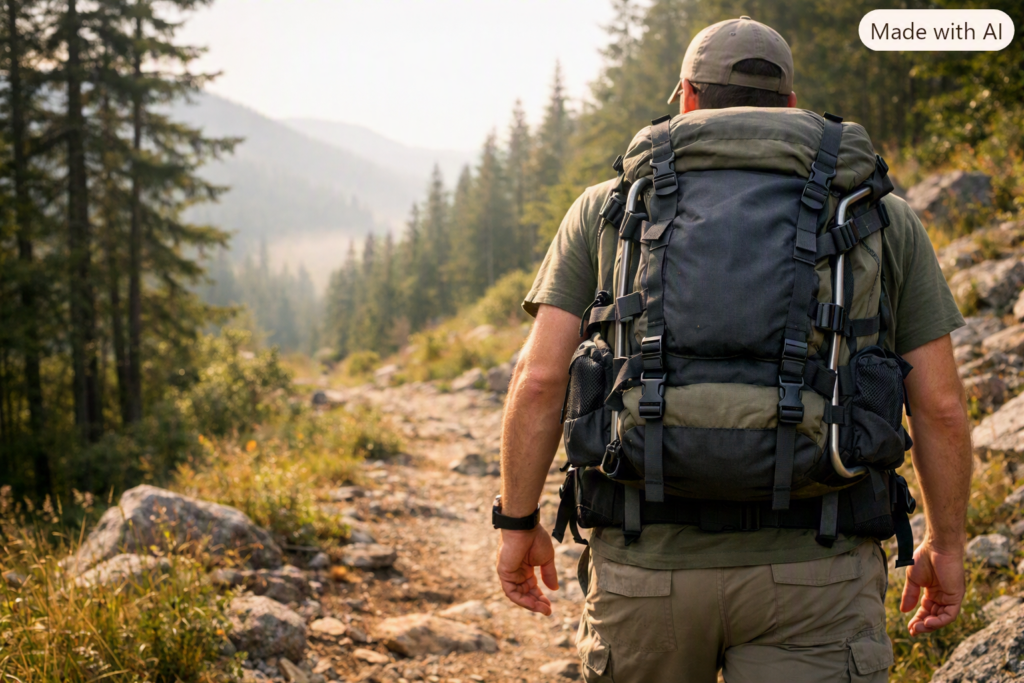
If you are new to solo camping and trying to decide between car camping and backpacking in for the first time — choose car camping. Car camping means driving to a campsite and pitching your tent there, rather than hiking in with everything on your back. Weight is not a constraint. You have your vehicle if you need to leave. And the learning focus is on the solo experience itself rather than simultaneously managing a backpack and navigation.
Backpacking solo is a great experience — but it is a lot to take on at once when you are still getting used to being alone at camp. Learn to enjoy the solo part first. The backpacking can wait for trip two.
Solo Camping Gear That Actually Makes a Difference
Solo camping gear is not dramatically different from regular camping gear — but there are some specific considerations that matter more when you are on your own.
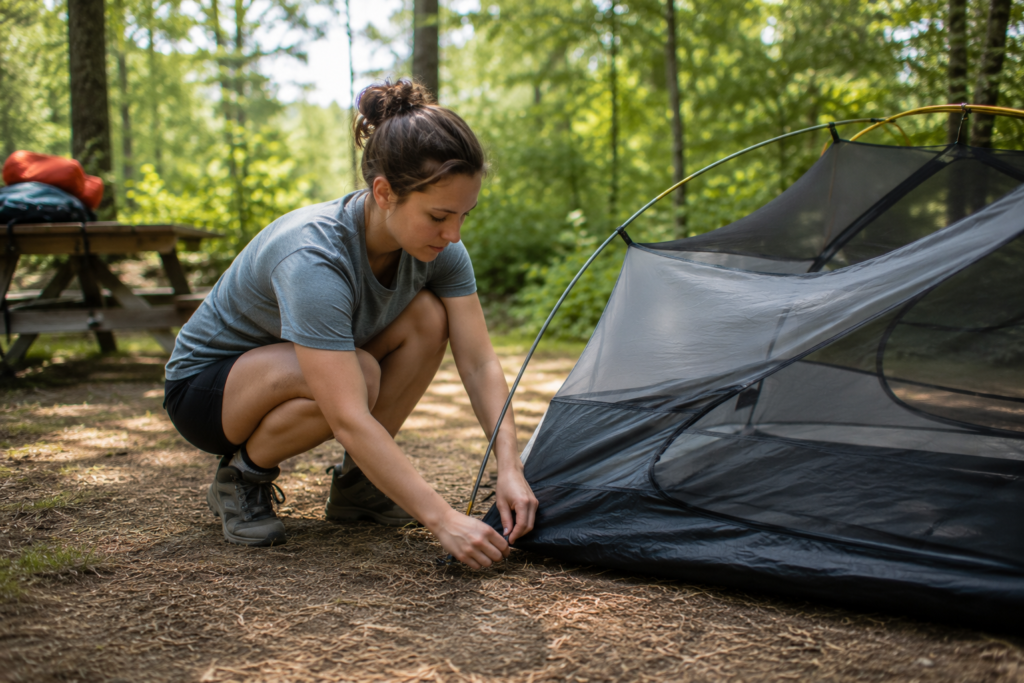
Before you start adding solo-specific items, make sure your baseline camping fundamentals are covered — our complete camping checklist for new campers gives you the foundation to build from.
The Right Tent for Solo Camping
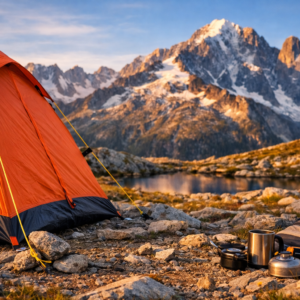
Most experienced solo campers recommend a two-person tent rather than a one-person tent for solo trips — and the reasoning is practical rather than extravagant. A two-person tent gives you room to sit up comfortably, space to keep your gear inside and dry, and a more comfortable night overall. The weight difference between a quality one-person and two-person tent is often minimal.
- Freestanding design: essential for solo camping — you cannot rely on trees or rocks to pitch a non-freestanding shelter alone
- Practise pitching your tent alone at home before the trip — in daylight, then in the dark. Arriving at camp in fading light unable to set up your tent is a genuinely unpleasant experience that one practice session entirely prevents.
- Waterproof rating of at least 2000mm hydrostatic head — weather changes faster and more dramatically in nature than forecasts suggest
- A tent with a vestibule: this covered entrance area lets you take off wet boots and store gear without bringing it all inside. Invaluable on a solo trip where organisation is entirely your responsibility.
Pitching a tent alone requires a slightly different approach than pitching with help — our how to pitch a tent guide covers the solo setup technique including staking before raising.
Sleep System: The Investment That Determines Your Night
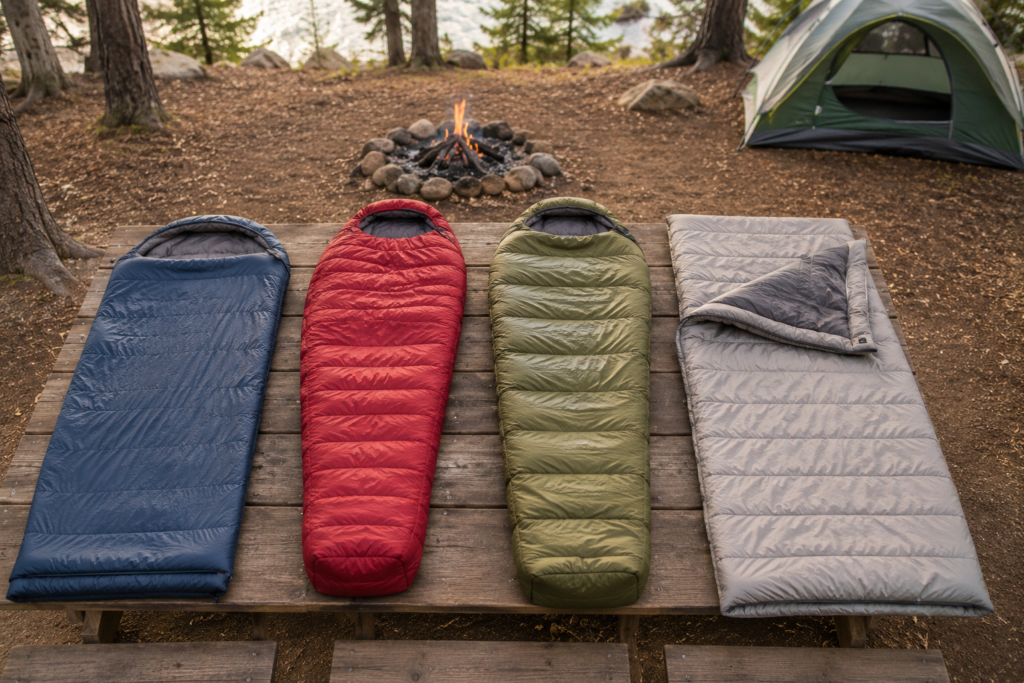
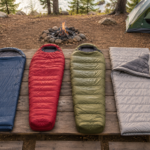
A bad night’s sleep on a solo camping trip does more damage to morale than almost any other single factor. Choose your sleeping bag and sleeping pad with the same care you give to choosing your tent.
- Sleeping bag temperature rating: choose one rated at least 5°C colder than the lowest temperature you expect — you will sleep better with a bit of margin than you will lying cold in a bag that is borderline
- Down vs synthetic: down is lighter and more compressible, synthetic retains warmth when wet. For solo camping where you cannot share a shelter if conditions get damp, a synthetic or hydrophobic down bag is the more reliable choice
- Sleeping pad R-value: minimum 3.5 for three-season camping. Cold rises from the ground faster than it falls from the air — a warm sleeping bag on a poor pad is a cold night.
- Earplugs: not obvious but genuinely useful. Forest and campsite sounds at night are unfamiliar and can feel alarming. Earplugs take the edge off without cutting out sound completely.
Navigation: The Non-Negotiable You Cannot Wing
When you are camping solo, nobody else is holding the map. Navigation is entirely your responsibility — which means you need to be more prepared than you would be in a group.
- Download offline maps for your specific area before you lose signal — apps like Gaia GPS or AllTrails allow this
- Carry a physical topographic map as backup — GPS devices fail, phone batteries die, paper does not
- Know how to take and follow a compass bearing — a 10-minute practice at home is all most people need for basic navigation
- Headtorch with fresh batteries: navigation in the dark solo is significantly more stressful than in a group — be prepared for it
- Share your route: take a photo of your trail map and send it to your emergency contact before you lose signal
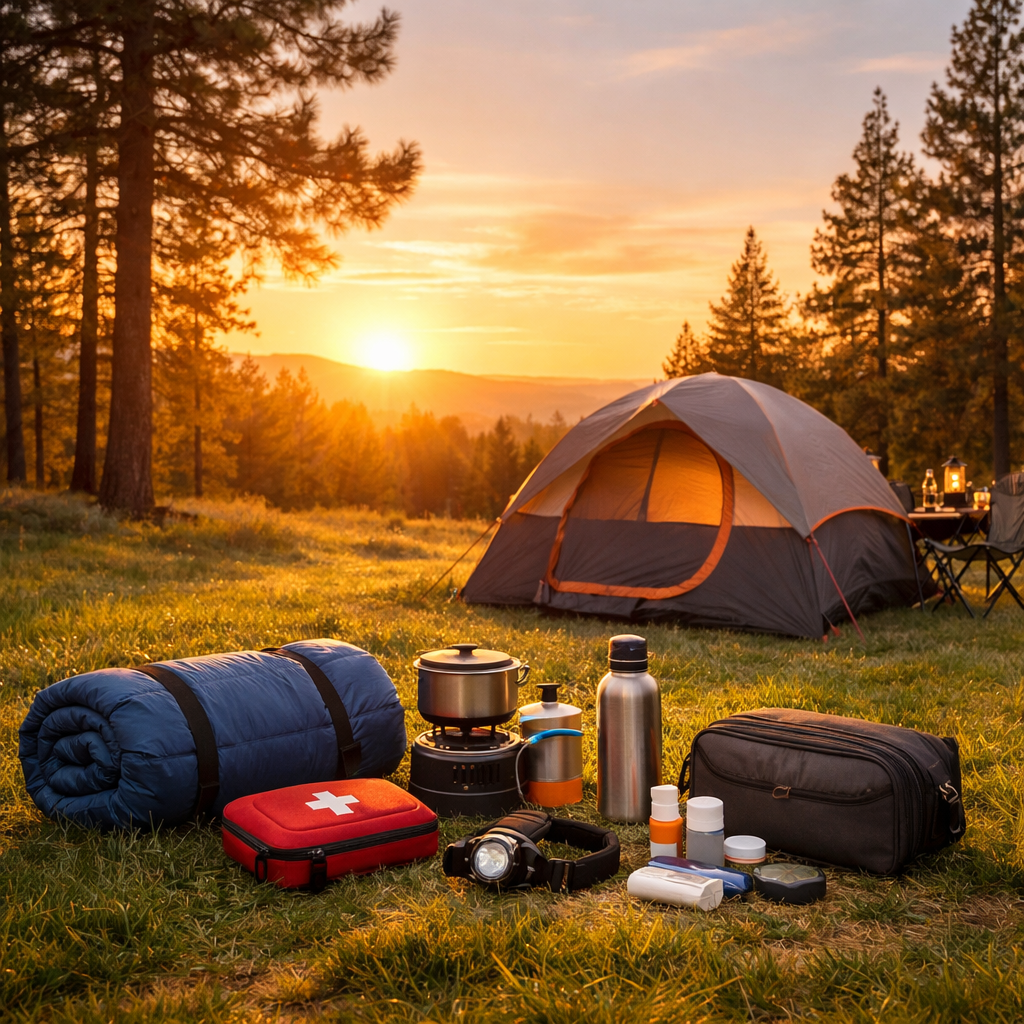
Solo Camping Checklist at a Glance
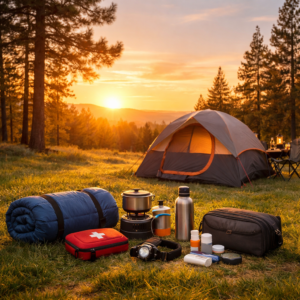
- Shelter: tent with a vestibule, groundsheet, tent pegs
- Sleep system: sleeping bag (rated 5°C colder than expected), sleeping pad (R-value 3.5+)
- Navigation: offline map downloaded, physical topo map, compass, GPS device
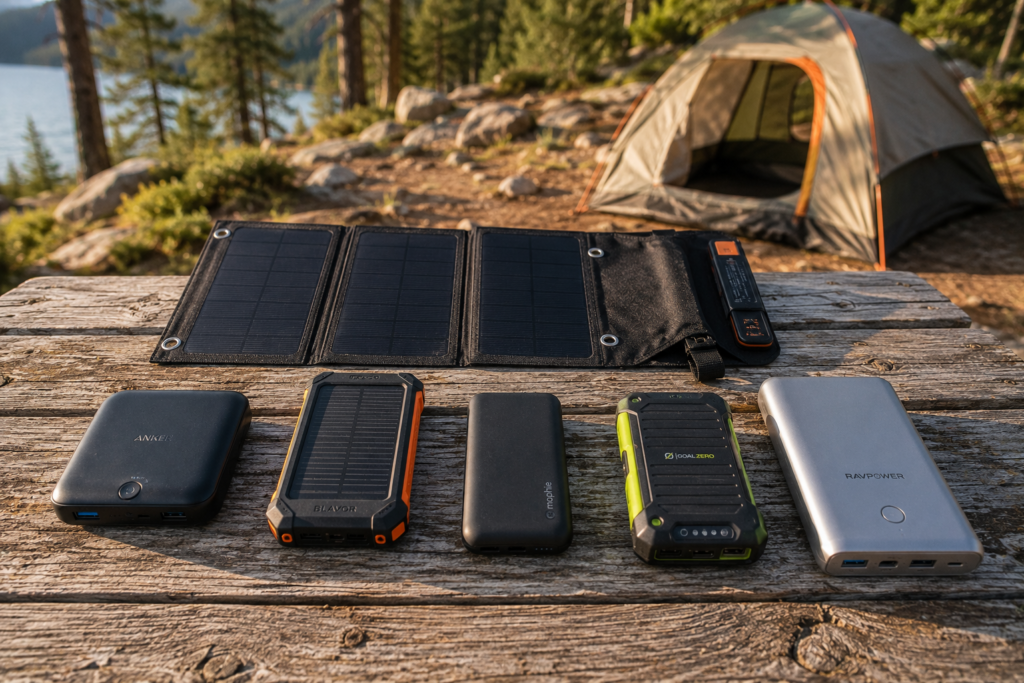
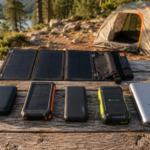
- Communication and safety: satellite communicator or PLB, fully charged phone, portable power bank, whistle
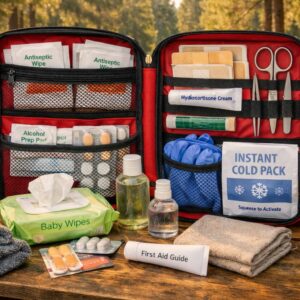
- First aid kit: comprehensive, including personal medications
- Water: 2L minimum, filter or purification tablets, Aquamira drops as backup
- Food: 3 days of supplies minimum, camp stove and fuel, pot, utensils, biodegradable soap
- Clothing: layering system (base, mid, waterproof shell), spare dry base layers, warm hat and gloves
- Lighting: headtorch with spare batteries, lighter and matches in separate waterproof bags
- Tools: multi-tool or knife, duct tape, cord/paracord
- Comfort and morale: journal, book, camera, something small that makes you happy
Stove selection matters more at altitude — our best compact camping stoves guide covers cold weather performance, pressure regulator advantages, and which stoves handle mountain conditions best.
Solo Camping Safety: How to Plan for Everything and Panic About Nothing
Solo camping safety is not about being fearful — it is about being prepared to the point where fear has nowhere to take hold. The campers who feel most secure alone in the wilderness are not the ones with the most experience. They are the ones with the best plan.
Tell Someone Exactly Where You Are Going
This is the most important first time solo camping safety measure and it costs nothing. Before every solo trip, leave a detailed trip plan with someone you trust — someone who is not coming with you and who will actually act on it if you do not return.
- Trailhead name and location, or campground name and pitch number
- Planned route — ideally with a photo of your map sent to them before you lose signal
- Expected return date and time
- Vehicle description and registration
- Who to call and when if they do not hear from you — specify the action (call the park ranger station, not the emergency services, unless you are overdue by more than 24 hours)
Set up a check-in schedule — a text at agreed times each day if you have signal. Agree in advance what your contact should do if a check-in is missed. This structure means that even in a worst-case scenario, help is coming in a defined timeframe.
Satellite Communicators and PLBs: Your Emergency Lifeline
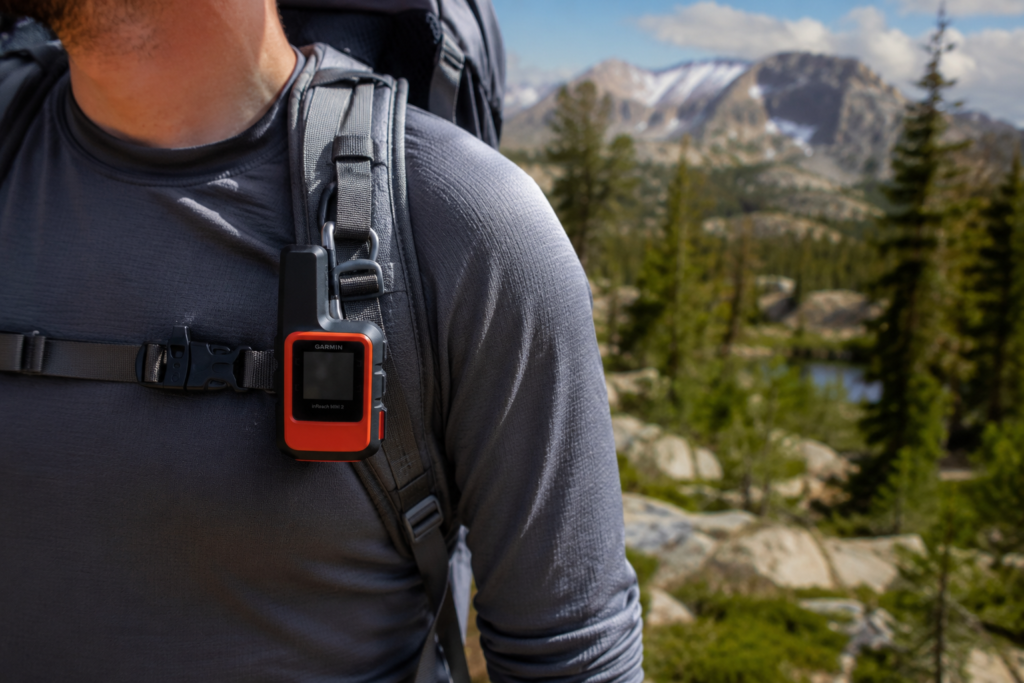
If you camp in areas where mobile signal is unreliable or absent — which describes most genuinely wild camping — a satellite communicator is the most important safety investment you can make. Unlike mobile phones, satellite communicators connect directly to satellites and work from virtually anywhere on Earth.
- Garmin inReach Mini 2: Two-way messaging, SOS, and GPS tracking. Sends your location to your emergency contact. The gold standard for solo wilderness camping.
- SPOT X: Two-way satellite messaging and SOS. Good value for regular solo campers.
- PLB (Personal Locator Beacon): One-way SOS only — no messaging — but extremely reliable, no subscription fee, and triggers rescue services with your GPS coordinates. Register before use with NOAA or COSPAS-SARSAT.
Knowing what to do if you get disoriented is as important as knowing how to use your satellite communicator — our emergency signaling tips for lost campers guide covers the full range of signaling methods, including what SAR teams are actually looking for.
Solo camping makes emergency planning more critical than group camping — our wilderness emergency evacuation guide covers evacuation planning, go-bag preparation, and what to do when you cannot leave on your own.
Wildlife Awareness When You Are Alone
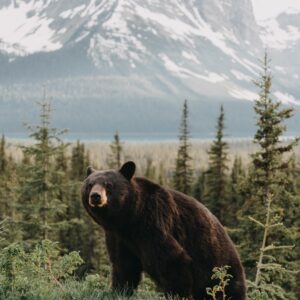
Solo camping in wildlife-rich environments means there is no partner to share watch with, no second opinion on what that sound was, and no one to help if a wildlife encounter escalates. This makes preparation more important, not more frightening.
- Store food correctly: bear canister or PCT hang method, 200 feet from your tent. This single habit prevents the vast majority of wildlife issues at camp.
- Cook and eat away from your sleeping area — 200 feet is the standard guideline
- Make noise on the trail: a bear bell, talking to yourself, or singing quietly signals your presence to animals before the encounter rather than during it
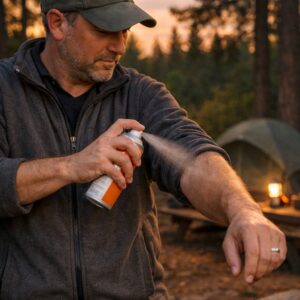
- Bear spray: carry it accessible — on your hip, not in your pack — in bear country
- Know what animals are active in your specific area before you go, not after you arrive
When you are alone, wildlife encounters require a different kind of calm — our wildlife safety while camping guide covers how to read animal behaviour, store food correctly, and respond without panicking.
Solo Female Camping Safety: The Specific Advice Worth Having
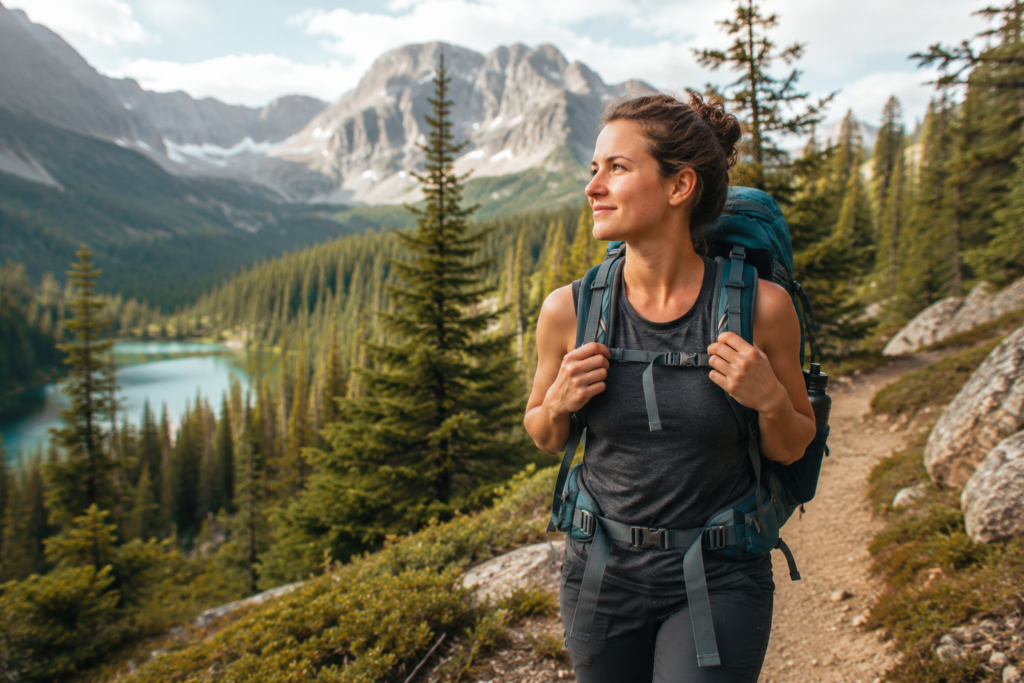
Women are the fastest growing demographic in solo camping — The Dyrt’s 2024 report identifies women aged 30-50 as the primary driver of solo camping growth. Solo female camping is genuinely safe and genuinely rewarding. It also comes with some specific safety considerations worth addressing directly.
- Campsite selection matters more for solo female campers: choose a site with good sightlines and visibility, not a hidden corner. Being visible to the camp community is a safety asset.
- Trust your instincts without second-guessing: if a person, a campsite, or a situation feels wrong, leave. You do not owe anyone an explanation.
- A personal safety alarm on your person is useful — 130dB is genuinely startling at close range
- A satellite communicator makes solo female camping significantly safer in remote areas — the ability to call for help from anywhere provides real peace of mind
- Tell people you are meeting someone at the campsite if it feels safer — white lies for personal safety are always acceptable
- Online communities like r/solocamping and r/womenoutdoors are excellent resources for site-specific advice and peer recommendations from people with direct experience
The Fear Factor: Handling the Anxiety of Being Alone in the Dark
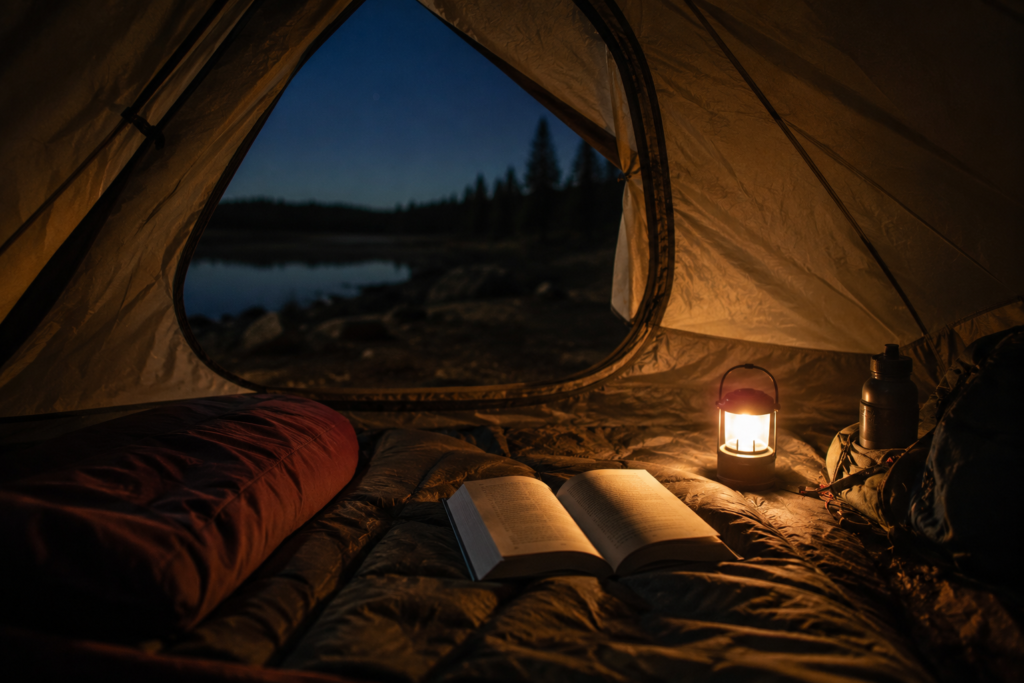
Every honest solo camping guide addresses this, and the honest truth is: almost everyone who has camped alone has experienced fear in the dark. It is a normal biological response to an unfamiliar situation. The sounds are different, the darkness is more complete than at home, and your brain is very good at generating reasons to be concerned about nothing.
The good news is that the fear almost always passes — and when it does, what replaces it is something that feels remarkably like confidence.
Why the First Night Is Always the Hardest
Almost every solo camper finds the first night harder than the second. Not because the second night is safer — it is exactly as safe — but because your brain has had one night to learn the sounds. The twig snap that had you wide awake at 2am on night one barely registers on night two.
Knowing this before you go helps more than you might expect. You are not scared because something is wrong. You are scared because something is new. That is a very different thing — and remembering the difference in the moment is one of the most useful things a first-time solo camper can know.
The sound that wakes you at 2am on your first solo camping trip is almost certainly a small animal doing something entirely ordinary. Squirrels, in particular, are dramatically disproportionate to their size in terms of the alarm they generate. Nobody has ever been harmed by a squirrel investigating their camp at night. They are, however, responsible for a significant percentage of unwarranted solo camping anxiety.
What Experienced Solo Campers Do When Fear Hits
The techniques that actually help when anxiety arrives at camp are simple and practical:
- Remind yourself of your preparation: You told someone where you are. You have a satellite communicator. You stored your food correctly. You have a first aid kit. Run through the list. Preparation is the antidote to fear.
- Slow your breathing: Box breathing — four counts in, hold four, out four, hold four — is evidence-based for reducing acute anxiety and takes about three minutes to produce a noticeable effect.
- Turn on a light: Darkness amplifies fear. A lamp or headtorch set to a comfortable level makes the inside of your tent feel manageable even when the outside feels uncertain.
- Focus on something: A book, a podcast, a journal entry. Giving your brain a task interrupts the anxiety loop more effectively than trying to think your way out of it.
- Remember that anxiety diminishes with experience: The second night is better than the first. The second trip is better than the first trip. Every solo night you complete builds a library of evidence that you are fine.
Solo Camping Food: Simple, Satisfying, and Entirely Yours
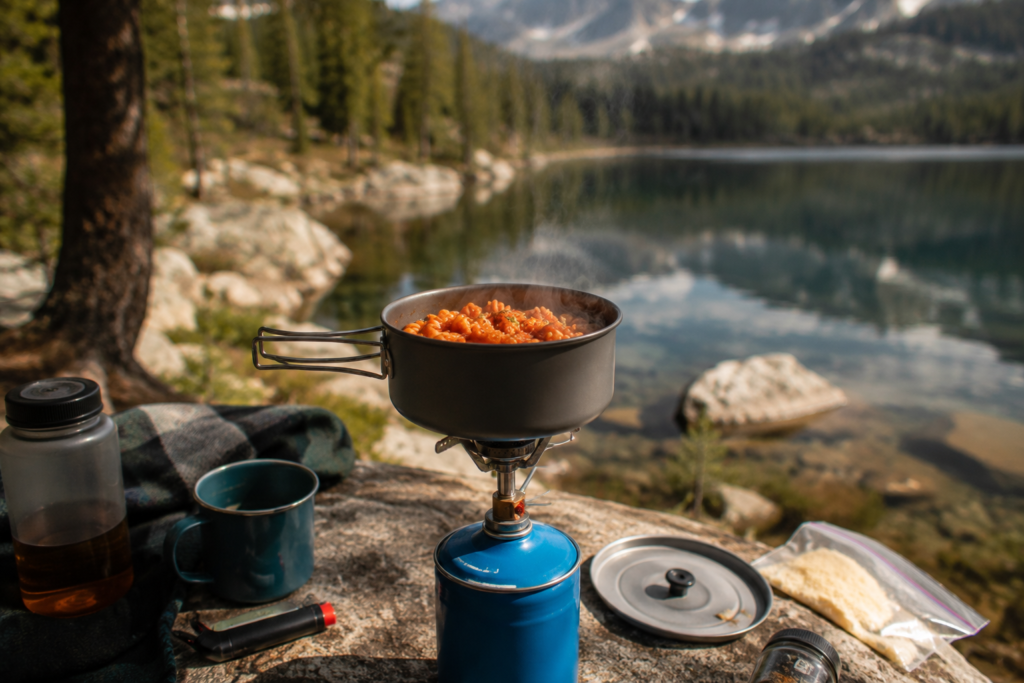
Cooking for yourself is one of the genuine pleasures of solo camping — no compromise on what to eat, when to eat it, or how much effort to put in. The cooking-for-one constraint is actually a creative advantage.
- Dehydrated and freeze-dried meals: The lightest and most convenient option for solo backpacking. Add boiling water and wait. Quality has improved dramatically — these are genuinely good now.
- One-pot meals: Pasta, rice, ramen, couscous — minimal washing up, satisfying, and infinitely customisable with what you can carry.
- High-calorie snacks: Trail mix, nut butter sachets, energy bars, dried fruit. Eat more than you think you need on active days. Solo camping burns more energy than most people expect.
- The one indulgence rule: Pack one food item that is purely about enjoyment rather than nutrition. Good coffee, a favourite chocolate bar, a packet of something you love. Morale at camp matters.
Water planning for solo camping: carry at least 2 litres between reliable water sources and treat all natural water sources.
Every drop of water used for cooking or drinking in the wilderness should be treated — our guide to purifying water in the wilderness covers every method from squeeze filters to UV purifiers so you can choose the right one for your trip.
Beating Loneliness and Making the Most of the Solitude
Loneliness is the thing most people worry about before a solo camping trip for beginners. It is also the thing most people are surprised by once they are there. True loneliness — the aching, uncomfortable kind — is rarer than expected in nature. What you find instead is something closer to solitude: a quiet, spacious feeling that is most commonly described as peaceful.
Activities That Make Solo Time Genuinely Enjoyable
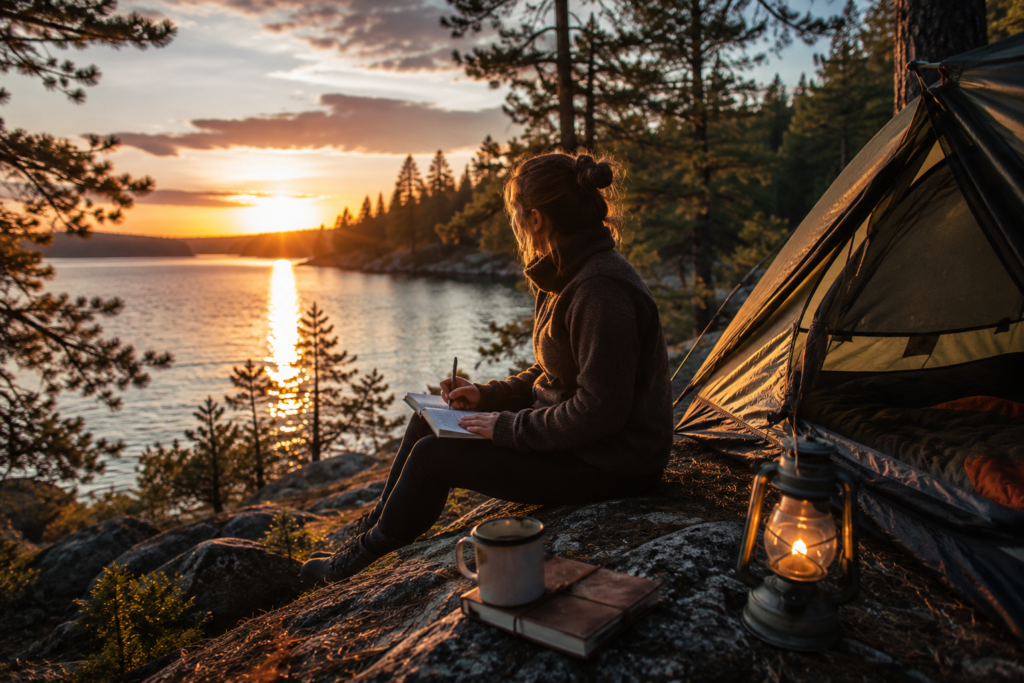
- Nature journaling: Write what you observe — sounds, sightings, light quality, how the air smells. The act of writing it makes you pay attention more carefully. These journals are almost always worth reading years later.
- Photography: Your own schedule means you can be at the viewpoint at exactly the right light. Golden hour with no group to coordinate is a specific kind of excellent.
- Reading: No interruptions, no competing obligations, no emails generating low-level guilt. Bring the book you have been meaning to read — not a light read, the real one.
- Stargazing: Dark skies without light pollution are one of the great solo camping gifts. Lie on your sleeping mat, use the free Stellarium app to identify what you are looking at, and give your eyes 20 minutes to adjust.
- Wild swimming: A lake, a river, a pool beneath a waterfall. Cold water solo is different from cold water in company — more deliberate, more present, more memorable.
For a complete guide to activities at camp for every mood and energy level, our outdoor camping activities guide covers everything from geocaching and foraging to campfire cooking and sunrise hiking.
The Digital Detox Opportunity
Solo camping is one of the most complete digital detox experiences available. No one to text, no group chat to update, no one expecting you to be available. Your phone becomes a tool — for navigation, photography, emergencies — rather than a social obligation.
Most solo campers report that the absence of digital connection is uncomfortable for the first few hours and then starts to feel like relief. By the second day, many describe checking their phone less and less. By the time they get back to signal range, they are reluctant to reopen everything.
Prepare for this in advance: download offline maps, podcasts, and audiobooks before you lose signal. Have something to listen to if you want it. And then allow yourself not to.
How Solo Camping Changes You
This is not something that is easy to explain to someone who has not done it, but it is consistent enough across solo camping experiences to be worth describing: people who camp alone regularly tend to notice a change in how they relate to difficulty. Problems that would have felt overwhelming before a solo trip feel more manageable after one. Not because the problems are different — because the evidence about what you are capable of has changed.
Camping alone is a contained, manageable version of self-reliance. You have all the skills you need. You survive and thrive. You go home knowing something about yourself that you did not know when you left. Most solo campers describe their first solo trip as one of the better decisions they have made.
The wilderness at night is not a threatening place. It is a quiet place doing its own thing, entirely indifferent to your presence. That indifference, once you get used to it, is one of the most peaceful things in the world. The forest was here long before you arrived and will be here long after you leave. You are just a visitor — and a very welcome one.
Building Your Solo Camping Confidence: The Step-by-Step Progression
Solo camping confidence builds in stages, and the most common mistake is skipping stages. Here is the progression that works:
- Step 1 — Sleep in a tent at home: In your garden or living room. One night. Get comfortable with the tent, the sleeping bag, the darkness, and the sounds before you add the variable of an unfamiliar location.
- Step 2 — Solo day hiking: Before you camp alone, hike alone. A few solo day hikes in familiar terrain builds the navigation confidence and the comfort with solitude that make a first solo overnight easier.
- Step 3 — First solo overnight at an established campground: Close to home, modern facilities, other people nearby. One night only. This is your proof of concept.
- Step 4 — Two to three nights at an established campground further from home: By now you know you can do it. Extend the duration and the distance. Start to develop the routines that make camp feel like your own space.
- Step 5 — First solo backcountry trip: You are ready. Start with a trail you are familiar with from a group hike. Take everything you need. Tell someone exactly where you are going. Go.
Nobody goes from never having camped alone to confidently spending a week solo in the backcountry in one step. The progression exists because each stage teaches you something the next stage requires. Trust it.
Frequently Asked Questions About Solo Camping for Beginners
Is it safe to go camping alone for the first time?
Yes — with the right preparation. Solo camping is genuinely safe for the vast majority of people who do it. The key safety measures are: tell someone exactly where you are going and when you expect to return, carry a satellite communicator or PLB for areas without mobile signal, store food correctly to avoid wildlife encounters, carry a comprehensive first aid kit, and start at an established campground rather than a remote backcountry site on your first trip. Preparation is the primary determinant of safety in solo camping, not experience.
What do I do if I get scared camping alone at night?
The fear is normal and almost universal on first solo nights. What helps: turn on a light, slow your breathing (box breathing — four counts in, hold four, out four — works well), remind yourself of all your preparation, focus on something — a book, a podcast, a journal. The sounds that feel alarming are almost always small animals doing ordinary things. Your brain needs one night to categorise the new sounds as non-threatening. The second night is significantly better. Trust the process.
What is the best solo camping gear for beginners?
The essentials: a freestanding two-person tent (more comfortable than a one-person for most beginners), a sleeping bag rated 5°C colder than expected, a sleeping pad with R-value 3.5 or above, a satellite communicator or PLB, a comprehensive first aid kit, offline navigation maps downloaded, a headtorch with spare batteries, a water filter or purification tablets, a compact camp stove and fuel, and enough high-calorie food for your trip plus one emergency day extra. Keep your pack weight under a third of your body weight if backpacking.
How do I find a good solo camping destination for beginners?
Start with established campgrounds rather than backcountry locations — national park campgrounds, state park sites, or KOA-style facilities. Choose somewhere familiar if possible, or a well-trafficked trail where you will encounter other hikers. Use AllTrails for recent trail conditions and reviews, Gaia GPS for offline map download, and the national park or state park website for specific campsite booking. For your first solo trip, prioritize accessibility, facilities, and familiarity over remoteness and adventure. Those come later.
How do I deal with loneliness when camping alone?
Loneliness in solo camping is more anticipated than experienced. Most solo campers report that the solitude feels peaceful rather than isolating once they are settled in. What helps: bring activities that genuinely absorb you (a good book, a journal, a camera), structure your day with a morning hike and an evening fire so time has a shape, cook a proper meal rather than eating cold food — the act of cooking creates something to do. If you do feel lonely, acknowledge it without judging it. It usually passes within an hour. And it almost never returns on night two.
The Wilderness Is Waiting — and It Is Better Alone Than You Think
The gap between imagining your first solo camping trip for beginners and actually doing it is almost always larger than the gap between doing it and wanting to do it again. Most people who try solo camping once are back planning the second trip before they have finished unpacking from the first.
Start close, start small, start prepared. Tell someone where you are going. Practice the tent. Buy the satellite communicator. Pack the book. And go out there and discover what you are like when the only company you have is the trees and the dark and the morning.
The wilderness has been waiting. It is not in any hurry. But now that you have the solo camping tips for beginners to actually do this, there is no reason to make it wait any longer.