Purifying Water in the Wilderness: The Complete Camping and Backpacking Guide
-
| Founder & Content Creator

Latest Posts
That crystal-clear mountain stream looks perfect. The water is cold, it is flowing fast, and after a long morning on the trail your water bottles are empty. Surely something that looks that clean is clean?
Not necessarily. Knowing how to go about purifying water in the wilderness is one of those skills that looks optional right up until the moment it very much is not. The same streams that look pristine can carry invisible pathogens — bacteria, parasites, and viruses that cause anything from a ruined trip to a genuinely serious illness. And the frustrating thing is that you cannot tell from looking.
This guide covers every method worth knowing for treating water in the wild — boiling, filters, UV purifiers, chemical tablets — how each one works, when to use each, which ones work for solo hikers versus family groups, and a few tips that most guides never mention.
Water is one of those items that needs to be sorted before everything else — our complete camping checklist for new campers covers all the pre-trip essentials alongside your purification kit.
Natural water sources can affect dogs just as seriously as they affect humans — our guide to camping with dogs covers water safety and the signs of gastrointestinal illness in dogs that drinking from contaminated sources can cause.
Why Purifying Water in the Wilderness Is Non-Negotiable
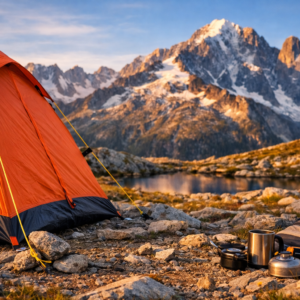
Here is something that surprises most first-time campers: the clearest, fastest-flowing, most beautiful mountain stream can still make you genuinely ill. Water in the wild picks up contaminants from sources you cannot see — animal carcasses upstream, livestock grazing near waterways, other hikers washing in a lake that feeds your stream. Even glacial runoff in pristine alpine areas can carry Giardia.
What is happening upstream from your water source is something you cannot see — and it is not just wildlife that poses a risk. Our wildlife safety while camping guide covers how to read your environment and camp safely in areas with animal activity.
What Can Actually Be in That Clear Mountain Stream
The main threats in untreated wilderness water fall into three categories:
- Protozoa: Giardia and Cryptosporidium are the most common in North American and European wilderness water. Giardia causes prolonged gut misery — bloating, cramping, and the kind of fatigue that can derail a multi-day trip completely. Crypto is tougher and more resistant to chemical treatment.
- Bacteria: E. coli, Salmonella, and Campylobacter. More common in water downstream from agricultural land, livestock areas, or popular camping zones. Causes gastrointestinal illness that typically hits 12-24 hours after ingestion.
- Viruses: Hepatitis A, rotavirus, and norovirus. Less common in North American and European backcountry water but a serious concern in less-developed regions internationally. Viruses are too small to be filtered out by most standard water filters — you need a purifier or chemical treatment to eliminate them.
None of these look, smell, or taste different from clean water. That is the point.
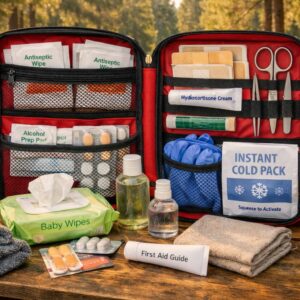
If you do get sick from contaminated water, your essential camping first aid kit should include rehydration salts and antihistamines as standard — illness at camp without these makes a miserable situation significantly worse.
| IMPORTANT DISTINCTION | A water FILTER physically removes protozoa and bacteria but does NOT kill viruses — viruses are too small to be caught by filter pores. A water PURIFIER (UV, chemical, or specially designed purifier filter) also kills or neutralises viruses. For camping in North America and most of Europe, a filter is usually sufficient. For international travel to less-developed regions, use a purifier. |
Filter vs Purifier: The Distinction That Actually Matters
This is the most important concept in this entire guide and the one most camping water posts skip over. Understanding the difference between a filter and a purifier helps you choose the right tool for where you are actually going.
- Water filter: Physically strains water through a membrane with microscopic pores. Removes protozoa (Giardia, Crypto) and bacteria (E. coli, Salmonella). Does NOT remove viruses. Suitable for most backcountry camping in North America, Europe, Australia, and New Zealand.
- Water purifier: Goes a step further — kills or neutralises viruses as well as protozoa and bacteria. UV light, chlorine dioxide tablets, and specially rated pump purifiers (like the MSR Guardian) all qualify. Required for international travel to areas with poor sanitation infrastructure.
The practical upshot: for most camping trips in developed countries, a quality filter is all you need. If you are travelling internationally or to remote areas where human sewage contamination is a risk — use a purifier.
Boiling Water: The Oldest and Most Reliable Method
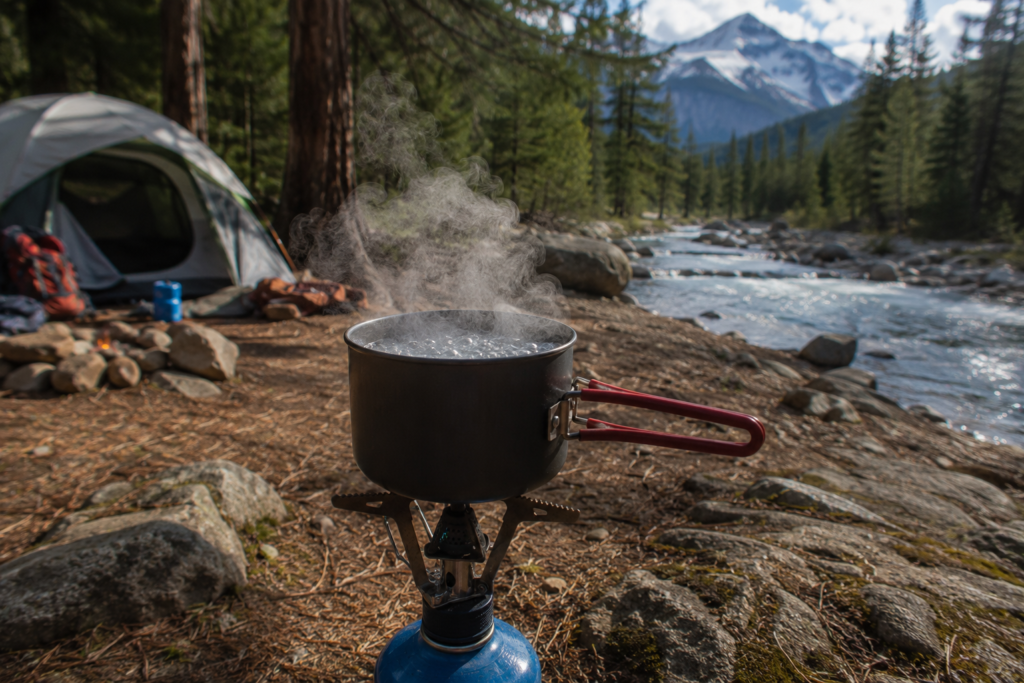
Boiling is the original water purification method and it remains the most reliable one available. No equipment required beyond fire or a camp stove, no batteries, no filter element to maintain. If in doubt about any other method, boiling is your definitive fallback.
How to Boil Water Correctly at Any Altitude
- Collect water from a flowing source if possible — moving water tends to have fewer pathogens than stagnant pools
- If the water is visibly murky, pre-filter through a bandana or coffee filter to remove sediment before boiling
- Bring the water to a full rolling boil — bubbles across the whole surface, not just at the edges
- At sea level to 6,500 feet (2,000m): boil for 1 minute — this kills all pathogens reliably
- Above 6,500 feet: boil for 3 minutes — water boils at a lower temperature at altitude, requiring longer to kill everything
- Let it cool before drinking — or use it immediately for cooking or hot drinks
The three-minute rule at altitude matters more than most people realise. Our mountain camping for beginners guide covers the full water and hydration picture for high elevation trips.
| HONEST LIMITATION | Boiling requires fuel and time — and produces hot water, which is less useful on a warm day. It also does not remove chemical contaminants or sediment. For everyday camp water on multi-day trips, a filter is more practical. Keep boiling as your backup for when filters fail or fuel is available anyway. |
When Boiling Is the Right Choice
- Your filter freezes overnight and you need water before it thaws — a common problem in cold conditions
- Your filter clogs on a silty water source and you have not brought a backup
- You are already cooking and the stove is on — boiling costs nothing extra
- You are in a winter camp and melting snow for water — boil the meltwater rather than drink it directly
- You need to treat water for a group and have no filter — a large pot handles volume efficiently
Camping Water Filters: How They Work and Which to Choose
Purifying water in the wilderness with a dedicated filter is the most popular method for backpackers and campers worldwide — and for good reason. Filters are fast, easy to use, require no chemicals and no stove, and produce water that is ready to drink almost immediately. Understanding the main types helps you choose the right one for your specific camping style.
How Hollow Fiber Filters Work
Most modern camping water filters — including the hugely popular Sawyer Squeeze and LifeStraw — use hollow fiber technology. This is worth understanding because it explains both why they work so well and how to keep them working.
Hollow fiber filters contain thousands of tiny tubes, each perforated by pores so small (typically 0.1-0.2 microns) that bacteria and protozoa physically cannot pass through. Water is pushed through the tubes, pathogens are trapped on the outside, and clean water comes out the other end. No chemicals. No batteries. No waiting.
The important maintenance implication: those pores gradually become blocked by sediment and organic matter. Backflushing — pushing clean water backward through the filter — clears the pores and restores flow rate. The Sawyer Squeeze comes with a cleaning syringe specifically for this. Get into the habit of backflushing after every use. It takes 30 seconds and keeps your filter performing like new.
| CRITICAL TIP | Never let a hollow fiber filter freeze when wet. Ice crystals physically rupture the fiber membranes, destroying the filter’s integrity — and the damage is invisible. You would have no idea the filter was no longer safe to use. On cold camping trips, sleep with your filter in your sleeping bag or inner jacket pocket to keep it above freezing. |
Squeeze Filters: Light, Fast, and Versatile
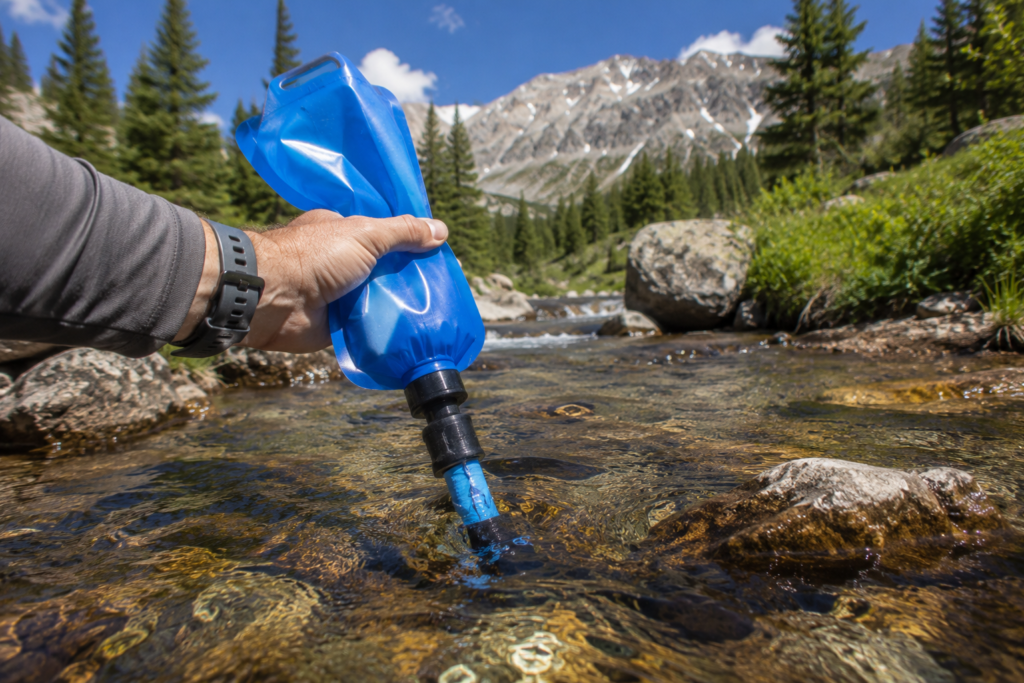
Squeeze filters are the most popular choice for solo backpackers and day hikers. You fill a soft-sided water pouch or bag from a stream, attach the filter, and squeeze water through directly into a bottle or your mouth. Fast, simple, lightweight.
- Sawyer Squeeze: The most widely used camping water filter in the world. Filters to 0.1 microns. Rated for 100,000 gallons of water — more than a lifetime of camping. Attaches directly to a standard Smartwater or Sawyer soft bottle. Includes cleaning syringe for backflushing. Weight: 3 ounces.
- Katadyn BeFree: Excellent flow rate, very light, attaches to a collapsible soft flask. Popular with thru-hikers and ultralight backpackers. Slightly shorter lifespan than the Sawyer but excellent real-world performance.
- LifeStraw Peak Squeeze: The newest generation of LifeStraw — faster flow rate and more durable than the original. Rated to 2,000 liters (twice most competitors). Excellent choice for solo hikers.
Remember: squeeze filters remove bacteria and protozoa but not viruses. For most North American and European camping this is fine. For international travel, pair with chemical drops.
Gravity Filters: The Group Camping Game-Changer
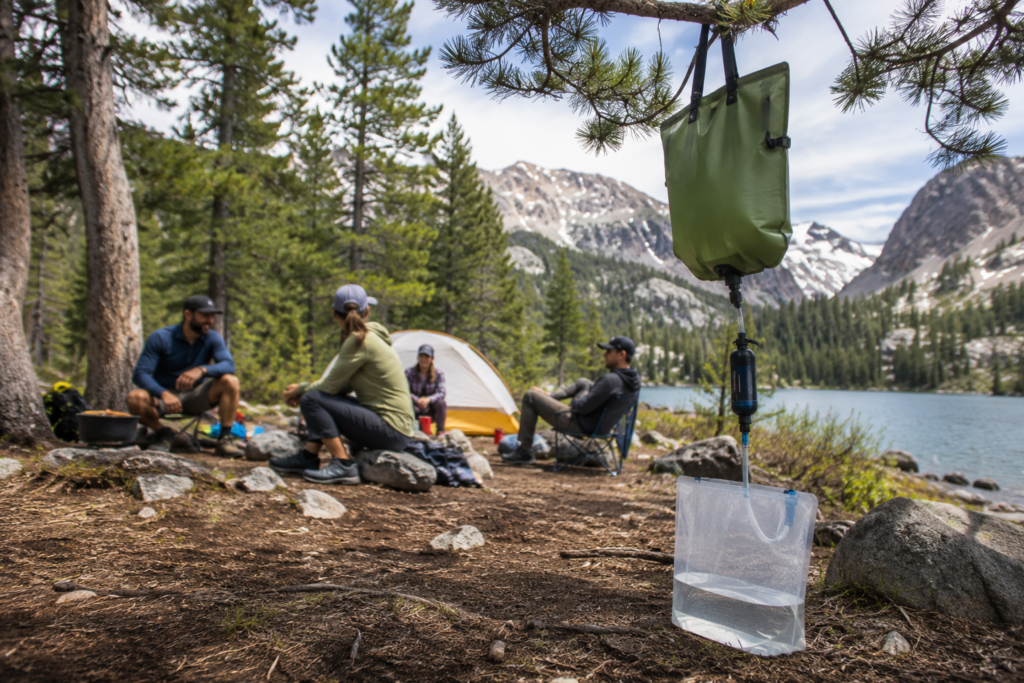
If you are camping with a group, a gravity filter system is one of the most practical investments you can make. Fill the dirty water reservoir from a stream, hang it from a branch or trekking pole at height, and gravity pulls water through the filter into the clean reservoir below. No pumping, no squeezing, no effort — it works while you cook, set up camp, or simply rest.
- Platypus GravityWorks (4L): REI’s top pick for camping with groups. Fast flow rate, durable, handles high-sediment water well. Excellent for base camps and multi-night trips.
- MSR AutoFlow XL (10L): The large-group option. Ideal for car camping or base camps where you need to keep multiple people hydrated for cooking and drinking.
- LifeStraw Mission (12L): Excellent for large groups. Popular with camping families and guided trips.
Gravity systems need height to work — a tree branch at least 4-5 feet above the clean reservoir gives adequate flow. They are slower than squeeze filters per litre but process large volumes with zero ongoing effort.
Pump Filters: Reliable in Any Conditions
Pump filters use manual pumping to push water through a filter cartridge. They are slower and require more effort than squeeze or gravity systems — but they are exceptionally reliable in difficult conditions, can draw water from shallow puddles and small seeps where other filters struggle, and give you precise control over how much water you treat.
- MSR Guardian Purifier: The gold standard for reliability. Self-cleans with every pump stroke. Kills viruses as well as bacteria and protozoa. Handles the murkiest water sources. Expensive and heavier than alternatives but built for a lifetime of use. REI’s pick for harsh conditions.
- Katadyn Hiker Pro: Lighter and more affordable than the Guardian. Suitable for most North American backcountry trips. Good choice for campers who want a reliable backup filter.
Bottle and Straw Filters: The On-the-Go Option
Bottle filters and straw filters integrate the filter directly into a water bottle or drinking straw, letting you fill up and drink immediately without any separate equipment.
- LifeStraw (original straw): The classic — sip directly from a stream or lake. Extremely lightweight and cheap. Limitation: you cannot fill a separate bottle or treat water for cooking. Best for day hikes and emergency use.
- Grayl GeoPress: Fill, press, drink. Works like a French press coffee maker — push water through a filter cartridge with one action. Also purifies viruses. REI’s top pick for international travel. Heavier than a Sawyer but extremely simple and effective.
- Bottle filter systems (Katadyn BeFree, Sawyer squeeze on a standard bottle): The most versatile option for solo campers — filter into your water bottle directly while walking.
UV Water Purifiers: Fast, Light, and Chemical-Free
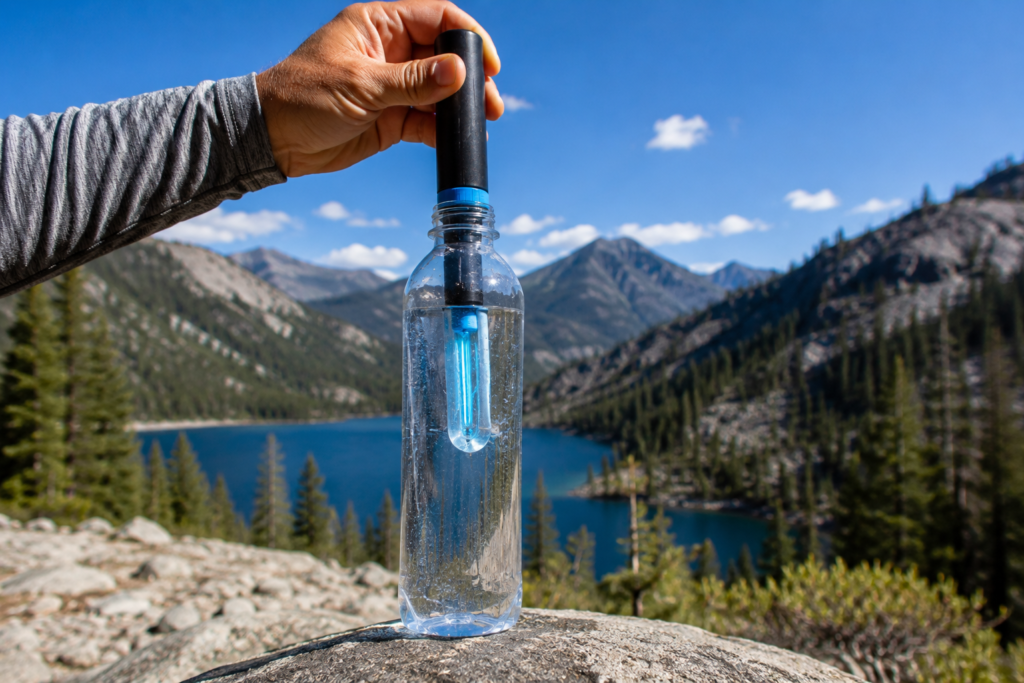
UV water purifiers work by exposing water to ultraviolet light, which damages the DNA of pathogens and renders them unable to reproduce. The treatment takes about 60 seconds and leaves no chemical taste — making UV purification one of the most pleasant methods for producing clean drinking water in the wilderness.
How UV Purification Works
Insert the UV device into clear water, stir for 60-90 seconds (some models do it automatically), and the water is treated. It works against bacteria, protozoa, and viruses — making it a true purifier, not just a filter.
- SteriPen Ultra: USB rechargeable, 50 litres per charge. Fast and reliable. Compact enough for a jacket pocket.
- SteriPen Adventurer Optics: Battery-powered. Better for trips where USB charging is not available.
The critical limitation: UV purification only works in clear water. Murky or cloudy water blocks UV light and prevents effective treatment. Always pre-filter dirty water through a bandana, coffee filter, or a squeeze pre-filter before using a UV purifier.
The other practical consideration: batteries die. Always carry spare batteries or a charging option, and have a backup treatment method for when power runs out.
Solar Disinfection: The Off-Grid Backup
If your main purification method fails and you have nothing else, solar disinfection (SODIS) is a legitimate backup that requires nothing more than clear plastic bottles and sunlight.
- Fill clear PET plastic bottles with water (the cleaner the water source the better — pre-filter if possible)
- Shake the bottles to oxygenate the water
- Leave in direct sunlight for a minimum of 6 hours, or 2 full days if cloudy
- Works best in warm climates with strong sunlight — less effective in cold or overcast conditions
SODIS does not work in opaque bottles, colored plastic, or glass. It is slow and dependent on weather. Think of it as a last resort rather than a planned method — but knowing it exists means you are never completely without options.
Chemical Water Purification: Tablets and Drops
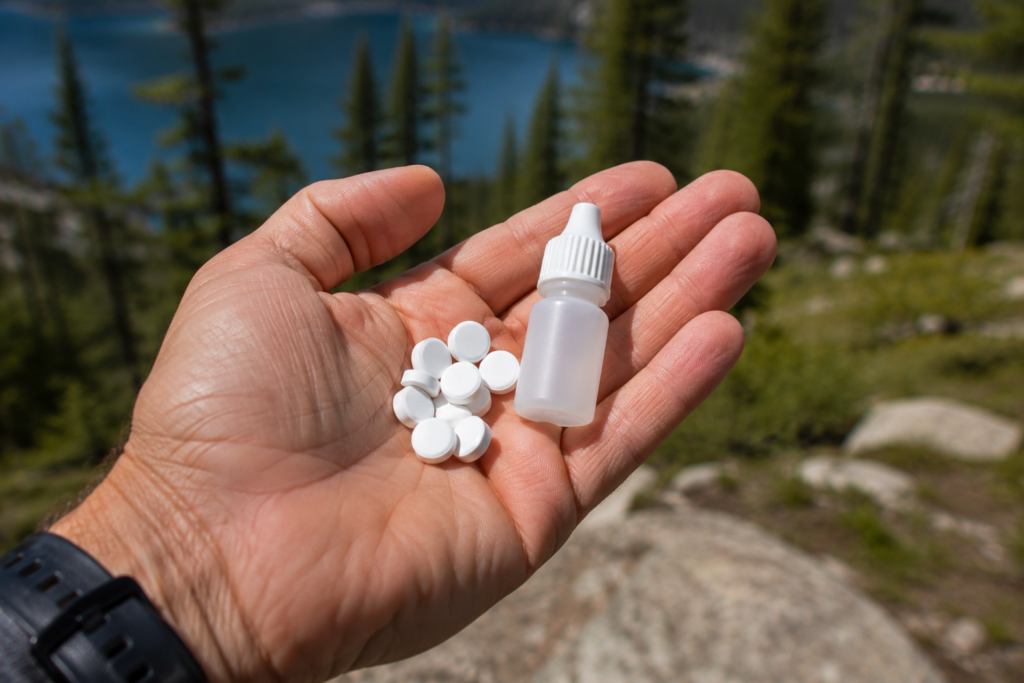
Chemical purification tablets and drops are the lightest and most packable of all water treatment options. A few tablets or a small bottle of drops weigh almost nothing, survive any weather conditions, and last for years unopened. They belong in every go-bag and emergency kit regardless of what other treatment method you carry as your primary.
Chlorine Dioxide: The Best Chemical Option for Campers
Chlorine dioxide is the gold standard for chemical water treatment. It works effectively against bacteria, protozoa, and viruses — including Cryptosporidium, which iodine cannot reliably kill. It also leaves a significantly milder taste than iodine.
- Aquamira drops: Two-part liquid system. Add Part A, add Part B, wait 5 minutes, add to water, wait 15-30 minutes before drinking. Taste is minimal. Popular with experienced backpackers as a backup to filters.
- Katadyn Micropur tablets: CleverHiker’s top pick for ultralight water treatment. One tablet per litre. Wait 30 minutes for bacteria and protozoa, 4 hours for Cryptosporidium. Convenient and effective.
- Potable Aqua Chlorine Dioxide tablets: Budget-friendly alternative. Works on the same principle with slightly different wait times.
Wait time is the main limitation: 15-30 minutes for most pathogens, up to 4 hours in cold water or for Cryptosporidium. If you need water urgently, chemicals are not your fastest option.
Iodine Tablets: Effective but With Limitations
Iodine tablets are effective against bacteria and most protozoa, but they have three significant limitations that chlorine dioxide does not:
- They do not reliably kill Cryptosporidium — one of the most common waterborne parasites in North American wilderness water
- They leave a noticeable iodine taste that many people find unpleasant — adding flavoured electrolyte tablets after treatment helps
- They are not recommended for pregnant women, people with thyroid conditions, or anyone with shellfish allergies
Iodine tablets remain useful as a lightweight emergency backup — but if you are choosing between iodine and chlorine dioxide for a primary or backup chemical treatment, chlorine dioxide is the better option in almost every scenario.
The Two-Step Method: Why Layering Gives You the Best Protection
Our recommendation for the most reliable water treatment in the wilderness is simple: do not depend on a single method alone. Use two. One to filter, one to back it up. Each method covers what the other misses, and together they handle virtually every situation you are likely to encounter outdoors.
- Step one: filter the water through a quality squeeze or gravity filter. This removes sediment, bacteria, and protozoa, making the water cleaner, clearer, and better tasting. It also makes any subsequent chemical treatment more effective, because chemical treatment works faster and more thoroughly in clear water.
- Step two: if you are in an area with any virus concern, add chemical drops after filtering. For most North American backcountry travel, this second step is optional. For international destinations or water sources near human habitation, it is worth adding.
The practical version used by most experienced campers: Sawyer Squeeze as the primary method (fast, light, handles most camping water with zero issues) plus Aquamira drops in the go-bag as an emergency backup. This covers virtually every scenario without adding meaningful weight to the pack.
| FROM EXPERIENCED BACKPACKERS | Always carry a backup treatment method. A filter can freeze, clog, or get lost. Batteries die. Tablets expire. The campers who handle water treatment problems calmly are the ones who always have a second option ready. Purification tablets weigh almost nothing and last years — there is no reason not to carry them. |
How to Choose Your Purification Method by Camping Style
Different camping styles call for different approaches to water purification methods camping. Here is how to match your setup to how you actually camp.
Solo Backpackers
Weight and packability are everything. The ideal solo setup: a squeeze filter (Sawyer Squeeze or Katadyn BeFree) plus a small bottle of Aquamira drops as backup. Total combined weight: around 3-4 ounces. Covers all scenarios without adding meaningful pack weight. Alternatively: a UV pen for speed and no chemicals, backed up by a handful of tablets.
Group and Family Camping
Volume is the priority. A gravity filter system — Platypus GravityWorks 4L or MSR AutoFlow XL for larger groups — handles the water needs of multiple people efficiently. Set it up on arrival, let it run, and the group has clean water for cooking and drinking throughout the camp session without anyone having to actively manage it.
Car Campers
Weight is not a constraint. Car campers can afford to bring a variety of options: a gravity filter for volume, a stove for boiling as a backup, and chemical drops for the kit bag. The flexibility this provides is worth the extra bulk — if one system fails, another is immediately available.
International and High-Risk Water Destinations
For camping or hiking in regions with poor sanitation infrastructure — much of Central and South America, Africa, Asia, and parts of Eastern Europe — you need a purifier, not just a filter. Viruses are a genuine risk in these environments.
- Best option: Grayl GeoPress or MSR Guardian — both purify viruses, bacteria, and protozoa in one step
- Alternative: Squeeze filter (removes bacteria/protozoa) plus chlorine dioxide drops (kills viruses) — an effective two-step system at lower cost
- Backup always: Katadyn Micropur tablets — lightweight, reliable, and widely trusted by international travellers
Finding the Best Water Sources in the Wild
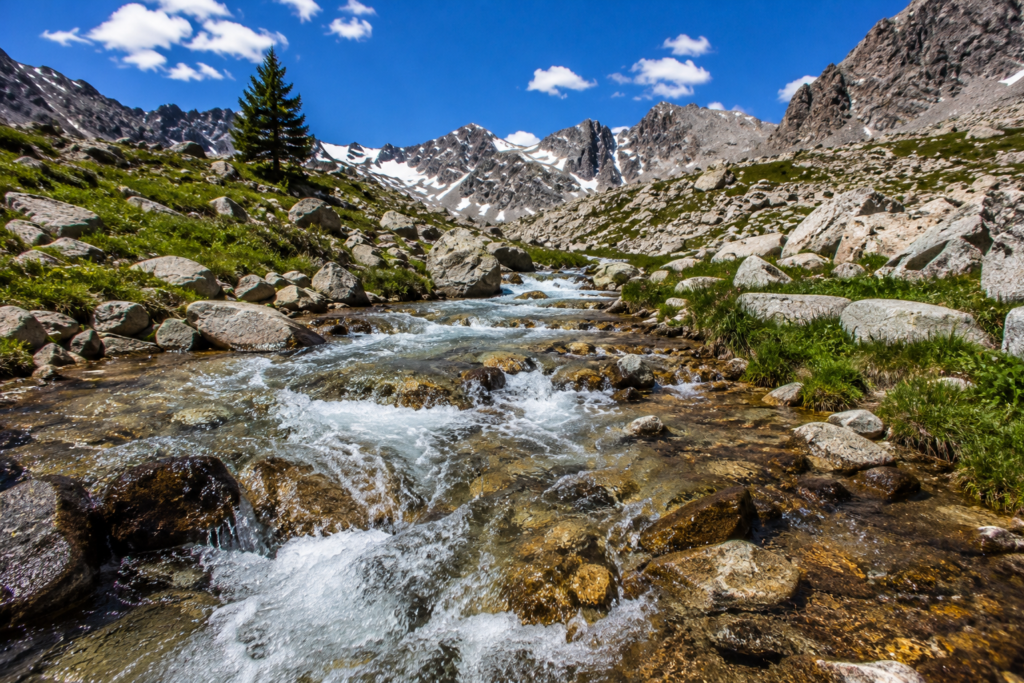
The quality of your starting water source affects how effectively any purification method works. Choosing a better source to begin with makes everything downstream easier.
- Flowing water over stagnant: Fast-moving streams and rivers have fewer pathogen concentrations than still ponds or slow pools. Moving water is also less hospitable to mosquito larvae — an added bonus.
- Higher is generally better: Water sources above the treeline, far from trails and camping areas, tend to be cleaner than those near popular routes where human and animal activity is higher.
- Upstream from the trail: Collect water upstream from wherever the trail crosses the water source — not downstream, where trail users may have disturbed the water or crossed through it.
- Away from grazing land: If you can see or smell evidence of livestock nearby, move upstream as far as possible or choose a different source.
- Springs and seeps: Water emerging directly from the ground tends to be very clean — it has been naturally filtered through rock and soil. Still treat it, but these are some of the best natural sources available.
When sourcing and using natural water, how you treat the environment around it matters too — our sustainable camping and leave no trace guide covers washing, waste disposal, and keeping water sources clean for the next camper who arrives.
Maintaining Your Water Filter: Tips That Extend Its Life
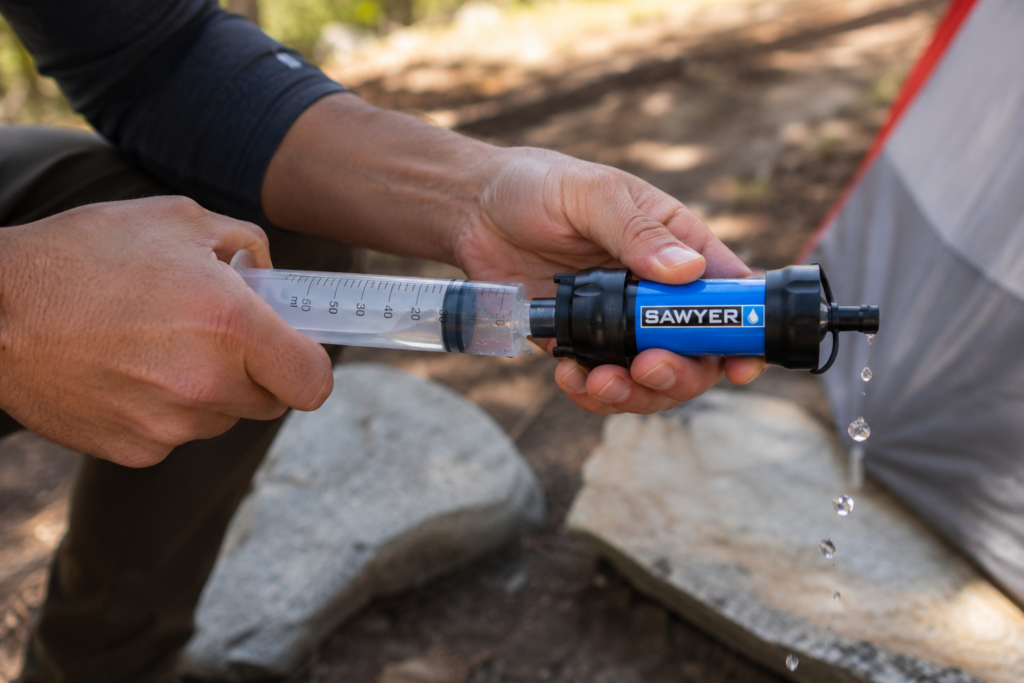
A water filter that is properly maintained performs well for years. One that is neglected can fail in the field — which is exactly when you need it most. These habits take seconds and make a significant difference.
- Backflush after every use: For hollow fiber filters like the Sawyer Squeeze, use the included cleaning syringe to push clean water backward through the filter immediately after use. This clears accumulated sediment from the pores before it dries and hardens.
- Never let it freeze: As noted above — a frozen hollow fiber filter may be permanently damaged. Sleep with it in cold conditions.
- Pre-filter dirty water: If your water source is murky or heavily silted, pour it through a bandana or coffee filter before running it through your camping filter. This extends filter life significantly and improves flow rate.
- Dry before long-term storage: If you are storing your filter for more than a few days, let it dry completely. Moisture in a stored filter can lead to mould or bacterial growth inside the element.
- Check flow rate regularly: If your filter is getting significantly slower, it needs a thorough backflush or cleaning. A dramatically slowed flow rate is the filter telling you it needs attention.
- Know your filter’s lifespan: Sawyer Squeeze: rated for 100,000 gallons. Katadyn BeFree: check the cartridge lifespan. LifeStraw Peak: 2,000 litres. Replace the filter element when it reaches its rated capacity.
Frequently Asked Questions About Purifying Water in the Wilderness
What is the easiest method for purifying water while camping?
A squeeze filter like the Sawyer Squeeze is the easiest everyday method — fill a soft water bottle from a stream, attach the filter, and squeeze clean water directly into your drinking bottle. It takes about 30 seconds per liter, weighs 3 ounces, and requires no batteries, chemicals, or waiting time. For even less effort, a gravity filter set up at camp handles multiple liters with zero ongoing input from you.
Is it safe to drink from a mountain stream without filtering?
No — not reliably. Even clear, fast-flowing mountain streams can contain Giardia, Cryptosporidium, E. coli, and other pathogens that cause serious illness. The appearance of water tells you nothing about its safety. Always treat water from any natural source regardless of how pristine it looks.
What is the difference between a water filter and a water purifier?
A water filter removes bacteria and protozoa (Giardia, Crypto, E. coli) by physically straining them out through a membrane. It does NOT remove viruses. A water purifier goes further — killing or neutralising viruses as well. For camping in North America and most of Europe, a filter is sufficient. For international travel to less-developed regions, use a purifier or combine your filter with chemical drops.
How long do you have to boil water to make it safe?
At sea level up to 6,500 feet: bring water to a full rolling boil for 1 minute. Above 6,500 feet: boil for 3 minutes. Water boils at a lower temperature at altitude, so a longer boiling time is needed to kill pathogens reliably. Always let the water cool before drinking, or use it immediately for cooking.
Can you drink water from a stream if you add iodine tablets?
Yes — but with caveats. Iodine tablets kill bacteria and most protozoa, but they do not reliably kill Cryptosporidium, which is common in North American backcountry water. They also leave a noticeable taste. Chlorine dioxide tablets are a better choice — they work against Crypto, leave a milder taste, and are widely available at outdoor retailers. Iodine tablets are fine as a last-resort backup but should not be your primary treatment method.
Clean Water, Happy Trails: Choosing Your Purification Setup
Here is the honest answer to ‘which method should I use for purifying water in the wilderness’: the best method is the one you actually use consistently. A theoretically superior filter that stays at the bottom of your bag because it is fiddly or heavy is less useful than a simple squeeze filter you use every single time you fill up.
For most campers, the ideal setup is simple: a squeeze filter as your primary method (Sawyer Squeeze for the budget-conscious, Katadyn BeFree for speed, LifeStraw Peak for durability) plus a small bottle of Aquamira drops or a handful of Katadyn Micropur tablets as your backup. This covers every realistic scenario, weighs under 4 ounces combined, and costs less than most other pieces of camping kit.
Test your setup at home before your trip. Know how to backflush your filter. Know how your tablets work and how long they take. And always — always — carry a backup option. The one time your filter freezes or clogs is exactly the trip you will be glad you did.
Purification tablets belong in every go-bag — the lightest and most reliable emergency backup available. Our wilderness emergency evacuation guide covers everything else that should go in there too.