Wilderness Emergency Evacuation Guide: How to Stay Safe in the Wild
-
| Founder & Content Creator

Latest Posts

Most camping trips are everything you hoped for — fresh air, beautiful scenery, good company, and a welcome break from everyday life. But nature does not always cooperate with your plans. Wildfires, flash floods, sudden storms, and other emergencies can develop quickly and without much notice, turning a peaceful trip into a situation that requires fast, calm, and deliberate action.
The good news is that a wilderness emergency evacuation does not have to be chaotic or frightening if you have prepared for it. In fact, the campers who handle emergencies best are rarely the ones who are physically the strongest or most experienced — they are the ones who planned ahead, packed the right kit, and knew what to do before anything went wrong.
This guide covers everything: how to read the warning signs before an emergency develops, how to build a proper evacuation plan before you leave home, what to pack in your go-bag, when to leave, how to handle specific emergencies like wildfires and flash floods, and what to do when leaving is not an option.
Reading Nature’s Warning Signs Before an Emergency Strikes
The most valuable thing you can do in any outdoor emergency is not react quickly — it is recognise early. The earlier you spot that something is developing, the more options you have and the calmer your response can be.

How Animals and Nature Signal Danger
Animal behavior is one of the most reliable early warning systems available in the wilderness — and understanding it overlaps directly with our wildlife safety while camping guide, which covers how to read and respond to animal encounters before they escalate.
Animals sense changes in atmospheric pressure, ground vibration, smell, and sound that humans simply cannot detect with our comparatively limited senses. This is not folklore — it is well-documented natural behaviour.
- Birds flying in erratic or unusual patterns, or large numbers leaving an area suddenly
- Deer, elk, or other large animals moving quickly in one direction without apparent cause
- Dogs becoming unusually anxious, barking persistently, or trying to pull away from the campsite
- Insects going quiet — a sudden silence from crickets or frogs often signals a pressure change
- Small ground animals like squirrels or rabbits disappearing from the area
None of these signs alone means an emergency is imminent. But any of them combined with dark clouds, unusual smells, rising water sounds, or your own gut feeling that something is off is worth taking seriously. Start your emergency checks early rather than waiting for certainty.
Weather Warning Signs Every Camper Should Know
Weather in the wilderness can develop much faster than at lower elevations or in urban environments. The terrain itself accelerates storm development, channels wind, and funnels water in ways that can create dangerous conditions within minutes.
- Those anvil-shaped clouds building on the horizon: You know the ones — flat at the bottom, towering upward like a column, then spreading out at the top into that distinctive flat anvil shape. When you see clouds forming like this, start thinking about shelter. Lightning and heavy rain are usually not far behind, often arriving within 30 to 60 minutes.
- The temperature suddenly drops: If the air gets noticeably cooler in a short space of time — especially if the wind starts picking up at the same time — a storm is likely on its way. This combination is one of the most reliable early warnings you will get.
- The wind changes direction: Wind that suddenly shifts or seems to be coming from a different direction than it was an hour ago is often a sign that a weather front is moving in. It is worth paying attention to, especially in mountain or valley terrain where weather can funnel and change fast.
- The wind changes direction: Wind that suddenly shifts or seems to be coming from a different direction than it was an hour ago is often a sign that a weather front is moving in. It is worth paying attention to, especially in mountain or valley terrain where weather can funnel and change fast.
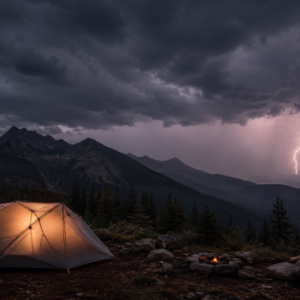
Lightning deserves its own dedicated preparation — our guide on how to stay safe from lightning while camping covers exactly what to do when a storm builds faster than expected.
| IMPORTANT RULE | The 30-30 rule for lightning: if the time between a lightning flash and the thunder it causes is 30 seconds or less, the storm is within 6 miles of you. Seek shelter immediately and wait 30 minutes after the last thunder before returning to open ground. |
Building Your Wilderness Emergency Evacuation Plan Before You Leave Home
A wilderness emergency evacuation plan is not something you work out when the emergency is already happening. It needs to be built, thought through, and agreed with your group before you ever arrive at the campsite. The good news is that this does not take long — and the peace of mind it provides is worth every minute.
Map Your Escape Routes — All of Them
The most important part of any emergency evacuation plan is knowing your way out — ideally two or three different ways. Before you leave home, pull up your campsite on a map and identify every realistic exit route: primary road, secondary road, and if roads are impassable, the overland walking route to the nearest road or settlement.
- Research whether the access roads flood in heavy rain — many rural camping roads become impassable in wet conditions
- Identify the nearest community, petrol station, or established building from your campsite
- Note any bridges on your route — bridges are often the first things closed in flood events
- Download offline maps for your area before you leave — apps like Gaia GPS or OS Maps work without cell signal
- Print a physical map of the area as a backup — screens fail, paper does not
At camp, walk all your identified exit routes before dark on day one. The road that looks straightforward on a map may be harder to navigate at night under stress. Knowing it in advance removes that variable entirely.
Setting Up Your Communication Network
Even in remote camping areas where cell service is unreliable or absent entirely, staying in contact with the outside world is possible with the right tools.
- NOAA weather radio: A battery-powered weather radio receives emergency alerts and forecast updates without needing cell signal. One of the most underrated pieces of emergency kit.
- Satellite communicator (Garmin inReach, SPOT): Two-way messaging and SOS capability from anywhere on Earth. The gold standard for remote area communication.
- PLB (Personal Locator Beacon): One-way emergency SOS only — triggers a rescue response with your GPS coordinates. Less flexible than a satellite communicator but extremely reliable and typically lower cost.
- Wireless Emergency Alerts (WEA): Make sure this is enabled on your phone settings before you leave. Government emergency alerts are broadcast directly to compatible phones in affected areas — no app required.
If you are planning a high elevation trip where cell signal disappears entirely, our mountain camping for beginners guide covers the communication and navigation tools that matter most above the treeline.
Emergency Contacts and Trip Filing
Before every camping trip, tell someone who is not coming with you exactly where you are going. This is one of the most effective safety measures available to campers and it costs nothing.
- Your trip contact should know: campsite name and location, planned arrival and departure dates, the access road you will use, your vehicle make, model, and registration
- Agree on a check-in schedule — for example, a text or call by 6pm each day
- Specify what action your contact should take if they do not hear from you — typically calling the local non-emergency police or park ranger line after a missed check-in
- Include medical information for all group members in your trip file — blood types, allergies, medications, next of kin contact details
| FROM THE FIELD | Emergency responders consistently report that trips with a filed plan and a designated contact are resolved faster and with better outcomes than those without. A five-minute conversation before you leave home can make a significant difference to how quickly help arrives if you need it. |
Building Your Go-Bag: The Camping Emergency Evacuation Kit
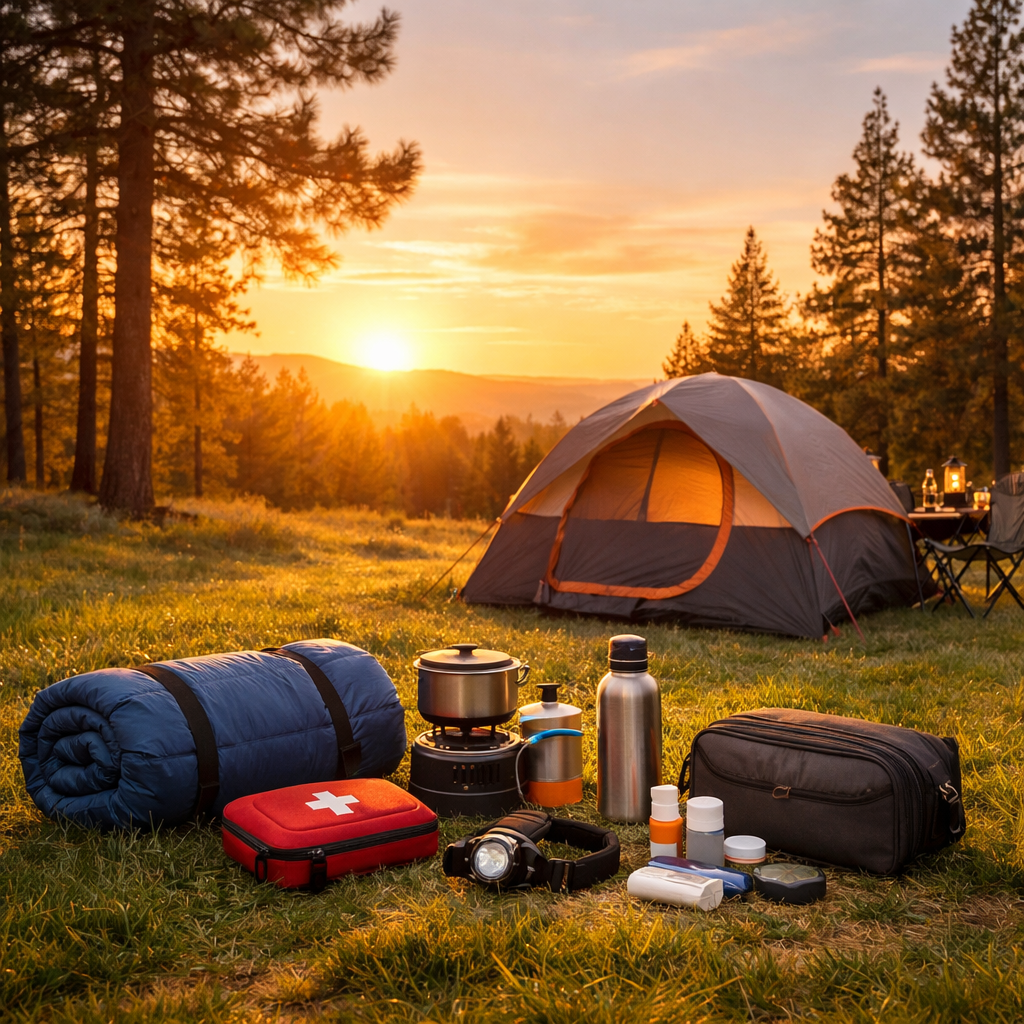
Your go-bag is the kit you grab and go with when there is no time for anything else. It should be pre-packed, easy to access, and positioned in your campsite so you can reach it within 30 seconds.
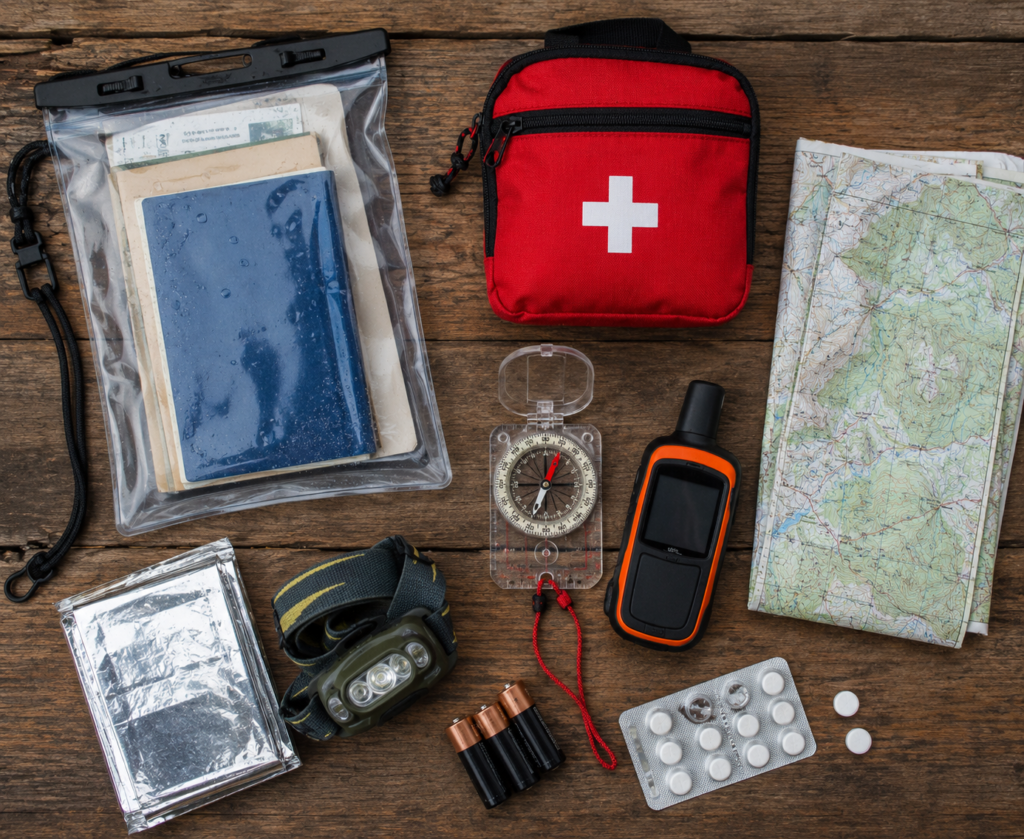
Your go-bag builds on your regular camping kit — if you have not already put together your baseline gear, our complete camping checklist for new campers is the right starting point before you add emergency-specific items.
Critical Documents and Personal Information
Physical documents stored in a waterproof container are one of the most overlooked components of a camping emergency evacuation kit. Digital devices fail. In a genuine emergency — especially if you need medical attention or to identify yourself to rescue services — having physical copies of key documents is invaluable.
- Printed copies of ID for each group member — passport, driver’s licence
- Insurance cards and emergency contact details
- Medical information: blood types, allergies, current medications, pre-existing conditions
- Printed map of the local area with your campsite and escape routes marked
- Emergency service numbers for the local area — ranger station, park authority, non-emergency police
Store these in a waterproof zip-lock bag or small waterproof document wallet. Place them at the very top of your go-bag.
First Aid Supplies and Medications
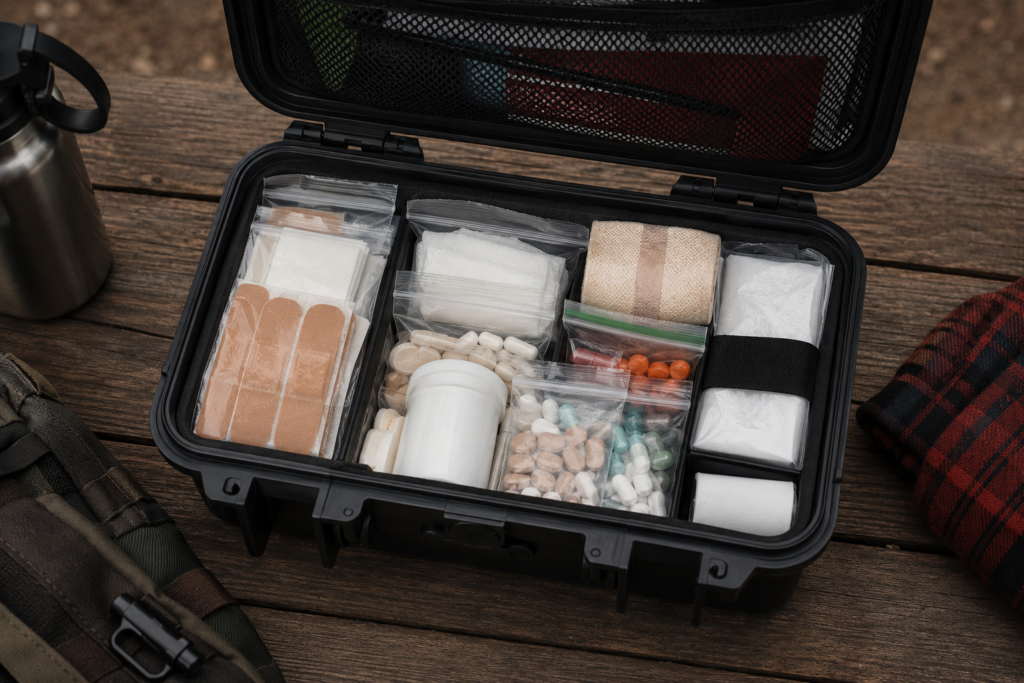
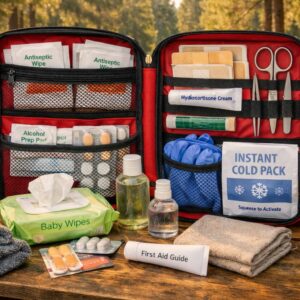
- Basic first aid kit: bandages, antiseptic wipes, blister plasters, tweezers, burn cream
- Pain relief and anti-inflammatory medication — paracetamol and ibuprofen
- Antihistamine tablets — for allergic reactions to insect stings or plants
- Any prescription medications for all group members — at least a 3-day supply in waterproof packaging
- Emergency medications if applicable: EpiPen, asthma inhaler, GTN spray
For a detailed breakdown of every item to include, our essential camping first aid kit guide covers everything from blister treatment to emergency medications — build your go-bag medical supplies from that list.
Navigation Tools: Map, Compass, and GPS
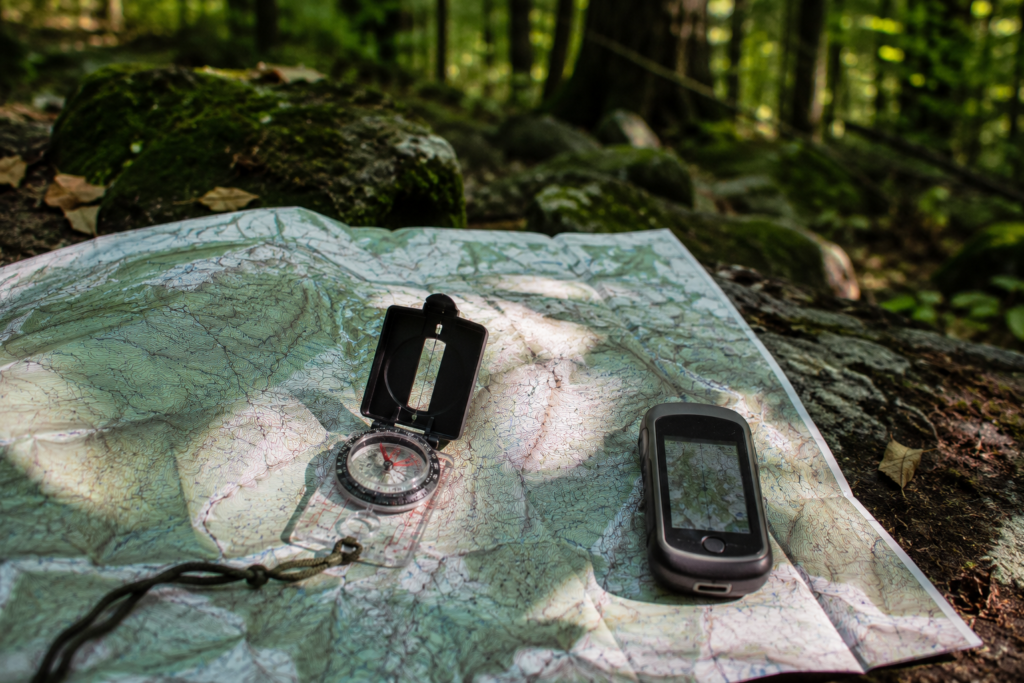
Your navigation kit should function independently of cell signal, batteries, and internet access. Modern GPS devices are excellent tools — but they need batteries and can break. A topographic map and compass need neither.
- Topographic map of your camping area — waterproofed, marked with escape routes
- Compass — learn to use it before the trip. A 10-minute practice at home is all most people need.
- GPS device with offline maps downloaded — Garmin handhelds are the most durable option
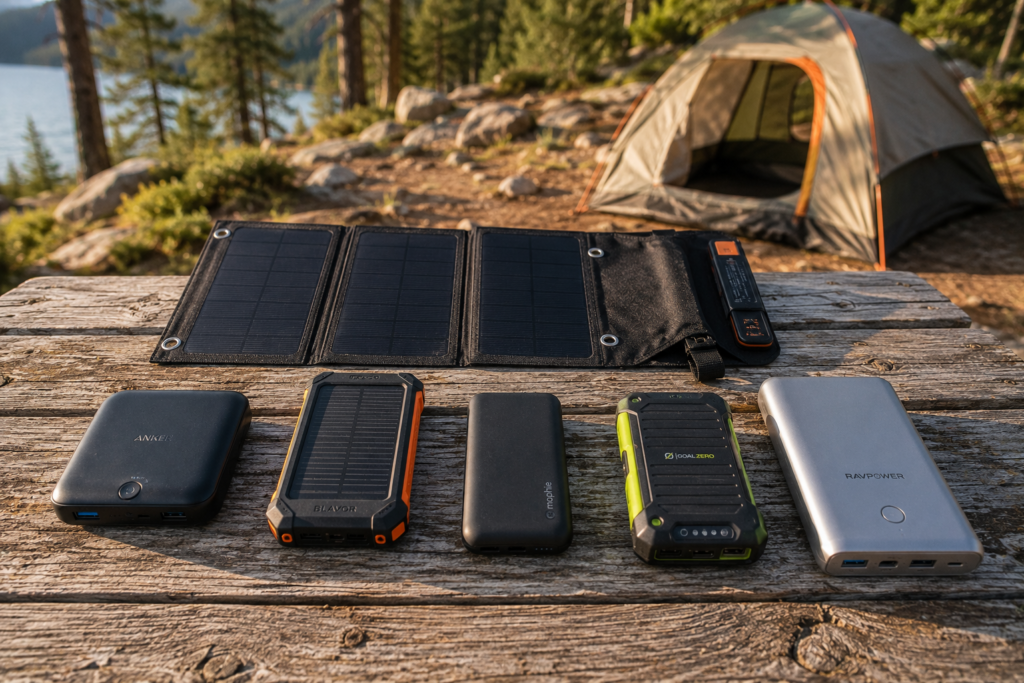
- Portable power bank — to keep your phone charged for GPS use
Know how to read your topographic map before you need to. The contour lines show elevation — tight lines mean steep terrain. Understanding what your map is telling you about the landscape between you and your exit route is a genuinely useful skill.
Keeping your satellite messenger, GPS, and phone charged in the backcountry is a safety essential — our best camping power banks guide covers the picks that hold charge in cold weather and rough conditions specifically.
Emergency Shelter and Warmth
- Emergency bivvy bag: A lightweight mylar bag that reflects body heat back to you. Weighs under 100g and can be the difference between a cold uncomfortable night and genuine hypothermia.
- Space blankets: Pack two — one for each person. They fold down to the size of a small chocolate bar.
- Fire-starting materials: Waterproof matches and a lighter in a sealed bag, plus firestarter sticks — dry tinder is not guaranteed in wet conditions.
- Headtorch with spare batteries: You need your hands free in an emergency. Phone torches are not a substitute.
- Water and purification: At least 1 litre of water per person in the go-bag, plus purification tablets for sourcing water along the way.
- Emergency food: High-calorie, no-preparation items — energy bars, nuts, dried fruit, chocolate. Enough for 24 hours per person.
What to Do With Pets During Evacuation
Pets are often forgotten in emergency evacuation planning and become a source of significant stress when an emergency actually happens. Plan for your animals before you arrive at the campsite.
- Keep dogs on a lead or long line at all times in areas with any fire or flood risk
- Pack a pet go-bag: collar with ID tag, lead, water bowl, 24-hour food supply, any medications
- Identify pet-friendly emergency shelters or friends in the nearest town before your trip
- Have a carrier ready for cats or small animals — do not assume you will have time to improvise
- If you must leave an animal behind — which should be a last resort — leave them with water, in a cool location, with a note on the door
When to Go: Making the Call to Evacuate
Here is the hardest truth about wilderness emergency evacuation: most people wait too long. Research by the Western Fire Chiefs Association found that a significant proportion of wildfire fatalities occur among people who chose to wait and see rather than leaving early — and were then overtaken by conditions that moved faster than expected. The same pattern occurs in flash flood events.
The moment you feel genuinely uncertain — not just mildly concerned, but actually uncertain about whether you should stay — that is the signal to begin your evacuation process. You can always turn around if the threat does not materialize. You cannot outrun a wildfire or a wall of floodwater if you have waited too long.
The Hardest Decision — and Why Early Is Always Better
The psychological difficulty of the evacuation decision is real. You have planned this trip, everyone is settled, the weather might still be uncertain, and leaving feels like an overreaction. This is exactly how every delayed evacuation starts.
Set a decision rule before your trip — a specific, pre-agreed trigger that automatically starts your evacuation process. For example: if wildfire smoke is visible from the campsite, we start packing immediately and assess from the trailhead. Or: if the creek rises by more than 30cm from its arrival level, we leave. Having a pre-set rule removes the in-the-moment pressure of making a judgment call under stress.
| CRITICAL RULE | Do not wait for an official evacuation order before leaving. By the time mandatory orders are issued, conditions are often already dangerous. Voluntary early evacuation is always safer, always faster, and always the right call when you are uncertain. |
Vehicle Preparation: Your Rolling Lifeline
From the moment you arrive at your campsite, your vehicle should be treated as your primary emergency asset — not just your transport home.
- Park facing your primary exit route — reversing in a hurry at night is avoidable with a little forethought on arrival
- Keep the fuel tank above half at all times during a camping trip — fill before you arrive if possible
- Do not bury your vehicle under equipment — keep the boot accessible and the keys in one agreed location
- Know what to leave behind — the tent stays. Documents, medications, phones, and go-bag come. Everything else is replaceable.
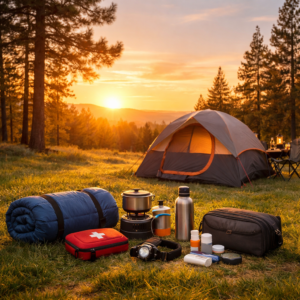
- If tent camping: do a dark evacuation practice on your first evening — time how quickly you can get yourselves and your go-bag into the vehicle and moving
Specific Evacuation Protocols by Emergency Type
Wildfires can move at extraordinary speed — up to 14 miles per hour in ideal conditions for the fire — and generate their own wind systems that accelerate their spread. Do not underestimate how fast conditions can change.
- Leave the moment you see smoke on the horizon or receive a fire warning alert — do not wait for visual confirmation of flames
- Drive away from the fire, moving at right angles to the wind direction rather than directly away if possible
- If trapped by fire: pull over in the most open area you can find, away from trees and dry vegetation. Stay in the vehicle with windows closed and engine off. Lie flat on the floor below window level. A vehicle provides meaningful protection from radiant heat as the fire front passes.
- Do not return to your campsite until officially cleared by fire services — hidden embers can reignite hours after the visible fire has passed
Wildfire Evacuation
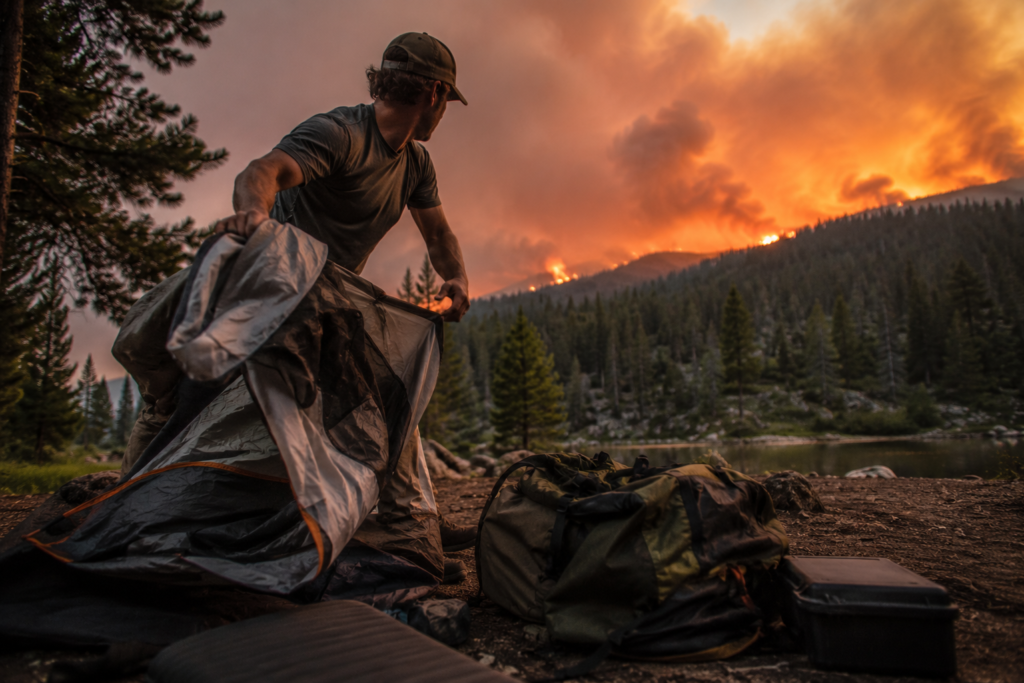
Wildfires can move at extraordinary speed — up to 14 miles per hour in ideal conditions for the fire — and generate their own wind systems that accelerate their spread. Do not underestimate how fast conditions can change.
- Leave the moment you see smoke on the horizon or receive a fire warning alert — do not wait for visual confirmation of flames
- Drive away from the fire, moving at right angles to the wind direction rather than directly away if possible
- If trapped by fire: pull over in the most open area you can find, away from trees and dry vegetation. Stay in the vehicle with windows closed and engine off. Lie flat on the floor below window level. A vehicle provides meaningful protection from radiant heat as the fire front passes.
- Do not return to your campsite until officially cleared by fire services — hidden embers can reignite hours after the visible fire has passed
Flash Flood Evacuation
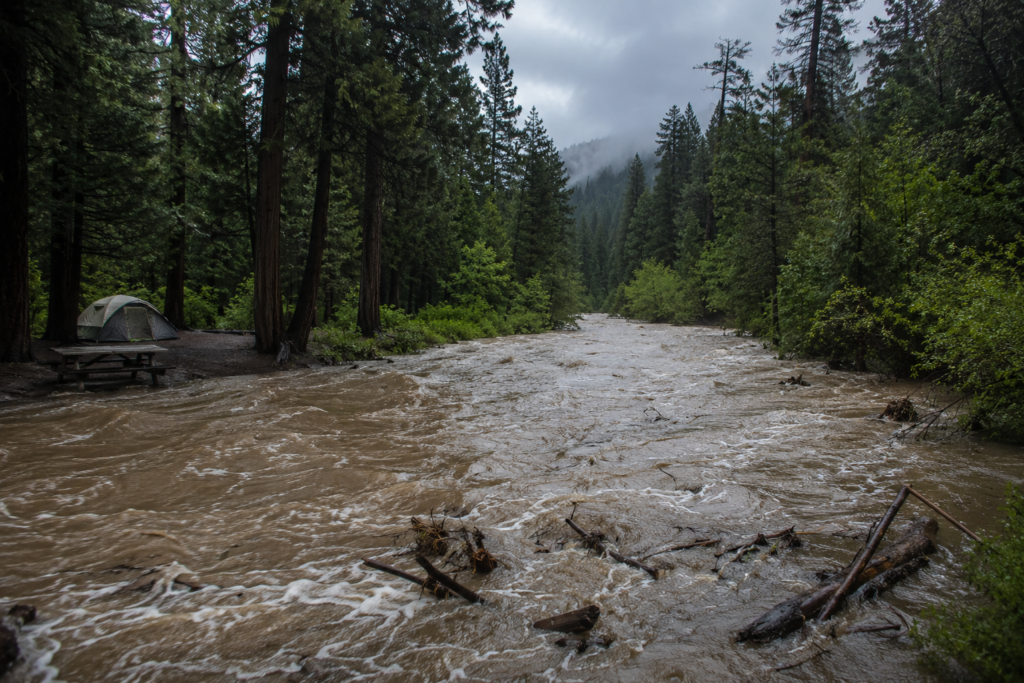
Flash floods are the most deceptive of all wilderness emergencies because the flood itself can arrive from miles away, at a campsite where the sky is currently clear and dry. Upstream rain — which you may not see or hear — can produce a wall of water that arrives with almost no warning.
- Never camp in a dry riverbed, canyon bottom, or low-lying valley that drains a large catchment area — these are flash flood corridors
- If you hear a low rumbling sound from upstream, do not wait to identify the source — move immediately to high ground
- Six inches of moving water can knock an adult off their feet. Two feet of moving water can carry a vehicle. Never attempt to cross moving floodwater on foot or in a vehicle.
- Once on high ground: signal for help and wait for rescue. Do not attempt to return through floodwater.
Severe Storm Evacuation
- If lightning is within 6 miles (30 seconds or less between flash and thunder): move immediately to a hard-topped vehicle or solid building. Tents offer zero lightning protection.
- If no vehicle or building is available: crouch low in a clearing away from trees, with feet together and hands over ears. Do not lie flat.
- In a tornado warning: lie flat in the lowest possible depression in the ground, away from trees and vehicles. A ditch or culvert is better than open ground.
- In extreme wind: shelter behind solid terrain features — large boulders or cliff faces on the sheltered side — rather than trees, which can fall
Solo campers need a more detailed emergency plan than group campers — our solo camping tips for beginners guide covers satellite communicators, trip filing, and the step-by-step approach to building confidence safely before heading into remote terrain alone.
When You Cannot Leave: Shelter-in-Place Strategies for Campers
Sometimes a camping emergency evacuation is not possible. A flooded road, an injured group member, a wildfire that has cut off your exit, or an emergency that developed faster than you could respond — these are situations where your priority shifts from getting out to staying as safe as possible wherever you are.
Choosing the Right Shelter for Your Emergency
The right shelter-in-place option depends entirely on the specific emergency you are facing.
- Wildfire: Move to the most open, clear area available — a rock clearing, a beach, a lake edge, or a large car park. Get away from trees, dry grass, and brush. If near water, enter it. Your vehicle with windows closed is a viable last resort.
- Flash flood: Get as high as possible above the valley floor. Rocky ridges, hillsides, and elevated terrain are your objective. Stay there until water levels drop and you receive the all-clear.
- Severe storm: A hard-topped vehicle is excellent lightning protection. A solid building is better. A tent is not shelter from a storm — it is part of the problem.
- Medical emergency: Stay in place, activate your satellite communicator or PLB immediately, keep the patient warm and comfortable, and follow wilderness first aid protocols while waiting for rescue.
Staying Connected When Stuck
When you cannot leave, communication becomes your most important tool. Rescue services need four pieces of information: who you are, where exactly you are, what the situation is, and what medical needs exist.
- Activate your satellite communicator or PLB — send your GPS coordinates with a brief status message
- If using a phone: text rather than call when signal is weak — text messages require far less signal strength to transmit
- Signal mirror, whistle, and bright clothing are your visual and audible signals to search and rescue teams
- Stay in one location once you have signalled for help — moving around makes rescue significantly harder
Our emergency signaling tips for lost campers guide covers the full range of ways to attract rescue attention when you cannot leave — from signal mirrors to whistle protocols.
Managing Supplies While You Wait
If you are sheltering in place and rescue may take hours or longer, how you manage your supplies in the early stages determines how comfortable and safe the waiting period is.
- Start rationing water immediately — do not wait until you are nearly empty
- Eat small amounts regularly rather than large meals — this maintains energy without burning through supplies
- Preserve battery life: switch phones to aeroplane mode except when actively trying to communicate or send your location
- Shelter from exposure first — hypothermia develops much faster than starvation or dehydration. Warmth is your first priority.
- Keep group spirits as calm and positive as possible — panic and stress burn through energy reserves and impair decision-making
Technology and Tools for Wilderness Emergency Preparedness
Technology can genuinely help in a wilderness emergency evacuation — but only when you understand its limitations as well as its capabilities. The best emergency technology is the kind that works when your phone battery is dead, your satellite has dropped out, and the weather has closed in around you.
Satellite Communicators and PLBs: Your Most Reliable Lifeline
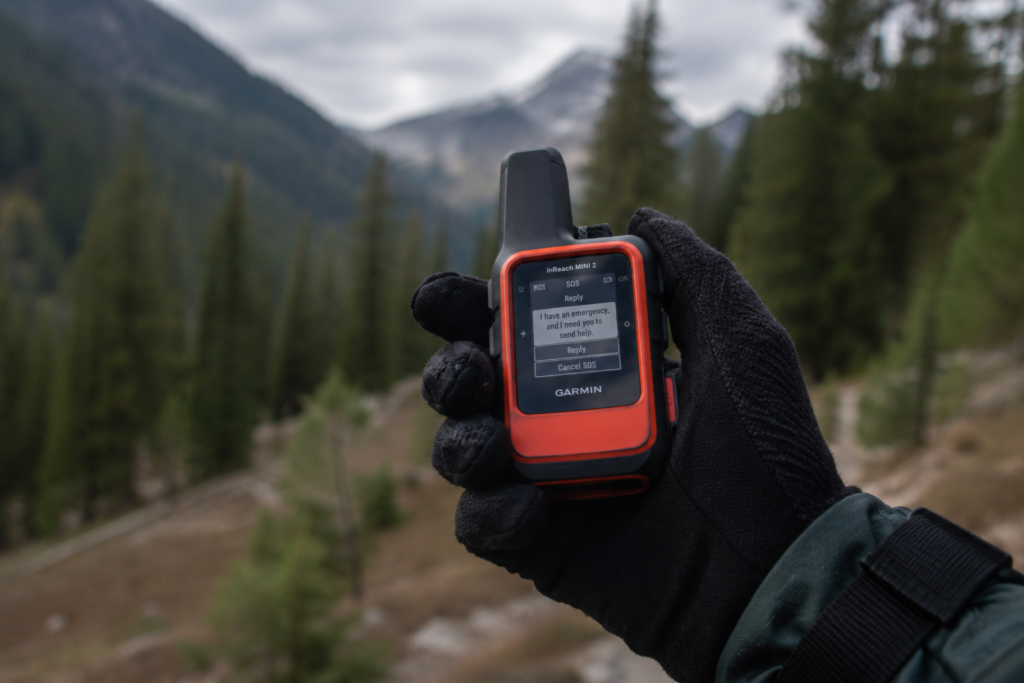
If you camp in remote areas regularly, a satellite communicator is the single most valuable safety investment available to you. Unlike mobile phones, satellite communicators do not require cell towers. They connect directly to satellites and work in virtually any location on Earth with open sky.
- Garmin inReach Mini 2: Two-way satellite messaging, SOS, and GPS tracking. Compact, lightweight, subscription-based. The most popular choice for serious outdoor users.
- SPOT X: Two-way satellite messaging, SOS, and location sharing. Good value for regular users.
- PLB (Personal Locator Beacon): One-way SOS only — no messaging — but extremely reliable, requires no subscription fee, and the signal is received and monitored by government rescue coordination centres.
The key practical point: register your device before you leave. Satellite communicators and PLBs must be registered with the relevant national authority (NOAA in the US, COSPAS-SARSAT internationally) to be connected to your contact details when an SOS is triggered.
If you cannot evacuate and need to signal your location, our dedicated guide to emergency signaling tips for lost campers covers every method from whistle technique and signal mirrors to PLBs and satellite communicators.
Weather Apps and Offline Navigation Tools
- Mountain Forecast: Elevation-specific weather forecasts rather than general area predictions. Significantly more accurate for high-altitude camping.
- Gaia GPS: Offline topographic maps downloaded before you leave. Works without cell signal. Excellent for route planning and emergency navigation.
- OS Maps (UK): The gold standard for UK outdoor navigation. Offline download available on subscription.
- NOAA weather radio: Battery-powered, receives emergency alerts and forecasts without cell signal. Invaluable in the US and Canada.
For any of these tools to help you in an emergency: download your maps and update your forecasts before you enter your camping area. Apps that require internet connection to function are useless in most emergency scenarios.
Practice Your Emergency Drills
This might feel like overkill for a camping holiday — but it genuinely is not. A timed practice evacuation on your first evening at camp takes less than ten minutes and tells you things you simply cannot know otherwise: how long it actually takes your group to pack up the essentials and get into the vehicle, where the bottlenecks are, and whether everyone knows where the go-bag and keys are in the dark.
The most valuable drill is simple: call out ‘we are leaving now’ on arrival evening and time how long it takes from that moment to being in the vehicle with the go-bag, documents, and medications. Most groups are surprised by how long it takes. Running it once at a manageable pace removes the worst of that surprise if you ever need to do it for real.
Wilderness first aid training takes this further — a one-day course covers the most common backcountry medical situations and gives you skills that apply on every trip you ever take from that point forward.
Frequently Asked Questions About Wilderness Emergency Evacuation
What should be in a camping emergency evacuation kit?
A camping go-bag should contain: waterproofed copies of ID and emergency contacts, basic first aid supplies and all medications, a topographic map and compass, a satellite communicator or PLB, an emergency bivvy bag and space blankets, a headtorch with spare batteries, at least 1 litre of water per person, high-calorie no-prep food for 24 hours, fire-starting materials, and a whistle. Everything should fit in a bag you can grab and carry within 30 seconds of the decision to leave.
What is the most important rule for wilderness emergency evacuation?
Leave early. The most consistent finding across wildfire, flash flood, and storm evacuation research is that delayed evacuation dramatically increases risk. Do not wait for an official mandatory order before leaving — voluntary early evacuation is always safer. Set a pre-agreed trigger with your group before the trip that automatically starts your evacuation process, removing the pressure of a difficult judgment call in the moment.
How do I signal for help if I cannot evacuate?
Activate your satellite communicator or PLB first — this sends your GPS coordinates directly to rescue services. If you do not have one: three blasts on a whistle is the universal distress signal. A signal mirror reflecting sunlight is visible to aircraft over very large distances. Bright colored clothing laid flat on open ground is effective from the air. Stay in one place once you have signaled — moving makes rescue harder.
What should I do if a wildfire cuts off my escape route?
If your planned exit is blocked: move to the largest open area you can reach — a clearing, lake edge, or open rock face away from dry vegetation. Create as much distance as possible between yourself and any combustible vegetation. If in a vehicle, pull over in the most open location available, windows closed, engine off, and lie below window level. The vehicle provides meaningful protection from radiant heat as the fire passes. Once the front has passed, exit carefully and move toward safety. Do not return the way the fire came from until surfaces have cooled and official clearance has been given.
Do I need a satellite communicator for camping?
If you camp in areas where cell signal is unreliable — mountain terrain, remote forests, coastal wilderness — a satellite communicator is the most valuable safety investment available to you. PLBs are a lower-cost alternative that provide one-way SOS only. For casual camping at established campgrounds with hosts and good mobile coverage, a satellite communicator is optional but still recommended. The weight and cost are minimal relative to what they provide.
Prepared Campers Enjoy the Wild More: Your Emergency Evacuation Action Plan
Here is something that might seem counterintuitive: campers who have a solid [FK] wilderness emergency evacuation plan tend to enjoy their trips more, not less. The preparation is not about fear — it is about confidence. Knowing you have thought through the scenarios, packed the right kit, filed your trip plan, and agreed your exit routes with your group means you can actually relax and be present in nature rather than quietly worrying in the back of your mind.
Emergency preparedness does not take the adventure out of camping. It keeps the adventure available by making sure a bad weather situation or unexpected event does not become a crisis. Most of what is described in this guide takes an afternoon to prepare and a few minutes to check at each campsite. The return on that investment is every single trip you take from that point forward.
Go out there, read the signs, plan your exits, pack your go-bag, and trust your instincts. The wilderness is beautiful, mostly benign, and worth every moment of preparation it takes to explore it safely.