Common Camping Mistakes to Avoid: What Every Beginner Needs to Know Before the First Trip
-
| Founder & Content Creator

Latest Posts
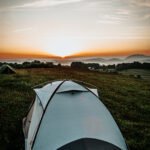
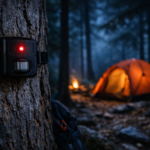
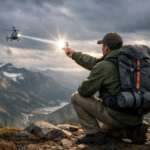
Almost every camper has a story that starts with ‘I can’t believe I forgot…’ or ‘Nobody told me that…’ or — and this is the classic — ‘It seemed fine when I read about it.’ The learning curve for camping is real, and it is steeper than it looks from the outside.
The good news is that most common camping mistakes to avoid are exactly the kind of thing you only need to be told once. They are not complicated. They do not require special skills or expensive gear. They just require knowing about them before you are standing in a field at dusk wondering why the tent poles do not seem to be going where they should.
This guide covers the mistakes that catch first-time campers most often — from the ones that just make a trip uncomfortable to the ones that can genuinely affect your safety. For every mistake, there is a straightforward fix. By the end of this you will be better prepared than most people who are pitching a tent for the third or fourth time.
Everyone Makes Camping Mistakes — Here Is How to Make Fewer of Them
Even experienced campers make mistakes. The difference is that experienced campers have usually made most of the big ones already and have built their systems around not repeating them. This guide is the shortcut to those systems — the benefit of experience without having to earn it the hard way.
According to a popular Camping Report, over 7.2 million Americans go camping for the first time every year. The most common first-time camper complaint in surveys is not the physical challenge — it is things that could have been avoided with five minutes of preparation. Forgotten gear. Wrong campsite. Unprepared for rain. Food that attracted wildlife. These are not bad luck. They are planning gaps, and planning gaps are fixable.
Mistake 1: Not Checking the Weather — and Packing as if It Will Be Perfect
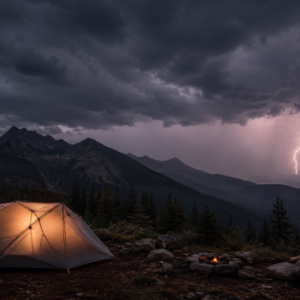
This is one of the most reliably made camping mistakes beginners make, and it is almost always made in good faith. You checked the forecast a week ago and it looked fine. You packed accordingly. And then conditions changed, as they do, because weather does not care about your plans.
The outdoors amplifies weather. A temperature that feels cool at home becomes genuinely cold when you are in a tent with only a sleeping bag between you and the ground. Drizzle that seems minor in a city becomes soaking when you are in a field with nowhere to shelter. Wind that you would not notice on a street removes all warmth from the air in a matter of minutes.
The Fix: Layer Up and Check Twice
- Check the weather forecast specifically for your campsite location — not just the nearest town. Mountain and coastal weather can be dramatically different from nearby lowland conditions.
- Check again the morning you leave, not just the night before. Weather windows can change in 12 hours.
- Pack for one weather category worse than what is forecast. If it looks like a cool clear weekend, pack for cool clear with a possibility of rain. If it looks like warm and sunny, pack a rain layer anyway.
- Layer your clothing system: moisture-wicking base layer, insulating mid layer, waterproof outer shell. This covers most weather combinations without overpacking.
Weather preparation goes beyond checking the forecast — our guide to wet weather camping covers the full picture of how to prepare for rain, from seam sealing your tent to the layering system that keeps you dry in any condition.
Mistake 2: Choosing the Wrong Campsite — the Decision That Shapes Everything
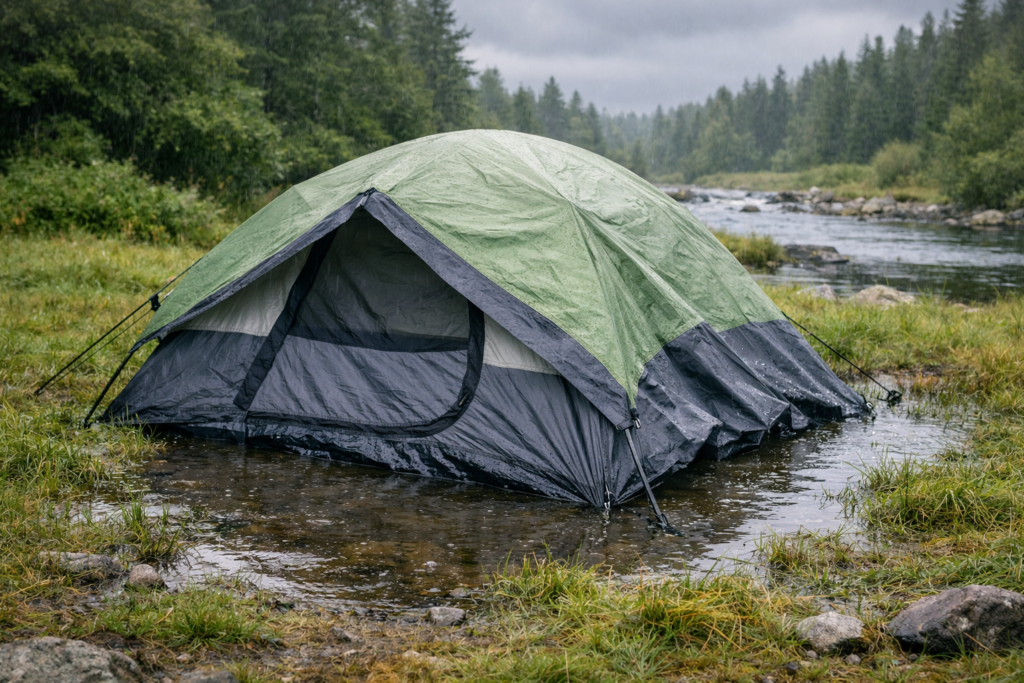
Where you camp affects your sleep, your safety, your morning mood, and the quality of almost every other decision you make on the trip. A well-chosen campsite removes problems before they start. A poorly chosen one creates them in the middle of the night when you have nowhere else to go.
The Fix: Know What to Look for Before You Book
- Avoid low-lying ground: water runs downhill and collects in hollows. A pitch that looks level and fine on a dry day becomes a puddle by morning after rain.
- Distance from water: too close to a river or lake means potentially marshy ground, insects, and wildlife drawn to the water source. A good distance of 50-200 feet is the standard guidance.
- Overhead hazards: look up before you pitch. Dead branches — called widow-makers — fall without warning, especially in wind. Dense canopy above your tent is a genuine risk on a windy night.
- Assess the gradient: a slight slope is useful for drainage. A noticeable slope means you will spend the night sliding toward one end of your sleeping bag.
- Research in advance: read recent reviews for your specific campsite on AllTrails, The Dyrt, or the campground’s own booking site. Recent campers will mention drainage problems, wildlife activity, or noise issues that photographs never show.
Mistake 3: Forgetting Essential Gear — or Packing Far Too Much of It
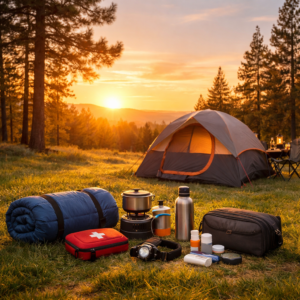
Packing for camping sits at an unusual intersection: too little and you are miserable, too much and you are exhausted. Both extremes are extremely common, and both are avoidable with the same tool: a checklist.
The Underpacking Problem
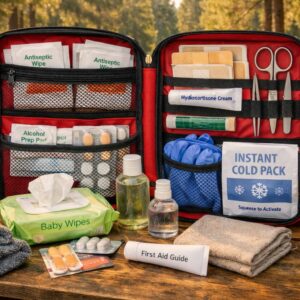
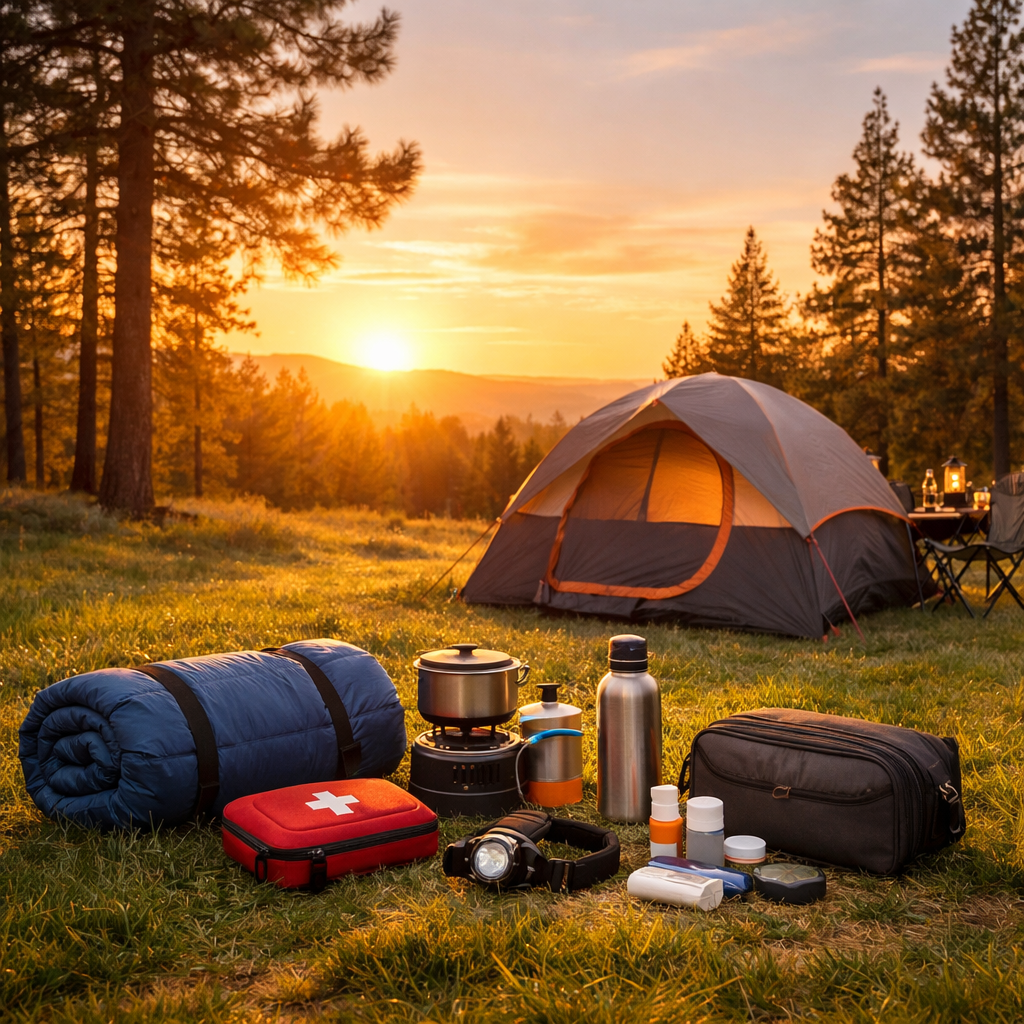
Certain items are absolute non-negotiables regardless of how light you want to pack. A first aid kit. A working light source with spare batteries. Enough water and a means of purifying more. A sleeping bag rated for the temperatures you will encounter. These are not optional extras — they are the items that determine whether something minor stays minor.
A first aid kit should never be left behind regardless of how light you are packing — our essential camping first aid kit guide covers exactly what to include for any camping trip.
The Overpacking Problem: The 20% Body Weight Rule
Overpacking is the more common mistake, especially for first-timers who are not sure what they will need and default to bringing everything just in case. The result is a pack so heavy that the trip is less enjoyable, not more comfortable.
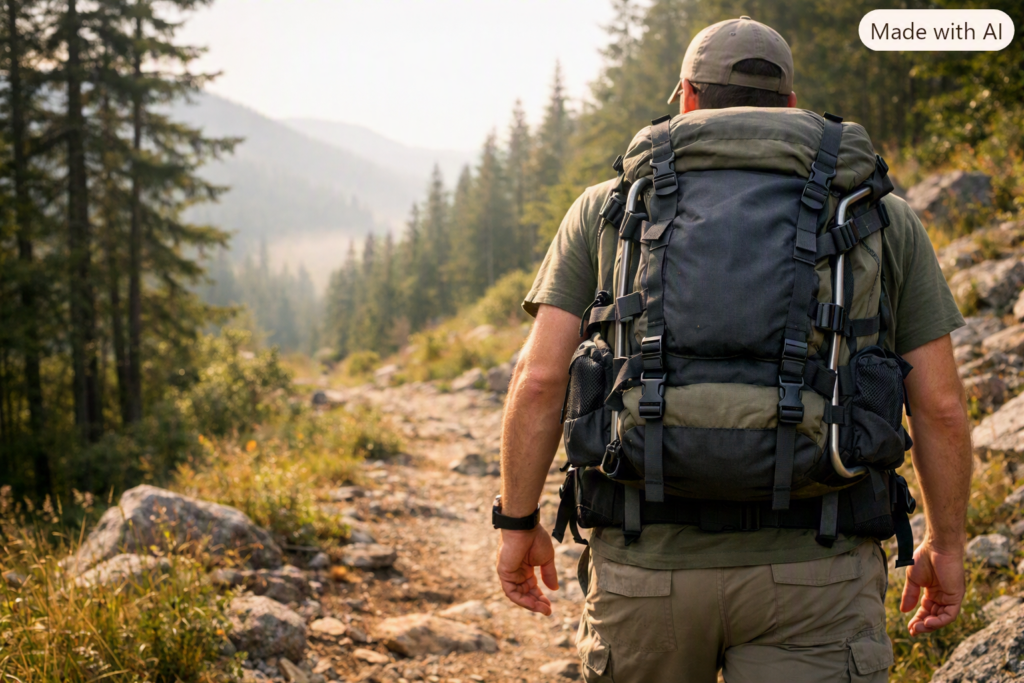
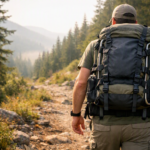
For backpackers, the practical rule is that your loaded pack should weigh no more than 20% of your own body weight. For a 75kg person, that is a 15kg pack maximum. For car camping, weight is less of a constraint — but bulk is still a real issue. A car full of gear you do not use is a car full of things to trip over, lose, and carry.
- After each camping trip: make a note of everything you did not use and leave it at home next time
- Before each trip: for every item, ask whether you will genuinely use it or whether you are packing it ‘just in case’
- First aid kits and emergency items are the exception — these stay regardless of weight
The Multifunctional Gear Fix
The smarter approach to camping packing is choosing gear that serves multiple purposes. One item that does two or three things takes up less space and weight than two or three items that each do one.
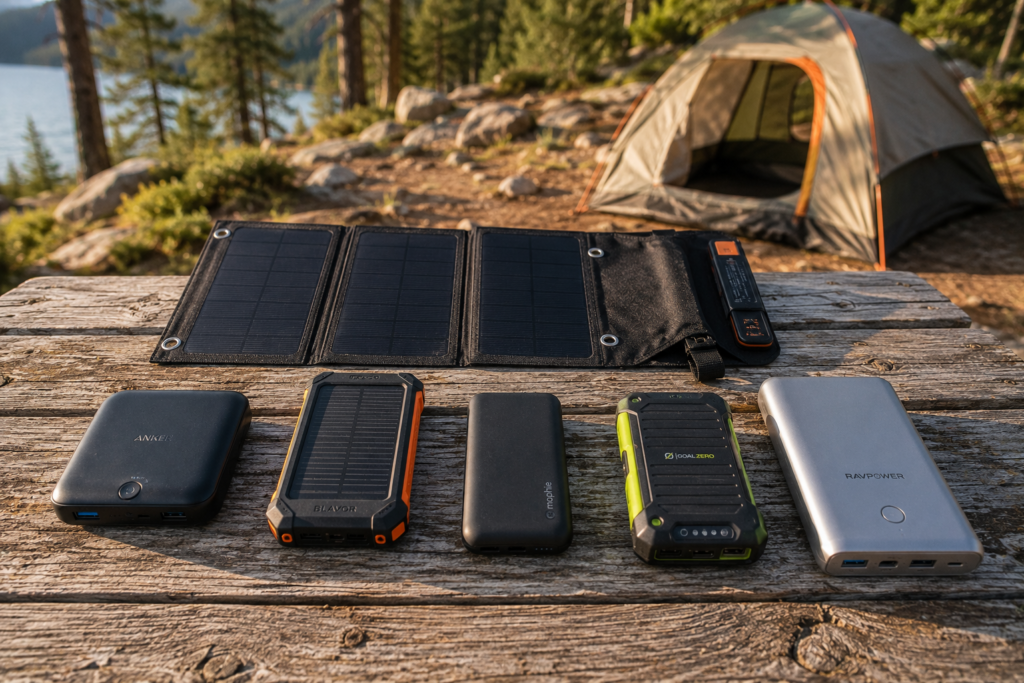
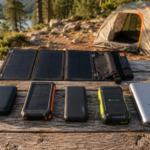
- A lantern that also charges your phone
- A cool box that doubles as seating
- Zip-off hiking trousers that convert to shorts
- A Buff or neck gaiter that works as a hat, a neck warmer, a dust mask, or a headband
- A tarp that can be a ground sheet, a windbreak, a rain shelter, or a signal device
The most reliable solution to forgotten gear is a checklist built before every trip — our complete camping checklist for new campers covers every category from shelter and sleep to cooking, safety, and clothing.
Mistake 4: Not Testing Your Gear at Home First
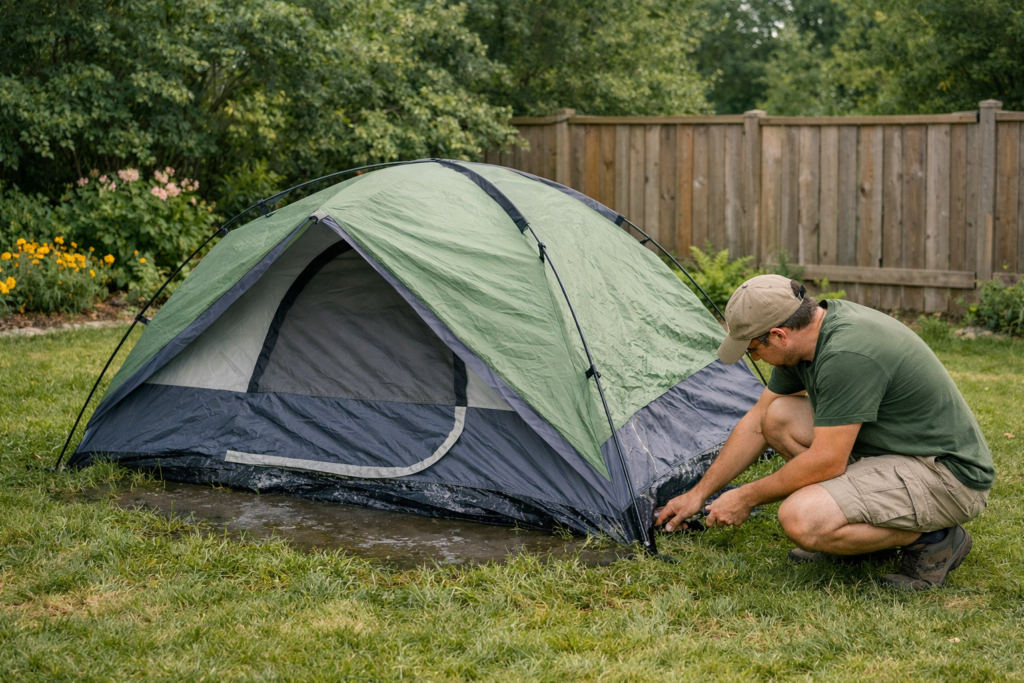
Setting up a tent for the first time in the dark, with insects arriving, after a long drive, when you are hungry — is one of the more reliably unpleasant ways to begin a camping trip. And yet this is exactly the situation many first-timers put themselves in because they have never actually set the tent up before leaving home.
- Pitch your tent in the garden. Check for missing poles, broken zips, or leaks. Run a hose over it if you expect rain — discovering a leak at home is a minor inconvenience.
- Light your camp stove. Boil water. Make sure the fuel canister connects properly and the ignition works.
- Check headtorch batteries and replace them regardless — batteries that feel strong at home drain faster in cold outdoor temperatures.
- If you have new hiking boots, wear them for a few short walks before the trip. Blisters from un-broken footwear on day one of a camping trip are genuinely unpleasant.
- Load your pack and carry it for 20 minutes. Adjust the straps properly. Discover which pressure points need padding before the trail does.
The tent instructions that say ‘easy to pitch in minutes’ were written by someone who pitched it dozens of times before writing that. For everyone else, there is a learning curve. Pitch it at home first, make your mistakes in the garden, and arrive at camp with a working tent you know how to set up. This one habit removes more first-trip stress than almost anything else on this list.
Mistake 5: The Tent Mistakes Most Campers Never Knew They Were Making
Even campers who test their tent at home sometimes make one or both of these — because nobody explicitly told them, and the consequences only become obvious in bad weather.
Not Attaching the Guylines
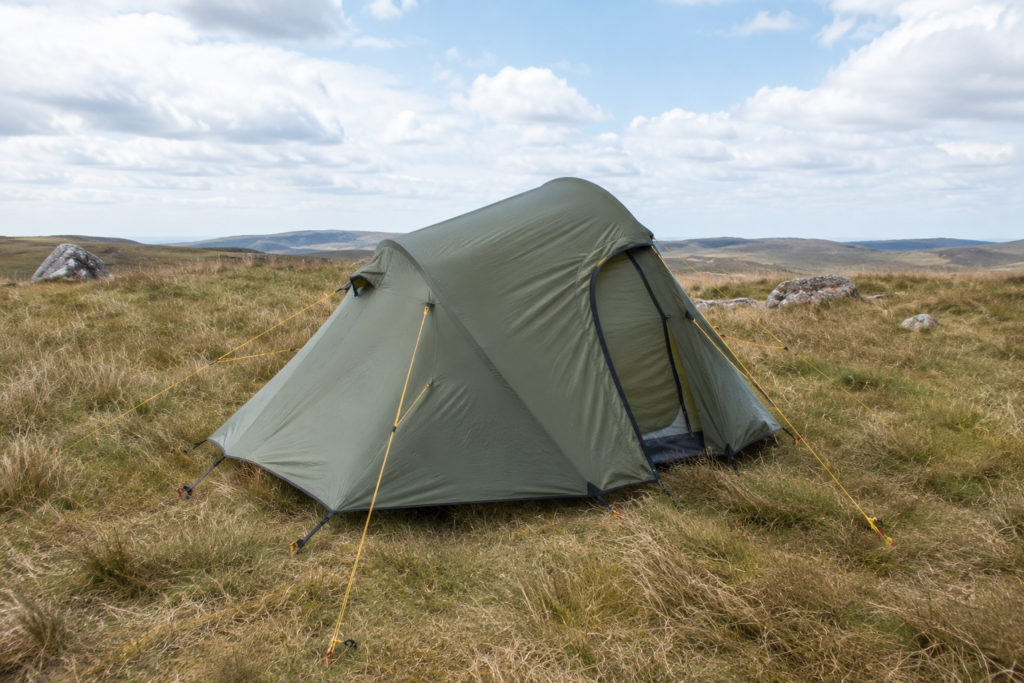
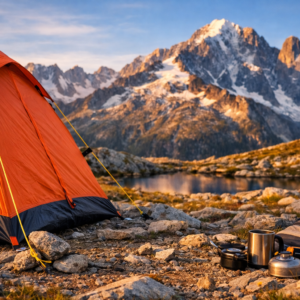
Guylines are the thin cords that run from the rainfly of your tent outward to stakes in the ground. Most campers skip them on calm nights because the tent stands up fine without them. This is the mistake.
Guylines do two things: they keep the rainfly taut and away from the inner tent mesh, which prevents condensation from wicking inward — and they stabilise the tent in wind. A tent without guylines in a storm can collapse, flood with condensation, or in extreme cases, blow away. Guylines take about two minutes to attach. Attach them every time, regardless of the forecast.
Buying the wrong tent for your needs is one of the most common and avoidable camping mistakes — our best camping tents for all weather buyer’s guide covers every category, spec, and the all-important capacity rating truth.
Confusing Sleeping Bag Rating with Sleeping Pad R-Value
This is one of the most common cold-night camping mistakes, and it is based on a genuine misunderstanding of how warmth works outdoors.
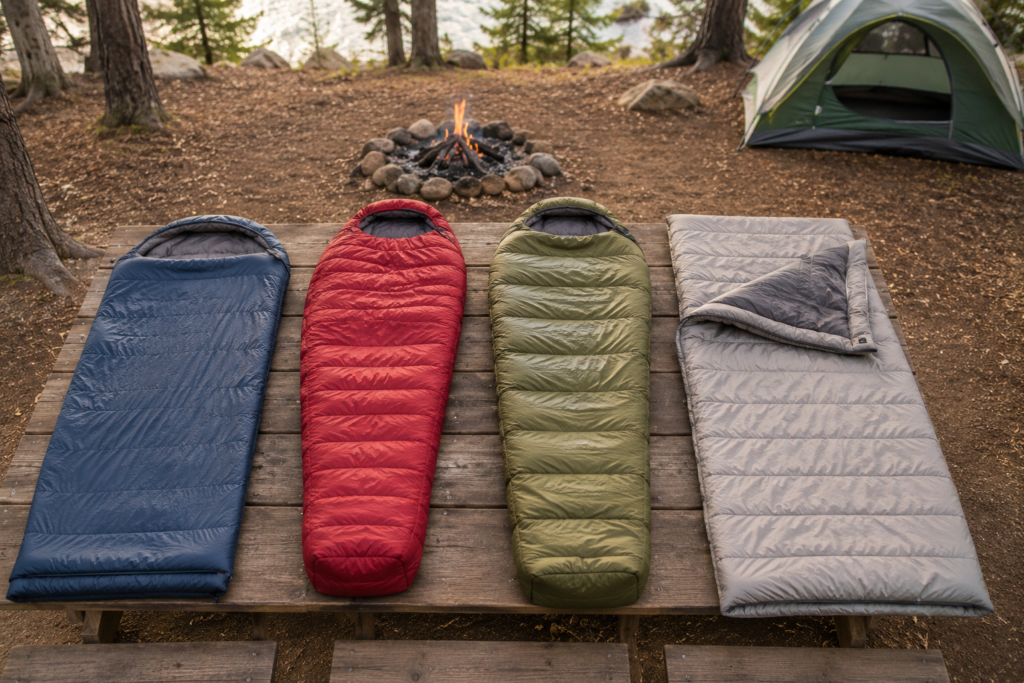
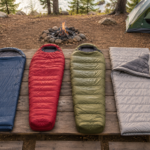
Your sleeping bag keeps heat in. Your sleeping pad keeps cold out. Cold ground draws heat from your body significantly faster than cold air — which means a warm sleeping bag on a poor pad is still a cold night. Both items need to be rated for the temperatures you expect.
- Sleeping bag: choose one rated at least 5°C below the lowest temperature you expect
- Sleeping pad R-value: minimum 3.5 for three-season camping. Higher for cold conditions.
If you wake up cold in a tent and your sleeping bag is rated for the temperature — check the pad. That is almost always the culprit.
One of the most avoidable gear mistakes is buying a sleeping bag based on the survival rating rather than the comfort rating — our best camping sleeping bags guide explains the difference and how to buy correctly the first time.
Mistake 6: Poor Food Storage — the Mistake That Invites Wildlife to Dinner
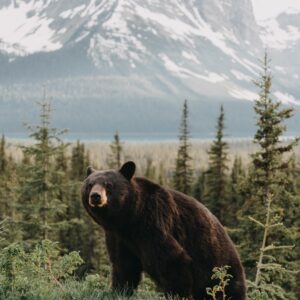
Food stored carelessly at camp is an invitation — and the wildlife that accepts it can range from mildly inconvenient (squirrels making off with your trail mix) to genuinely dangerous (bears drawn to a campsite by food smells).
The Fix: Bear Canisters, Hang Kits, and the 200-Foot Rule
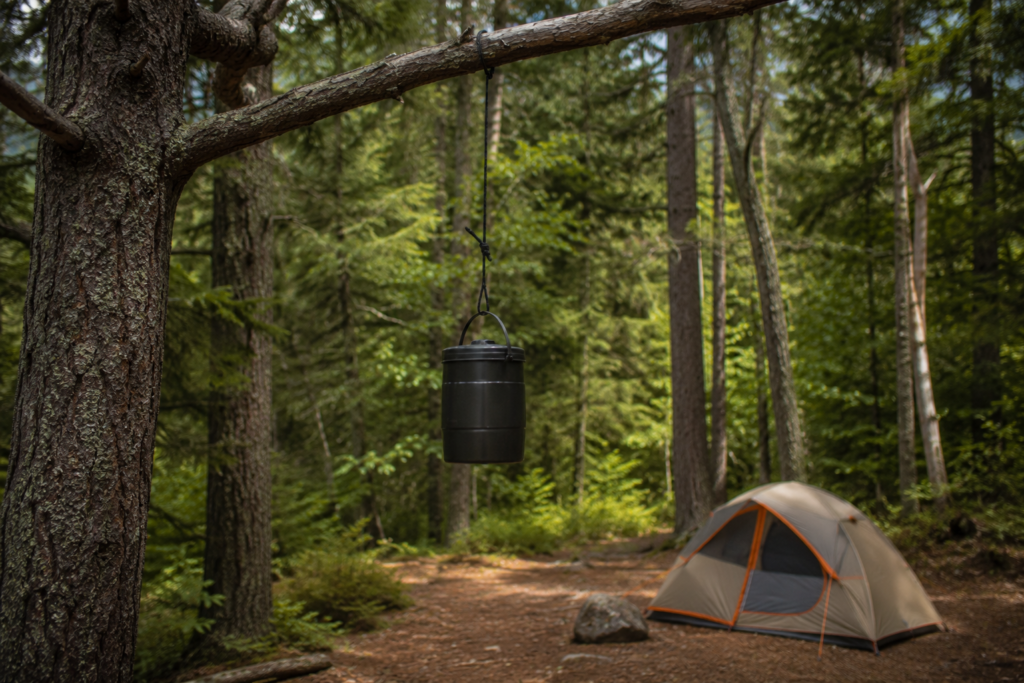
- Store all food, rubbish, and scented items (including toothpaste, sunscreen, and cooking equipment) in a bear canister or hung bear bag when not in use
- The standard guideline: food storage should be at least 200 feet from your sleeping area — far enough that a smell-following animal does not end up at your tent
- Never leave food in your car in bear country — bears can and do break into vehicles for food smells
Proper food storage prevents the vast majority of wildlife encounters at camp — our wildlife safety while camping guide covers how to respond if an encounter happens despite good preparation.
- Cook and eat away from your tent and store all cooking gear with your food, not inside your shelter
- Pack out all rubbish — food waste left at a campsite creates problems for every camper who uses that site afterward
Mistake 7: Campfire Mistakes That Put Everyone at Risk
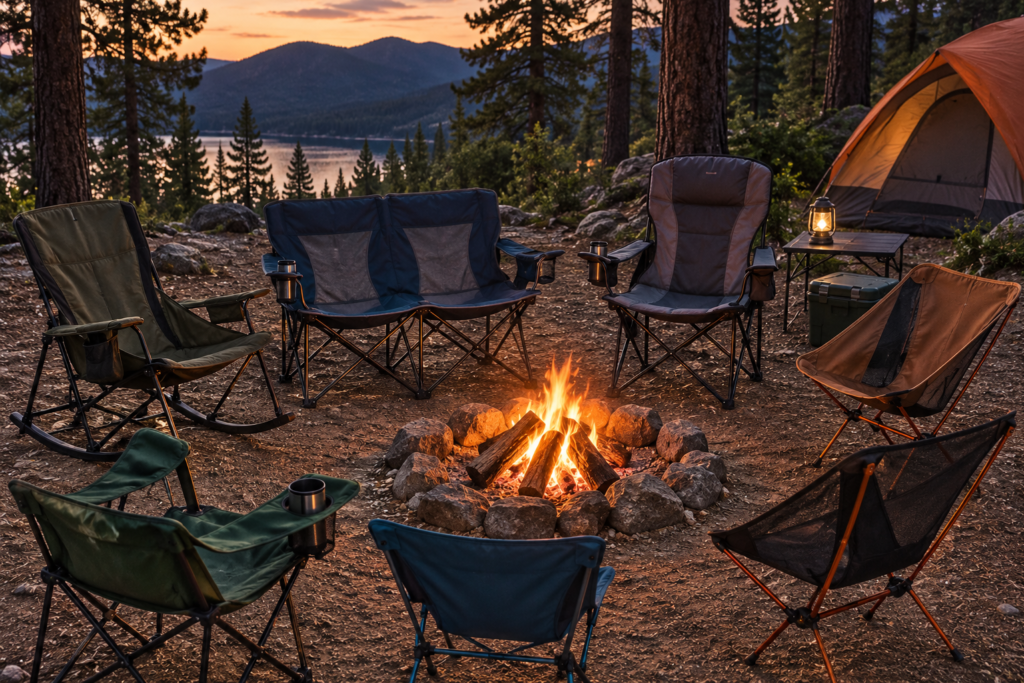
A campfire is one of the great camping experiences — and one of the most consequential things you can get wrong. Most campfire mistakes are not dramatic errors. They are small misjudgments that compound: too close to the tent, not fully extinguished, made in a prohibited area.
Not Checking for Campfire Permits and Bans
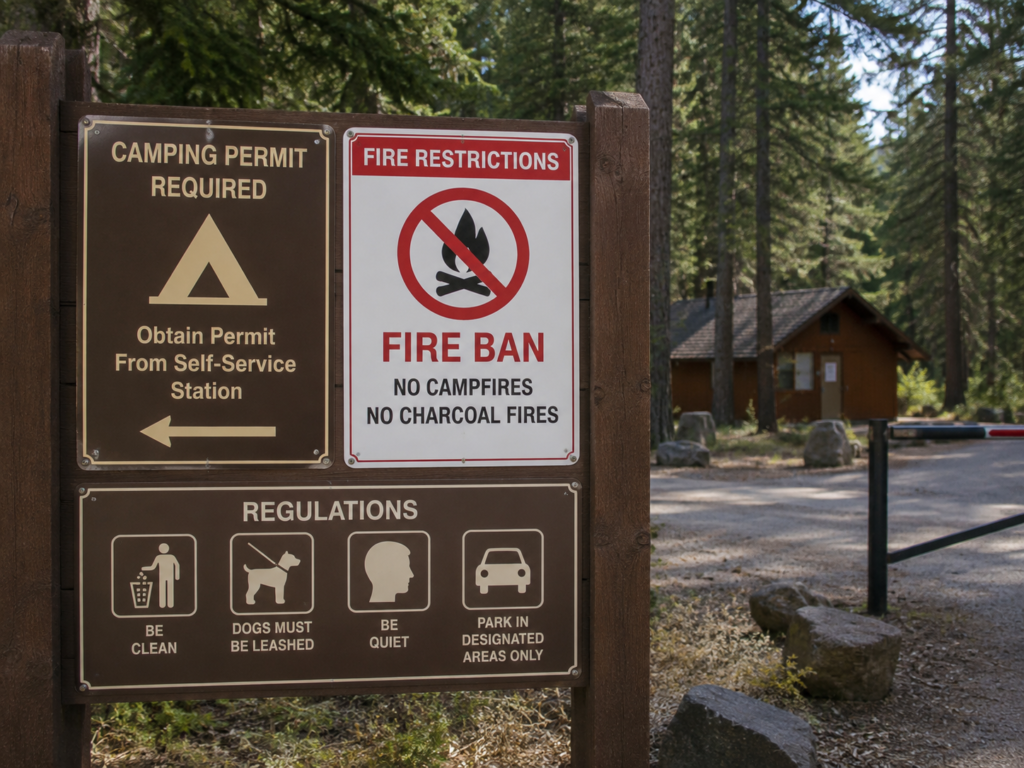
Many campers do not know that campfire restrictions exist, change frequently, and vary by location. During dry periods, fire bans can be implemented at very short notice — sometimes the same day. Starting a fire in a prohibited area is not just a fineable offence in many places. It is a genuine wildfire risk.
- Check campfire regulations for your specific campsite before you leave home — not just on arrival
- Many national parks and public lands require a campfire permit even when fires are otherwise permitted — these are often free and available online but mandatory
- If a fire ban is in effect: use a camp stove instead. No campfire experience is worth the risk or the fine.
- Check again on the day of arrival — conditions change fast in dry weather
Building and Extinguishing the Fire Correctly
- Build fires only in existing fire rings or designated fire areas — never on bare ground in an area with no ring
- Keep fires small and manageable — the goal is a cosy fire, not a bonfire
- Never leave a fire unattended, even briefly
- To extinguish: pour water on the fire, stir the ashes thoroughly, pour more water. The ashes should be cold to the touch before you leave or sleep. If they are still warm — they are still a risk.
- ‘Drown, stir, drown again’ is the standard method — a fire that looks dead can still have live embers underneath
‘The campfire will probably go out on its own’ is a sentence that has started a meaningful percentage of the world’s accidental wildfires. It will not go out on its own. Pour the water, stir the ashes, pour more water, feel the ashes with the back of your hand. If they are warm: more water. This takes three minutes and is non-negotiable.
Mistake 8: Disrespecting Leave No Trace — and Why It Matters More Than You Think
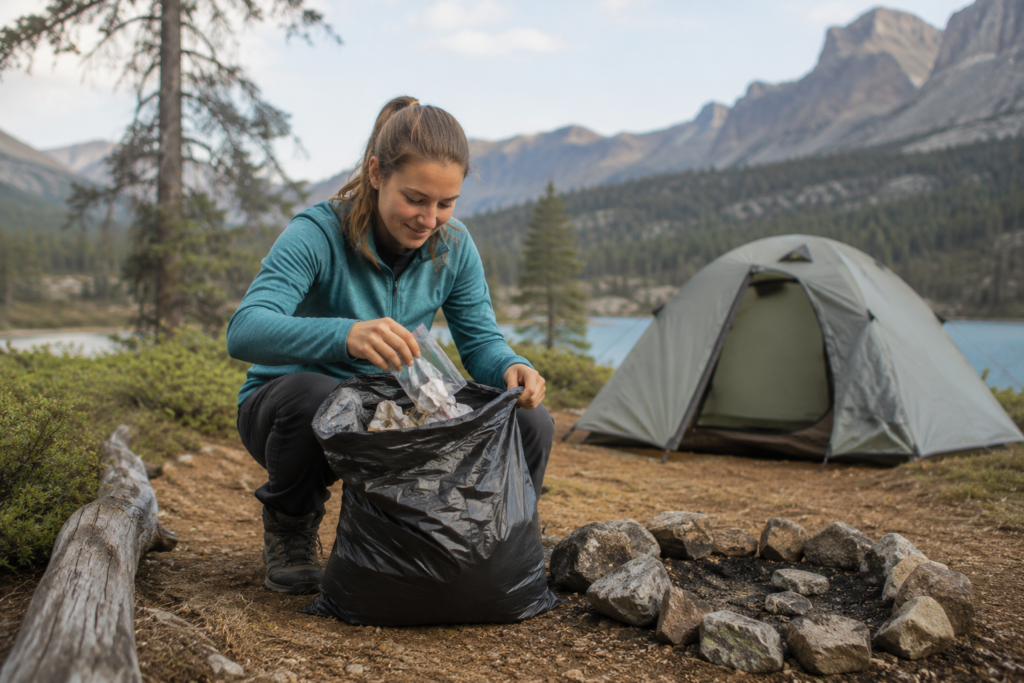
Leave No Trace is not a set of bureaucratic rules imposed on camping. It is a framework for making sure the places you love are still there — and still beautiful — for every trip you take in the future.
- Pack out everything you pack in: rubbish, food waste, and in some wilderness areas, human waste. If you carried it in full, you can carry it out empty.
- Stay on marked trails: vegetation that looks tough is often more fragile than it appears. A single shortcut taken by hundreds of visitors creates permanent erosion.
- Minimise campfire impact: use existing fire rings, keep fires small, and fully extinguish before leaving.
- Respect wildlife: observe from a distance, never feed animals, store food properly.
- Be considerate of other campers: noise carries further in natural settings than in cities. Keep voices and music at a level that does not reach neighbouring campsites after dark.
Leave No Trace is a full set of seven principles — our sustainable camping and Leave No Trace guide covers all of them and exactly what they mean in practice on a camping trip.
Mistake 9: Misjudging What Your Body Can Handle
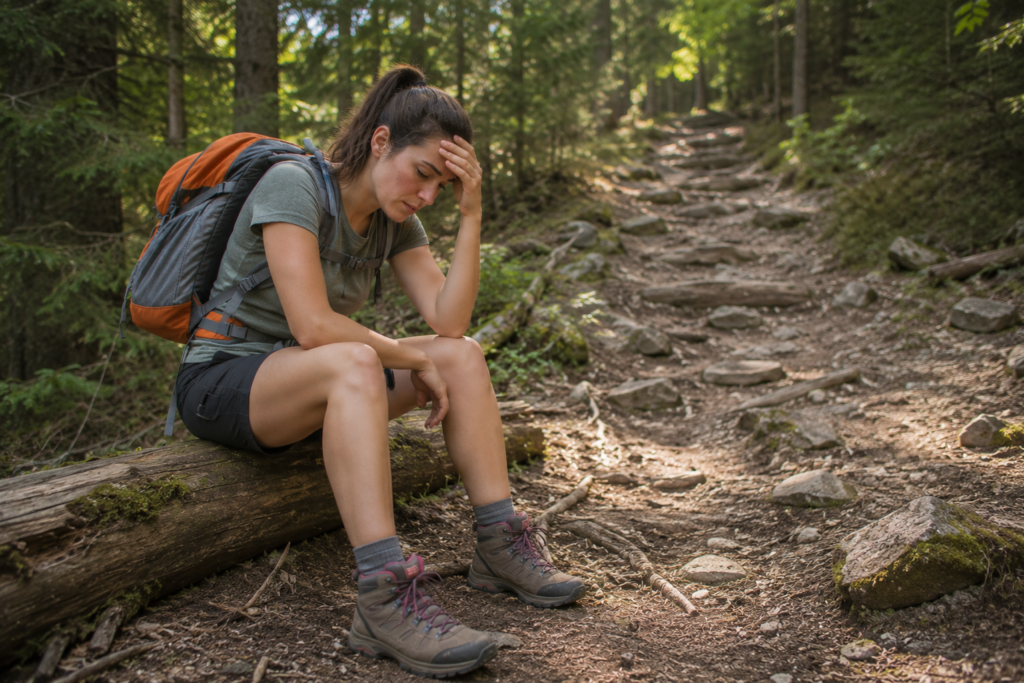
Ambition is a wonderful quality in many areas of life. Choosing your first camping hike is not one of them. First-time campers consistently overestimate how far they can comfortably walk with a loaded pack, how quickly they will adjust to altitude, and how much the combination of physical exertion and outdoor conditions will affect them.
- Start with shorter, less challenging trails than you think you need — you can always add distance on subsequent trips
- Match trail difficulty to the least experienced or fit person in your group, not the most capable
- Build in rest time: camping is not a race. A day with a shorter walk and a longer afternoon at camp is almost always more enjoyable than pushing for distance
- Acclimatise to altitude gradually if you are camping at elevation — the effects of altitude begin to be noticeable above 2,500m and can significantly affect sleep and energy
- Know the signs of overexertion: persistent fatigue, muscle trembling, dizziness, or unusual breathlessness are signals to stop and rest, not push through
Mistake 10: Not Respecting Wildlife — or the Other Campers Around You
Wildlife — Keep Your Distance and Your Food Secure
Wildlife encounters at camp are almost always the result of one of two things: food left accessible, or people approaching animals too closely. Both are avoidable.
- Observe wildlife from a distance — the distance that allows natural behaviour without the animal reacting to your presence
- Never feed wild animals — human food is often harmful to them, and animals that associate humans with food become a risk to other campers
- If an animal approaches your campsite: make yourself large and make noise — most animals are more frightened of you than you are of them
- Know what wildlife is active in your area before you arrive and what specific precautions apply — bear country has different requirements from deer country
Camp Neighbours — Keep the Noise Down
This one does not appear on most camping mistakes lists, but it consistently appears in camping forums as one of the things that ruins trips — not your own preparation failures, but other campers who did not think about noise.
- Sound travels much further in natural settings than in urban environments — what feels like a normal conversation volume around a campfire carries to neighbouring pitches easily
- Most campgrounds have quiet hours (typically 10pm to 7am) — these are not suggestions
- Headtorches on red light mode at camp after dark — white light shining into a neighbouring tent is a specific and common irritant
- Music through a portable speaker: a gentle background is enjoyable, a playlist at full volume is antisocial. Put in headphones or keep it low.
Mistake 11: Not Telling Anyone Where You Are Going
This is the cheapest, easiest, lightest safety measure available to any camper — and it is consistently overlooked. Before every camping trip, leave a trip plan with someone who is not coming with you.
- Where you are going: campsite name, trailhead, grid reference or coordinates
- Your planned route if you are hiking in
- When you expect to be back
- Your vehicle description and registration
- What to do if they do not hear from you by a specific time — and who to call
This single step means that if anything goes wrong — injury, disorientation, equipment failure — someone knows where to start looking. It costs nothing and takes five minutes. There is genuinely no reason not to do it on every trip.
This matters most for anyone camping alone — our solo camping tips for beginners guide covers trip filing, satellite communicators, and the full safety picture for solo wilderness trips.
Frequently Asked Questions About Common Camping Mistakes
What is the most common mistake first-time campers make?
Forgetting to test gear at home before the trip is the most consistently made mistake among first-timers — particularly tent setup. Arriving at a campsite in fading light and discovering you do not know how to pitch your tent, or that a pole is missing, is one of the most reliably avoidable bad starts to a camping trip. Pitch your tent at home at least once before the trip. The second most common is underpacking for weather — check the forecast twice and always pack for one category worse than predicted.
How do I avoid overpacking for camping?
Use the 20% body weight rule as your absolute maximum for backpacking — a 75kg person should not carry more than a 15kg pack. For any camping style, make a list of what you used on your last trip and what you did not — leave the unused items at home next time. Prioritize multifunctional gear: one item that serves three purposes is better than three items that each serve one. First aid kits and emergency supplies are always exceptions — pack these regardless.
Is it safe to leave a campfire to burn out on its own?
No — never. A campfire that looks dead can have live embers underneath that are hot enough to reignite or spread for hours. The correct method is to pour water on the fire, stir the ashes thoroughly, and pour more water. Repeat until the ashes are completely cold to the touch. The back of your hand held close to the ashes is your test — if you feel any heat, the fire is not out. This takes three minutes and is non-negotiable before sleeping or leaving camp.
Why do I get cold at night camping even with a warm sleeping bag?
Almost certainly your sleeping pad. Cold rises from the ground significantly faster than it falls from the air, and a sleeping bag alone provides almost no insulation underneath you because the insulation compresses under your body weight and loses its effectiveness. Your sleeping pad is what insulates you from the ground — choose one with an R-value of at least 3.5 for three-season camping. A warm sleeping bag on a poor sleeping pad is still a cold night.
What should I do if I forget something important on a camping trip?
Stay calm and assess what you actually have. Most camping emergencies are less critical than they feel in the moment. If the missing item is a safety essential — first aid kit, shelter, water purification — and the trip genuinely cannot be safe without it, turn back or do not leave the trailhead. For most other forgotten items, improvise with what you have. Then build a proper checklist for next time and review it before every subsequent trip. The checklist is the solution to almost all forgotten gear.
The Best Trip You Will Ever Have Starts With the Mistakes You Decide Not to Make
Here is the honest truth about common camping mistakes to avoid: none of them are complicated, and none of them require expensive solutions. They require preparation, which costs nothing, and awareness, which costs even less.
Check the weather twice. Test your tent at home. Build a checklist and actually use it. Attach the guylines. Store your food correctly. Check for fire permits. Tell someone where you are going. Attach the guylines.
Most great camping trips are not the result of everything going perfectly. They are the result of most things going reasonably well because someone did a bit of thinking before they left. That person can be you, on every trip, starting with the next one.