Eco-Friendly Camping Gear: Small Swaps, Big Impact on the Planet
-
| Founder & Content Creator

Latest Posts
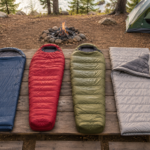
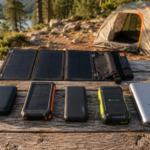
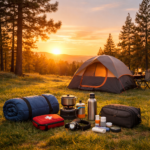


Eco-friendly camping gear is where responsible outdoor adventure actually begins. With over 40 million Americans heading outdoors every year, the cumulative impact of camping on our natural spaces is real and growing. Eco camping — also known as sustainable camping or green camping — involves adopting practices and choosing gear that minimise environmental harm, preserve natural ecosystems, and leave the places we love genuinely better than we found them.
The good news is that being a responsible outdoor enthusiast is not complicated. It comes down to what you pack, how you camp, what you cook, how you handle waste, and how you leave your campsite. This guide covers all of it — practical, friendly, and genuinely useful for every level of camper.
THE CORE IDEA IN ONE LINE
‘Pack In all that you have Packed Out’ — everything you brought in leaves with you. Every other eco camping tip in this guide builds on that single principle.
Why Irresponsible Camping Does More Damage Than You Think
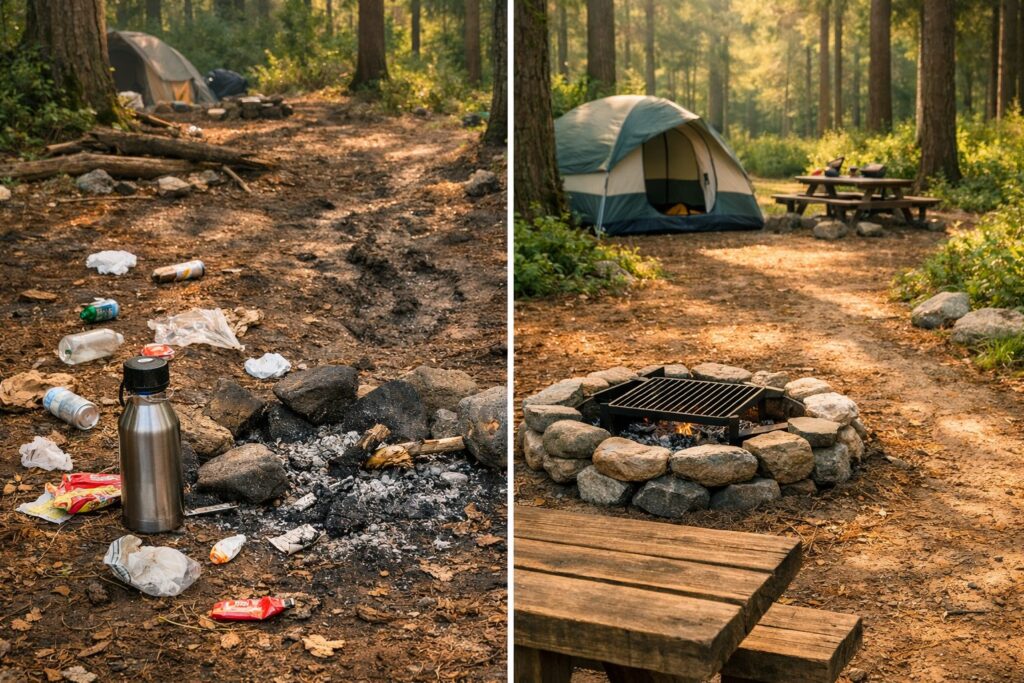
Not adhering to eco-friendly camping practices causes real, measurable harm to the natural spaces we enjoy. Waste not disposed of responsibly pollutes soil and waterways. Non-biodegradable materials like single-use plastic bottles and packaging can take up to 450 years to decompose, contaminating groundwater in areas that were pristine when you camped there. That is a sobering thing to picture.
Careless campfires in undesignated areas pose a serious wildfire risk, threatening both wildlife and surrounding communities. Overusing water at lakeside campsites, or disposing of detergents and waste into natural water bodies, directly damages aquatic ecosystems. Setting up camp on sensitive, undesignated ground causes soil erosion and destroys the delicate plant life growing there — sometimes permanently. None of this is dramatic or intentional. But it happens, and it adds up.
How to Choose the Right Campsite for Low-Impact Camping
Choosing Established Campsites vs Creating New Ones
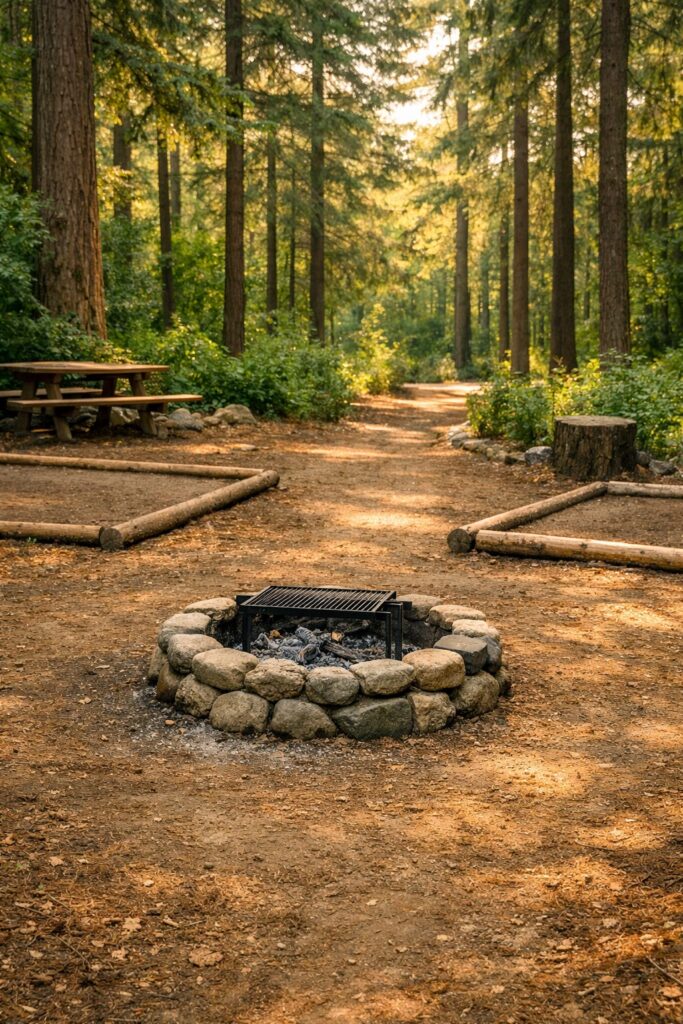
Before embarking on any camping trip, research your destination thoroughly. Check the rules and guidelines that govern the area and always look for already established or previously camped sites rather than creating new camping spots. Each new campsite carved from undisturbed ground concentrates damage in a fresh area. Established sites concentrate use on already-impacted ground — which is far better for the surrounding ecosystem.
Planning in advance and choosing certified or well-regulated camping grounds gives you the best chance of a sustainable trip. Visiting off-peak where possible also reduces pressure on popular camping areas, giving fragile ecosystems time to recover between busy seasons — and, as a bonus, gives you a quieter, more genuine outdoor experience.
Avoiding Delicate Terrain and Fragile Ground
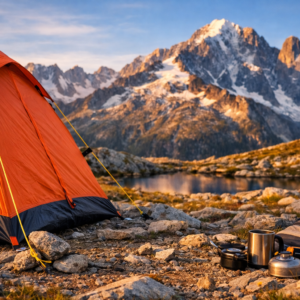
Choose to set up camp on hard, resilient surfaces rather than fragile, sensitive ones. Rocks, dry grass, gravel, and compacted earth are ideal surfaces that resist damage from tent pegs and foot traffic. Fragile vegetation — small shrubs, wildflowers, mosses, and cryptobiotic soil crusts — can take years to recover from a single night of camping. You may not even realize you are trampling something significant. When in doubt, use an established site.
The Best Eco-Friendly Camping Gear and Packing Essentials
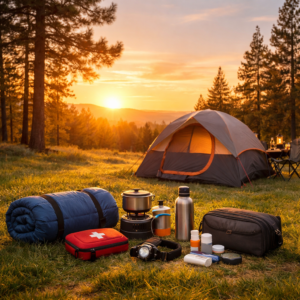
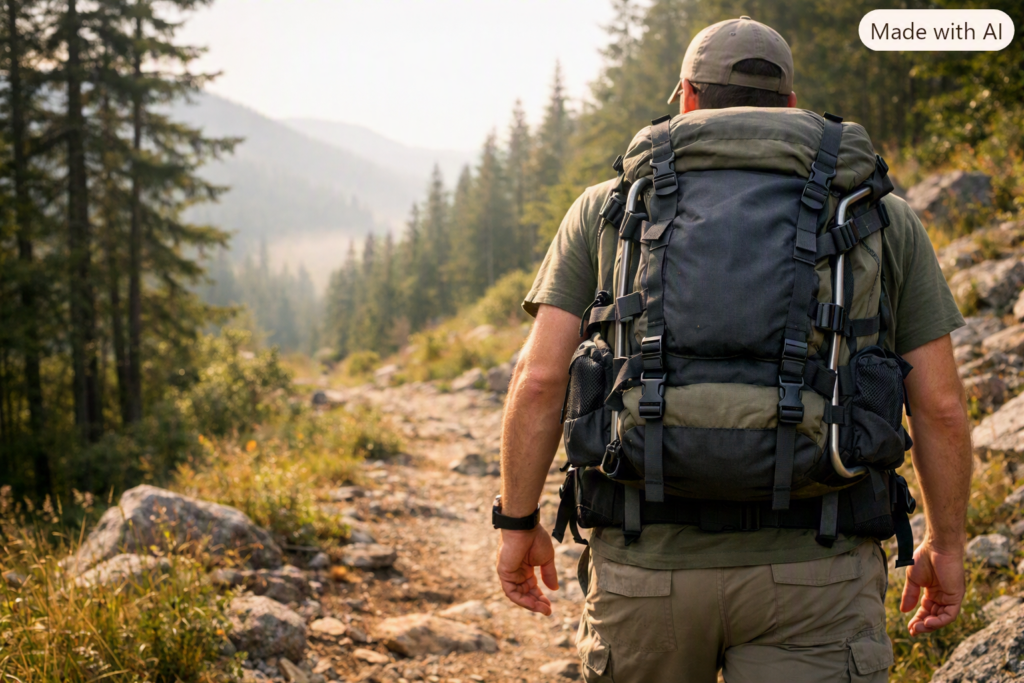
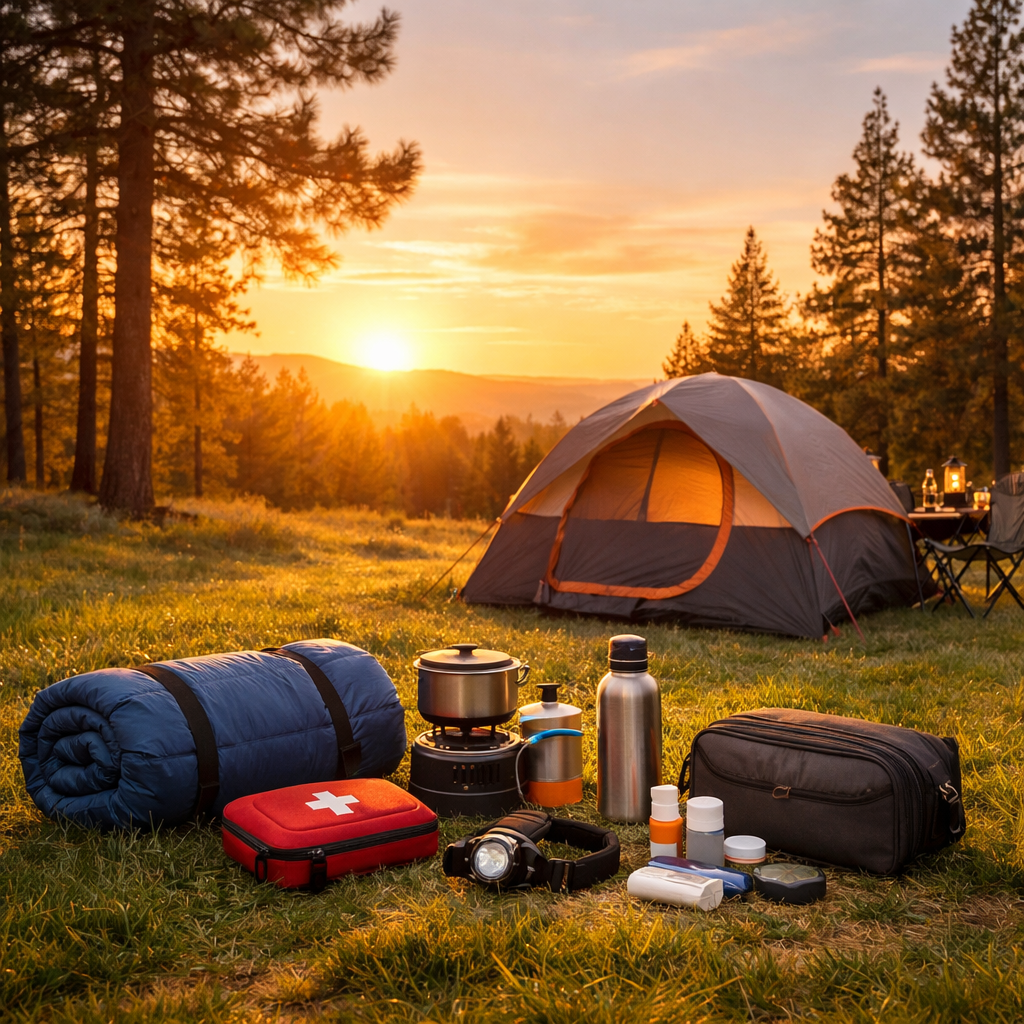
Packing smart is one of the most effective eco camping tips there is. The less you carry, the smaller your footprint — both on the environment and on your back. Understanding the weather conditions at your destination is the starting point: this lets you pack minimally, bringing only clothing appropriate for expected conditions rather than every option. Lightweight, multi-purpose eco-friendly camping gear reduces both your carbon footprint and your pack weight.
Essential Eco-Friendly Camping Gear List
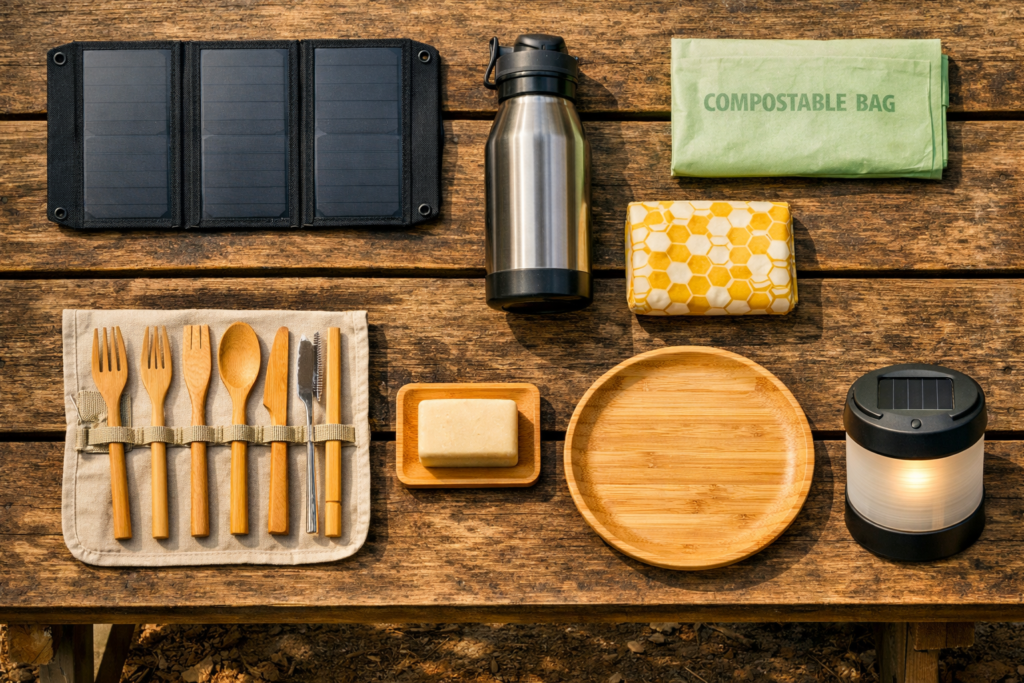
Solar and Renewable Energy Gear Worth Packing
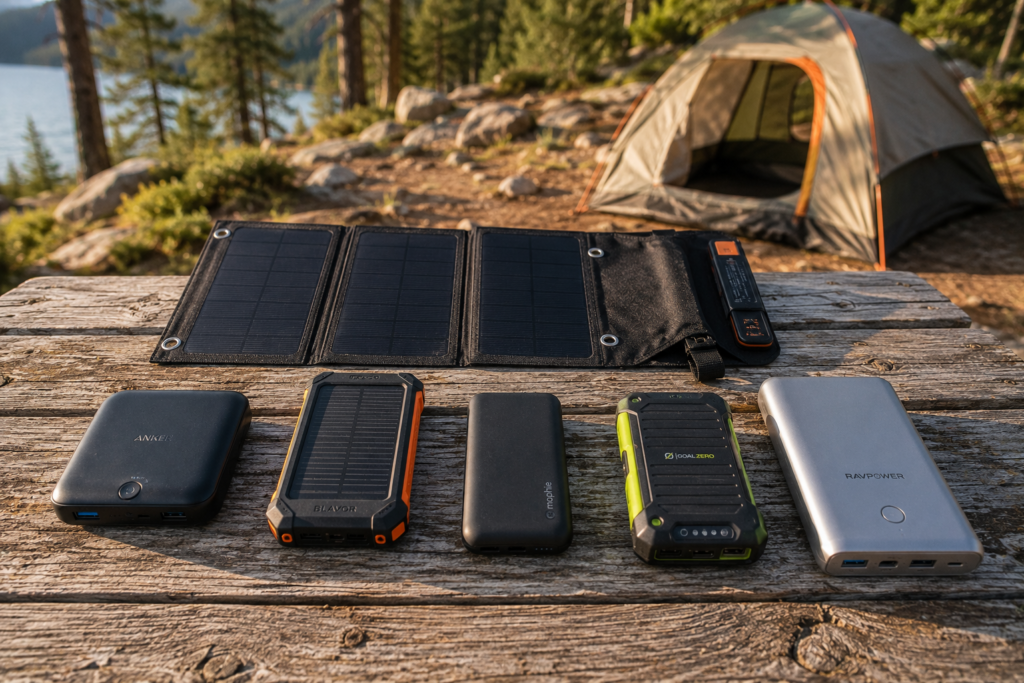
- Solar panels and solar-powered lanterns — harness the sun’s energy to charge devices and light your campsite without batteries or fuel
- Reusable water bottles and water filters — replace single-use plastic entirely. A filter bottle makes any fresh water source drinkable
- Bamboo cutlery, plates and cups — biodegradable, lightweight, and functional. One purchase that replaces endless single-use plastic
- Biodegradable toiletries — soap, shampoo, and toothpaste that break down naturally and are safe near water sources
- Beeswax food wraps — replace cling film for food storage. Washable, reusable, and completely compostable
- Compostable trash bags — for responsible waste management at camp. Separate wet and dry waste before you leave home
- Reusable containers for food and storage — instead of disposable packaging that becomes waste at the campsite
- Ultralight gear from recycled materials — investing in well-made, sustainable gear reduces both your pack weight and the environmental cost of manufacturing
Need the full item-by-item packing list? Our [complete camping checklist for new campers] covers every gear category — use it alongside this eco camping gear guide.
Sustainable Camping Packing Tips
- Pack minimally — bring only what you actually need. Every unnecessary item has a manufacturing and transport footprint
- Avoid using ACs and heaters — adapt to natural ways of heating and cooling instead
- Pitch tents in shaded positions for natural cooling in summer; orientate toward sunlight in cooler conditions
- Avoid packing plastic containers and bottles — use reusable alternatives for everything
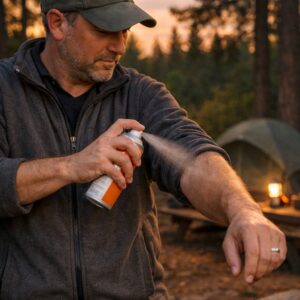
- Pack earth-friendly insect repellent — plant-based alternatives are effective and gentler on waterway ecosystems
- Keep one trash bag for dry non-biodegradable waste and a separate one for organic waste — clearly labelled before you leave home
- Use compostable trash bags — so even your waste management gear leaves minimal trace
Sustainable Cooking at Camp: Food Choices That Reduce Your Footprint
Best Eco-Friendly Cookware Materials for Camping
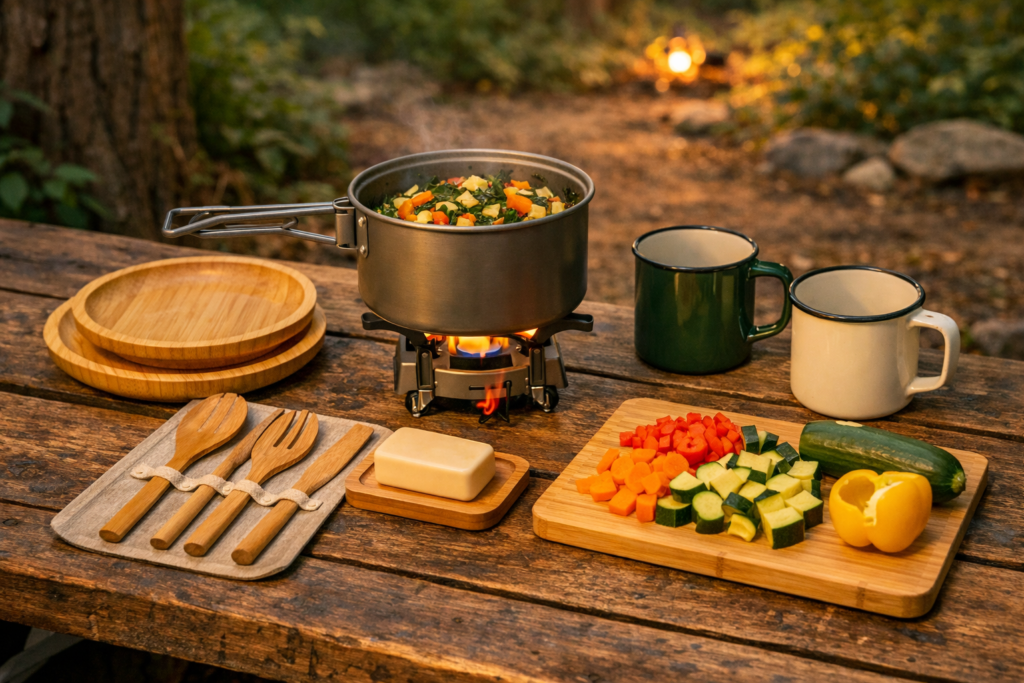
Use cookware that is genuinely eco-friendly — bamboo, enamel, titanium, and recycled aluminium are all excellent materials. Bamboo plates and cups are biodegradable at end of life. Titanium pots last for decades and are fully recyclable. Enamel is non-toxic, durable, and adds zero chemicals to your food or the environment. Avoiding single-use plates and glasses entirely is one of the simplest and most impactful sustainable camping choices you can make.
- Bamboo plates, bowls and cups — biodegradable, functional, and completely plastic-free
- Titanium or recycled aluminium pots and pans — buy once, use for decades
- Enamel mugs — durable, non-toxic, and a camping classic for good reason
- Use a camp stove rather than relying on campfires for cooking — faster, more controllable, leaves no fire scar
Zero-Waste Food Storage and Meal Planning
Have a clear plan for what you will cook during the trip before you leave. Prepare and portion food at home into reusable containers — this dramatically reduces packaging waste at camp and makes cooking significantly easier. Resort to consuming local and organic produce available near your camping destination where possible, rather than packing excessive canned and packaged food.
Try going plant-based for at least some of your camp meals. Plant-based foods typically require fewer resources to produce and store, generate less cooking smell that could attract wildlife, and often come in less packaging than meat and dairy products. You do not have to be a committed vegetarian to appreciate a simple lentil curry or pasta with roasted vegetables cooked over a camp stove — and these meals are genuinely among the easiest outdoor cooking options available.
- Pre-portion all ingredients at home in reusable containers — no packaging waste at camp
- Buy local produce near your destination where possible — fresher, lower transport footprint, supports local communities
- Try plant-based camp meals for at least some of your trip — lentils, pasta, rice, and vegetables are cheap, lightweight, and require no refrigeration
- Use beeswax wraps instead of cling film for food storage
- Bring a sealed organic waste bag — take food scraps home to compost rather than leaving them at the campsite
Wildlife Safety and Responsible Behaviour in the Wild
Camping in the wild means sharing space with animals that were there long before you arrived. Responsible wildlife behaviour is not just about protecting the animals — it directly protects you and other campers too. Animals that associate human campsites with food become bold and ultimately dangerous, which tends to end badly for the animal rather than the human. Every responsible choice you make around wildlife keeps that from happening.
Safe Food Storage Around Wildlife
The Correct Way to Store Food at Camp
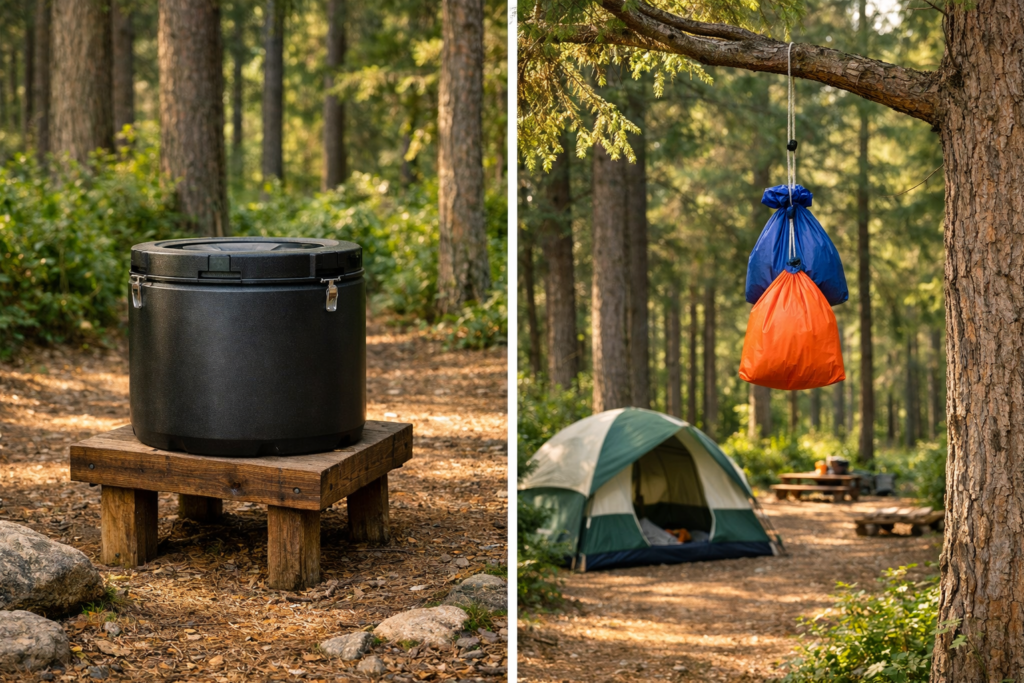
Keep all food, cooking equipment, and scented items — including toiletries — secured away from your sleeping area at all times. Use bear-proof canisters where provided. Where not, hang your food bag at least 12 feet high and 6 feet away from the tree trunk using the PCT hang method. Never leave food unattended on the camp table, even for a few minutes — coastal birds and bold mammals will find it very quickly indeed.
Responsible Behavior Around Wild Animals
- Avoid making loud, unnecessary noise — this disturbs the wildlife around your site, particularly at dawn and dusk when animals are most active
- Never feed any animals that approach — not squirrels, not birds, not deer. Feeding wildlife habituates them to humans in ways that get them removed or killed
- Avoid using heavily scented products — perfumes, scented sunscreens, and scented toiletries attract wildlife. Use unscented alternatives outdoors
- Keep pets leashed at all times unless in a designated off-lead area
- Keep a safe, respectful distance from all wild animals — observe without approaching, following, or positioning yourself between an animal and its young
For a comprehensive guide to animal encounters — from insects to large predators — our [wildlife safety while camping] handbook covers every scenario you might face outdoors.
Campfire Safety and Ethics Every Responsible Camper Needs to Know
A campfire is one of camping’s greatest joys — and one of its most serious responsibilities. Setting up a campfire in the wrong place, leaving it unattended, or extinguishing it improperly can cause irreversible damage to the ecosystem around your site. Getting this right is fundamental to being a responsible outdoor enthusiast.
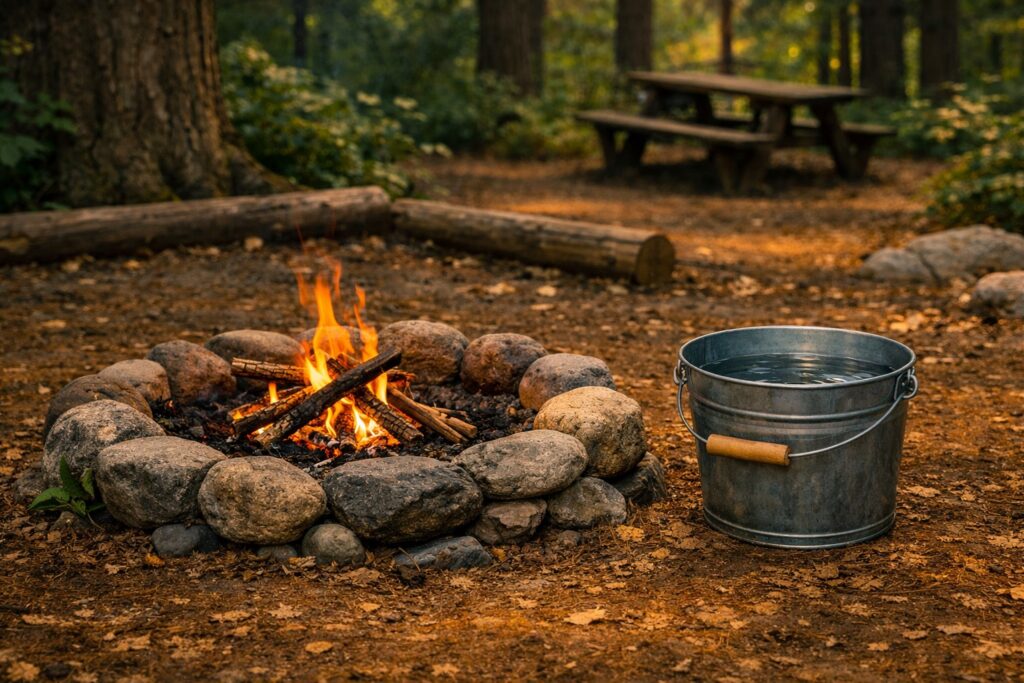
How to Build and Extinguish a Responsible Campfire
Step-by-Step — How to Fully Extinguish a Campfire
- Set up campfires only in designated fire rings — never create a new fire ring or burn in an undesignated area
- Collect only dead, fallen wood — never cut branches from living trees for firewood
- Keep flammable materials well away from the fire area at all times
- Never use petrol, accelerants, or lighter fluid to start a campfire
- Keep a bucket of water beside the fire at all times — not just for emergencies but for controlled extinguishing
- Never leave a campfire unattended — ever. Not for ‘just a minute’, not while you go to the tent
- Check local fire bans and restrictions before your trip — some areas prohibit fires entirely during dry seasons
Extinguishing a campfire correctly is as important as building it responsibly. Here is the correct sequence:
- Step 1 : Pour water generously over the fire — all the flames, all the embers, all the ash
- Step 2: Stir the ash thoroughly with a stick while continuing to add water — reach into every layer
- Step 3: Feel for heat with the back of your hand above the ash — if warmth is still present, add more water and repeat
- Step 4: Continue until the ash is completely cold to the touch
- Step 5: Scatter the cold wet ash widely in the morning before leaving — never leave a mounded ash pile
Off-Roading and Trail Rules: Protect What You Came to See
Off-roading during camping trips sounds exciting and it genuinely can be — but it comes with real responsibility. Sticking strictly to trail markers and designated paths is not bureaucratic rule-following. It is protecting the very environment that makes the trip worth taking. Off-trail vehicle damage can take decades to recover. Soil compaction from vehicle or foot traffic affects plant growth for years by destroying the microscopic soil structure that roots depend on.
- Follow trail markers at all times — do not go beyond them regardless of how accessible an area looks
- Stick to designated trails — even a few steps off-trail tramples vegetation and begins soil compaction
- Walk single file in groups — this concentrates foot traffic on the narrowest possible strip
- Use navigation apps with downloaded offline maps — having GPS removes the temptation to guess routes through undesignated areas
- If you find yourself off-trail — retrace your steps exactly rather than forging ahead
Leave No Trace: The One Rule That Covers Everything Else
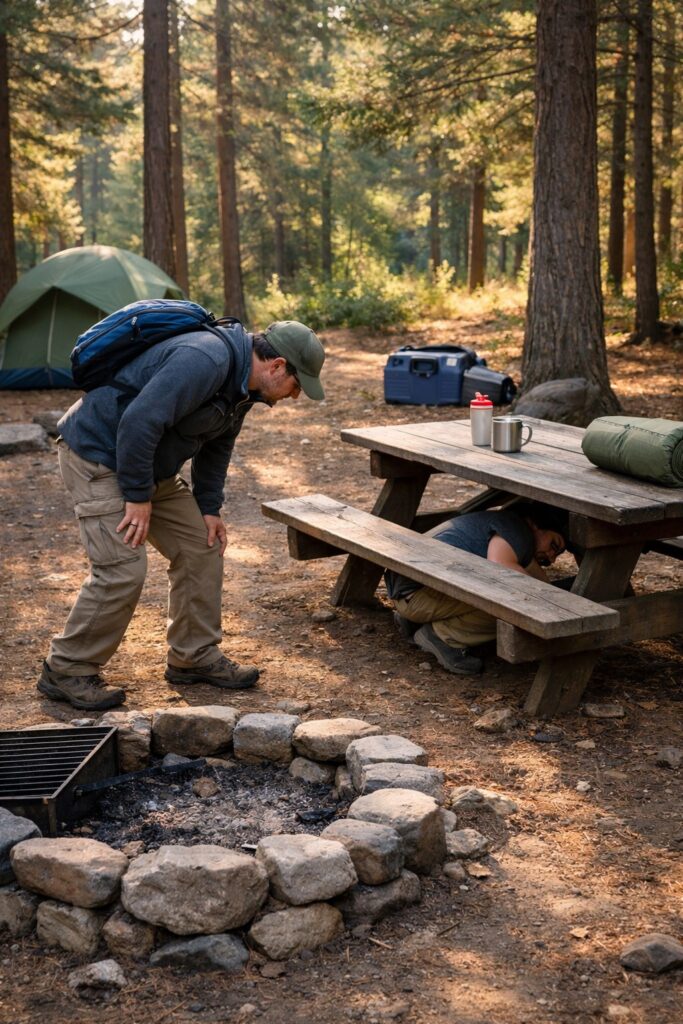
When all the specific tips and practices distil down to one principle, it is this: Leave No Trace. Pack out everything you brought in. Inspect every corner of your campsite before you leave. Check for litter, leftover food, any gear forgotten under a table or behind a rock. Leave your campsite in exactly the same condition you found it — or better.
The Campsite Inspection Checklist
Create a routine before every departure. Here is a simple campsite inspection checklist to run through before you leave any site:
- Scan the entire campsite systematically — near the tent, around the fire ring, under the table, along the perimeter
- Check for any litter, packaging, food scraps, or leftover items from any previous occupants too — leave it better than you found it
- Ensure the fire is completely cold — not just out, but genuinely cold to the touch
- Scatter cold ash from the fire ring — do not leave a mounded pile
- Remove all tent pegs and guy lines — these are easily forgotten and left behind
- Dispose of grey water at least 200 feet from water sources — scatter widely, never dump in one spot
- Take photos of the campsite before leaving — this habit quickly reveals anything missed, and builds a useful routine over time
When these guidelines are followed consistently, they effectively reduce environmental impact and leave the surroundings green and undisturbed upon departure. This guarantees the continued beauty and vitality of the natural spaces we love — for the next visitors, and for the generations of campers who come after us.
For the full deep-dive on all the Leave No Trace principles and sustainable outdoor ethics, our [sustainable camping Leave No Trace guide] is the complete companion to this post.
Frequently Asked Questions About Eco Camping Tips
These are the questions responsible outdoor enthusiasts ask most often about eco-friendly camping — answered honestly and practically.
What are the most important eco camping tips for beginners?
Start with three things: pack only reusable containers and cutlery, choose an established campsite, and commit to packing out every single piece of waste you bring in. These three habits alone cover the majority of a beginner’s environmental impact. From there, swap to biodegradable toiletries and a solar lantern, and you are already camping more responsibly than the majority of outdoor visitors.
What eco-friendly camping gear should I buy first?
A reusable water bottle with a built-in filter is the single most impactful first purchase — it eliminates single-use plastic bottles entirely. After that: a bamboo or titanium cutlery set, biodegradable soap, and a solar LED lantern. These four items replace a significant volume of disposable and single-use products and pay for themselves quickly.
How do I reduce waste while camping?
Pre-portion and pack all food at home in reusable containers so no packaging enters your campsite. Bring clearly labelled bags for dry waste, wet organic waste, and recyclables. Use beeswax wraps instead of cling film. Carry a compostable bag for food scraps. Before leaving, inspect every inch of your campsite for litter. Pick up any waste left by previous visitors. Leave the site cleaner than you found it.
Is bamboo camping gear actually eco-friendly?
Yes — genuinely. Bamboo grows rapidly without pesticides, requires minimal processing, and biodegrades completely at end of life. Bamboo cutlery and plates are a real improvement over plastic in every environmental measure. Look for sustainably sourced bamboo with credible certification rather than purely marketing claims.
What is the Leave No Trace principle in simple terms?
Leave No Trace means leaving your campsite in exactly the same — or better — condition than you found it. Pack out all waste, pick up any litter you find, avoid creating new campfire rings or new paths, store food safely, and respect wildlife by observing without interacting. In one sentence: take only photographs, leave only footprints.
Pack Your Kit, Respect the Wild, Leave It Better Than You Found It
Being a responsible outdoor enthusiast is not about perfection. It is about intention — and the habit of making better choices, trip by trip, until they become automatic. The campers who have the greatest impact on natural spaces are not always the most experienced. They are the ones who thought carefully before they packed, who chose the right gear, who cleaned up before they left, and who left the fire completely cold.
By following these eco camping tips and choosing eco-friendly camping gear thoughtfully, you join a growing community of outdoor enthusiasts who understand that protecting our natural spaces today is what ensures extraordinary adventures tomorrow — for you, for everyone who follows, and for the wild places themselves.