Ready-to-Eat Camping Food: The Complete No-Cook Guide for Every Camper
-
| Founder & Content Creator

Latest Posts
You have just finished a six-hour hiking day. Your legs ache, the sun is dropping, and the last thing you want to do is spend the next 45 minutes figuring out how to cook dinner on a single-burner stove in fading light.
This is exactly when good ready-to-eat camping food earns its place in your pack. Not boring food. Not sad food. Genuinely decent meals and snacks that take minutes to prepare, weigh almost nothing, and leave you with barely any washing up — so you can get back to sitting by the fire where you actually want to be.
This guide covers every category of no-cook camping food worth knowing about — from freeze-dried meals and rice pouches to charcuterie boards, overnight oats, and the humble tuna packet that experienced backpackers swear by.
Before you think about which foods to pack, make sure the rest of your trip is sorted first — our complete camping checklist for new campers gives you the full picture.
Why No-Cook Camping Food Is Worth Planning For
Here is something most campers only discover on their first evening at camp: the gap between “I will cook a proper meal tonight” and “please just give me food right now” is smaller than you think. You are tired, it is getting dark, the wind has picked up, and boiling water suddenly sounds like a lot of effort.
That is not a failure of planning. That is just camping. And it is exactly why experienced campers always have no-cook camping meals in their pack alongside anything that requires a stove.
These are not a backup plan or a compromise. They are a deliberate, smart part of any well-packed food kit. Here is why:
- Fire restrictions: Many campsites — especially during dry summer months — prohibit open fires and sometimes even stoves. Having no-cook options means you eat well regardless.
- Weight savings: Going stoveless eliminates the stove, fuel canister, and pot from your pack — potentially saving 500g-1kg on a backpacking trip.
- Speed: Tear open a packet, add cold or hot water, eat. Day one arrivals and final-day departures are always easier with no-cook options.
- Less wildlife attraction: Cooking amplifies food smells significantly. No-cook or cold-soak meals reduce the scent footprint that attracts animals to your campsite.
- Emergency backup: If your stove fails or fuel runs out, ready-to-eat camping food is your safety net.
| PRO TIP | The best approach is a hybrid: plan one or two proper cooked meals per trip and fill the rest with ready-to-eat options. This gives you the enjoyment of cooking at camp without the pressure of having to cook every single meal when you are tired. |
The Best Ready-to-Eat Camping Food by Category
Here is a breakdown of every category of ready-to-eat camping food worth knowing — what each one is, why campers love it, and what to look for when buying.
Dehydrated and Freeze-Dried Meals: The Lightweight Champions
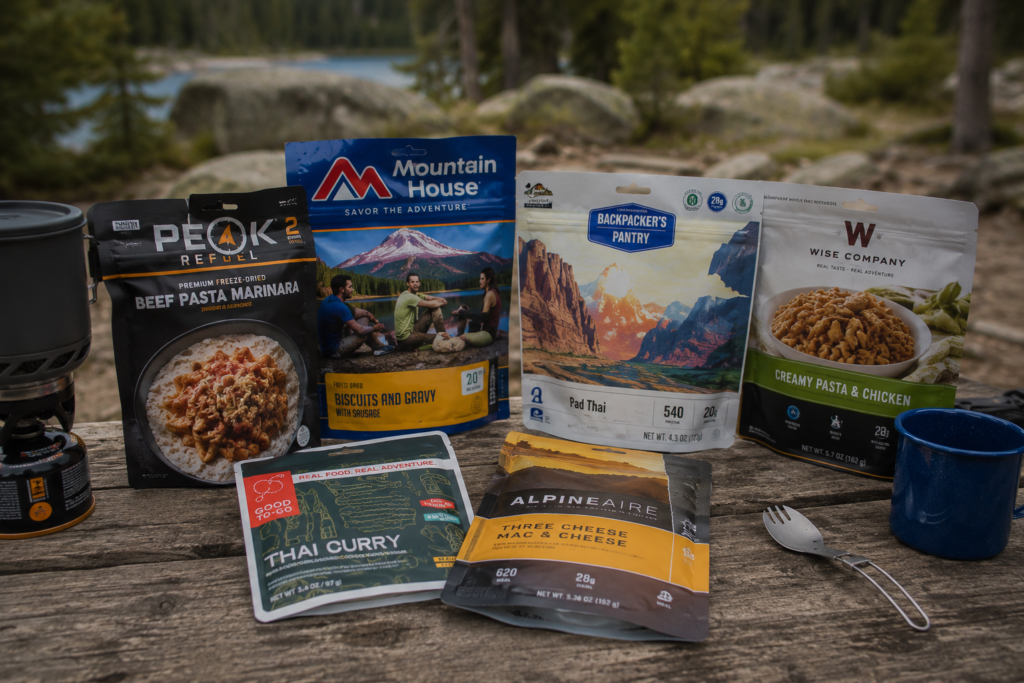
Dehydrated and freeze-dried meals are the backbone of serious backpacking food. They are light, long-lasting, and require nothing more than boiling water — or in many cases, just cold water and enough time to rehydrate.
The difference between the two: dehydrated food has moisture removed through heat, which keeps most of the nutrition but changes texture slightly. Freeze-dried food is processed at very low temperatures, which preserves flavour and texture much better — and rehydrates faster. Freeze-dried meals are generally better quality and cost a bit more.
- Popular brands: Mountain House, Backpacker’s Pantry, Good To-Go, Firepot
- Rehydration time: 5-15 minutes in boiling water, 20-45 minutes in cold water
- Shelf life: up to 25-30 years unopened — stock up when on sale
- Best for: backpackers and hikers covering serious distance who need maximum calorie density per gram
Dehydrated and freeze-dried meals are especially valuable for high altitude trips — our mountain camping for beginners guide covers the full food and hydration picture at elevation where weight and fuel efficiency matter most.
| COLD SOAK OPTION | Many dehydrated meals can be cold-soaked — add cold water, seal the pouch, wait 30-45 minutes, and eat. No stove needed at all. This is popular with ultralight backpackers and works well in warm conditions. Ideal if you want to go completely stoveless. |
Rice Pouches and Grain Packets: Five Minutes to a Hot Meal
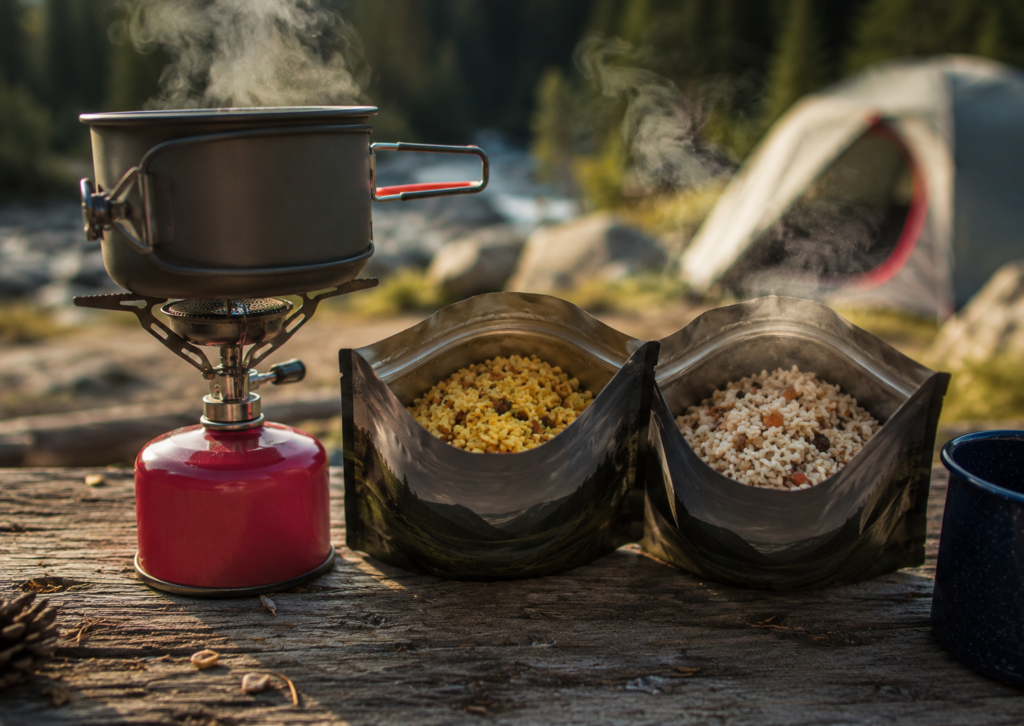
Pre-cooked rice pouches are one of the most practical pieces of ready-to-eat camping food available at any supermarket. They contain rice that is already cooked — you just heat the pouch in boiling water or over a stove for a few minutes, tear it open, and eat.
They come in a wide variety of flavors — garlic and herb, spiced tomato, mixed grain, basmati with vegetables — and pair well with a sachet of ready-made curry or soup poured over the top. Lightweight, cheap, and widely available at any supermarket before your trip.
- Heat time: 2-3 minutes in boiling water, or eaten cold in a pinch
- Weight: typically 250g per pouch — a full adult portion
- Works well with: ready-made sauce pouches, canned beans, tuna packets
Ready-Made Soup Packets: Warmth in a Pouch
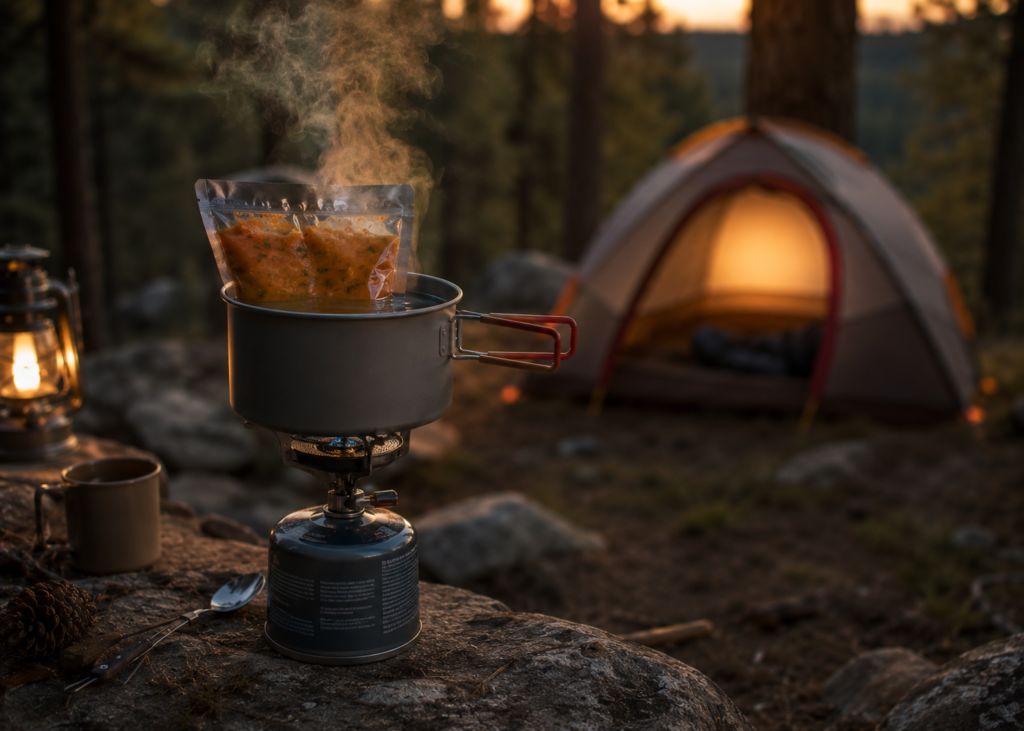
A hot soup at the end of a long day does something no cold meal can quite replicate — it warms you from the inside out and makes camp feel like home. Ready-made soup pouches are one of the lightest and most comforting easy camping meals no cooking required beyond heating water.
Most pouches come in cardboard carton or foil format, heat in under five minutes, and come in flavours ranging from tomato and basil to Thai sweet potato, lentil, and mushroom. Many cater for vegetarian, vegan, and gluten-free diets.
- Pair with: flatbreads, crackers, or a rice pouch for a complete meal
- Look for: UHT carton soups for longer shelf life without refrigeration
- Good budget option: instant noodle or ramen packets — not the most nutritious but warming, fast, and universally loved at camp
Flatbreads, Wraps, and Tortillas: The Most Versatile Camp Food
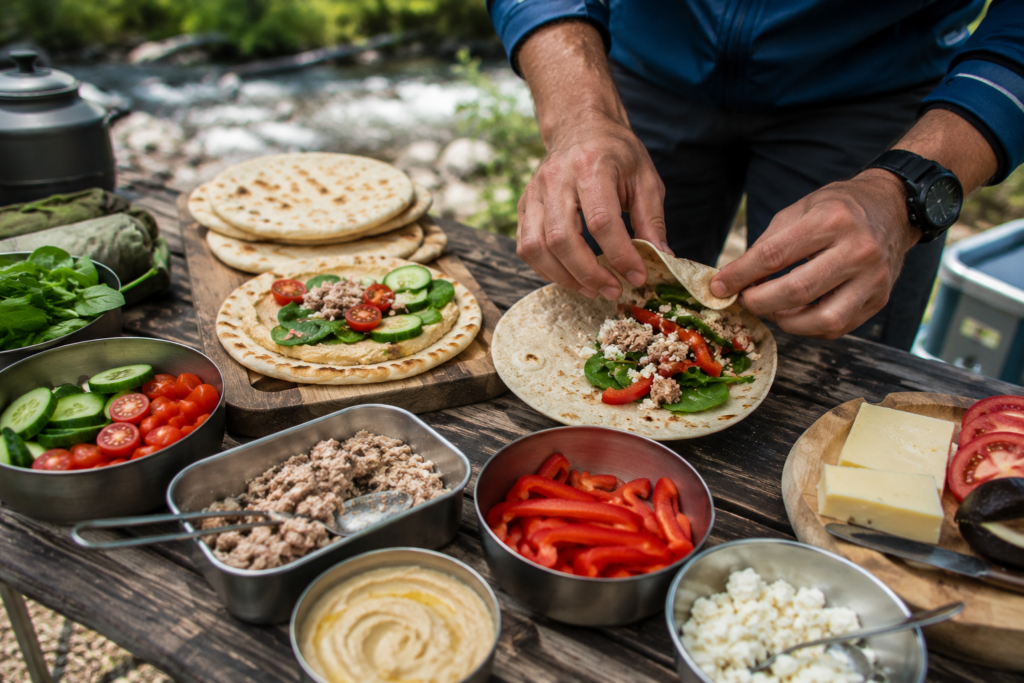
If there is one item that belongs in every camping food bag regardless of trip length, it is tortillas or flatbreads. They are incredibly versatile, do not require refrigeration for the first few days, weigh almost nothing, and can become breakfast, lunch, or dinner depending on what you put in them.
- Breakfast wrap: peanut butter, banana, and honey — assembled in 60 seconds
- Lunch wrap: tuna packet, pre-cut salad kit, and a squeeze of lemon
- Dinner wrap: rice pouch contents folded in with hummus and dried tomatoes
- No-cook pizza: spread tomato paste on a flatbread, add cheese and whatever toppings you have — no oven needed if you eat it as-is, or briefly warm over a stove
Tortillas last 5-7 days unrefrigerated. Pita breads and naan last 3-5 days. For longer trips, consider vacuum-sealed flatbreads which last significantly longer.
Canned and Tinned Foods: Old Reliable
Canned food gets overlooked by backpackers because of the weight — but for car camping, it is one of the most practical and affordable no-cook food categories available. Canned chilli, baked beans, fish, chickpeas, and soup require nothing beyond opening and optionally heating.
- Best for: car camping where weight is not a concern
- Top picks: chilli con carne, lentil dhal, baked beans, canned mackerel, chickpeas in sauce
- Storage tip: decant into lighter resealable pouches or bags before the trip to save weight on backpacking trips
- Downside: heavy and bulky — not suitable for serious backpacking
| IMPORTANT | Take all empty cans home with you — never leave them at the campsite. Cans retain food smell even when empty and attract wildlife. A sharp tin edge left in nature is also a hazard for animals. |
Tuna, Salmon, and Protein Packets: No-Cook Protein Sorted
This is the secret weapon of experienced backpackers and one of the most recommended no cook camping meals categories in outdoor forums: foil packets of tuna, salmon, chicken, and sardines. They are lightweight, shelf-stable, high in protein, and require zero preparation beyond opening the packet.
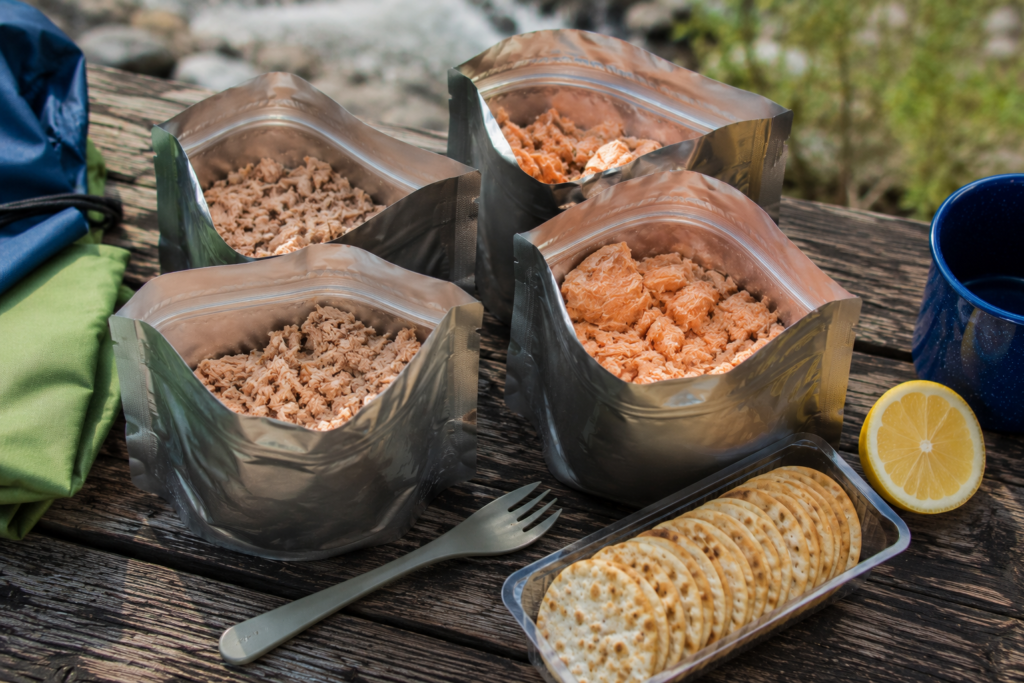
Unlike canned fish, foil packets have no liquid to drain and no need for a can opener. Tear, eat, and pack the empty pouch out. Combined with crackers or flatbreads, a single tuna packet provides around 18-20 grams of protein — a complete camping lunch in under two minutes.
- Tuna packets (flavoured): lemon and pepper, sweet chilli, spring water — widely available, around 100-150 calories per packet
- Salmon pouches: higher in omega-3s, slightly richer flavour than tuna
- Chicken breast pouches: works well in wraps and with rice pouches
- Sardines in olive oil: high in protein and healthy fats, great with crackers
- Mackerel in tomato sauce: one of the most calorie-dense protein options available
Nut Butters, Hummus, and Dips: The Snacking Heroes
Single-serve sachets of nut butter — peanut, almond, cashew — have become a staple of camping food lists for good reason. They are calorie-dense, protein-rich, shelf-stable, and genuinely satisfying. One sachet of peanut butter spread on a flatbread or eaten straight off a spoon provides around 190 calories and 7 grams of protein.
- Peanut butter sachets: the classic — pairs with anything from apples to rice cakes to flatbreads
- Almond butter sachets: slightly lighter flavour, similar nutritional profile
- Hummus pots: available in individual serving tubs, good for 2-3 days unrefrigerated — pairs perfectly with flatbreads, carrot sticks, or crackers
- Cheese portions (Babybel-style): individually wax-sealed, last 3-5 days without refrigeration, excellent protein and fat source
Pre-Cut Salad Kits and Fresh Vegetables: Keeping It Light
For the first day or two of a camping trip, fresh food is both possible and delicious. Pre-cut salad kits from the supermarket — the kind that come with dressing and toppings already included — are a genuinely easy no-cook camping meal that most campers never think to pack.
Add a tuna packet or some cheese on top and you have a complete, nutritious meal with zero cooking and minimal washing up. Pre-washed baby spinach, cherry tomatoes, cucumber, and bell pepper all travel well for 24-48 hours.
- Day 1-2: fresh salad kits, cherry tomatoes, cucumber, bell pepper, fresh fruit
- Day 3+: switch to dried fruit, tinned vegetables, and longer-lasting items
- Avoid: items that bruise or wilt quickly — lettuce, cut melon, soft berries
No-Cook Camping Breakfasts Worth Waking Up For
Breakfast is the meal most campers want to be fast and easy. Here are two genuinely great camping food ideas no stove options worth knowing about.
Overnight Oats: Mix Tonight, Eat Tomorrow
Overnight oats might be the single most underrated piece of camping food advice available. The concept is almost embarrassingly simple: the night before, pour oats into a container or zip-lock bag, add your liquid of choice (milk, oat milk, yoghurt, or even water), seal, and leave overnight. By morning the oats have fully rehydrated and breakfast is ready.
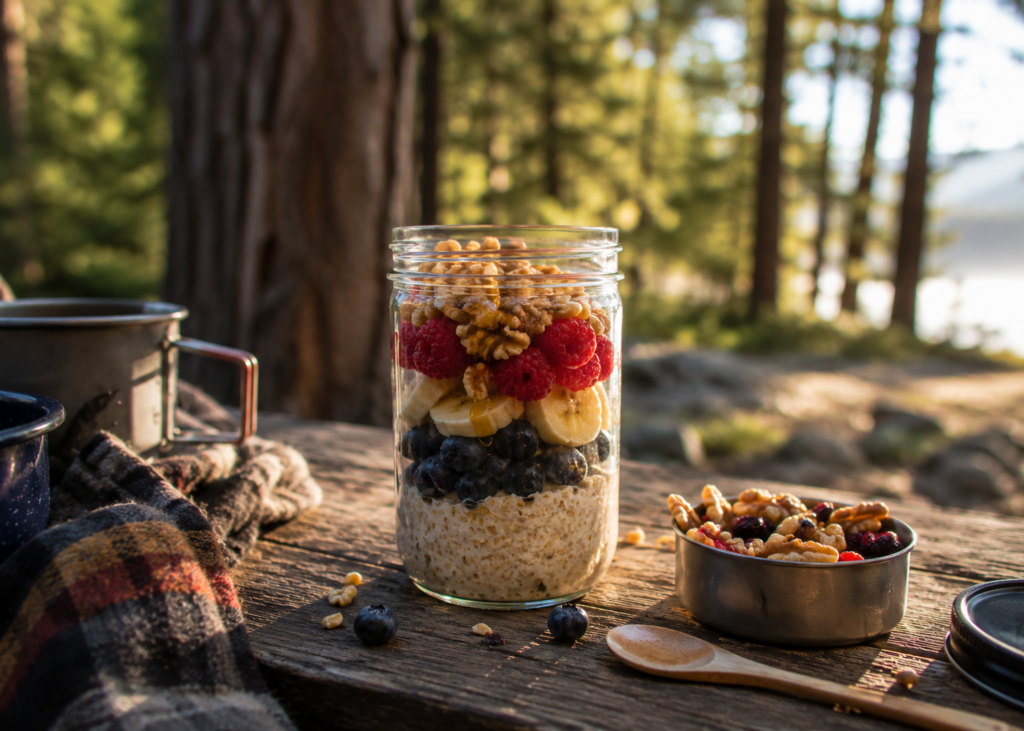
Add dried fruit, nuts, seeds, a spoonful of nut butter, or a drizzle of honey before you seal the bag. In the morning, give it a stir and eat straight from the container. One pot. No cooking. No washing up. Five minutes of effort the previous evening.
- Base: rolled oats (not instant — they go mushy) plus enough liquid to cover
- Add before sealing: dried mango, cranberries, raisins, chia seeds, flaxseed
- Add in the morning: a nut butter sachet, honey, granola for crunch
- Container: zip-lock bag or lightweight screw-top tub
Granola, Yogurt Pouches, and Grab-and-Go Breakfast Options
- Granola with powdered milk: mix with cold water for an instant, crunchy, calorie-rich breakfast
- Squeezable yoghurt pouches: shelf-stable versions available at outdoor retailers — much lighter than tubs
- Protein bars as breakfast: not glamorous but practical for early starts or big hiking days
- Instant porridge sachets: the one exception to the ‘no cooking’ rule — just add boiling water, takes 3 minutes, universally warming
- Muffins or bakery items from home: last 2-3 days, zero prep, excellent morale booster on day two
The Camp Charcuterie Board: The No-Cook Meal Everyone Loves
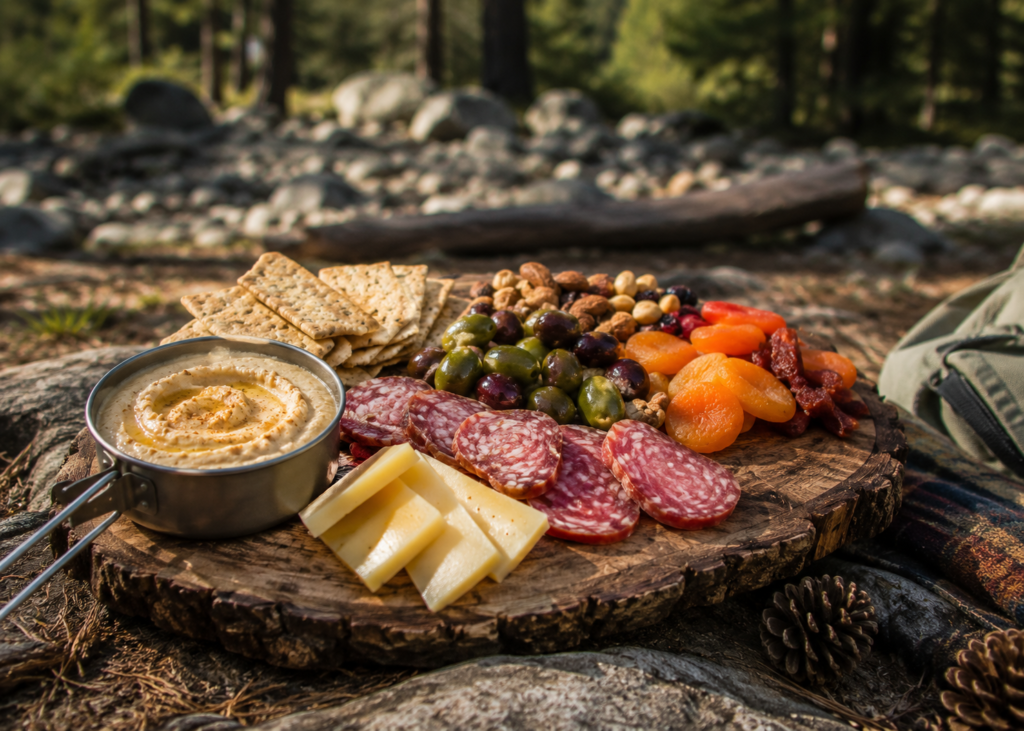
If you camp with others, this is the move. A camp charcuterie board — also called a snack board or grazing board — is a spread of ready-to-eat items that people graze from for dinner. No plates, no cooking, no washing up. Everyone helps themselves, and somehow it always feels more social and enjoyable than a proper cooked meal.
It is also incredibly easy to pack: individual portions of each item, assembled at camp on a flat surface, board, or directly on the table. Here is what goes on it:
- Crackers or flatbreads — the base
- Cheese portions — individually wax-sealed Babybels or a harder cheese like Gouda
- Salami, pepperoni, or chorizo — cured meats that do not require refrigeration for several days
- Hummus or nut butter sachets — for spreading and dipping
- Olives in a small tub or sachet
- Dried fruit and nuts — dates, apricots, cranberries, almonds, cashews
- Dark chocolate broken into squares — dessert included
Camp charcuterie boards are consistently one of the most upvoted camping food ideas in outdoor communities. The appeal is simple: it looks impressive, requires zero effort, and produces almost no washing up. Pack the components in a single dry bag and you are set.
No-Cook Camping Desserts and Sweet Treats
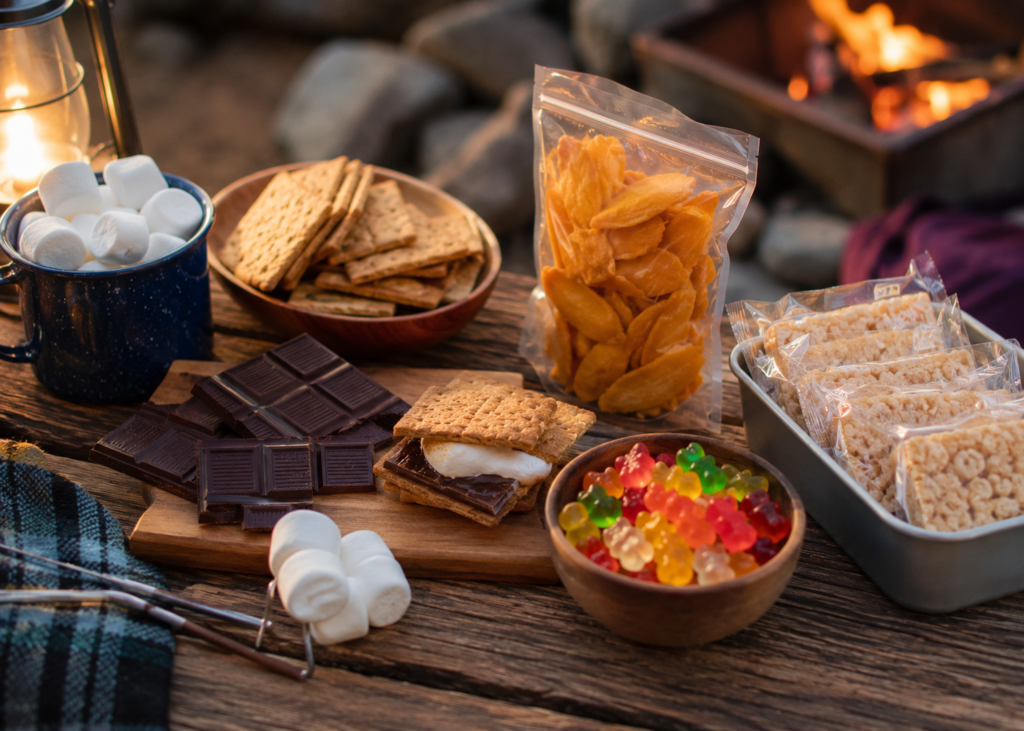
Dessert at camp does not have to involve a campfire or a stove. Here are the best ready-to-eat camping food options for satisfying a sweet tooth outdoors.
- S’mores ingredients: Graham crackers, marshmallows, and chocolate — the classic camping dessert. Works beautifully over a campfire but can be assembled cold if fires are restricted.
- Dark chocolate: Melts in warm weather but is one of the most calorie-dense, mood-boosting treats you can pack. Break into squares and share around.
- Dried fruit: Mango, apricots, dates, cranberries — naturally sweet, lightweight, and genuinely satisfying as an evening snack.
- Pudding cups: Single-serve chocolate or vanilla pudding pots — no refrigeration needed if consumed within 24 hours of opening.
- Rice Krispie treats or flapjacks: Make at home before the trip and wrap individually. Last 4-5 days without refrigeration.
- Gummy bears or sweets: A small bag goes a long way around a campfire. Pack as a treat for the end of a hard hiking day.
How Much Food to Pack: A Simple Camping Food Calculator
One of the most common camping mistakes is either packing too much (extra weight, wasted food) or too little (very hungry, very unhappy). Here is a simple framework:
- Calories per day: Active hiking days require 2,500-3,500 calories per adult. Rest days need closer to 2,000. When in doubt, pack slightly more than you think you need — hunger at camp is miserable.
- Per meal target: Aim for roughly 500-700 calories per main meal and 200-400 calories per snack session. Two snack sessions per day is a good baseline.
- Weight per day: For backpacking, aim for 500-700g of food per person per day as a target. Ready-to-eat options with high calorie density help keep this down.
- The plus-one rule: Always pack one extra meal per person as an emergency backup. It weighs very little and has saved many trips.
- Snacks between meals: Trail mix, energy bars, protein pouches, and nut butter sachets every 60-90 minutes on hiking days maintains energy and prevents the energy crash that makes late-afternoon hiking feel miserable.
Storing Your Camping Food Safely
How you store your camping food matters as much as what you pack. Poor food storage attracts wildlife, spoils your supplies, and can create genuine safety hazards.
- Store all food at least 100 yards from your sleeping area — never in your tent
- Use a bear canister or hang food from a tree at least 10 feet off the ground in bear country
- Keep food in sealed zip-lock bags or airtight containers to contain smells
- Pack all food waste out — never bury it or leave it at the campsite
- In hot weather: keep opened items in a dry bag in the shade and consume within the day
Food smells attract more than just hungry hikers — they bring insects and wildlife too. Our guides to keeping mosquitoes away while camping and wildlife safety while camping cover both sides of that equation.
Pack out every wrapper, pouch, and food scrap — our sustainable camping and Leave No Trace guide explains why this matters for the places you love to camp.
Frequently Asked Questions About Ready-to-Eat Camping Food
What is the best ready-to-eat camping food for backpacking?
For backpacking, freeze-dried meals are the gold standard — light, calorie-dense, and require only boiling water. Combine them with tuna pouches, nut butter sachets, flatbreads, energy bars, and trail mix for a complete, lightweight food system. The goal is maximum calories per gram of weight. A good backpacking food day averages around 500-700g of food per person while delivering 2,500-3,000 calories.
What camping food requires no cooking at all?
Plenty of great options require absolutely zero heat or water. Tuna and salmon pouches, nut butter sachets, energy bars, trail mix, crackers with cheese or hummus, flatbreads with fillings, dried fruit, and charcuterie-style spreads are all genuinely satisfying no-cook options. Cold-soak dehydrated meals — add cold water and wait 30-45 minutes — also work without heat, though they take longer to rehydrate than hot-water versions.
How long does ready-to-eat camping food last?
Shelf life varies significantly by type. Freeze-dried meals last up to 25-30 years unopened. Dehydrated meals last 1-5 years. Tuna and salmon pouches last 2-5 years. Energy bars typically last 1-2 years. Fresh items like salad kits and pre-cut vegetables last 1-3 days depending on temperature. As a general rule: check the best-before date on packaging, and keep everything sealed until needed to maximize freshness at camp.
Is ready-to-eat camping food nutritious enough for active trips?
Yes — when chosen carefully. Modern freeze-dried and dehydrated meals are significantly better nutritionally than they used to be, with balanced macros and reasonable calorie counts. For active hiking days, supplement meals with protein-rich snacks like tuna pouches, nuts, and nut butter sachets to hit your calorie targets. Electrolyte tablets added to water replace minerals lost through sweat. The key is planning for the calorie demands of your specific trip rather than assuming normal day-to-day portions will be enough.
Can I eat dehydrated camping meals without cooking?
Yes — this is called cold soaking. Add cold water to the meal pouch, seal it, and wait 30-45 minutes for the food to fully rehydrate. The texture is slightly different from the hot-water version and the temperature obviously changes the experience, but it works well and means you can go completely stoveless. Many experienced backpackers cold-soak all their meals to save weight by leaving the stove and fuel canister at home. Works best in warm weather.
Pack Smart, Eat Well: Your Ready-to-Eat Camping Food Checklist
Good ready-to-eat camping food is not about settling for less — it is about eating well without the effort. A mix of freeze-dried meals for the evenings, overnight oats for mornings, a charcuterie board for one night, tuna packets and wraps for lunches, and a constant supply of trail mix and energy bars gets you through almost any trip in good shape.
Here is a quick checklist to pack from:
- Dehydrated or freeze-dried main meals — one per person per evening
- Rice pouches or grain packets — for quick hot meals
- Tuna or salmon pouches — two to three per person per trip
- Flatbreads or tortillas — one pack lasts multiple days
- Nut butter sachets — two to three per person per day
- Trail mix — 100-150g per person per day as a hiking snack
- Energy bars — two per person per active day
- Soup pouches — one per evening for warmth and comfort
- Overnight oats supplies — oats, dried fruit, nut butter, honey
- Charcuterie items — for one fun no-effort dinner
- Dessert — dark chocolate, dried fruit, or a batch of home-baked flapjacks
- Emergency extra meal — always pack one spare per person
If you want to go beyond ready-to-eat options and actually cook at camp — recipes, stove techniques, and meal prep ideas — our easy camp cooking for beginners guide covers everything.