Camping With Kids: The Ultimate Parents’ Guide to Family Camping Success

Latest Post



Camping with the kids — it sounds downright magical, doesn’t it?
Picture this: adorable little tents nestled in the woods, meals cooked under the stars, giggles echoing around the campfire, and sweet bonding moments as you all gaze up at the constellations.
But if you’ve ever tried family camping with toddlers or pre-teens, you know the reality can be quite different. Between midnight bathroom emergencies, “I’m bored” complaints, and managing fear of the dark while camping, your first camping trip with children might feel more chaotic than peaceful.
Here’s the truth: camping with kids isn’t about perfection—it’s about preparation. Whether you’re planning your first family camping adventure or looking to improve your outdoor experiences, this complete guide covers everything from camping activities for kids to safety tips, meal planning, and solving the six most common camping challenges parents face.
By following these proven family camping tips from experienced outdoor parents, you’ll transform potential disasters into cherished memories and raise confident little adventurers who love the great outdoors.
Why camping with kids is worth the effort?(Despite the challenges)
Before diving into logistics, let’s address why camping with children matters for family development:
Benefits of Camping for Kids:
- Builds resilience: Kids learn to adapt to uncomfortable situations and problem-solve
- Reduces screen time: Natural outdoor engagement without digital distractions
- Strengthens family bonds: Shared challenges create lasting memories
- Develops outdoor skills: Early exposure to nature builds lifelong appreciation
- Improves sleep quality: Physical activity and fresh air promote better rest (eventually!)
- Teaches responsibility: Age-appropriate camping chores build confidence
So, here are a few tips and tricks fellow adventurers, to help you prepare for the camping trip with children.
According to outdoor recreation studies, children who camp regularly show improved problem-solving skills and environmental awareness compared to non-camping peers.
The key to successful family camping? Realistic expectations and proper preparation. This guide gives you both.
How to prepare your kids for a camping adventure?
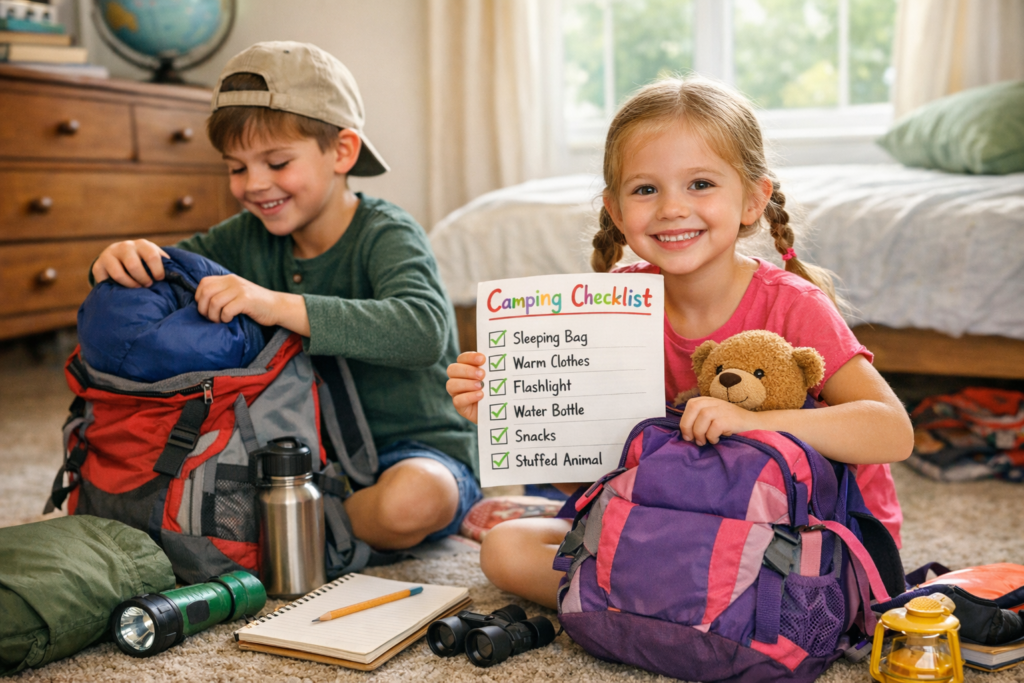
Keeping kids engaged and excited about camping is key to making the trip enjoyable for everyone. These camping preparation tips for children help build anticipation and reduce anxiety about sleeping outdoors.
Start by building anticipation
- Ask them to create their own camping checklist with must-have items like favorite toys, books, and snacks. Involving them in the packing process makes them feel included and prepared for the adventure.
- Involving them in the packing process makes them feel included and prepared for the adventure
Entertainment Planning
- Encourage them to download audiobooks or create a camping playlist with fun, upbeat songs
- For toddlers camping, pack their favorite stuffed animal—a familiar comfort item makes sleeping outdoors much easier
- If you have toddlers, don’t forget their favorite stuffed toys—a comforting companion can make sleeping outdoors much easier
Age-specific camping preparation tips
Toddlers (2-4 years):
- Practice sleeping in the tent in your backyard first
- Read camping-themed picture books weeks before the trip
- Let them help pack their own small backpack
Young Kids (5-8 years):
- Show them photos/videos of the campground beforehand
- Assign them a special camping job (junior fire-watcher, nature photographer)
- Create a countdown calendar to build excitement
Pre-teens (9-12 years):
- Involve them in route planning and campsite selection
- Give them their own camping gear (flashlight, compass, journal)
- Let them invite a friend (if you’re brave!) for shared adventure
6 Common Camping With Kids Problems (And How to Solve Them)
Problem #1 Fear of the dark while camping
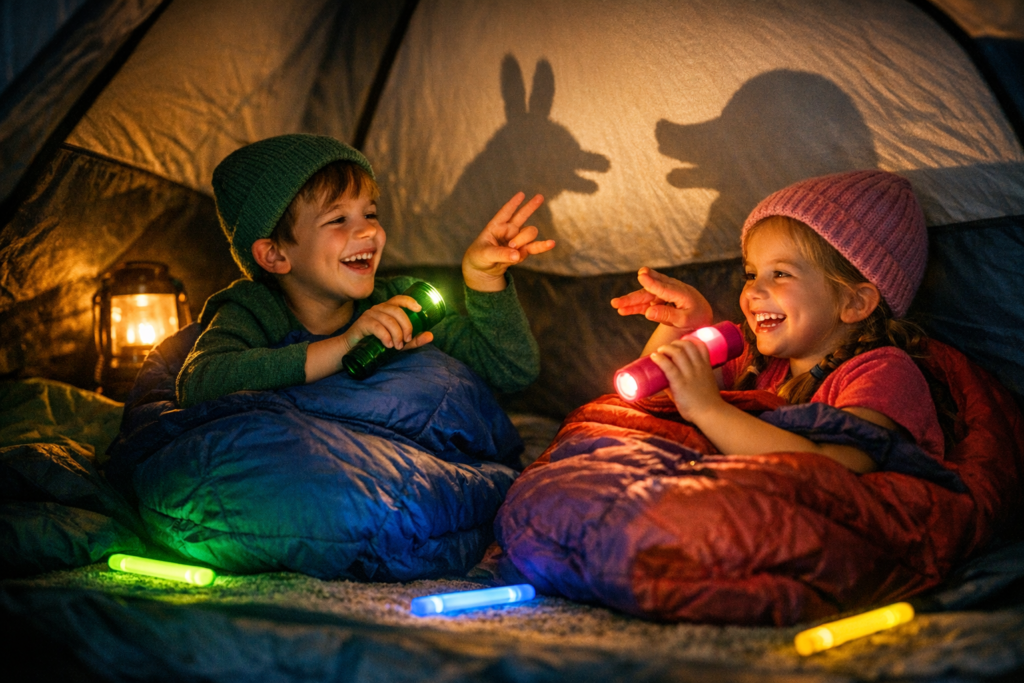
As night falls and you cozy up in your tent, your child suddenly becomes a little bundle of nerves. This is one of the most common challenges when camping with toddlers and young children. Every distant owl hoot or rustling bush sparks their imagination, making them wonder if a bear is lurking nearby, ready to pounce.
In that moment, you might start questioning whether this family camping adventure was such a great idea after all. But don’t worry—this is just part of the excitement!
Solution: Turn Nighttime Fear Into a Fun Adventure
Kid -Friendly Camping lights that build confidence
Instead of letting nighttime fears take over, transform the experience into a playful and reassuring part of your family’s outdoor adventure. One of the easiest and most effective ways to ease nighttime anxiety is with kid-friendly camping gear, especially fun camping flashlights. Pick up a few colorful models from the dollar store and let each child choose their own. Having control of their light source can boost a child’s confidence and give them a sense of safety after dark.
After the sun sets, take your kids out with their flashlights and go around the tent, making it feel like an adventure, and checking for any monsters around, making it a fun humorous activity. Creating such light-hearted moments tends to create a safe place for kids, and they feel comfortable right from the very first day in the tents.
Another creative idea would be to buy glow sticks for kids, which are magical and can be game changers to ward off their fear. They are quite robust and do not break when dropped. So they are a blessing for kids who tend to drop anything given to them. Sometimes, it also makes sense to buy a battery powered night lamp inside the tent to keep the kids comfortable throughout the night.
Problem 2 – “I’m Bored!” Complaints at the Campsite
The challenge:
Once you have set up your tent on the campsite and are ready to soak in the beauty of nature, kids suddenly start acting weird. This is especially common during the first camping trip with kids who are used to constant digital entertainment. [ They feel that they’ve been suddenly dropped into the wilderness with no escape.
They start asking for their tablets, complaining that there is no WiFi, and suddenly start saying they are very bored. Sounds familiar?
The Solution – Beat the Camping Boredom with Outdoor activities for Kids
The secret to successful camping with children is having a arsenal of outdoor camping activities that engage different interests and energy levels.
Active Camping Games and Activities
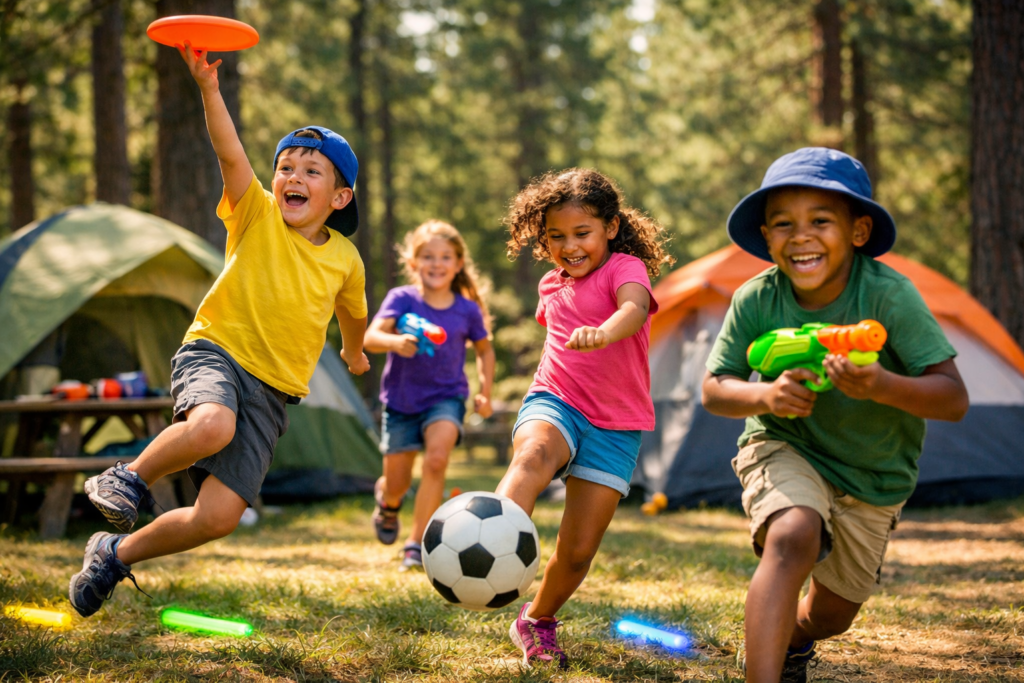
Outdoor camping games play a crucial role in keeping kids entertained. Pack essentials like Frisbees, pickleballs, footballs, and water guns for exciting and active play. These camping activities for kids burn energy during the day, making bedtime much easier!
Nature-based Activities:
- Encourage exploration with campground adventures such as nature scavenger hunts, where children can discover fascinating elements of the wilderness
- Rock painting with natural pigments
- Leaf/Bark rubbing art projects
- Identifying bugs with magnifying objects
- Cloud watching and nature photography
Quiet Time camping activities
Bring a deck of cards, chess, board games, or portable gaming consoles for indoor or more relaxed entertainment. These options provide a great way to unwind during quiet moments.
Camp Chore Adventures:
Engaging kids in camp chores can be both fun and educational. One great activity is having them collect firewood for the campfire, which gives them a sense of responsibility and accomplishment. Since safety is important, parents can supervise this task to ensure a secure experience.
Encourage exploration with campground adventures such as nature scavenger hunts, where children can discover fascinating elements of the wilderness.
For added enthusiasm, consider making it a friendly competition. If multiple kids are participating, you can offer a small prize to the winners, encouraging a healthy competitive spirit and enhancing their involvement in the adventure. This combination of teamwork, exploration, and playful competition makes learning outdoors truly enjoyable!
Additional Camp chore ideas
- Tent site setup assistants(with supervision)
- Meal prep chefs
- Campfire builders (with supervision)
- Dish washing helpers
- Story time Hosts
- Mini Compost Keepers
- Star Gazers
Creative Camping Activity: Nature Journaling
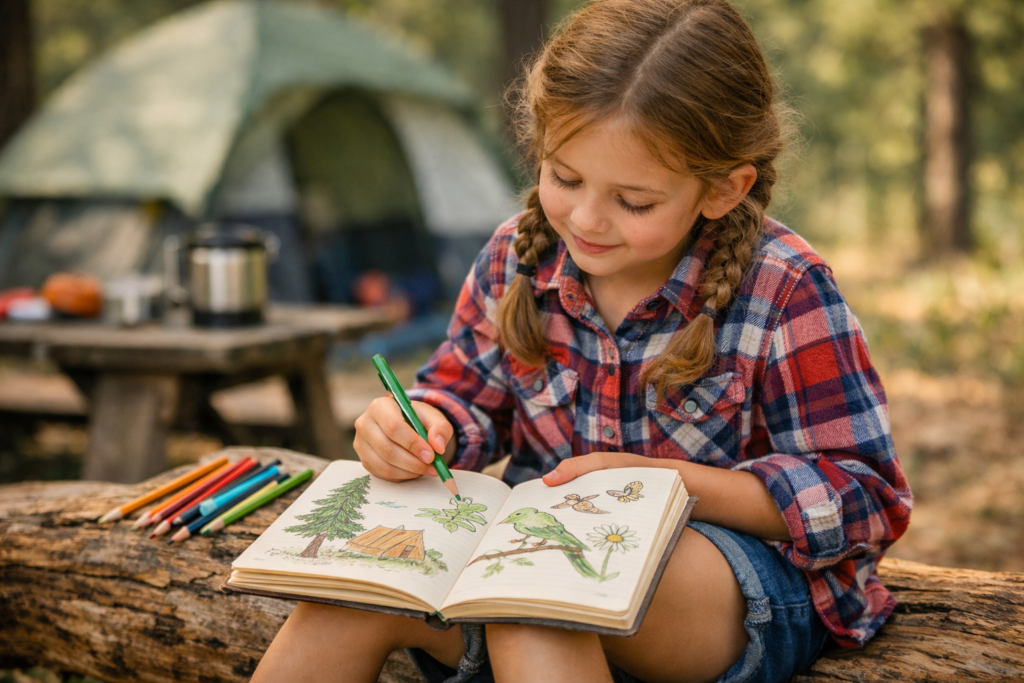
Give each kid a small notebook and colored pencils to make their own camping journal. They can draw what they see, write about their adventures, or just doodle for fun.
This simple activity keeps them entertained and helps them remember their trip. Plus, their journal becomes a special keepsake full of nature drawings and happy memories!
Journaling Prompts for Kids:
- Draw three things you saw today
- Write about your favorite camping moment
- Describe the sounds you hear at night
- Sketch your campsite from above
- List animals you hope to see tomorrow
Problem 3 – The great Bathroom Challenge
The challenge:
Every camper knows that bathroom situations can turn into a real adventure—whether it’s a fear of pit toilets, unexpected midnight emergencies, or the infamous “I need to go NOW!” moment when you’re far from any facilities.
The solution – Plan bathroom logistics before problems arise
One of the most overlooked aspects of camping with toddlers and young children is camping bathroom preparation. Here’s how to handle it
For toddlers and young children
For younger kids or toddlers, having a small portable potty makes all the difference, because it is not easy to trek through the woods at 2 am or 3 am with an uncomfortable or a crying toddler.
Best Portable Camping Potties for Kids:
- Folding camping toilets with disposable bags
- Portable potty seats that fit over adult toilets
- Travel potty chairs with splash guard
- Emergency pee funnels for girls (age 6+)
For older kids
For older kids, a little planning to understand the campground facilities makes all the difference. As soon as you arrive at the camping site, make a quick tour of the campground to check where the bathrooms are. This little exploration will get the kids familiar with the bathroom facilities, and how far they are from the tent.
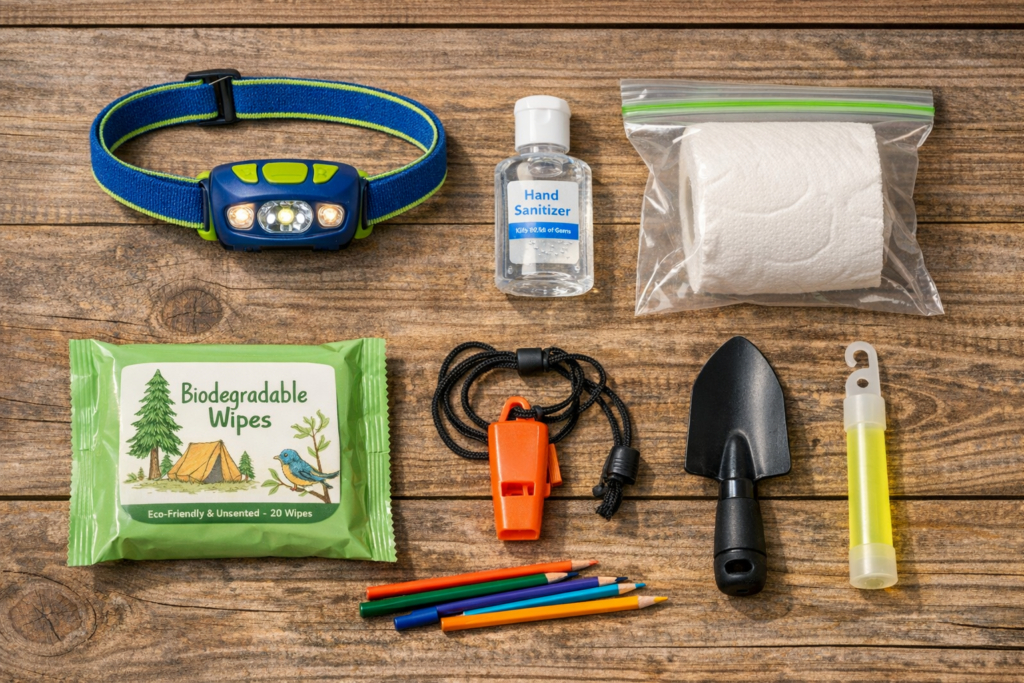
Create a camping bathroom kit for kids including:
- Flashlight or headlamp (dedicated bathroom light)
- Hand sanitizer and wipes
- Personal toilet paper roll in ziplock bag
- Whistle for emergencies
- Glow stick to mark the tent path back
Equip your kids with flashlights and sanitizers, so that they can take that walk to the bathroom themselves if it is safe enough, or parents can accompany the kids if they are far off from the tent.
Wilderness bathroom skills
When nature calls in the great outdoors, knowing proper toilet etiquette is essential. Teaching basic wilderness bathroom skills is an important part of camping with children in remote areas. In remote areas, using secluded spots with biodegradable toilet paper can be a practical and eco-friendly camping solution.
Teaching Kids “Leave No Trace” Bathroom Ethics:
- Dig cat holes 6-8 inches deep, 200 feet from water
- Pack out all toilet paper in sealed bags
- Use natural landmarks to mark bathroom spots
- Never go near water sources
Problem #4- Getting kids to sleep while camping
The Challenge:
You have tucked everyone into the tent, hoping to get a good night’s sleep under the starlit sky in the wilderness, and then the complaints start rolling in—the ground below is too hard and uncomfortable, it’s too hot and stuffy inside the tent, there are mosquitoes around, need a bathroom break, lots of weird sounds around, so on and so forth.
Why Kids Struggle to Sleep While Camping:
- Unfamiliar sounds trigger survival instincts
- Temperature regulation differs from home
- Lack of bedtime routine creates anxiety
- Ground sleeping surface is completely new
- Darkness intensifies every sensation
The Solution – Prioritize comfort and create camping sleep routines
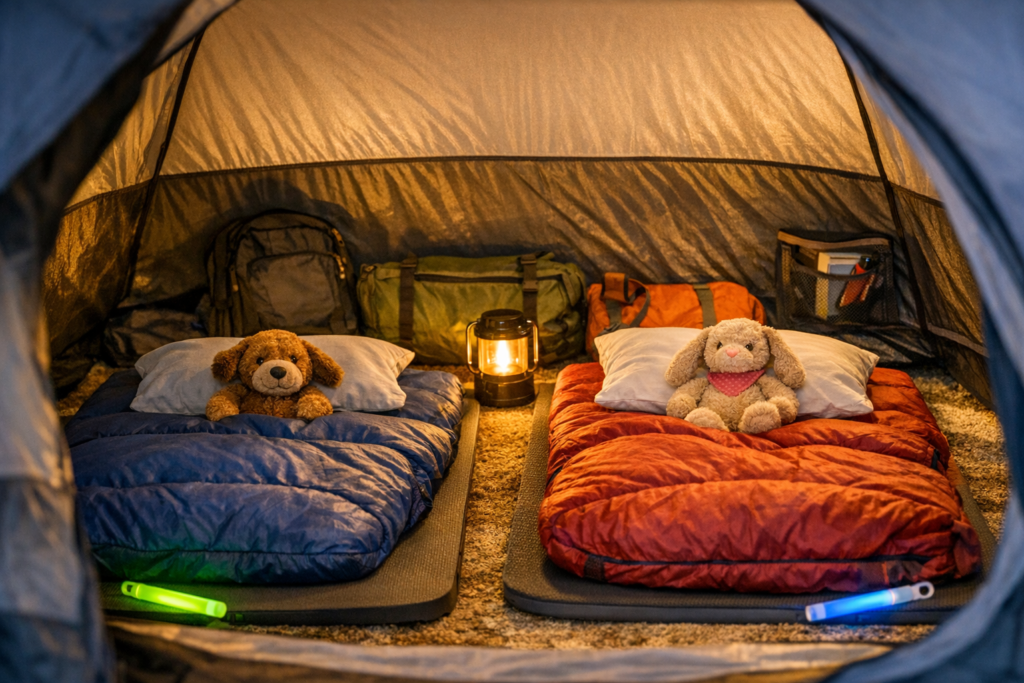
Essential camping sleep gear for kids
Investing in good camping gear, like quality sleeping pads, can add soft textures that kids need while sleeping. Instead of buying inflatable pillows, carry their familiar pillows that kids are used to so that the familiar comforting smell and coziness make a huge difference.
Best sleeping Gear for Camping with Kids
- Thick sleeping pads (R-value 3+): Insulation from cold ground
- Kid-sized sleeping bags: Properly fitted bags retain warmth better
- Sleeping bag liners: Add warmth and familiar softness
- Foam pads under air mattresses: Extra cushioning and insulation
- White noise machines: Battery-powered sound to mask nature noises
Create a Camping Bed Routine
Create a routine before kids are taken to sleep. Consistency is key when camping with toddlers and young children who thrive on predictable patterns.
Camping Bedtime Routine (30-45 minutes):
- Wind-Down Activities (15 mins)
- Tell them a small fun story, or read a camp-themed book in the tent by flashlight
- Gentle stretching or Yoga poses
- Quiet songs or lullabies
- Stargazing and Learning (10-15 mins)
- Try singing soothing campfire songs, and do some stargazing with kids, with information about planets, stars, and the galaxies
- Point out constellations with your mobile apps
- Share some fun facts about space
- Make wishes on “shooting stars”
- Final Prep (10 mins)
- Last bathroom trip
- Arrange sleep gear
- Give them their comfort toys
- Set a dim light lamp to create a calm ambience
Try to avoid overly stimulating activities before bedtime. A quiet story, a small walk, some reading, and make them comfortable.
Temperature Management for Kids:
Remember, cold children are often grumpy and irritable. To help them sleep well, make sure the sleeping pads inside the tent are warm and soft, creating a cozy environment.
How to keep kids warm at night?
- Layer up smartly: Start with a base layer, add a fleece, and finish with warm socks.
- Boost sleeping bag warmth: Use liners to add 10–15°F of extra insulation.
- Warm their feet: Place a hot water bottle near the toes (always check the temperature first).
- Don’t forget hats: A significant amount of body heat escapes through the head.
- Seal the warmth in: Fully zip sleeping bags—half-zipped bags lose heat quickly.
If your child is shivering, restless, and has a cold nose or cheeks, then these are the signs that your child is cold, and you can act on it.
If your kids are afraid of the dark, pack nightlights or glow sticks to provide comfort.
It is always good to stay patient, as it may take a day or two for kids to adjust to the new surroundings. Talk to them and provide assurance that it’s all an awesome adventure activity!
Problem #5 – Making Camping Meals Easy With Hungry Kids
The challenge:
Planning meals for your first family camping trip? You’re not alone—campfire cooking with kids can feel like a challenge, especially when you’re juggling tired little ones and picky appetites. But don’t worry—family-friendly camping meals don’t have to be complicated! With a little prep and the right approach, you can make outdoor mealtime simple, stress-free, and even fun.
Between managing cooking equipment, keeping food fresh without refrigeration, and dealing with “I don’t like this!” complaints, camping meal planning with kids requires strategy.
Solution: Focus on simple, familiar and kid-approved meals
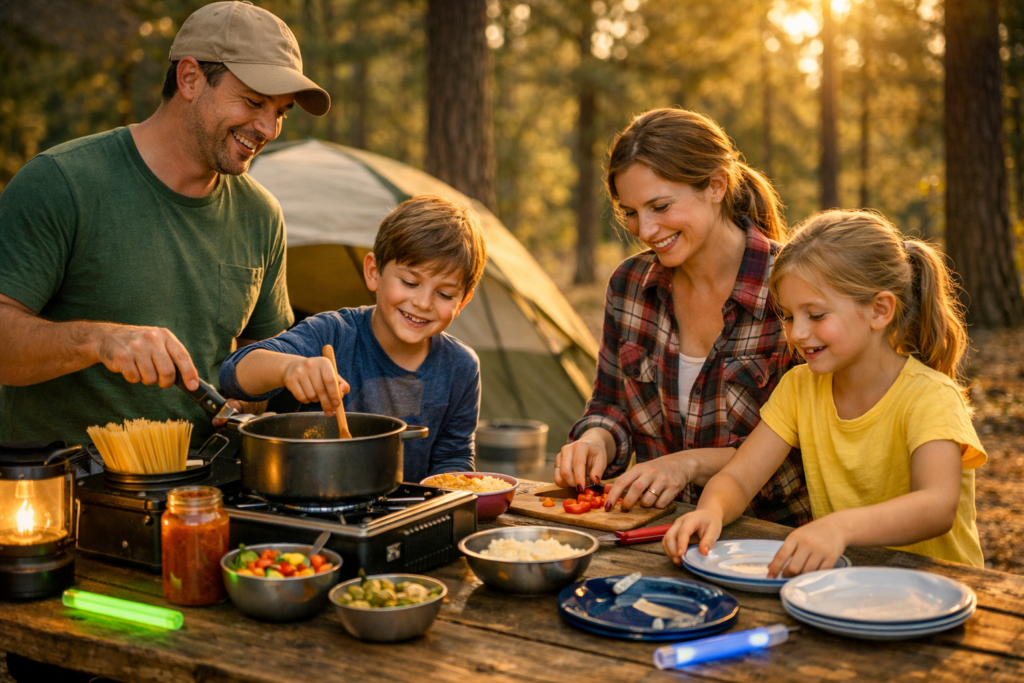
When camping with kids, it’s best to stick with simple, easy-to-prepare meals that don’t require a lot of cleanup. Get your children involved in the camping meal planning process before the trip—ask them to help create a checklist of ingredients and supplies to pack.
This involvement creates buy-in: kids who help plan meals are 70% more likely to eat them without complaints!
Easy Camping Meals for Kids (By Meal Type)
Breakfast Ideas for Family Camping:
- Pre-made pancake mix (just add water!)
- Warm instant oatmeal topped with fruits or nuts
- Hearty breakfast burritos wrapped in foil for easy cooking over the campfire
- Yogurt parfaits with granola (in cooler)
- Breakfast sandwiches on English muffins
- Cereal bars and fruit for lazy mornings
Lunch Options:
- Sandwiches, trail mix, fresh fruit, and plenty of water
- Quesadillas cooked on camp stove
- Hummus and veggie wraps
- Cheese and crackers “charcuterie”
- Leftover breakfast burritos (cold or reheated)
Dinner Favorites:
- Foil packets, hot dogs, or one-pot pasta
- Spaghetti with pre-made sauce
- Tacos with pre-cooked meat
- Grilled cheese and soup
- Pre-marinated chicken skewers
Snacks That Kids Actually Eat:
- Granola bars, crackers, cut-up veggies, fruit pouches
- Popcorn (cook over campfire in special popper)
- S’mores ingredients (obviously!)
- Beef jerky or turkey sticks
- Dried fruit and nut mixes
- Cheese sticks (in cooler)
For more information on ready-to-eat camping food that might be a lifesaver when on an outdoor trip, there is a detailed blog that you might want to check out to get some very useful camping food tips
Camping Food Safety with kids
Critical Food Storage Tips:
- Keep cooler in shade, open minimally
- Pack beverages in separate cooler (opened frequently)
- Freeze water bottles to use as ice packs
- Store all food in sealed containers or bear-proof storage
- Never leave food in tent (attracts wildlife)
Simple Cleanup Systems:
- Three-basin system: wash, rinse, sanitize
- Biodegradable soap only (camp-safe)
- Let kids help with age-appropriate tasks
- Pack trash out in sealed bags
For more information on ready-to-eat camping food that might be a lifesaver when on an outdoor trip, there is a detailed blog that you might want to check out to get some very useful camping food tips.
Problem #6- Keeping kids safe while camping
Heading out into the great outdoors for a family camping trip is an exciting way to connect with nature and each other. But when camping with kids, child safety becomes a top priority. From curious wildlife to unfamiliar terrain, the great outdoors presents challenges that you haven’t yet faced.
According to outdoor safety statistics, most camping injuries with children are preventable through proper preparation, clear rules, and active supervision.
Camping is full of wonder, but also potential hazards. Kids can easily wander off, encounter wildlife, or get sunburned if precautions aren’t in place. That’s why it’s essential to be proactive about camping safety for children.
Solution: Comprehensive Camping Safety Plans for Families
Creating a camping safety plan for kids before your trip prevents 80% of common outdoor accidents. Here’s your complete safety framework:
Pre-Trip Safety Preparation
Before you even pitch your tent, sit down with your kids and go over some simple but crucial campground safety rules. Make sure everyone understands the safety plan and knows what to do in an emergency. Keep reiterating these rules so that it stays at the top of their mind.
Essential Safety Conversations Before Camping:
For Ages 3-6:
- “Always stay where mommy/daddy can see you”
- “Never put anything from nature in your mouth”
- “If you get lost, stay in one place and blow your whistle”
- “Fire is for looking, not touching”
For Ages 7-12:
- Memorize parent’s phone number and campsite number
- Understand weather dangers (lightning, heat)
- Know how to identify poison ivy/oak
- Learn basic first aid (cuts, scrapes)
The 10 Essential Camping Safety Rules for Kids
Establish clear play zones:
- Let your kids know where it’s safe to explore around the campsite and which spots they should stay away from
- Use natural landmarks (big tree, picnic table) as boundaries
- Mark safe zone with colorful flagging tape
Emergency whistles:
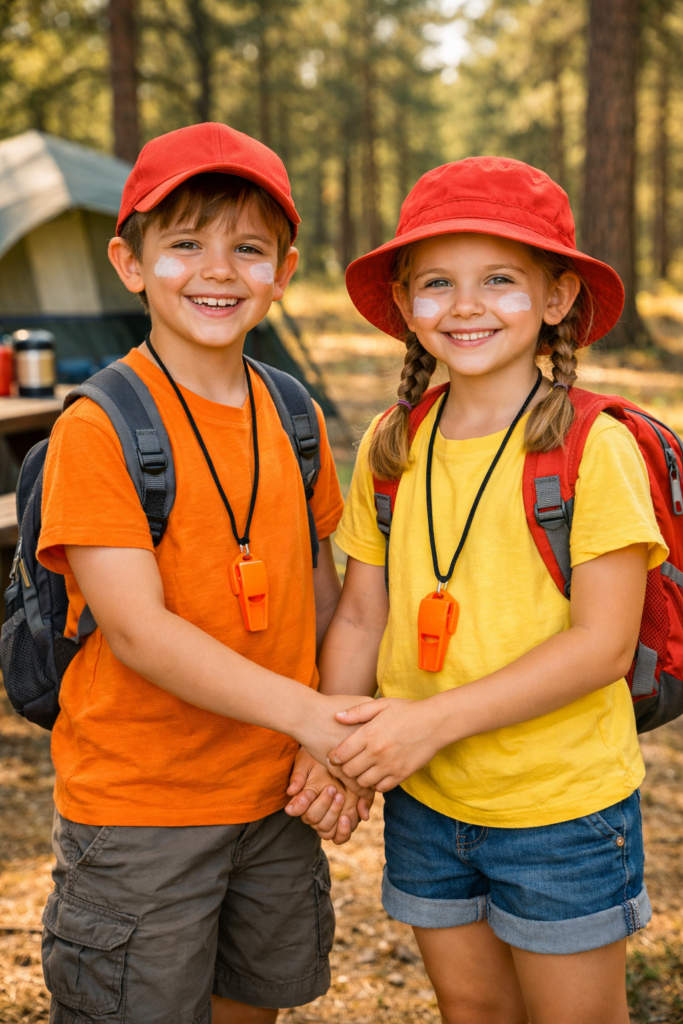
- Give each child a whistle to wear around their neck, and teach them it’s only to be used if they’re lost or feel unsafe
- Practice whistle signals: 3 blows = emergency, need help
Dress in bright colors:
- Bright clothing makes it easier to spot your kids from a distance, especially in woody terrain
- Avoid camouflage patterns (ironic but true!)
- Take photos of kids each morning in their outfit (for description if lost)
Sun protection for kids:
- Use kid-safe sunscreen, hats, and lightweight long sleeves
- Reapply sunscreen every 2 hours and after swimming
- Lip balm with SPF prevents chapped lips
- Seek shade during peak UV hours (10 AM-4 PM)
Wildlife safety:
- Store all food away from tents to avoid attracting animals. Teach basic camping safety for kids, including how to respect wildlife
- “Look but don’t touch” rule for all animals
- Never feed wildlife (squirrels, chipmunks, birds)
- Make noise on trails to avoid surprising animals
Buddy system:
- Always have children stay in pairs. A key family camping rule—no wandering off alone!
- Assign buddies at start of trip
- Check-in system: buddies report to parent every 30 minutes
Emergency readiness:
- Know the nearest medical center and pack a kids’ camping first-aid kit
- Download offline maps before trip
- Share itinerary with someone at home
- Pack emergency contact cards in kids’ pockets
Water safety:
- Life jackets on near any water (lakes, rivers, streams)
- No swimming without adult supervision
- Teach “reach or throw, don’t go” water rescue basics
Fire safety:
- 6-foot perimeter around campfire (mark with rocks)
- Never run near fire
- Adults only add wood to fire
- Know where fire extinguisher/water bucket is
Stranger awareness:
- Check with parent before talking to new people
- Stay in campsite unless with family
- Immediately report to parents when anyone makes them uncomfortable
Camping First Aid Kit for Kids
Essential items for family camping:
- Adhesive bandages (various sizes—kids get lots of scrapes!)
- Antibiotic ointment
- Children’s pain reliever (acetaminophen/ibuprofen)
- Antihistamine (Benadryl for allergic reactions)
- Tweezers (splinters, ticks)
- Thermometer
- Hydrocortisone cream (bug bites, rashes)
- Moleskin (blisters)
- Elastic bandages
- Instant cold packs
- Poison ivy treatment
- Children’s electrolyte packets
- Any other prescription-based medicines, you can pack along
Essential Camping Gear Checklist for Families
Must-Have Camping equipment for kids
Shelter & Sleep:
- Family-sized tent (extra room for gear)
- Quality sleeping bags (temp-rated appropriately)
- Thick sleeping pads (R-3+ for kids)
- Pillows from home
- Extra blankets (kids get cold!)
Clothing Layers:
- Moisture-wicking base layers
- Insulating mid-layers (fleece)
- Waterproof outer layers
- Extra socks (lots of them!)
- Warm hats and gloves
- Sturdy hiking boots or shoes
- Camp shoes/sandals
Lighting & Safety:
- Flashlight for each child
- Headlamps for adults
- Lantern for tent/campsite
- Glow sticks (fun and functional)
- Emergency whistles
- First aid kit
Entertainment & Comfort:
- Favorite stuffed animals
- Books and audiobooks
- Outdoor games (frisbee, ball)
- Cards and travel games
- Journals and colored pencils
- Portable music speaker
Kitchen & Food:
- Camp stove and fuel
- Cookware and utensils
- Cooler with ice
- Water bottles for everyone
- Biodegradable soap
- Trash bags (many!)
Hygiene & Bathroom:
Towels and washcloths
- Portable potty (for toddlers)
- Toilet paper
- Hand sanitizer and wipes
- Toiletries in travel sizes
- Sunscreen (SPF 30+)
- Bug spray (kid-safe)
Camping with Kids Survival Kit – Quick Recap
- Have a good tent interior with tent bags and comfortable pillows
- Embrace the chaos and try to create memories
- Lower the expectations and do not look for perfection
- Pack easy-to-cook meal plan ingredients and plan easy and nutritious recipes
- Start with short, local camping trips before attempting remote adventures
- Lay down ground rules for kids to be safe in the outdoors and reiterate the rules time and again
- Pack kids outdoor gear like flashlights, and their favorite toys to keep them occupied
- Plan activities like Scavenger Hunt, Journal writing, book reading, indoor games, etc., to keep kids occupied
- Take photos at every stage—the chaos makes the best memories!
Your Family Camping Adventure Starts Now
Camping with kids isn’t about perfection—it’s about embracing the joy, laughter, and unexpected adventures that make every moment special.
Whether you’re planning your first camping trip with toddlers or you’re a seasoned outdoor family looking to improve your adventures, remember this: every successful family camping experience starts with realistic expectations and solid preparation.
It’s about watching your child connect with nature, discover the magic of sleeping under the stars, and build a deep appreciation for the outdoors.
The camping challenges you face—fear of the dark, bathroom emergencies, boredom, sleeping struggles—are all solvable with the strategies in this guide. You now have the knowledge to:
✅ Prepare kids mentally and physically for camping ✅ Solve the 6 most common camping problems parents face ✅ Keep children safe, fed, entertained, and sleeping well ✅ Choose age-appropriate activities and gear ✅ Create camping memories that last a lifetime
Your Next Steps:
- Choose a beginner-friendly campground (bathrooms, amenities)
- Start with a single overnight trip
- Pack using the checklist above
- Review safety rules with kids
- Go camping and embrace the adventure!
Most importantly, it’s about showing them that, as a family, they have the confidence and resilience to take on any adventure together, creating cherished memories along the way.
The wilderness is waiting, and your kids are ready to explore it—with you by their side. Happy camping! 🏕️