How to Camp in a Hammock: The Beginner’s Essential Guide

Latest Post






How to Camp in a Hammock Comfortably: A Beginner’s Guide
Camping in a hammock is one of the most comfortable and lightweight ways to sleep outdoors, especially for beginners who struggle with uneven ground or bulky tents. In this beginner-friendly hammock camping guide, you’ll learn how to choose the right hammock camping gear, set up your hammock correctly, and sleep comfortably in a hammock in different weather conditions. Whether you’re backpacking or weekend camping, this guide will help you get started with confidence.
Thinking about swapping your tent for a hammock? Great choice! Hammock camping is gaining serious traction among backpackers, weekend adventurers, and nature lovers—and once you feel that gentle sway under the stars, you’ll see why.
If you’ve ever struggled to sleep on uneven ground or searched endlessly for a flat spot to pitch your tent, a hammock offers a game-changing alternative. It’s lightweight, surprisingly cozy, and lets you camp in places where tents simply can’t go.
In this beginner’s guide to hammock camping, I’ll cover everything you need to get started—from picking the right gear to achieving the perfect hang. Let’s get you swinging with joy in the beautiful, serene nature!
How to Camp in a Hammock: What Beginners Need to Know
Hammock camping is just what it sounds like—ditching the tent and sleeping outdoors in a hammock. Rather than setting up on the ground, you string your hammock between two solid trees and rest comfortably above the forest floor.
And no, we’re not talking about those old-school rope hammocks from your grandparents’ backyard. Today’s camping hammocks are crafted from tough ripstop nylon, often come with built-in bug nets, and can be paired with rain tarps and insulation gear to keep you cozy in any season.
If your camping spot requires a hike, a hammock is a much lighter and more compact option compared to bulky tents. This makes camping with a hammock far easier and more convenient than carrying a tent.
And the best part is, once you get the hang of setting up your hammock, it is a lot easier than pitching a tent. A good camping hammock always creates a better experience.
Why choose Hammock camping? The great benefits
Very compact and lightweight
If you’re the kind of backpacker who counts every ounce, hammock camping is a game-changer. A full setup—hammock, bug net, rain fly, and tree straps—weighs less than most tents. Even better, it packs down to the size of a water bottle, leaving you with extra room in your pack for essential camping gear and food.
Set up wherever trees stand tall
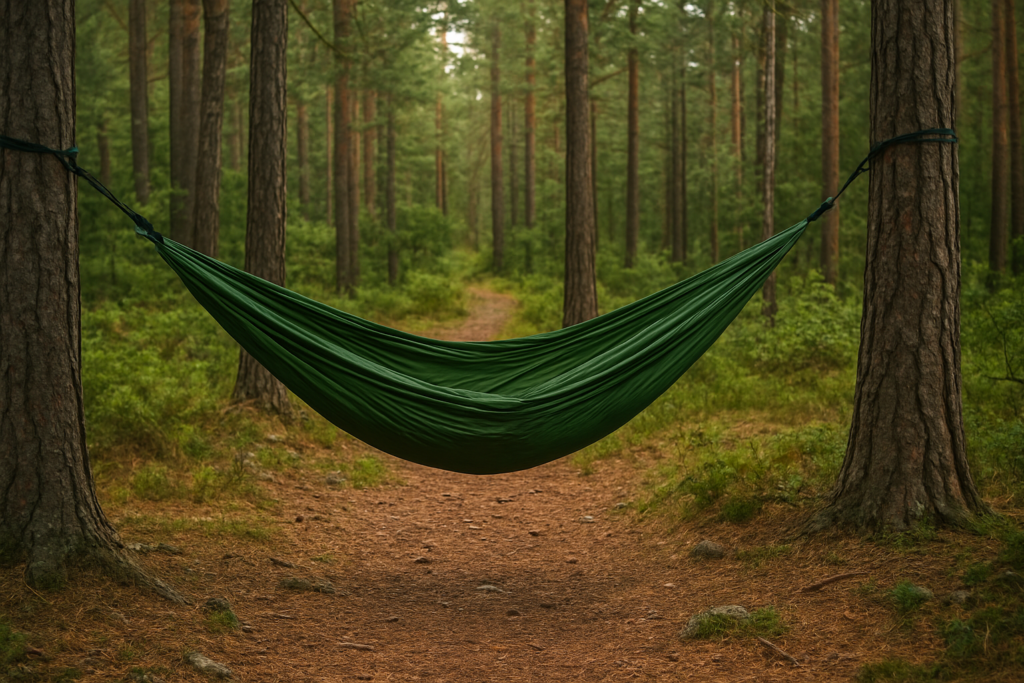
You don’t need to worry about finding flat ground free of rocks, roots, mud, or thick shrubs. Even uneven terrain or flowing streams aren’t a concern—because you’ll be sleeping above it all in a hammock. As long as you have two sturdy trees spaced 10 to 15 feet apart, you’re good to go.
Superior comfort for your back
Let’s be honest — sleeping on the ground isn’t always the most comfortable experience, even with a top-quality sleeping pad. A well-set-up camping hammock gently supports and aligns your body, reducing pressure points that often cause restless tossing and turning. Many campers say they wake up feeling more rested and ache-free in a hammock than they ever did in a tent.
Quick and Easy Setup
One of the biggest perks of camping hammocks is how simple they are to set up. Unlike tents that require poles, stakes, and a perfectly flat spot, hammocks can be hung almost anywhere there are two sturdy trees. No more fumbling with tent poles in the dark or trying to clear rocks and roots from the ground.
With a bit of practice, you can have your hammock campsite ready in under five minutes — rainfly, straps, and all. It’s the perfect solution for campers who want to travel light, save time, and spend more of their trip relaxing instead of wrestling with gear. Additionally, the elevated setup ensures you’ll always have a clean, dry, and comfortable place to rest — even if the ground is uneven or damp.
Essential Hammock Camping Gear
If you’re ready to swap your tent for a hammock, here’s the gear you’ll need to stay comfortable, dry, and bug-free:
The hammock itself
Choose a strong and sturdy hammock specifically designed for outdoor camping use, and not the decorative cotton hammocks from home décor stores. Look for Ripstop nylon construction for durability and weather resistance. Consider the weight capacity of the hammock to be higher than your body weight, so that you are comfortable. You can consider double hammock size if you are tall and need extra room for comfort.
Tree Straps (Suspension System)
These are crucial for safely and securely hanging your hammock. Go for wide, adjustable straps that won’t damage tree bark. Look for daisy chain straps with multiple loops. They make height adjustments incredibly easy and require zero knot-tying skills.
Bugnet
If your hammock doesn’t have one integrated, a separate bug net is a must—especially in mosquito-prone areas. A full-length bug net can completely surround your hammock and create a roomy pod to read, rest and relax.
Rain Tarp or Rainfly
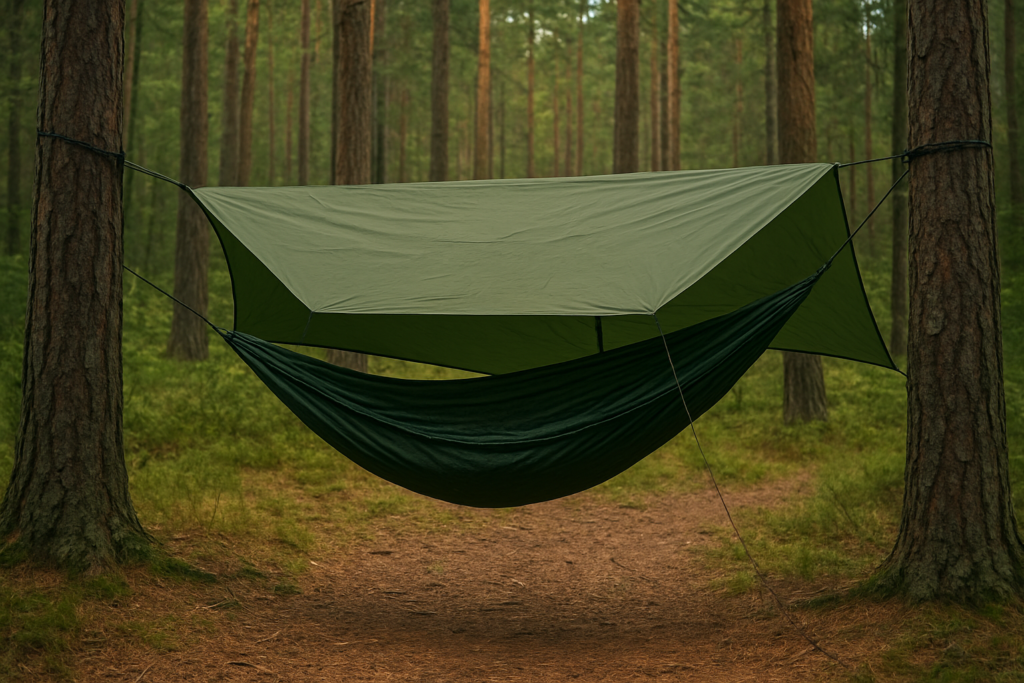
Keeps you dry during unexpected showers. Make sure it’s large enough to cover your entire setup. Weather changes very fast in an outdoor setup so it is wise to pack a waterproof tarp even on clear days.
If you’re camping in a hammock during stormy weather, make sure you understand how to stay safe when lightning strikes — our detailed guide on lightning safety while camping covers everything you need to know.”
Under quilt or sleeping bag
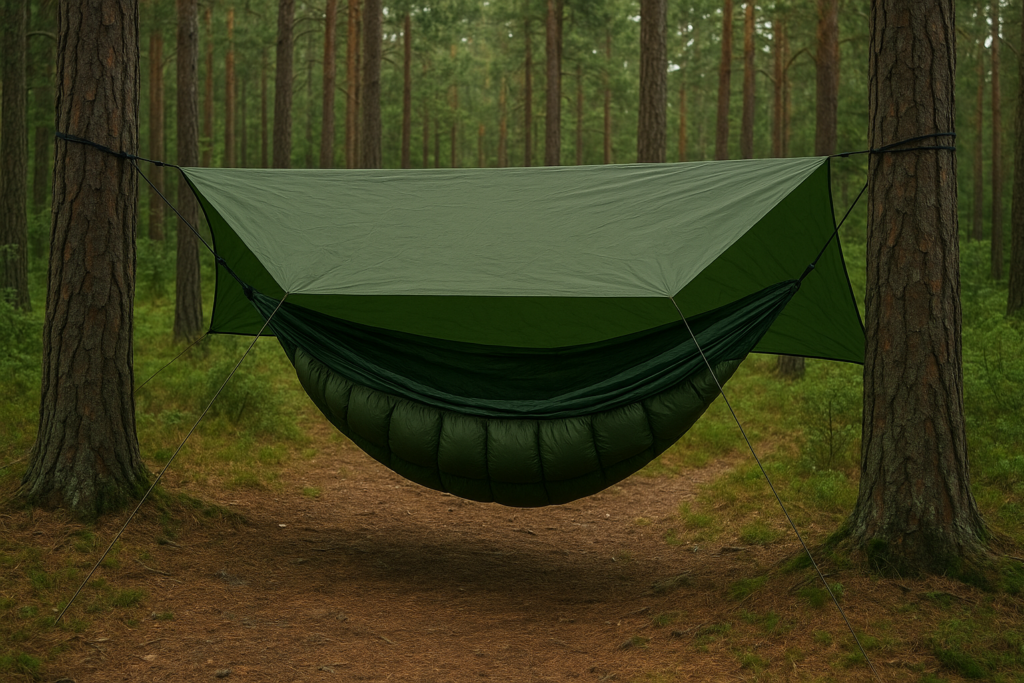
Even when the weather’s mild, you’ll still need some insulation underneath to stay warm. An underquilt hangs beneath your hammock to eliminate drafts and keep your backside warm. The sleeping pad is placed inside the hammock for insulation.
Ridgelines and Guy lines
These help you hang your tarp and bug net properly, keeping everything taut and secure.
How to Set Up Your Hammock (Step-by-Step)
Choose the Right Location
Choose two sturdy trees that are about 15-20 feet apart and are on a strong, durable ground. Ensure that the trees are not damaged or have signs of any disease. Before setting up, always check overhead for dead or unstable branches—known as “widow makers”—that could fall unexpectedly.
Hanging the hammock at the right angle and height
Getting the setup right is key to a comfortable night’s sleep. Aim to hang your hammock so the lowest point sits about 18 inches off the ground—roughly chair height when you’re lying in it. Start by attaching your tree straps around 5 feet up the trunk.
For the best hang, your suspension should form a 30-degree angle from the tree to the hammock. Picture a gentle curve—neither stretched tight like a violin string nor sagging like a hammock in a comic strip. Aim for that sweet spot in between. This angle helps distribute weight evenly and prevents shoulder squeeze or pressure points.
Set up your Rain Tarp
To stay dry and cozy, setting up your rain tarp properly is essential. Start by running a ridgeline between the same two trees you used for your hammock—just a bit higher than your suspension points. Secure the cord tightly, then drape your tarp over it like a roof.
Make sure the tarp extends at least 12 inches beyond both ends of your hammock to shield you from wind and rain. Use guy lines and stakes to anchor the corners to the ground, creating a taut, sloped shape that sheds water efficiently.
Extra Tips:
Practice your setup at home so you’re not fumbling with knots in the rain.
Angle the tarp slightly lower on the windward side for better protection.
Use drip lines on your suspension to prevent water from running down into your hammock.
In stormy weather, consider a full-coverage tarp or one with doors for added shelter.
Stay Warm with Proper Insulation
Even if the air feels mild during the day, temperatures can dip quickly at night—especially when you’re suspended in a hammock. If it’s going to drop below 70°F, it’s time to add insulation.
Do you know what the best option is? A cozy under quilt that hangs snugly beneath your hammock. It traps warmth and blocks chilly air from creeping in underneath. Could you make sure it wraps evenly around the bottom to avoid cold spots? No under quilt? No problem—a sleeping pad inside your hammock can also help insulate your back and keep you comfortable.
Friendly Tip: Hammocks lose heat from below faster than tents, so don’t skip this step. Staying warm means better sleep and a much happier morning.
The Secret to sleeping comfortably in a hammock
Lie Diagonally – It’s a total game changer
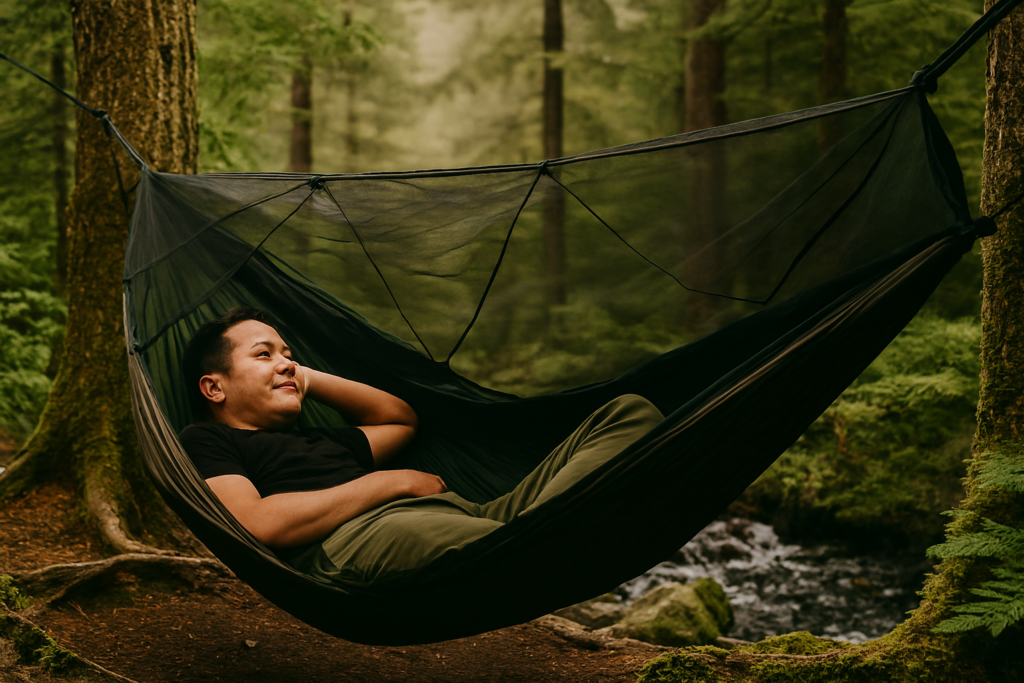
Here’s the golden nugget that separates the blissfully rested from the “never again” crowd: the key to sleeping comfortably in a hammock is all about your position. Once your hammock has a nice, relaxed sag, try lying diagonally across the fabric. You’ll be amazed at how much better it feels—your head and feet gently drop, and your body stretches out in a flatter, more ergonomic position.
Why does this matter? Sleeping diagonally in a hammock helps you avoid that banana-shaped curve that can strain your back. Instead of lying straight down the middle, sit in the center and shift your body so your head and feet point toward opposite corners. This creates a surprisingly flat surface that supports your spine and reduces pressure points.
Adjusting for different sleeping styles
One of the best things about a well-hung hammock is its versatility. Whether you’re a back sleeper, side sleeper, or even a stomach sleeper, you can find a position that works for you. In fact, many side sleepers discover they can comfortably sleep on their back in a hammock—something they struggle with in a regular bed!
Friendly Tip: If you feel any tension in your knees while lying diagonally, just tuck a small pillow, rolled-up jacket, or extra clothes under them. It’s a simple fix that makes a big difference in comfort.
Is Hammock camping right for you?
Hammock camping isn’t just a trend—it’s a lightweight, flexible, and surprisingly comfortable way to sleep outdoors. Sure, there’s a bit of a learning curve. Your first setup might take some trial and error, and forgetting your underquilt could mean a chilly night (many campers have learned that the hard way!).
But once you get the hang of it, most hammock campers say they’ll never go back to sleeping on the ground. Whether you’re thru-hiking or just chilling at a local park, how to camp in a hammock becomes second nature with a little practice.
Start with a backyard test run, invest in solid gear—especially insulation—and don’t be afraid to tweak your setup until it feels just right. Your back will thank you, your pack will feel lighter, and you’ll sleep better than you ever did in a tent.
Happy hanging—and here’s to starry skies and zero pressure points!