Female Solo Camping Safety: Your Ultimate Guide in the Wild
-
| Founder & Content Creator

Latest Posts
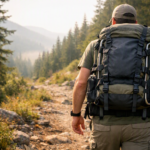
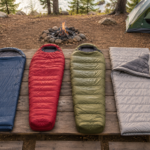
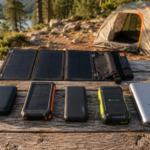
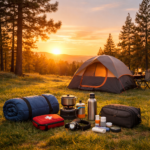
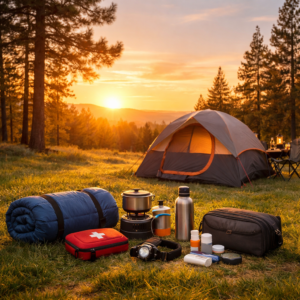
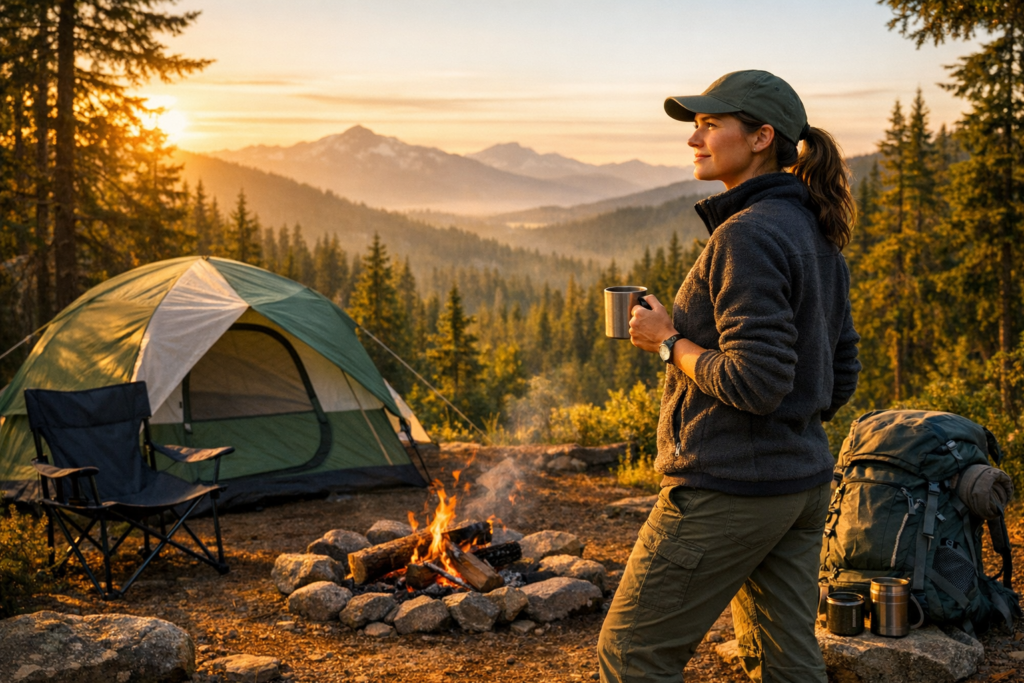
Imagine sipping morning coffee at a secluded campsite, watching sunrise paint the sky, surrounded by peaceful wilderness. This isn’t just a dream—solo camping for women is one of the fastest-growing outdoor activities.
Solo camping for women offers women unparalleled freedom, self-discovery, and connection with nature. But let’s be honest: camping alone as a woman comes with unique safety considerations that can’t be ignored.
Here’s the truth experienced female solo campers know: the wilderness doesn’t care about gender, but smart preparation does. Poor planning can transform your peaceful escape into danger. The key? Mastering the right gear, safety protocols, and confidence-building strategies.
This guide covers:
✅ Choosing the safest campsites for solo female travelers
✅ Essential safety protocols and communication strategies
✅ Complete solo camping gear checklist
✅ Real-world safety scenarios and solutions
✅ Building confidence for your first trip
Solo camping for women isn’t about being fearless—it’s about being smart, prepared, and trusting yourself. Whether planning your first overnight trip or improving wilderness skills, this guide gives you the knowledge to camp confidently and safely.
Why Solo Camping appeals to Women?(And why it’s worth trying?)
The Empowerment Factor
- Complete autonomy: Set your own pace, choose activities, and make decisions with full freedom.
- Self-reliance skills: Practice fire-building, navigation, and emergency response to grow independent.
- Confidence building: Show yourself you can handle challenges solo.
- Mental clarity: Enjoy digital detox and quiet introspection time.
The Practical Benefits
- Flexible scheduling: Camp when it works best for YOUR calendar.
- Personal growth: Safely step outside your comfort zone.
- Stress relief: Experience nature therapy without social obligations.
- Budget-friendly: Solo trips often cost less.
Real Statistics
67% continue solo outdoor activities long-term.
43% of women who try solo camping report increased confidence in other life areas.
Source: KOA North American Camping Report 2024
Common Concerns Addressed
“Isn’t it dangerous?” With proper preparation, solo camping can be statistically safer than many daily activities. Smart planning prevents most risks.
“Won’t I be lonely?” Solitude ≠ loneliness. Many solo campers say this is their favorite part—peaceful time without pressure.
“What if something goes wrong?” Preparation is key. This guide covers prevention, response, and backup plans so you’re ready.
Is Solo Camping Safe for Women? Addressing the Fear Factor
Let’s address the elephant in the tent: is camping alone safe for women? The short answer is yes—with smart preparation and awareness. The wilderness isn’t inherently more dangerous for women; the key is understanding unique safety considerations and planning ahead. Venturing into the wilderness alone can feel overwhelming, especially if you’re used to camping with friends or family. Many women report initial anxiety about their first solo camping trip, which is completely normal—and even healthy—because it keeps you alert and prepared.
Why Solo Camping for women Feels Intimidating (And How to Overcome It)
Common Fears:
- Wildlife encounters → Addressed through proper food storage and awareness
- Getting lost → Solved with navigation tools and preparation
- Injuries alone → Managed with first aid skills and communication plan
- Unwanted attention → Prevented through campsite selection and boundary-setting
- Equipment failure → Avoided by testing gear beforehand
Reality Check:
- 92% of reported solo camping incidents are preventable through preparation
- Most dangerous situations arise from poor planning, not gender
- Experienced solo female campers report feeling safer in nature than in many urban environments
But solo camping isn’t about isolation; it’s about independence, self-reliance, and reconnecting with nature on your own terms. It’s about proving to yourself that you’re capable, prepared, and empowered to handle whatever comes your way.
Solo Camping for Women: Essential Safety Tips
Safe Campsite Selection: Finding Your Perfect Solo Spot
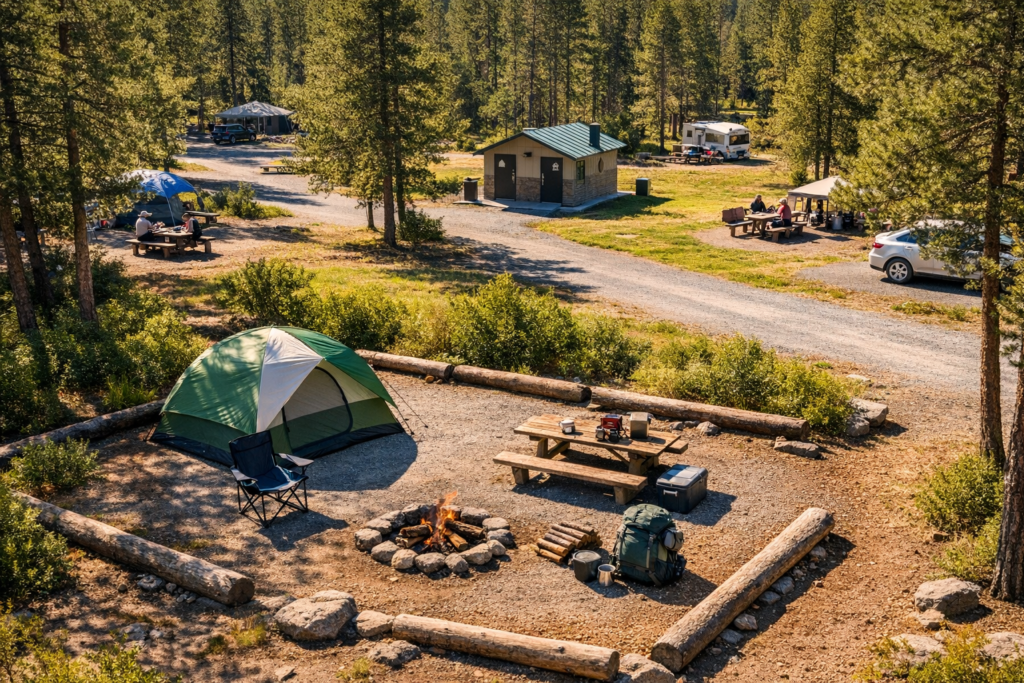
Choosing the right campsite is your first and most important safety decision when camping alone as a woman. The ideal solo camping location balances accessibility with privacy—close enough for help, secluded enough for peace
The Goldilocks Principle of Campsite Selection
Choose a campsite that is not too isolated (hello, horror movie vibes) and not too crowded (goodbye wilderness retreat). Think of it as the Goldilocks zone: just right for solo safety and solitude.
Ideal Characteristics for Solo Female Campers:
Accessibility
- Within 30-60 minutes of civilization (emergency services)
- Cell service OR visible to other campers (choose one)
- Established campgrounds with hosts (especially for first-timers)
- Clear, maintained access roads
Visibility & Layout
- Open sightlines (you can see who’s approaching)
- Not at dead-end of campground (have exit routes)
- Near bathroom facilities (reduces late-night walks)
- Well-lit by natural light during day
Social Balance
- Some nearby campers (safety in community)
- Not directly next to large groups (noise, unpredictability)
- Family-oriented campgrounds (generally safer vibe)
- Weekday camping often quieter than weekends
Campsites to Avoid for Solo Women
- Completely isolated dispersed camping (for beginners)
- Sites with only one access road (limited exit options)
- Locations with no cell service AND no campground host
- Places with recent crime reports (check local forums)
- Parking-lot style sites with heavy foot traffic past your tent
- Sites near bars, party areas, or known drinking spots
Safe campsite selection is all about finding the ideal spot where you can receive quick help and assistance when needed, while also being quiet and serene to enjoy your own space. Never choose a site that lacks cell phone coverage or has poor visibility.
Research Your Campsite Thoroughly Before Arrival
Researching your campsite matters the most because your safety entirely depends on it.
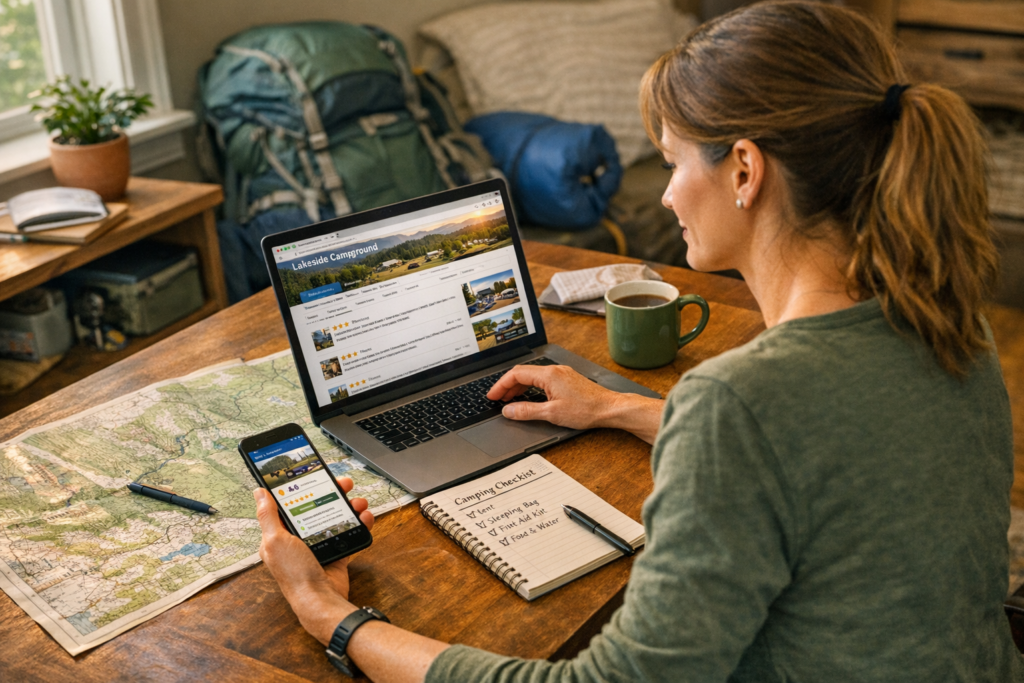
The 7-Point Solo Camping Research Protocol
- Read Reviews From Other Solo Female Travelers:
- Check reviews of other female solo travelers who have been to that campsite location earlier
- Look specifically for mentions of:
- Safety concerns or incidents
- Campground host responsiveness
- Quality of nearby campers
- Campground host responsiveness
- Solo female experiences in specific (pleasant or scary)
- Assess Local Wildlife and Weather Patterns:
- Do research on the local wildlife and weather patterns at the campsite location
- Specific checks
- Bear activity reports (check wildlife agency websites)
- Poisonous plants/insects common in area
- Your Camping dates – and the historical weather conditions for those dates
- Fire restrictions and drought conditions
- Flash flood risks of nearby water sources
- Verify Cell Phone Coverage:
- Contact the local stations and check about cell phone signals and connectivity issues
- Use coverage maps: OpenSignal.com, Carrier coverage maps, Ask campground directly about specific carriers
- Backup plan: If no cell service, ensure campground has host or emergency phone
- Check Recent Activity Reports:
- Trail condition reports (AllTrails, local hiking forums)
- Recent crime statistics (local sheriff departments)
- Seasonal hazards (fire season, hunting season, spring flooding)
- Understand Campground Amenities:
- Confirm availability of:
- Potable water sources
- Bathroom facilities and their condition
- Campground host presence and hours
- Emergency services contact info
- Firewood availability (if fires allowed)
- Confirm availability of:
- Map Your Route and Emergency Exits:
- Download offline maps before arrival
- Identify nearest hospital/urgent care (Google Maps beforehand)
- Screenshot directions to campsite
- Note alternate routes in case of road closures
- Join Solo Female Camping Communities:
- Facebook groups: “Solo Female Travelers” Ask specific questions about campsites you’re considering
- Get real-time advice from experienced solo campers
Safe campsite selection is crucial for a good camping experience, and knowing where you camp is really a high-priority activity.
Communication Plan: Never Camp Without Telling Someone
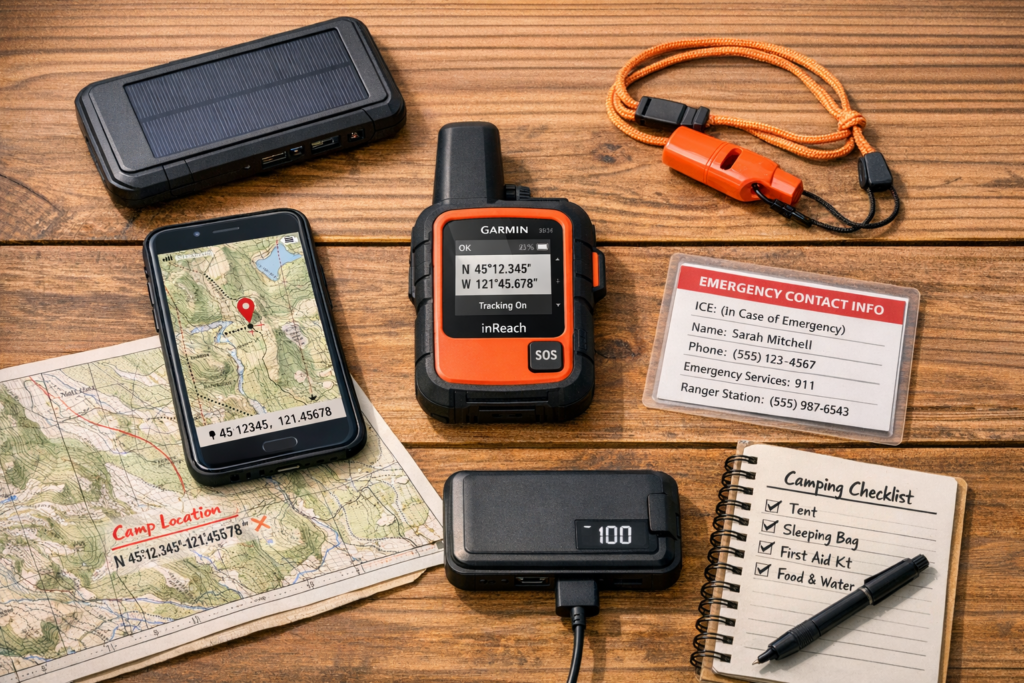
Imagine you are miles away from civilization in a remote place, and suddenly you realize that your phone battery is dead, and you realize you do not have a backup, nor have you told anybody about your location or coordinates. This might put you in a very unsafe spot, and you really don’t know how to handle it.
Creating Your Solo Camping Communication Plan:
Before You Leave (48 Hours Prior):
Share with Trusted Contact (Friend/Family):
“If I don’t contact you by [DATE/TIME], call authorities” agreement
- Exact location or coordinates
- Specific campsite number/name
- GPS coordinates (not just campground name)
- Planned arrival time
- Expected return date and time
- Vehicle description and license plate
- Itinerary: planned hikes, activities, routes
- Emergency contact list
- Check-in schedule (daily/twice daily)
- “If I don’t contact you by [DATE/TIME], call authorities” agreement
Technology & Communication Tools
So, keep a GPS tracker handy and keep sending messages if the service is available.
Best Communication Devices for Solo Camping:
Cell Phone Backup Systems:
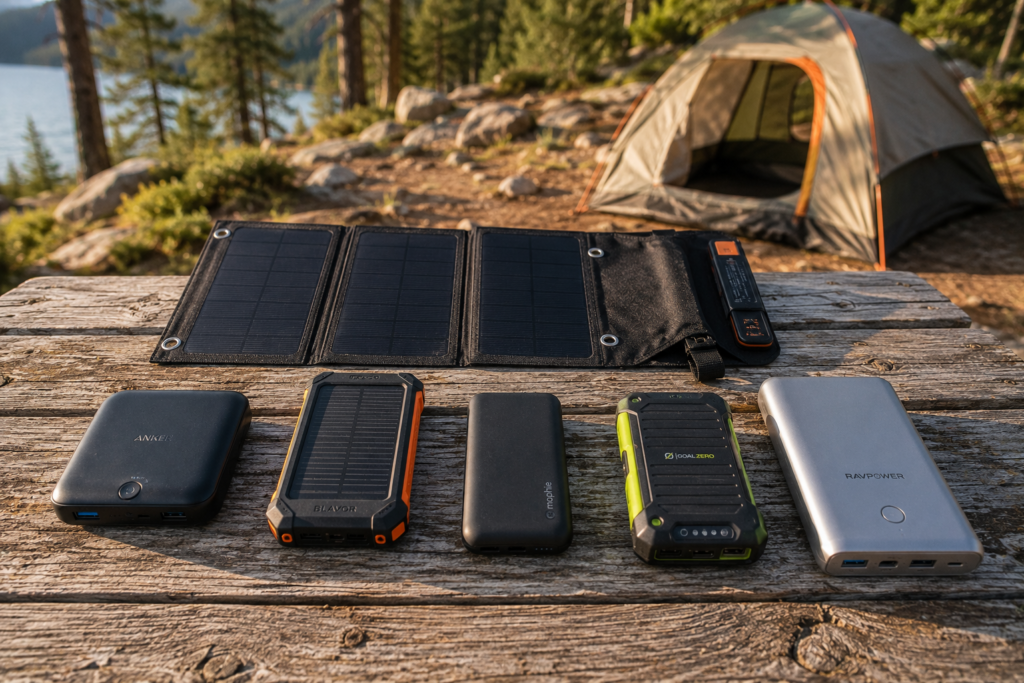
- Portable battery banks (20,000+ mAh minimum)
- Solar chargers for extended trips
- Waterproof phone case
- Offline maps downloaded: Google Maps, Gaia GPS, AllTrails
Satellite Communication (No Cell Service):
- Garmin inReach Mini: Two-way satellite messaging, SOS
- SPOT Gen4: GPS tracker with emergency beacon
- Zoleo Satellite Communicator: Affordable sat messenger
- PLBs (Personal Locator Beacons): Emergency-only devices
Daily Check-In Protocol
- Set alarm for same time daily
- Send pre-agreed message (“All good!”)
- If you miss check-in, contact knows to take action
- Battery dies? Your contact initiates search after deadline
Essential Safety Tip: So, the most essential tip is to inform your friends and family about your plan, exact location or coordinates, and when you will be back.
Also familiarize yourself with our emergency signaling tips for lost campers — knowing how to signal for help is critical when you are alone.
Trust Your Intuition: When Something Feels Wrong
Even if you’ve reached your campsite, sometimes something just doesn’t feel right. Maybe it’s the location itself that gives you uneasy vibes, or perhaps it’s the behavior of nearby campers that raises red flags.
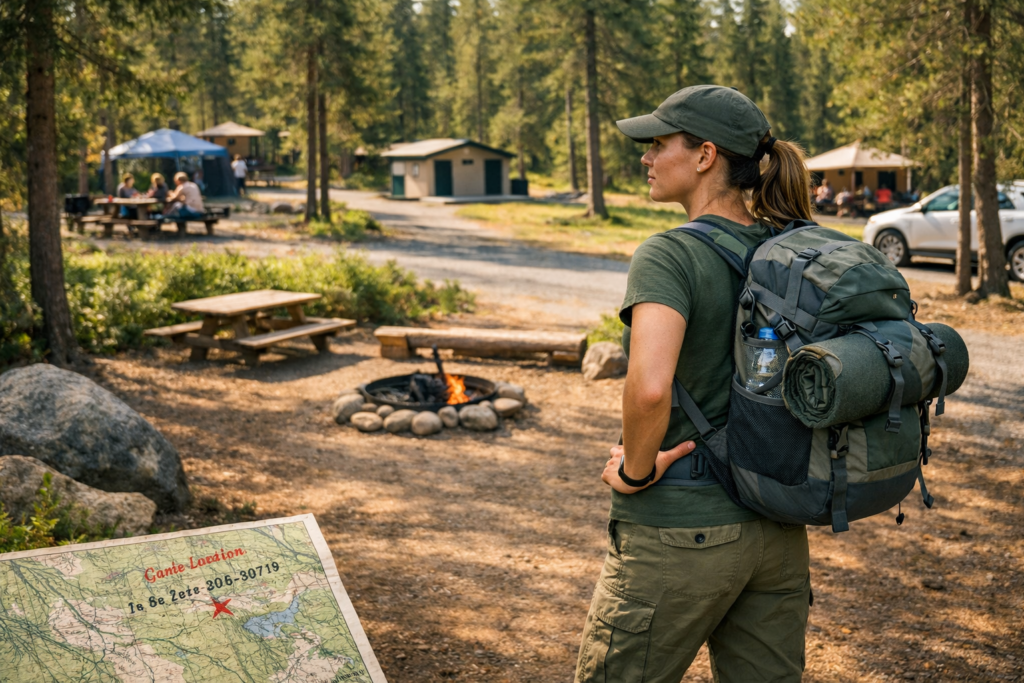
Gut Feeling Red Flags That Demand Action
Trust Your Instincts If You Notice:
Location Warning Signs
- Excessive isolation (no one around for miles)
- Poor visibility (can’t see who’s approaching)
- Sketchy access road or blocked exit routes
- Evidence of recent disturbance (trash, damaged sites)
- Campground host absent when supposed to be present
People Warning Signs
- Someone watching your campsite setup repeatedly
- Overly friendly approaches asking intrusive questions
- Anyone asking if you’re alone (lie and say “partner’s hiking”)
- Groups drinking heavily nearby
- Anyone approaching after dark without clear reason
Environmental Concerns
- Wildlife warnings posted but you weren’t informed
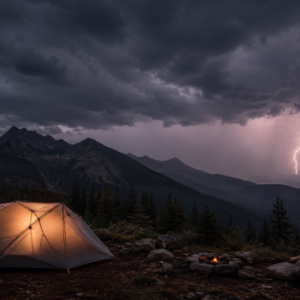
- Weather turning severe (storms, lightning, extreme heat)
- Wildfire smoke or smell nearby
- Flooding risk from swollen streams
Whatever may be the reason, if you feel uncomfortable or unsafe in any way, don’t ignore that inner voice. No matter how excited you are to stay and camp, it’s always wiser to trust your instincts and move to a safer spot. Your safety comes first—always.
For an added layer of protection at your campsite, our guide to camping security systems covers radar alarms and wildlife detection tools worth considering for solo trips.
Weather is just as important as wildlife — our guide on how to stay safe from lightning while camping is essential reading before any solo trip.
What to Do When Your Gut Says Leave
Immediate Actions (Don’t Second-Guess):
- Don’t announce you’re leaving (to potentially unsafe people)
- Pack essentials first: Keys, phone, wallet, important gear
- Get in vehicle with doors locked before finishing packing
- Drive to public/safe area: Gas station, town, busy campground
- Then decide: Find new campsite, get hotel, or head home
You Don’t Need a “Valid” Reason:
- Intuition IS valid
- Better to “waste” a campsite fee than risk safety
- Experienced solo campers leave sites regularly—it’s normal
- No one will judge you for prioritizing safety
Alternative Safe Options:
Contact local rangers for alternative safe sites.
- Drive to nearest town and hotel
- Find busier campground with host present
- Camp in Walmart parking lot (many allow overnight)
Dealing With Harassment: Know What to Do
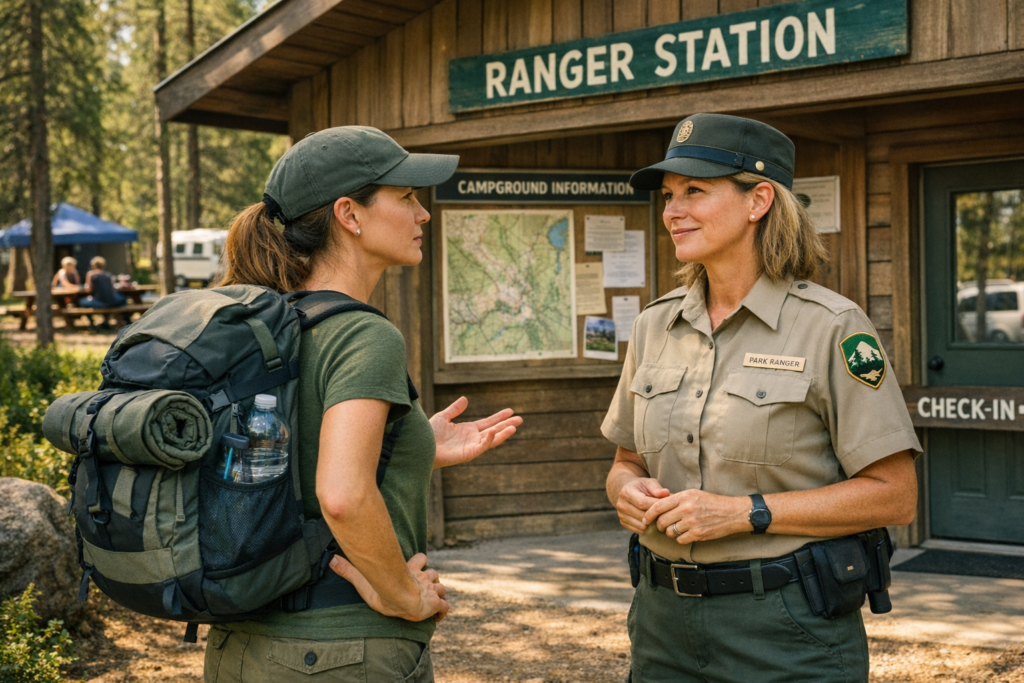
When you find that someone is bothering you or harassing you, and that is not stopping soon, then you should be all ready to talk to the person in charge there, either the caravan parking staff, the campsite host, or maybe your near campsite neighbors, and tell them immediately that you are not feeling safe. There are a few tricks or techniques that you could follow to make others feel that you are not alone like
- Whenever you are talking to someone, you can always mention that “Waiting for my partner” which makes others feel that you have company
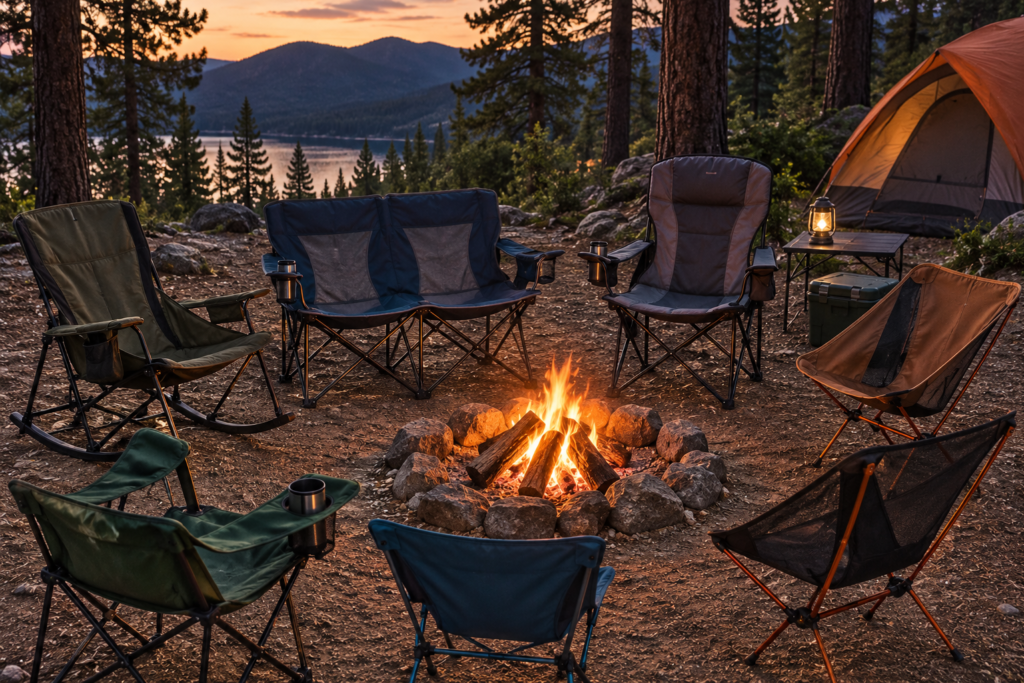
- Setting up two camping chairs – implying that you are not alone
- Hanging men’s clothes on the clothes line outside suggesting male presence
- Larger men’s boots outside the tent, suggesting that you are not alone
Apart from the above, you can also do things to set boundaries- like maybe
- Always keeping the interactions brief with strangers
- Trying not to be too friendly or not sharing too many personal details (like where you are from, solo status ,etc.)
- Having clear and direct communication with strangers whenever you don’t like something, like telling them to leave your campsite if they are intruding, warning them if you feel they are following you, and also threatening to report to show that you are serious
Despite taking care, if the harassment doesn’t stop, then be ready to report either to the Campground host, 911, or your immediate camp neighbors whom you trust.
Essential Solo Camping Gear Checklist for Women
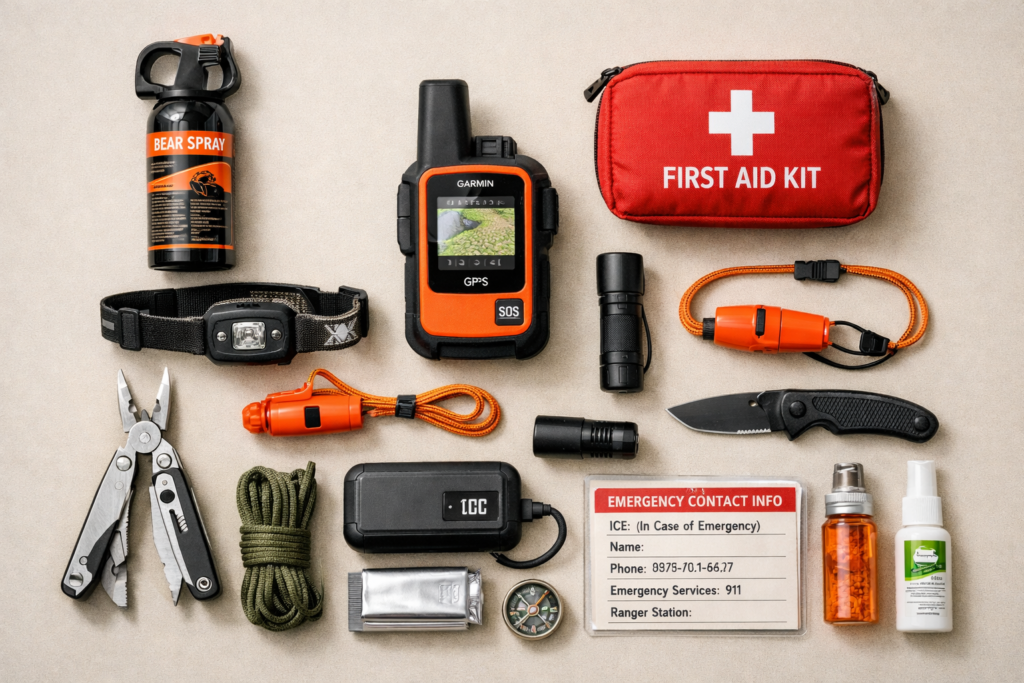
Having the right gear isn’t about being paranoid—it’s about being prepared. This solo camping checklist for women covers safety essentials, comfort items, and emergency equipment every solo camper should pack.
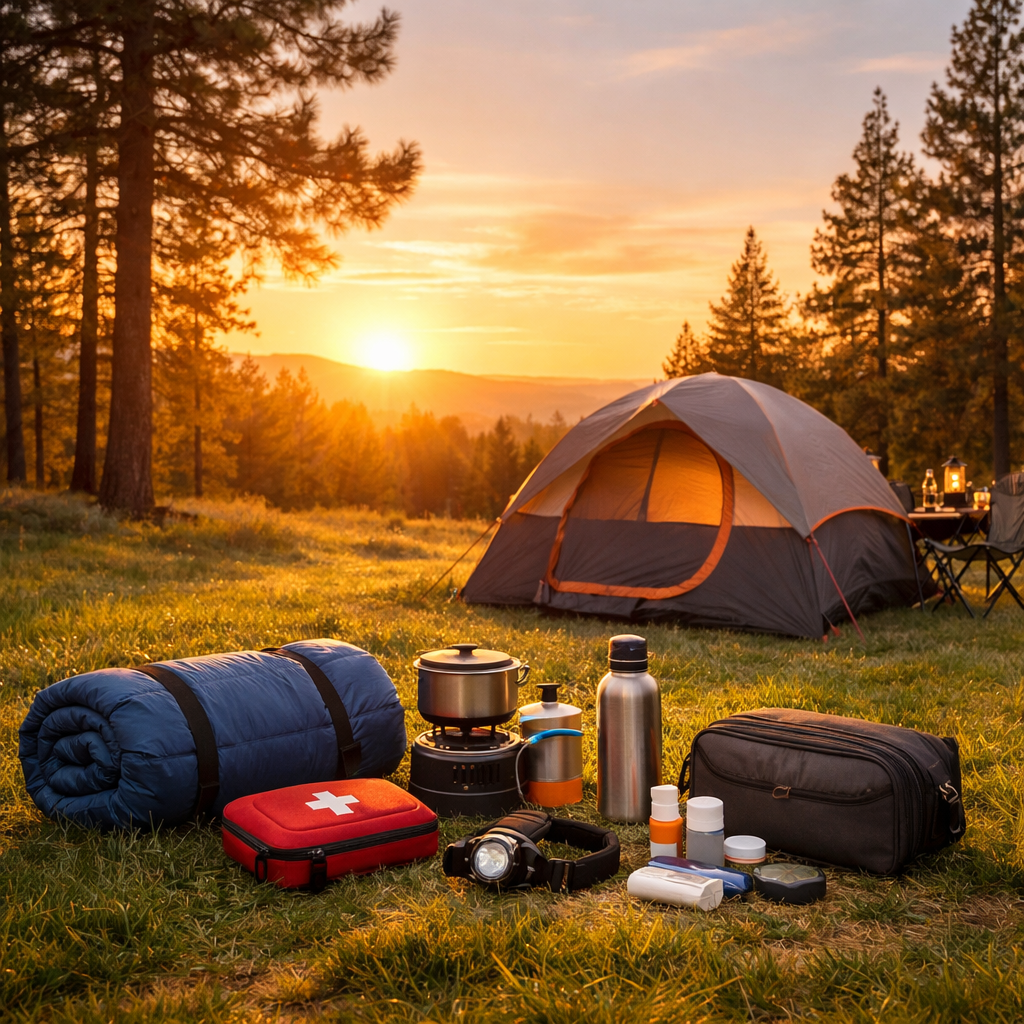
Here are all the important and non-negotiable items that you need to pack
- All weather clothing (Base layer, mid layer, outer layer like waterproof pants and rain jackets, warm hats, gloves and extra socks)
- Flashlights and headlamps with extra batteries, and also glow sticks as backups if all the batteries die
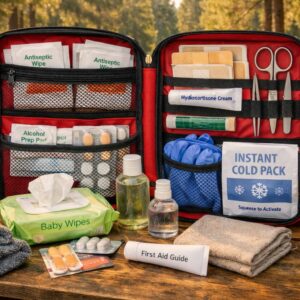
- First-Aid Kit for any cuts, sprains, and surprise injuries(Your first aid kit should include treatment for cuts, sprains, and allergic reactions. For comprehensive guidance, check our wilderness first aid essentials and emergency response guide.)
- Offline Maps and Compasses, GPS devices, batteries to charge your devices or phones
- Self-defense tools and bear sprays for animal encounters or any kind of sketchy or dangerous situations that you might face
- Personal alarm or whistles in case of emergency scenarios
- Solo Camping Tents with good security features
- Weather Radios to give you real-time weather alerts even without mobile signals
- Fire Starter Kit with waterproof matches and lighters
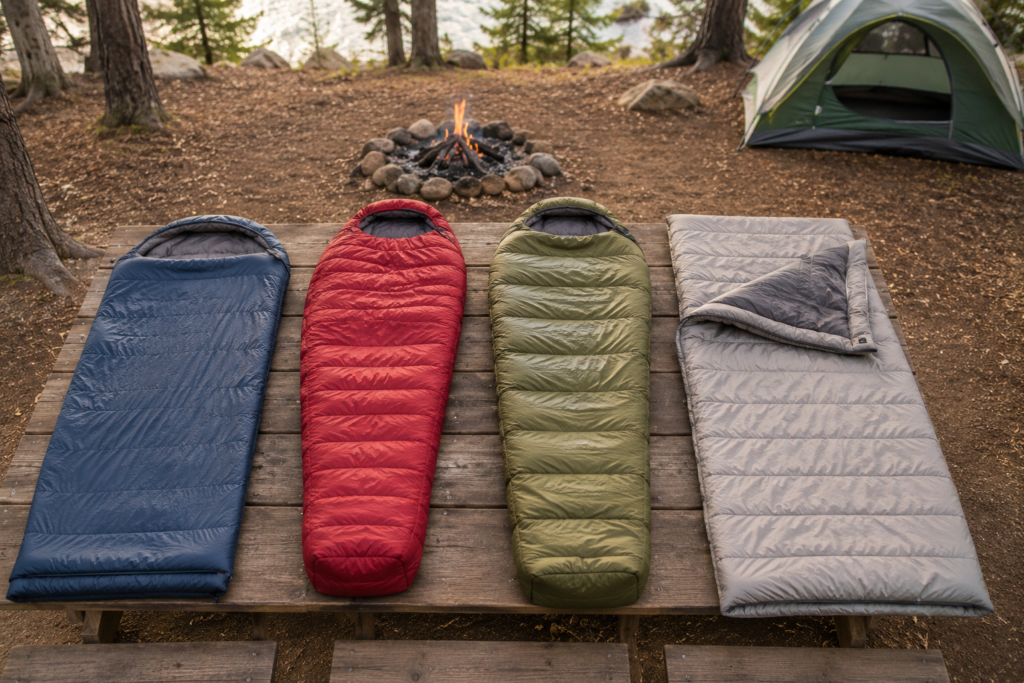
- Sleeping Bags and pads to make you warm and comfortable on cold nights
- Camping stoves for cooking
- Easy-to-cook food and utensils
- Water-filtration system or tablets to filter your water before drinking
- Camping chairs, insect repellants, sunscreens, cameras, books and journals
- Biodegradable Soaps, toothpaste, toothbrush, wipes, period products, hand sanitizers
Digital Safety: Social Media and Location Sharing
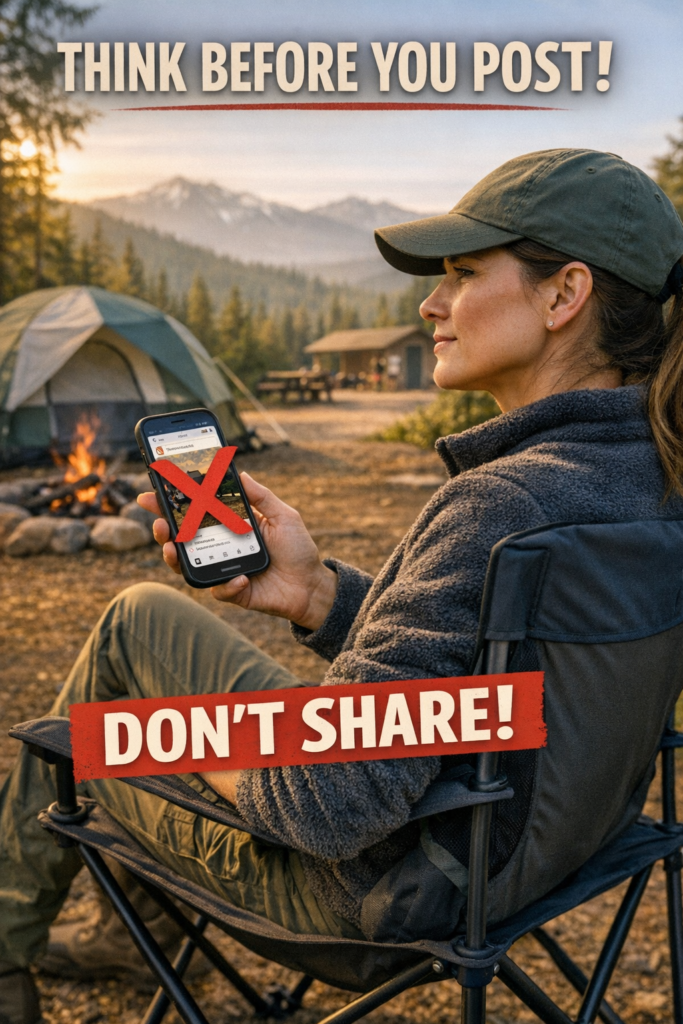
Never Share Your Exact Location in Real-Time
Avoid sharing real-time updates about your campsite or trail. This is one of the most critical yet overlooked aspects of solo camping safety for women.
Why Real-Time Sharing is Dangerous:
The Risks
- Then strangers showing up at your campsite is definitely not what you want
- While your followers may be friendly on social platforms, you might unintentionally alert someone with bad intentions
- Geotags reveal precise coordinates (can be extracted from photos)
- Public posts can be seen by strangers beyond your followers
- Sharing “I’ll be here for 3 days” gives predators a timeline
- Stalkers can track patterns (favorite spots, regular trips)
Safe Social Media Practices for Solo Campers
Smart Sharing Strategies
- Airplane mode (or Location Services OFF)
- Save Phots and Videos without posting
- No “Check-ins” post on Facebook or Instagram
- Disable geotagging in Camera Settings(Photos contain GPS data)
Who You CAN Share With (Private, Real-Time):
- Closed Facebook groups for women campers (if truly private)
- Your emergency contact (via text, not social media)
- Trusted family members (private message, not public post)
So, never compromise your safety or solitude, and share your magical adventure when you are safe back home.
Glamping is also an excellent option for solo female travelers — hosts are usually accessible, facilities are comfortable, and the experience is considerably less daunting than backcountry solo camping. Our glamping trip for beginners guide covers the solo traveller options specifically.
Frequently Asked Questions About Solo Camping for Women
Is it safe to camp alone as a woman?
Yes — solo camping for women is safer than media portrayals suggest. The wilderness itself presents consistent, manageable risks that preparation handles well. Studies consistently show that most outdoor incidents — regardless of gender — result from poor planning rather than predatory encounters. Choosing established campgrounds with hosts, sharing your location with a trusted contact, and carrying basic safety gear covers the vast majority of risks.
What should a solo female camper do if someone makes her feel unsafe?
Trust your instincts immediately — you do not need a ‘valid’ reason to leave. If someone is making you uncomfortable, never announce you are leaving. Pack your essentials first, get into your vehicle with doors locked, and drive to a public area. Report any concerning behavior to the campground host or call 911. Experienced solo female campers leave sites regularly — it is a smart decision, not a failure.
What is the best communication device for solo camping with no cell signal?
A satellite communicator is the gold standard — devices like the Garmin inReach Mini allow two-way messaging and SOS alerts anywhere on earth, with no cell signal required. For budget-conscious campers, a PLB (Personal Locator Beacon) is a one-way emergency-only option that is highly reliable. Always carry a fully charged portable battery bank as backup for your phone even when satellite devices are available.
How do I choose a safe campsite for solo female camping?
Look for campgrounds with an on-site host, some nearby campers for community safety, good sightlines so you can see who is approaching, and clear exit routes. Avoid completely isolated dispersed sites for your first solo trips. Established campgrounds with host presence — particularly those with positive reviews from other solo female campers — offer the best balance of safety and solitude.
What self-defence tools should women bring solo camping?
Bear spray is the most versatile option — it deters both aggressive wildlife and human threats from a safe distance. A loud personal alarm or whistle is lightweight and effective for drawing attention in an emergency. A tactical torch serves double duty as a visibility tool and personal safety device. Carry whichever tools you are comfortable using — and practice with them before your trip.
Adventure Boldly – Camp Confidently
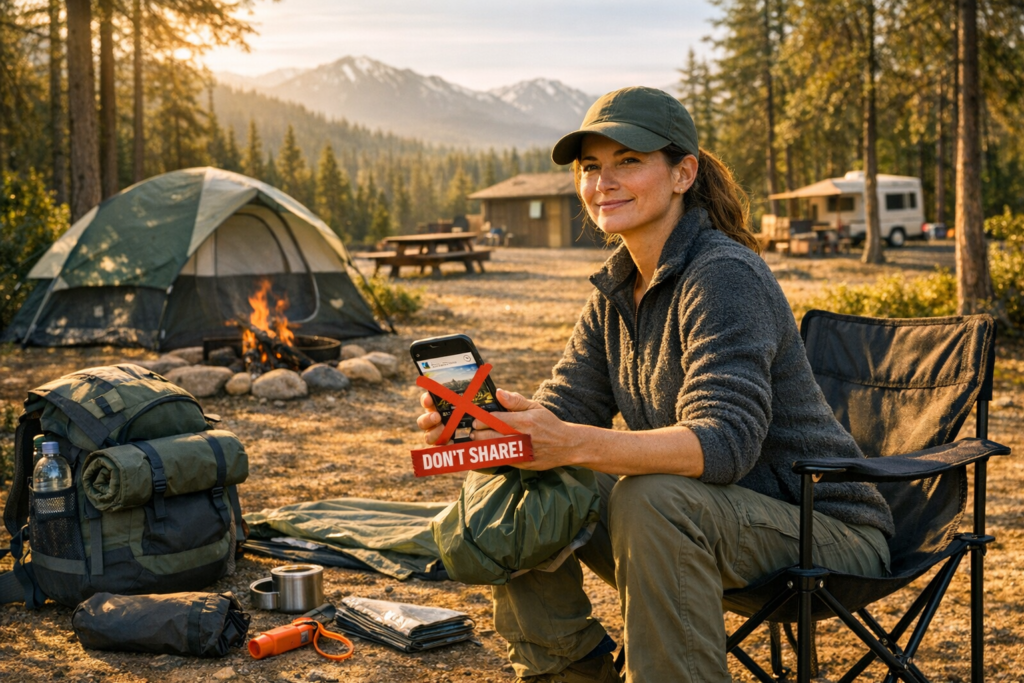
Solo camping as a woman isn’t about proving how brave you are—it’s about being smart, prepared, and reclaiming your independence in nature.
After reading this complete guide, you now have everything you need for safe, empowering solo camping:
- Campsite selection strategies that balance safety and solitude
- Communication protocols ensuring someone always knows your location
- Complete gear checklist covering safety, comfort, and emergencies
- Harassment response plans for setting boundaries and getting help
- Digital safety practices protecting your location privacy
Planning doesn’t ruin the fun—it creates space for it. When you’re prepared, you can relax and enjoy the quiet forest mornings, the glow of campfires, and the calm that comes with being out there on your own.
Your next steps
- Choose your first campground (established, with host, good reviews)
- Create your communication plan (share with trusted contact)
- Pack using the checklist (test gear beforehand)
- Practice tent setup (at home, in daylight, and in the dark)
So pack wisely, stay alert, and camp with confidence. Show the outdoors that you’re not just visiting—you belong out there just as much as anyone else. The wilderness is waiting, and it doesn’t care about your gender. It only cares that you’re prepared, respectful, and ready to experience its magic. Your solo camping adventure starts now. 🏕️✨