Beach camping for beginners – Your Complete Guide to a Perfect Beach Trip
-
| Founder & Content Creator

Latest Posts
Beach camping for beginners sounds like a dream — wake up to crashing waves, fall asleep under a sky full of stars, and spend your days doing absolutely nothing except enjoying one of the most beautiful settings on earth. And honestly? It really is that good. But beach camping is also genuinely different from forest or mountain camping, and if you show up without the right preparation, the sand, wind, and sun will have a field day with you.
This guide covers everything a first-time beach camper needs to know — from picking the right campsite and packing the right gear, to handling coastal weather, keeping sand out of everything (a noble and endless battle), and eating well by the sea. By the end of this, you’ll be completely ready for your first coastal adventure.
Why Beach Camping Is One of the Best Outdoor Experiences You’ll Ever Have
There’s a reason beach camping is one of the fastest-growing outdoor trends. It combines everything people love about camping — disconnecting from screens, breathing fresh air, cooking simple food — with the added magic of the ocean. The sound of waves is arguably the world’s best white noise machine. The sunrises are extraordinary. And there is genuinely nothing quite like your morning coffee with your feet in the sand and nothing but open water in front of you.
Beach camping also tends to attract a relaxed, friendly crowd. Neighbours at beach campsites are almost always up for a chat, happy to share a campfire, and completely unconcerned about what time it is. It is that kind of trip.
HONEST HEADS-UP FOR FIRST-TIMERS
Here is the honest truth about beach camping for beginners: it is not harder than regular camping — it’s just different in ways nobody thinks to warn you about. Sand gets into everything. And we mean everything — sealed bags, zipped pockets, things you cannot explain. Coastal winds arrive stronger and stay longer than expected. And the sun at the beach is a different beast entirely — UV reflected off sand and water is significantly more intense than inland. Know these three things going in and you will have the time of your life.
How to Choose the Right Beach Campsite: What Every Beginner Should Know
What to Look for in a Beach Campsite
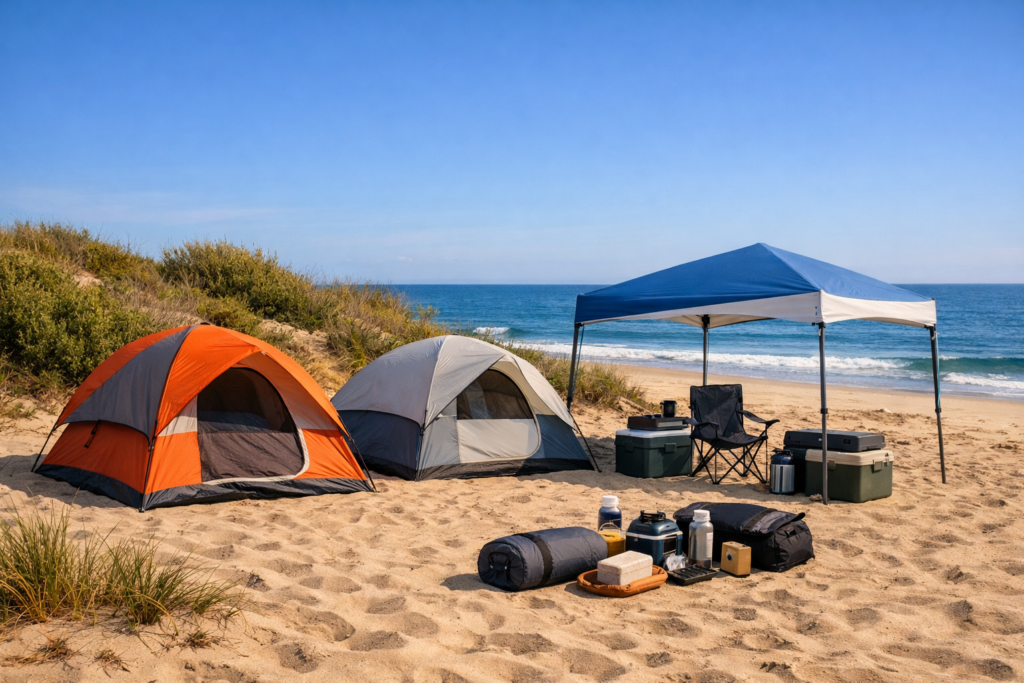
Start researching your beach campsite well before you go. Beach campsites in popular locations book up fast — especially June through September. Here’s what to look for when choosing:
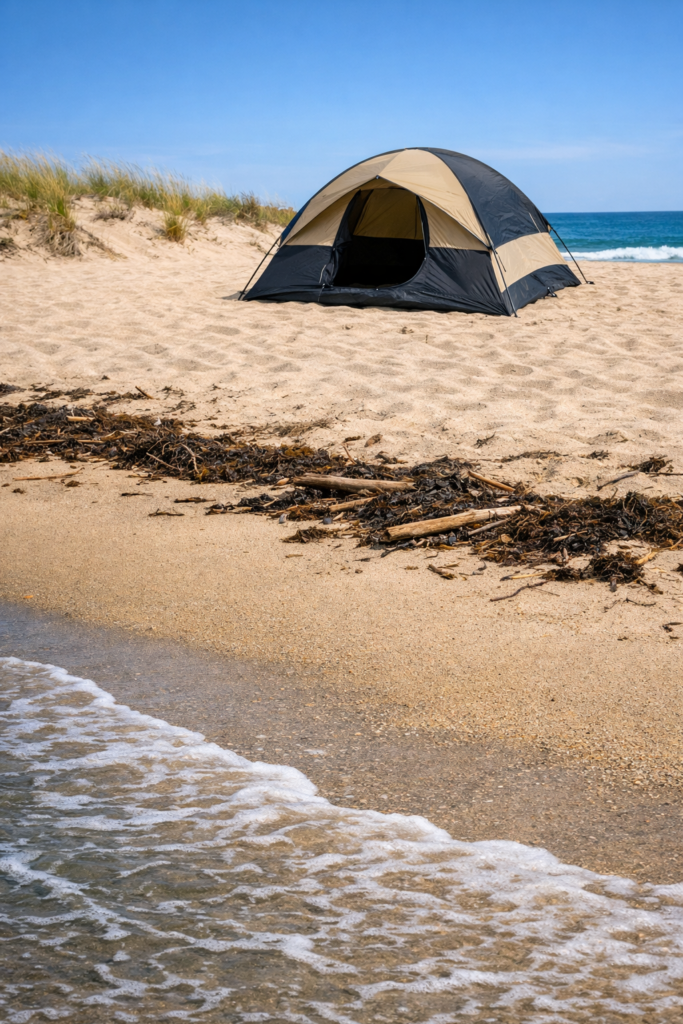
- Above the high tide line — never camp where the sand is wet or where seaweed and driftwood have collected. That’s exactly where the tide came in last time
- Natural windbreak — dune vegetation, rocks, or a slight elevation change behind you significantly reduces wind impact on your tent
- Distance from facilities — toilets and freshwater access within walking distance make a huge difference, especially for first-timers
- Flat, compacted sand — loose, deep sand is hard to stake into and uncomfortable to sleep on
- Permitted campfire area — check local rules before assuming you can build a fire
Do You Need a Permit to Camp on the Beach?
This is the question most first-time beach campers forget to ask until they arrive. The answer varies by location, but the short version is: always check before you go. Many popular beaches require advance booking and a camping permit. Some national park beaches require permits issued months in advance. Some beaches are privately owned and do not permit camping at all. A quick search for ‘[beach name] camping permit’ before you book saves a lot of grief.
Also check: fire rules (many beaches prohibit open fires during dry months), whether dogs are permitted, and whether you can drive onto the beach or if you need to carry gear.
Essential Beach Camping Gear: Everything You Need to Pack
Beach camping gear is not just regular camping gear — it’s gear that has to survive sand, saltwater spray, UV radiation, and strong wind simultaneously. Here’s what matters most and why.
Choosing the Right Beach Tent
What to Look for in a Wind-Resistant Beach Tent
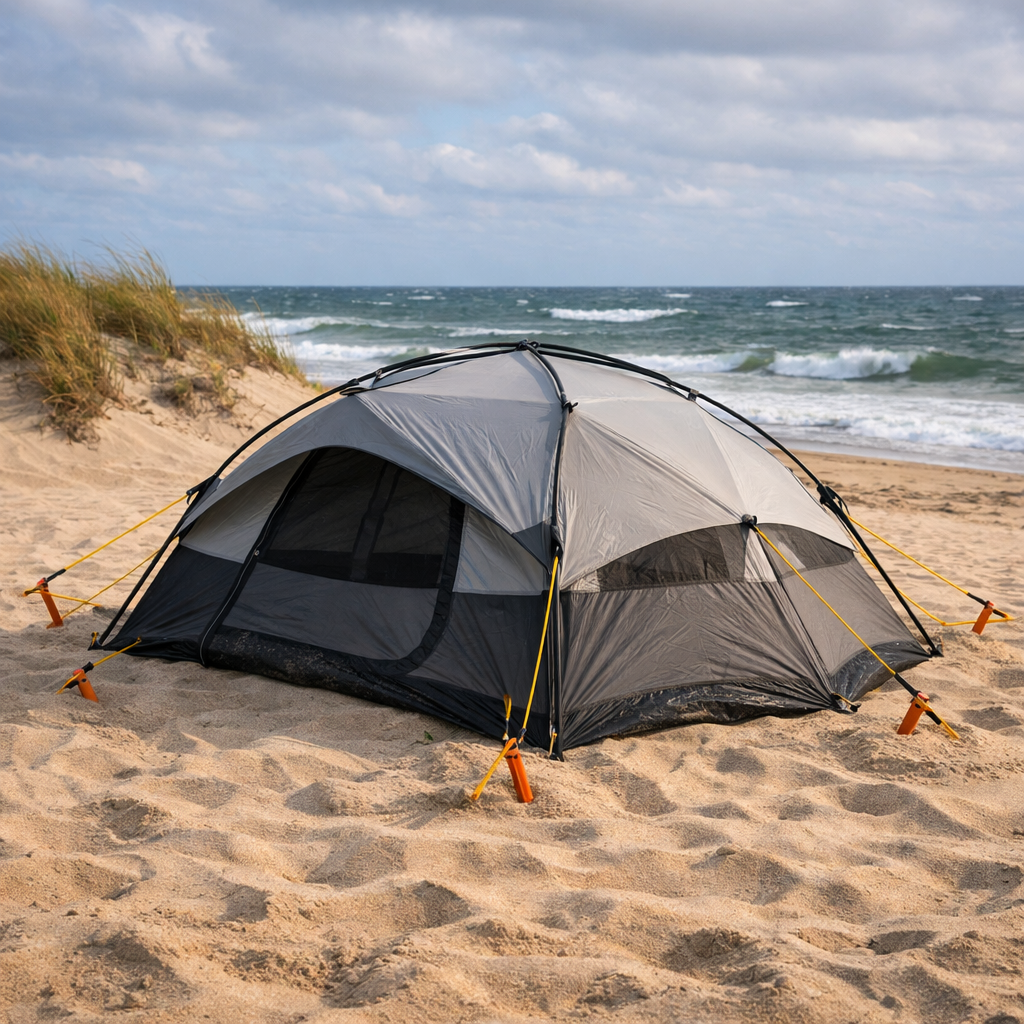
- Low-profile geodesic design — dome-shaped tents resist wind far better than tall cabin-style tents
- Full rainfly coverage — beach storms arrive with zero notice; always have a full rainfly fitted
- Mesh inner walls — ventilation is critical in beach heat; mesh lets the breeze through while keeping bugs out
- Sand-specific stakes — standard pegs pull straight out of loose sand; use wide sand anchors or fill bags with sand for anchoring
- Guy lines included — extra tension lines add critical stability in high coastal winds
- Vestibule or gear porch — a covered area outside the main tent door for sandy shoes and wet gear is genuinely invaluable
Sun Protection and Shade Gear
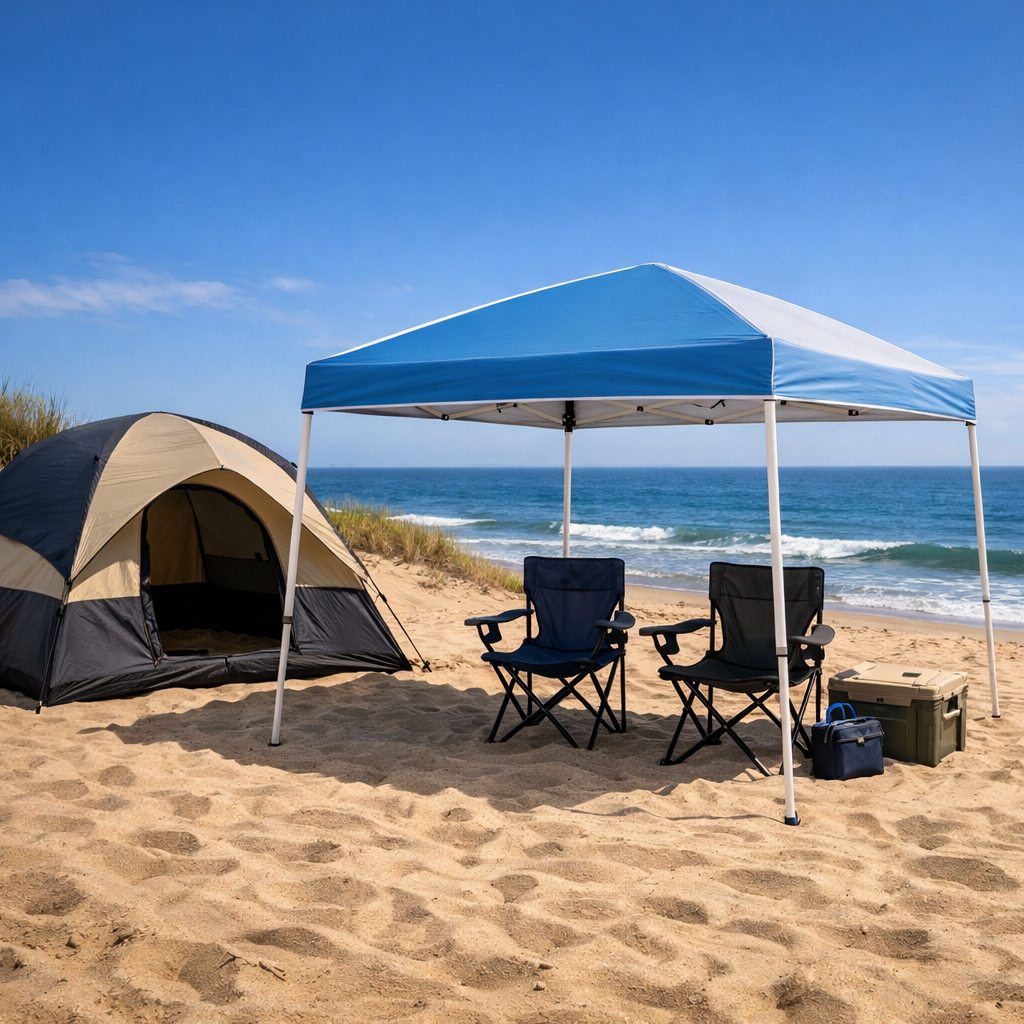
- Pop-up shade canopy with UPF 50+ — beach UV is reflected by both sand and water, increasing exposure by up to 40% compared to inland camping
- SPF 30+ reef-safe sunscreen — reef-safe formulas are increasingly required at protected coastal areas and are better for the environment
- Wide-brimmed sun hat — protects face, neck, and ears during long beach days
- UV-protective lightweight long-sleeve shirts — more practical than constant sunscreen reapplication during extended sun exposure
- Lip balm with SPF — constantly overlooked but very important
Lighting, Seating, and Comfort Essentials
- Solar-powered LED lanterns — beaches get maximum sun during the day; your lanterns recharge themselves
- Headlamp for each person — hands-free torch for night walks and bathroom trips
- Wind-resistant enclosed candles or lanterns — standard open candles are useless on a breezy beach
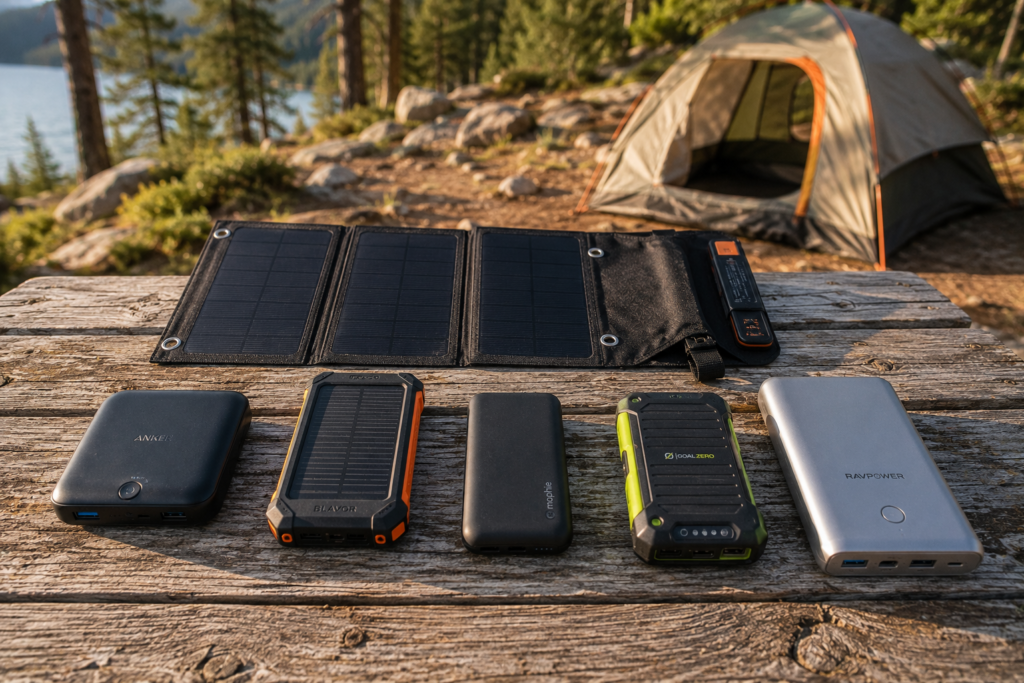
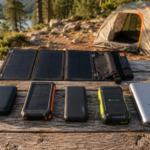
- Portable power bank — for phones, cameras, and rechargeable devices
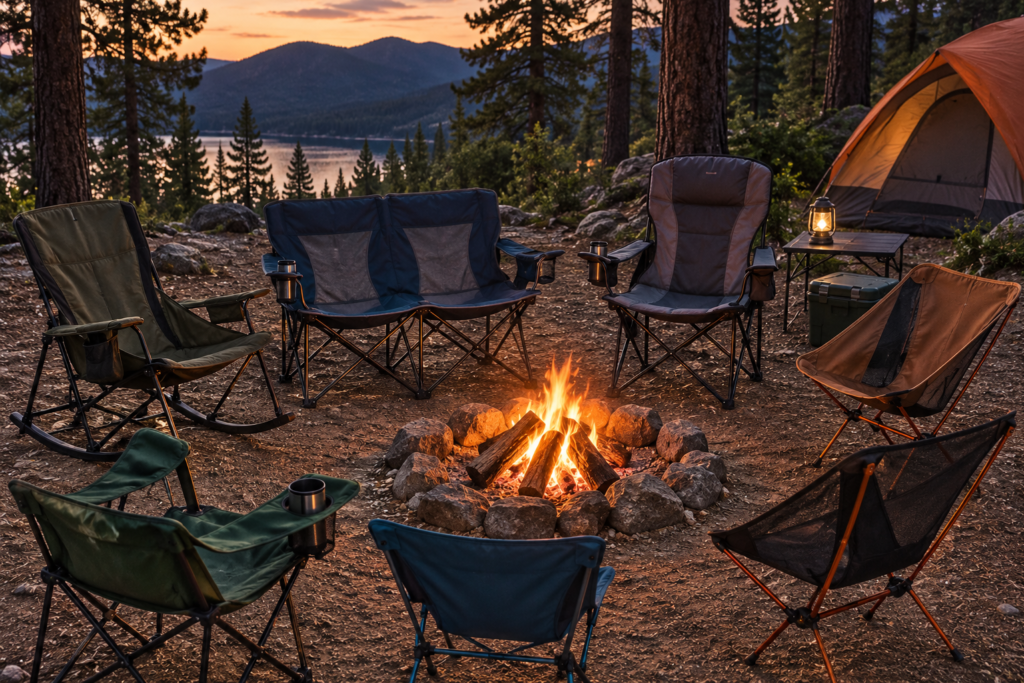
- Low-profile beach camping chairs — lighter than standard camp chairs and more stable on sand
- Compact folding camp table — keeps food and gear off the sand
How to Handle the Three Big Beach Weather Challenges
Beach weather is beautiful and brutal in equal measure. The key difference between a great beach camping trip and a miserable one usually comes down to one thing: preparation for weather you didn’t expect. Here are the three main challenges and exactly how to handle them.
Dealing with Heat and Sun at the Beach
Beaches amplify heat. Sand reflects UV radiation back at you, water reflects it at you from the other side, and there are usually few natural shade options. The result is significantly more sun exposure than you’re used to — even on an overcast day. Approach heat at the beach the way you’d approach it on a mountain: proactively, not reactively.
- Drink water before you feel thirsty — by the time you’re thirsty on the beach you’re already dehydrated
- Pack electrolyte sachets — sweating in beach heat depletes salts faster than water alone replaces them
- Reapply sunscreen every 90 minutes minimum — and every time you come out of the water
- Set up shade before you need it — the canopy goes up first, not when you’re already burned
- Avoid peak sun hours 10am–4pm for extended outdoor activity — plan hikes and active games for morning and late afternoon
Managing Strong Coastal Winds
How to Anchor a Tent in Sand (Step by Step)
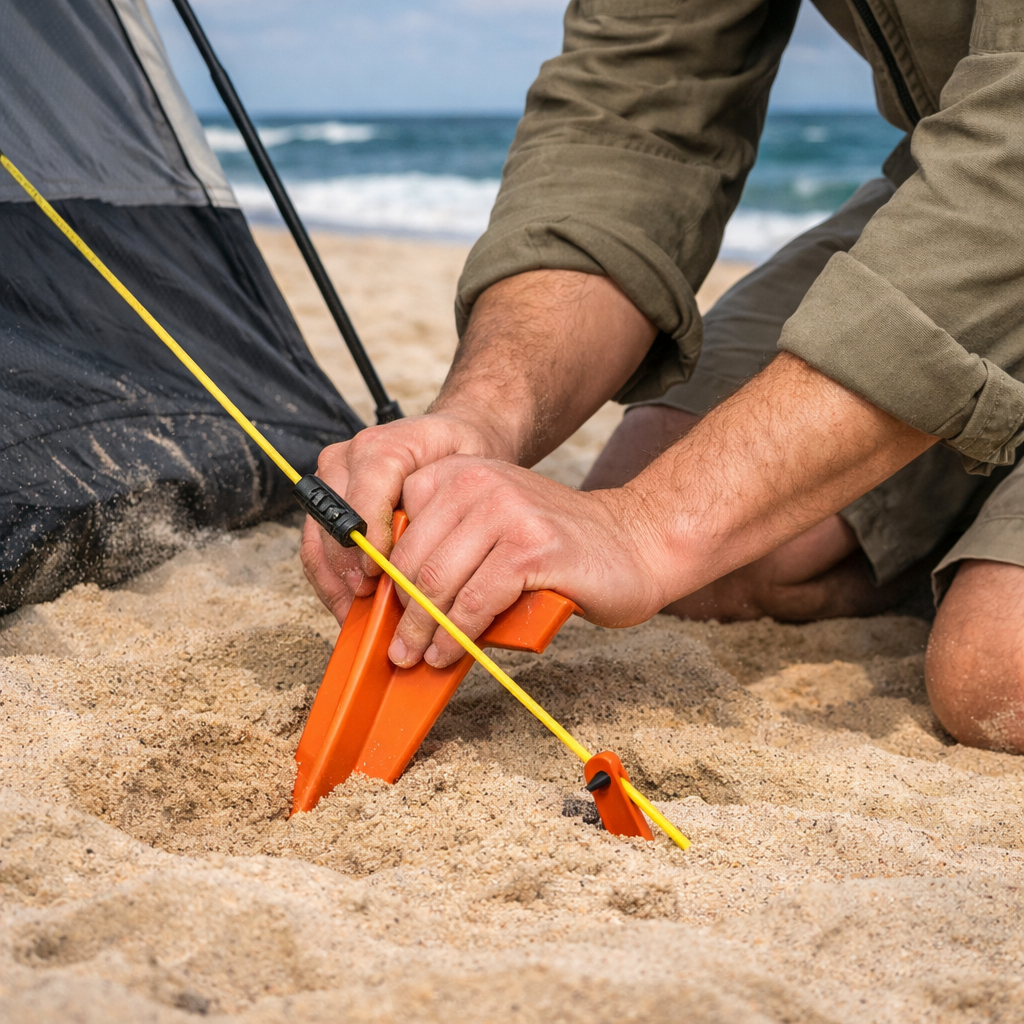
Coastal winds can hit 25–40mph without much warning. Standard tent pegs pull straight out of loose sand. This is non-negotiable gear knowledge for beach camping. Here’s how to anchor properly:
- Step 1: Use wide sand anchor stakes (also called sand screws or auger stakes) — they grip loose sand far better than standard pegs
- Step 2: Drive stakes at a 45-degree angle away from the tent — angled stakes resist pull-out forces much better than vertical ones
- Step 3: Attach guy lines to at least four points around the tent — more anchor points mean more stability
- Step 4: If you’re in a truly exposed location, fill dry bags or stuff sacks with sand and tie them to the base of the tent as additional ballast
- Step 5: Orient the narrowest end of your tent into the prevailing wind — less surface area = less force
And the golden rule: stake everything before you need to. Winds that seem manageable at 3pm can become genuinely dangerous at midnight.
What to Do When It Rains at the Beach
Beach rain is different from mountain rain. It often comes with saltwater spray driven by wind, which is more corrosive and penetrating than regular rain. Your tent’s rainfly is doing more work than usual — make sure it’s fully fitted and all seams are sealed. Pack an extra tarp to create a sheltered cooking and sitting area outside the tent. After any storm, rinse all gear with fresh water as soon as possible — salt corrosion on zips, buckles, and poles accelerates wear significantly.
Keeping Sand Out of Everything: The Beach Camper’s Battle Plan
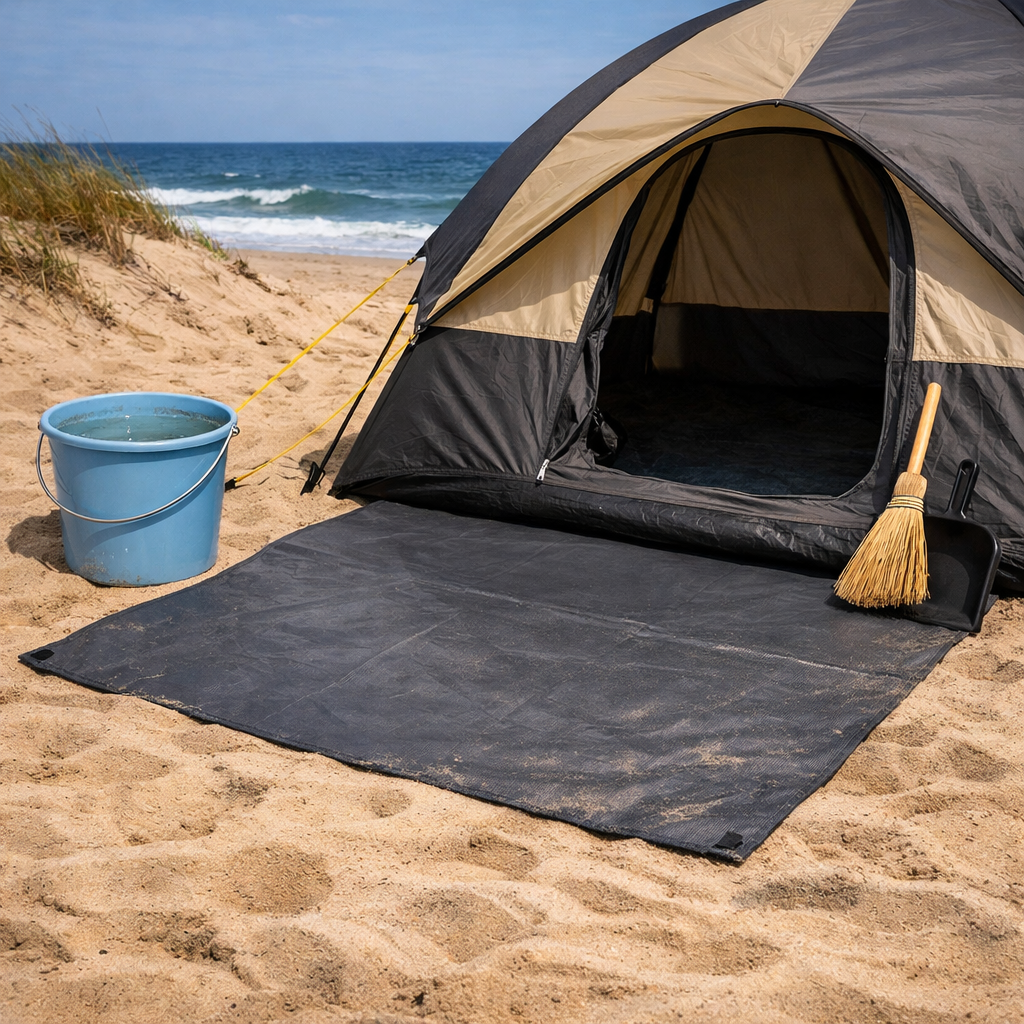
Let’s be completely honest with you: sand will get into your tent. Sand will get into your sleeping bag. Sand will get into your food. Sand will appear in places you did not think were physically accessible to sand. This is beach camping. The goal is not to eliminate sand — it’s to manage it well enough that it doesn’t ruin your trip. Here’s the system that works:
- Large ground tarp outside tent door — your ‘de-sanding zone’. Step on it coming and going
- Bucket of fresh water beside the tarp — rinse feet before stepping onto the tarp and entering the tent
- Small whisk broom and dustpan — sweep the tent interior morning and evening; takes 90 seconds and makes a big difference
- Keep tent zipped at all times when not entering or exiting — the wind moves sand faster than you think
- Shake all clothing, towels, and bedding away from the tent before bringing them inside
- Store gear in sealed dry bags inside the tent — not loose
- Tent vestibule for sandy shoes — never bring shoes inside the main tent body
THE ONE THING THAT MAKES THE BIGGEST DIFFERENCE
A large tarp (3m x 3m minimum) placed as your campsite ‘base’ — tent on one section, sitting and cooking area on the rest. Everything stays elevated off the loose sand. Sand management goes from chaos to completely manageable.
Beach Camping Safety Tips That Every First-Timer Must Know
Beach safety isn’t scary — it’s just specific. The hazards at the beach are different from the forest, and knowing them in advance means you can handle them calmly if they come up.
Tide Safety for Beach Campers
How to Read a Tide Chart Before You Camp
Tide awareness is the single most important safety skill for beach camping that regular campers don’t have. Two things to do before you pitch your tent:
- Check the tide chart for your location — search ‘[beach name] tide times’ or use a free app like Tide Chart or Tides Near Me
- Identify the high tide line on the beach when you arrive — look for the line of damp sand, seaweed, and driftwood. Camp above it, with a generous buffer
- Camp on rising ground if possible — even gentle elevation provides protection from unexpected storm surge
- Note your campsite position relative to permanent landmarks (rocks, dunes) — so you can find your way back at night
This isn’t being overcautious — people genuinely wake up to water in their tent because they camped below the high tide line. Five minutes of tide research before you pitch saves a very unpleasant night.
Wildlife and Bug Protection at the Beach
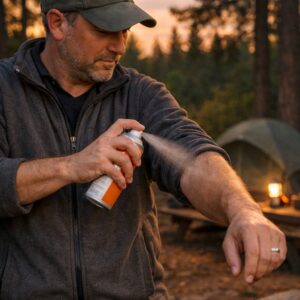
Beach wildlife is different from forest wildlife. You’re less likely to encounter large animals and more likely to deal with insects — particularly sand fleas, no-see-ums, and mosquitoes near dune vegetation. Sand fleas are most active at dawn and dusk. They are attracted to organic matter, so keep your campsite clean, food sealed, and use DEET-based repellent during active periods.
- DEET-based insect repellent (30%+ concentration) — most effective against sand fleas and coastal insects
- Fine mesh tent inner — standard camping tent mesh may not keep out tiny sand flies and no-see-ums; check mesh size before buying
- Permethrin-treated clothing — for long evenings on the beach when bugs are most active
- Keep campsite free of food scraps — coastal birds (seagulls specifically) are bold, fast, and completely shameless food thieves
- At night: keep food in sealed hard containers, not just zip-lock bags — raccoons and other coastal mammals are common at established beach campsites
Beach Camping Food Guide: What to Cook, Pack and Snack On
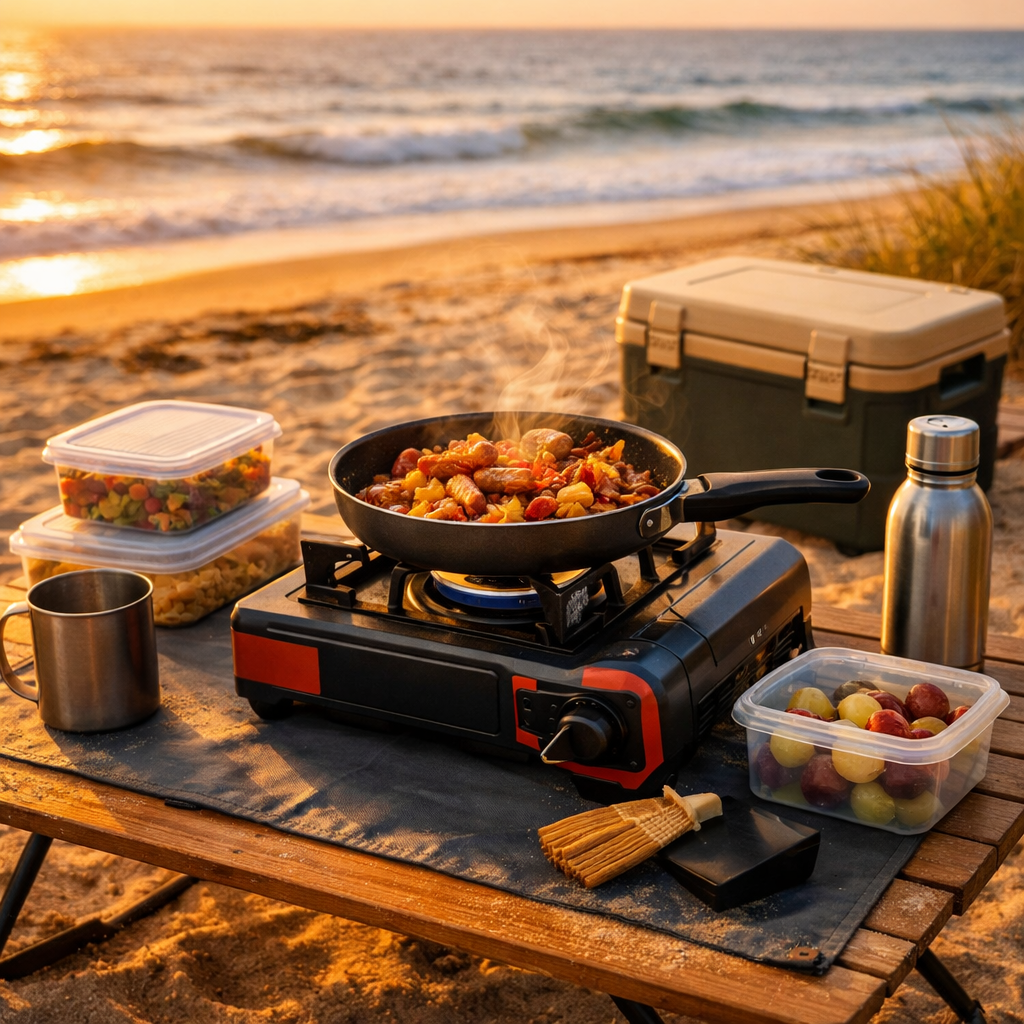
Cooking at the Beach: Equipment and Meal Ideas
Pro Tips for Protecting Food from Sand and Heat
Beach cooking has two extra complications that indoor cooking doesn’t: sand getting into everything, and heat that degrades food much faster than you expect. Here’s how to handle both.
- Always cook on a camp stove — beach campfires are not always permitted and wind makes open-fire cooking unreliable
- Use stainless steel or anodised aluminium cookware — saltwater air corrodes standard cookware quickly; rinse with fresh water after every use
- Keep the cooler in shade and open it as little as possible — every time you open it, cold air escapes and warm air enters
- Pack beverages in a separate cooler from food — drinks are opened frequently and a separate cooler means your food cooler stays cold longer
- Store all food in hard-sided sealed containers, not just zip-locks — sand and insects find their way into anything soft
- Pre-portion meals in labelled bags before the trip — less opening, less sand contamination, easier cooking
For meals: keep day one simple — sandwiches, wraps, no cooking needed after the drive. Days 2 onwards: one-pot pasta, foil packet fish or vegetables cooked over the stove, pre-marinated proteins. If your beach permits fishing and you have a licence, fresh-caught fish cooked simply with butter and lemon is genuinely one of life’s great beach camping meals.
Beach-Friendly Snacks That Survive the Heat
- Trail mix with nuts and dried fruit — survives heat, no refrigeration needed, high energy
- Energy bars — choose ones with a high melting point (avoid chocolate coatings in summer)
- Crackers and nut butter in individual packets — no mess, no refrigeration
- Fresh fruit with thick skin — oranges, apples, bananas hold up well in heat
- Avoid: chocolate, gummy sweets, soft cheese, anything cream-based — all melt or spoil rapidly in beach heat
Fun Things to Do While Beach Camping: Activities for Everyone
One of the great gifts of beach camping is that the beach itself is the activity. But when you want to be a bit more intentional about it, here are some ideas that work brilliantly in a beach camping setting:
- Sunrise walk — sounds obvious but it genuinely never gets old. Set an alarm once. You’ll be glad you did
- Snorkelling — if conditions are calm, a basic snorkel and mask reveals a completely different world
- Fishing — check local regulations and licensing requirements; fresh-caught beach meals are extraordinary
- Kite flying — beaches have the perfect conditions; a basic kite is cheap, packs flat, and keeps everyone occupied
- Beach volleyball and frisbee — the classics exist for a reason
- Sand castle building — not just for children. Competitive adult sand castle building is a legitimate beach camping activity
- Stargazing — beaches away from city lights offer spectacular dark skies. Download a free star chart app before you go
- Kayaking or paddle boarding — if rentals are available nearby, an early morning paddle is one of the best beach camping experiences possible
The Complete Beach Camping Checklist
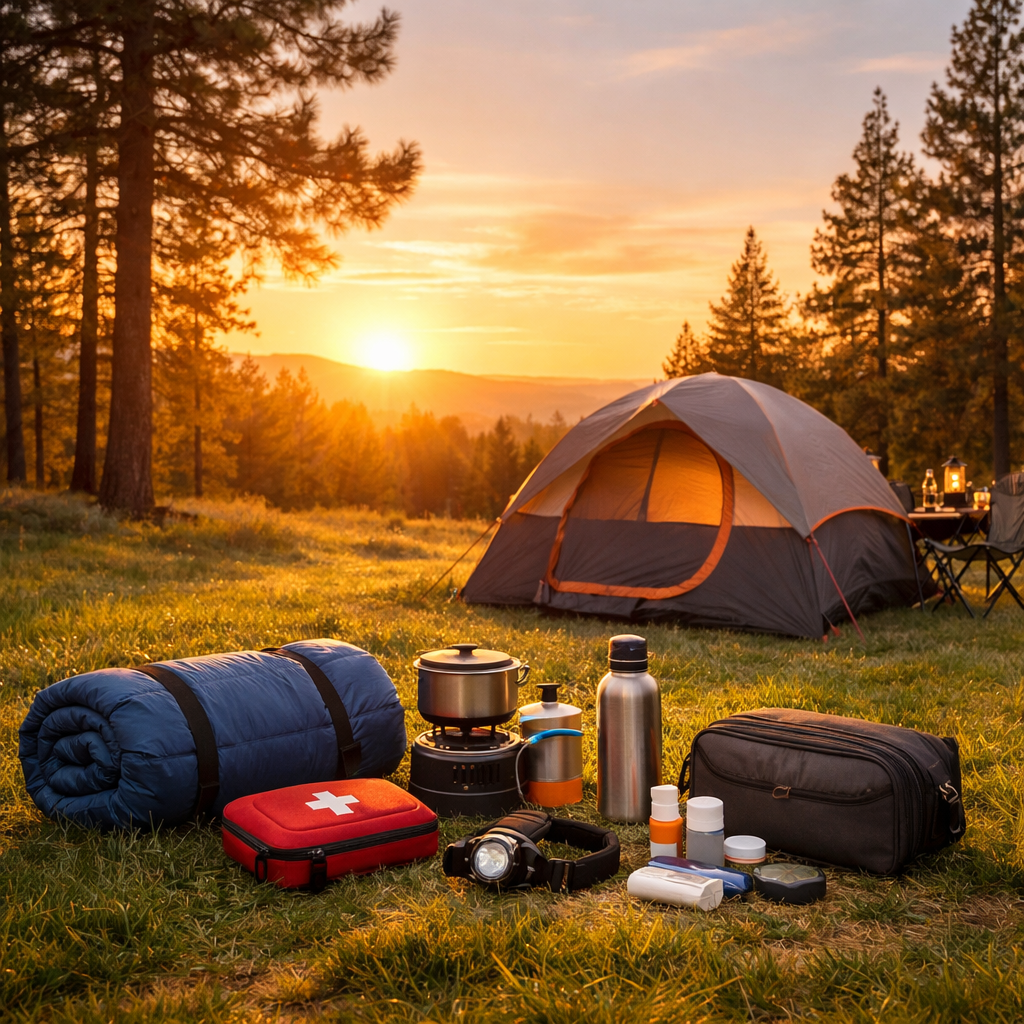
Use this as your packing template. Go through it the night before you load the car.
SHELTER AND SLEEP
- Wind-resistant low-profile dome tent
- Sand-specific anchor stakes (wide auger type)
- Guy lines (extra set)
- Full rainfly (fitted before arrival)
- Ground tarp (for under tent AND outside door)
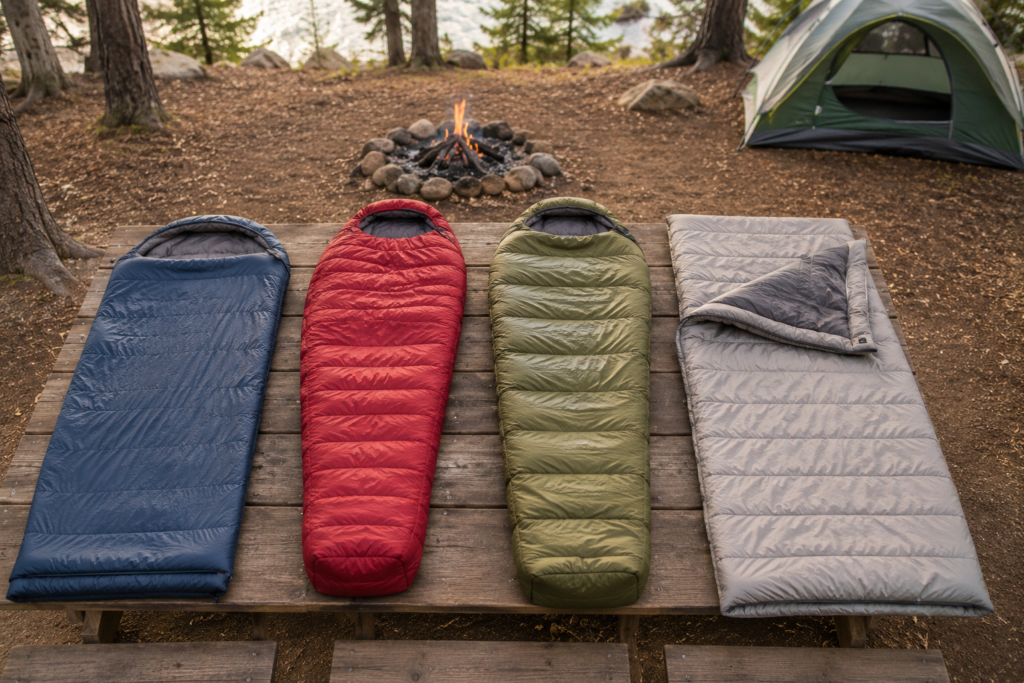
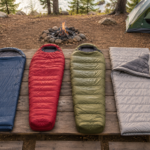
- Sleeping bag rated for coastal humidity
- Sleeping pad
- Camping Pillows
- Extra blanket (Nights are cooler)
SUN AND HEAT PROTECTION
- SPF 30+ Sunscreen bottle
- Pop-up shade canopy with UPF 50+
- Wide-brim sun hat
- UV-protective lightweight long-sleeve shirt
- Lip balm with SPF
- Electrolyte sachets
- Large water containers
SAND MANAGEMENT
- Large tarp (3m x 3m minimum) for campsite base
- Bucket for foot rinsing
- Broom and Dustpan
- Dry bags for gear storage inside tent
- Doormat or beach mat outside tent entry
BUGS AND SAFETY
- DEET-based insect repellent
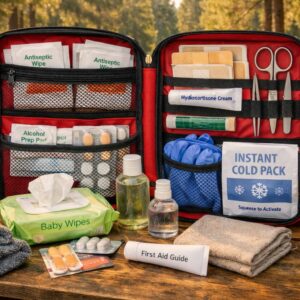
- First Aid Kit
- Tide chart app downloaded offline
- Waterproof phone case
- Emergency whistle
- Waterproof torch and headlamp
(Pack a proper first aid kit for the beach — our [essential camping first aid kit] guide has everything you need to build one before your trip.
FOOD & COOKING
- Camp stove and spare fuel
- Stainless steel or aluminum cookware
- Sealed food Containers
- Reusable plates, cup, cutlery
- Biodegradable washing-up liquid
- Fresh water supply for cooking and rinsing gear
For a full breakdown of the best no-cook and ready-to-eat options, our [ultimate ready-to-eat camping foods] guide is exactly what you need for a stress-free trip.
COMFORT & ACTIVITIES
- Beach camping chairs
- Folding Camp Table
- Solar LED Lantern
- Portable Power Bank
- Quick-Dry towels
- Swim Wear
- Water-proof sandals and shoes
- Beach entertainment (Frisbee, Kite, Books and Cards)
Frequently Asked Questions About Beach Camping for Beginners
Here are the questions first-time beach campers ask most often — answered directly.
Is beach camping good for beginners?
Absolutely — with the right preparation. Start with an established beach campsite that has facilities (toilets, freshwater) rather than a wild or primitive beach. The unique challenges of beach camping (sand, wind, tides) are all manageable once you know what to expect. This guide gives you everything you need for a great first trip.
What kind of tent is best for beach camping?
A low-profile geodesic dome tent with a full rainfly, mesh inner walls for ventilation, and good guy line attachment points. Avoid tall cabin-style tents — they act like sails in coastal wind. Buy sand-specific anchor stakes separately if they’re not included with your tent.
How do I keep sand out of my tent while beach camping?
Use a large tarp outside your tent door as a de-sanding zone, keep a bucket of water for foot rinsing before entry, always keep the tent zipped, sweep the interior with a small whisk broom morning and evening, and store gear in sealed dry bags inside the tent. You won’t eliminate sand — but you’ll manage it well enough that it won’t ruin your trip.
Is beach camping safe at night?
Yes — with basic precautions. Pitch above the high tide line (check the tide chart), use proper tent anchoring for wind, keep food in sealed hard containers to avoid wildlife, and have a torch and whistle accessible at all times. Tell someone your location and planned return date before you go.
What food should I bring beach camping?
Simple, heat-stable foods work best. Avoid anything chocolate-coated or cream-based in summer heat. Good options: trail mix, energy bars, crackers with nut butter, fresh fruit with thick skins, tinned fish, instant noodles, and pre-prepped pasta or rice dishes. For fresh meals, a camp stove with one-pot recipes makes beach cooking genuinely enjoyable.
Ready to Hit the Beach? Here’s Your Next Step
Beach camping for beginners is one of those things that sounds more daunting than it actually is. Yes, there’s sand. Yes, the wind will test your tent stakes. Yes, you’ll find sand in your sleeping bag on night one. And yes — you will absolutely, one hundred percent want to go back. That’s the thing about waking up to the sound of waves. It gets into you.
Pick your beach, check the tide times, stock up on sunscreen, pack your sand anchors, and go. The ocean is waiting.
Before you pack a single bag, work through our [complete camping checklist for new campers] — the most thorough general packing guide on the site.