Emergency Signaling Tips for Lost Campers: How to Be Found Faster
-
| Founder & Content Creator

Latest Posts
Getting lost in the wilderness is frightening. That part is unavoidable. But panic is not your biggest enemy in that moment — invisibility is. And invisibility is the one thing you can actually do something about.
Knowing the right emergency signaling tips for lost campers could be the difference between a quick rescue and a long, dangerous wait in the dark. Every year, thousands of campers and hikers get disoriented in the wilderness — and the ones who get found fastest are almost never the most experienced. They are the ones who knew how to make themselves seen and heard.
This guide covers every signaling method worth knowing — fires, mirrors, whistles, ground markers, PLBs, smartphone features, satellite communicators — along with the survival mindset that experienced search and rescue professionals say matters most. Everything here is practical, everything is honest, and all of it could matter on a trip you have not taken yet.
Why Emergency Signaling Can Save Your Life in the Wilderness
Most campers who get disoriented do not get disoriented in dramatic fashion — swept into a ravine, blizzard descends, compass spins wildly. More often it is quieter than that. The path looked different than the map suggested. Fog came in. You took a fork that seemed right and then less right and now unmistakably wrong. It happens to experienced hikers and first-timers alike.
What separates a story people laugh about afterward from one that ends badly is almost never experience or fitness. According to research based on over 50,000 SAR cases compiled in Lost Person Behavior, roughly 75% of lost hikers are found within two miles of their last known location. The forest is not as vast as it feels when you are scared. The people looking for you are closer than you think.
The question is whether you are making it easy for them to close that gap.
The reality of getting lost while camping
Thousands of campers get disoriented in the wilderness every year — but most are found within 24-48 hours. The critical variable is not how experienced you are. It is whether you know how to signal for help when lost, and whether you started the process quickly.
Search and rescue teams use drones, infrared cameras, and GPS tracking. But all that technology still requires effective emergency signals to detect. A silent person in dense terrain can be passed within 100 metres by an air crew and never spotted. Your job is to make yourself impossible to miss.
How Search and Rescue Teams Actually Find Lost Campers
Modern SAR operations divide the search area into sectors and work systematically outward from the last known location. Ground teams move through terrain on foot, air crews scan from above, and drone operators cover ground in between.
Visual distress signals work during daylight flights. Emergency whistle signals help ground teams pinpoint location in dense cover. Signal mirror techniques can catch a pilot’s eye from miles away. Bright clothing on open ground is one of the most reliable visual cues for aerial searchers.
What SAR teams look for above all is contrast — something that does not look like it belongs in the natural environment. Your job is to be as visually and audibly conspicuous as possible, from as high and open a position as you can safely reach.
The Golden Rule: Stay Put and Signal
Why Wandering Makes Rescue Harder
When you keep moving, you expand the search area with every step. You exhaust yourself — burning the energy you will need for signaling. You eliminate the one advantage SAR teams have, which is a fixed last-known location to work outward from. And you risk getting further lost rather than closer to safety.
Unless you are 100% certain of your direction — meaning you can see the trail, you can see a road, or you have GPS confirmation of your route — staying put and signaling is almost always the right call.
The STOP Method: The First Thing to Do When You Realise You Are Lost
Before you light a fire, before you blow your whistle, before you do anything else — use the STOP method. This framework is taught by NOLS, wilderness medicine organisations, and SAR professionals worldwide because it addresses the thing that kills people in survival situations before dehydration or exposure does: panic-driven bad decisions.
- S — Stop: The moment you realise you are lost, physically stop walking. Sit down if you need to. Do not take another step until you have completed the next three steps.
- T — Think: Think back through what you remember. When did you last know exactly where you were? What did the terrain look like? Which direction were you heading? What time did you leave the last landmark?
- O — Observe: Look around you carefully. Can you see any familiar landmarks? Which way does the terrain slope? Is there a water source you could follow? What resources do you have available for signaling?
- P — Plan: Based on what you think and observe, make a deliberate plan. If you have no clear certainty about your direction — stay put and signal. If you can identify a reliable route to safety — move calmly and deliberately.
FROM SAR PROFESSIONALS: The STOP method saves lives not because it gives you a magic answer — but because it forces a pause between stimulus and response. Most bad decisions in survival situations are made in the first few minutes of realising something is wrong. STOP interrupts that pattern and gives your brain time to shift from panic to problem-solving. It takes about five minutes and could change everything.
The Psychological Benefits of Active Signaling
Beyond the practical advantages of being found faster, there is something else that consistent signaling does — it keeps your brain productive rather than anxious. Survivors consistently report that having a routine of checking and maintaining their signals helped them stay calm during long waits.
When you are building a signal fire, arranging ground markers, and blowing three whistle blasts every fifteen minutes — you are not lying in a tent spiralling. You are doing something purposeful and useful. That psychological difference is real and significant when you are alone and scared.
Before You Leave: The Emergency Signaling That Starts at Home
The best wilderness survival signaling advice in this entire guide is also the simplest: the most effective emergency signaling happens before you are lost. The preparation you do before leaving the trailhead determines how quickly SAR deploys, where they look first, and whether anyone is looking at all.
File a Trip Plan With Someone Who Will Actually Act on It
A trip plan is the single most valuable emergency signaling tool available to any camper — and it is free, weighs nothing, and takes ten minutes to set up. Leave it with someone who is not on the trip with you and who will take action if they do not hear from you.
- Where you are going: trailhead name, campsite name or coordinates, planned route
- When you are leaving and when you expect to be back
- Your vehicle description and registration — SAR often looks for unattended vehicles to confirm someone is still in the field
- What to do if you do not check in: specify the action (call the park ranger station after 24 hours overdue, not the emergency services for a minor delay)
- Medical information: blood type, allergies, medications, any conditions SAR should know about
Filing a trip plan is itself a form of emergency signaling — it tells SAR exactly where to start looking before you need a whistle. Our wilderness emergency evacuation guide covers exactly what to include and who to leave it with.
How SAR Teams Actually Search — and Why Your Preparation Changes Everything
Understanding how search and rescue teams work makes every preparation decision more meaningful.
SAR teams begin from the last known point — usually your registered trailhead or your vehicle. They work outward in expanding sectors based on terrain, weather, and the typical distance a lost person travels in a given time period. The Lost Person Behavior database, compiled from over 50,000 SAR cases, shows that 75% of lost hikers are found within two miles of their last known location.
This has a direct implication for your preparation: the more precisely you have communicated your route, your campsite, and your timeline, the smaller the initial search area and the faster you are found. Every piece of information in your trip plan shrinks the search zone before the team even reaches the field.
Emergency signaling matters most for solo campers, who have no group to share the task or raise an alarm if something goes wrong. Our solo camping tips for beginners covers the full solo safety picture including trip filing and satellite communicators.
Universal Distress Signals Every Camper Should Know
Before we get into the specific techniques, there are signals recognised by rescue professionals everywhere in the world — signals you can use regardless of what equipment you have or what country you are in. Learn these first. They are your common language with anyone who is looking for you.
The Rule of Three — Your Portable Distress Signal
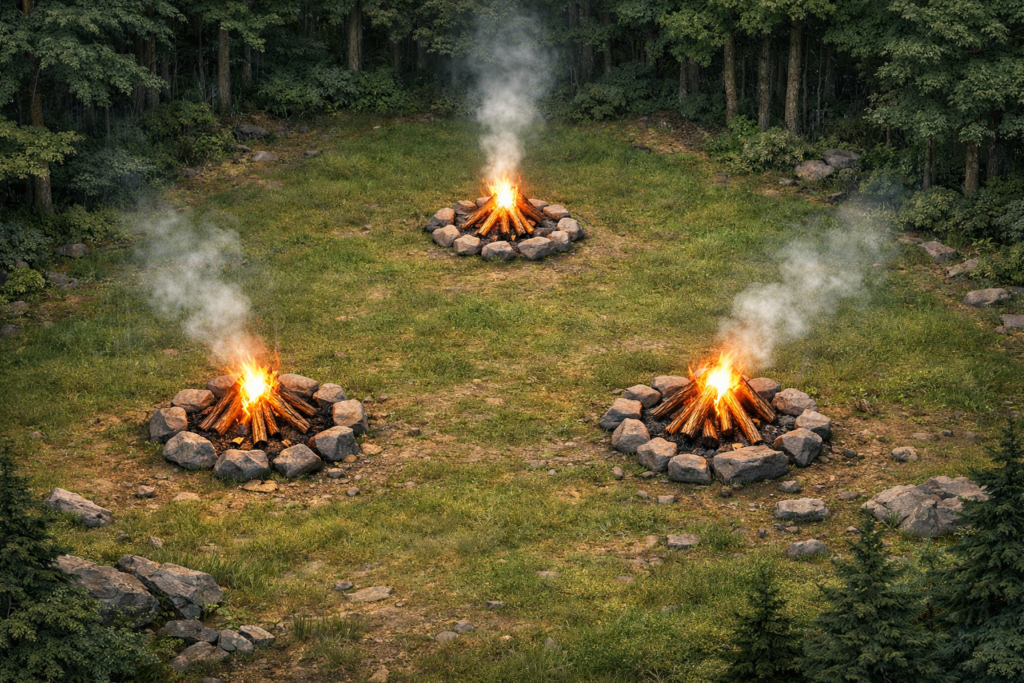
The single most important emergency distress signal to memorise: three of anything means distress. Three whistle blasts. Three fire flashes. Three signal fires in a triangle. Three shots from a firearm. Three of anything evenly spaced sends a clear, internationally recognised message: someone is in trouble here.
Why three? Patterns of two occur naturally — a branch snapping, an animal calling. Patterns of three almost never do. When SAR teams see or hear three evenly spaced signals, they recognise it immediately as a lost hiker rescue signal. Learn it, use it consistently, and you are speaking the same language as the people trying to find you.
- Three whistle blasts — pause 30 seconds — repeat every 10-15 minutes
- Three flashes of light — pause — repeat
- Three signal fires in a triangle pattern
- Three loud sounds of any kind — rocks struck together, metal cookware, shouting
The international distress signal is three of anything. Not two, not four — three. This is genuinely easy to remember, which is exactly why it was chosen. When you are cold, scared, and possibly dehydrated, simple is survivable. Three blasts on a whistle. You can do that in your sleep.
Creating Signals with Maximum Visibility
Every effective emergency signal follows three principles: contrast, motion, and repetition.
Contrast means your signal stands out sharply against its background — bright orange against forest green, dark smoke against a pale sky, a flashing light against darkness. Motion catches the eye faster than static objects — waving, flashing, flickering signals attract attention instinctively. Repetition ensures you are not missed during a brief scan — one flash might go unnoticed, three repeated at intervals will not.
Best Visual Emergency Signaling Techniques for Lost Campers
Visual signals are your primary tool during daylight hours and the first thing aerial search crews are scanning for. Here is how to use each technique to maximum effect.
- Build your fire in an open clearing where aircraft can see it from above — dense tree cover defeats the purpose entirely
- Once the fire is burning well, add green leaves, fresh grass, or damp wood to create thick smoke. A smoke column visible during the day can be spotted from miles away.
- Keep the fire controlled — a wildfire is genuinely the last thing you or your rescuers need
- If you have enough fuel, maintain three separate fires in a triangle pattern about 30 feet apart — this is unmistakably a distress signal from the air
- Flame is more visible at night. Smoke is more visible during the day. Adjust your fuel accordingly.
Ground-to-Air Symbols: SOS and Emergency Markers
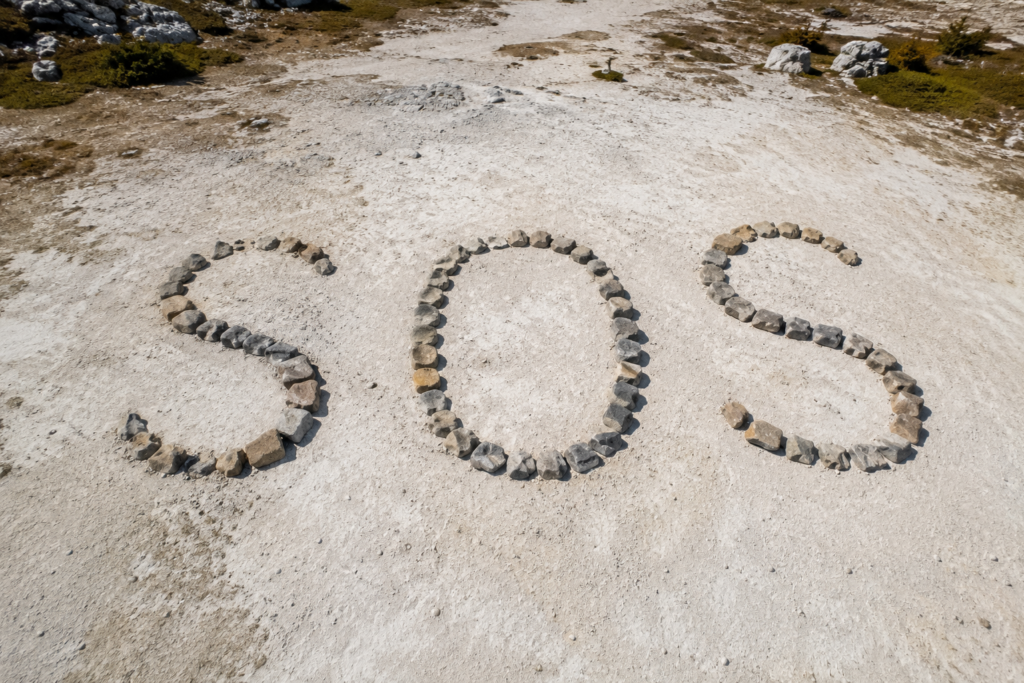
When you have time and open terrain, large ground markers can be incredibly effective for aerial searches. Make them as big as you possibly can — at least 10 to 12 feet long. Use any contrasting materials available: rocks, logs, branches, bright clothing, cleared dirt, or snow.
The most recognized symbols:
- SOS: The universal distress signal. Recognised worldwide, instantly understood by any pilot or crew.
- → (Arrow): Shows the direction you are travelling if you have moved from your original position.
- X: Unable to proceed or require medical assistance.
- F: Need food and water.
Size matters far more than perfection. A rough SOS that is 15 feet long and high-contrast is dramatically more visible from a helicopter than a neat, small one. Think big, think contrast.
Signal Mirror Techniques for Daylight Rescue
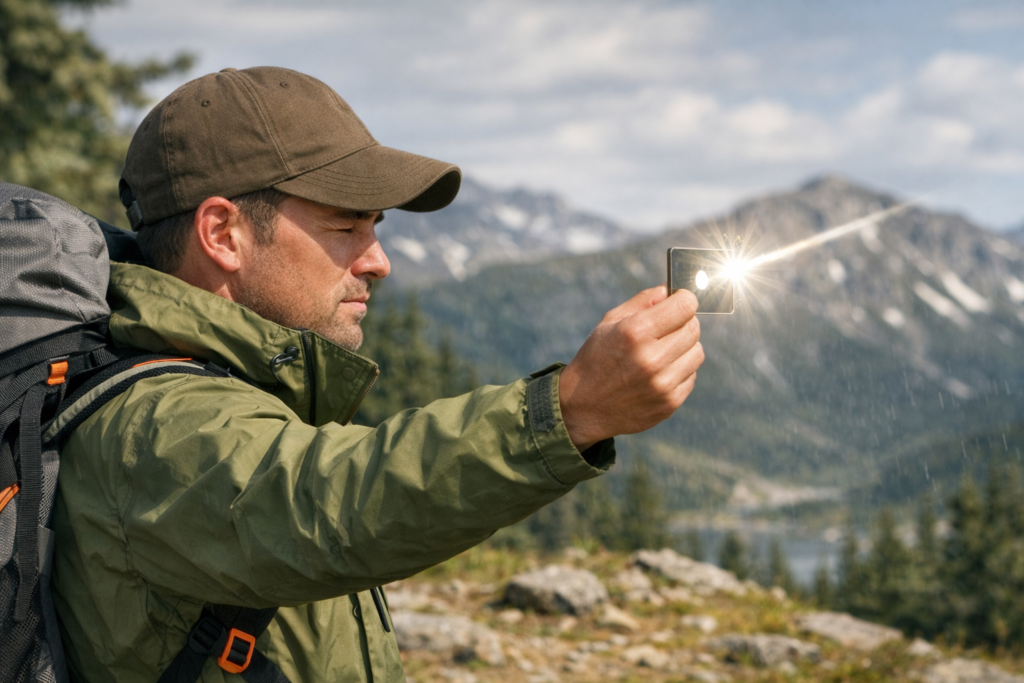
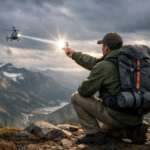
A signal mirror is one of the most underrated pieces of emergency kit available. It is lightweight, requires no batteries, and can reflect sunlight visible up to ten miles away on a clear day. A flash of reflected sunlight is almost impossible for an air crew to ignore.
- Aim the reflection toward aircraft or distant elevated positions where rescuers might be watching
- Practice by reflecting onto your hand first, then sweep that reflection toward your target
- Flash in groups of three — remember the Rule of Three — then pause and repeat
- No signal mirror? Improvise: smartphone screen, metal water bottle lid, belt buckle, eyeglasses, any polished metal surface
The key is directing sunlight deliberately — not just hoping someone notices a random glint. Aim, sweep, hold for a second, repeat.
Using Bright Clothing and Camping Gear as Signals
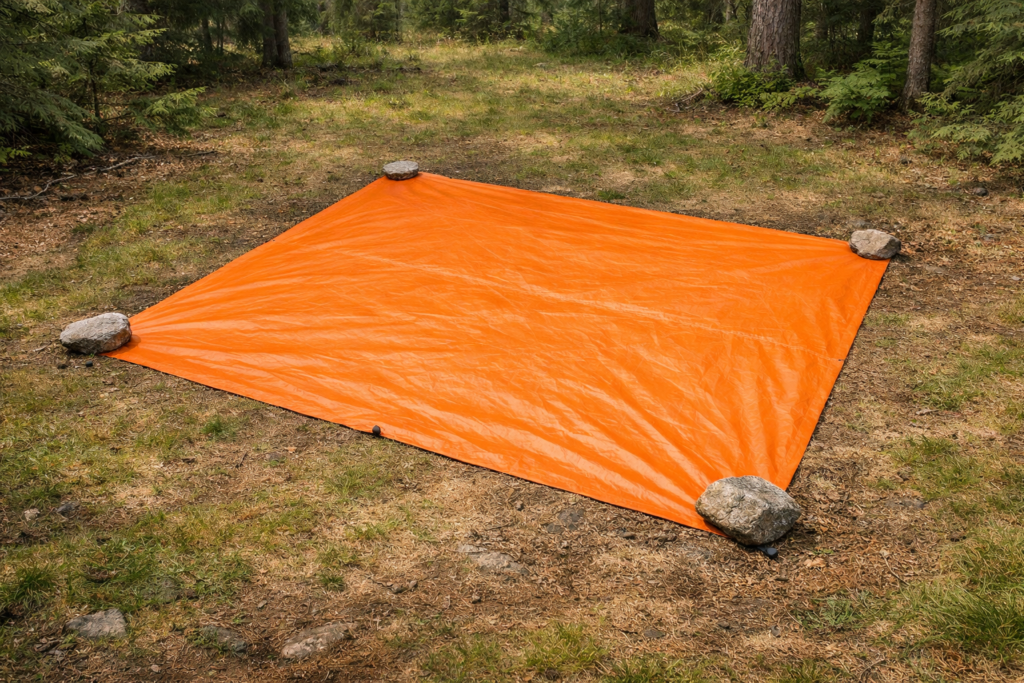
Your existing gear can become a powerful visual marker with a bit of strategic thinking. The bright jacket or orange rain cover you wore hiking in is already a signal — it just needs to be positioned correctly.
- Lay bright clothing flat in open clearings where it is visible from above
- Hang bright items from high branches to add height and visibility from ground level
- Position on ridgelines or hilltops where both aerial and ground searchers can see them
- Secure everything — items that blow away in wind are useless as signals
- Motion amplifies visibility: attach lightweight fabric to a long stick and wave it when you hear aircraft
Audible Signaling Methods That Save Energy
Sound has one enormous advantage over visual signals: it travels through obstacles that block light. Dense trees, terrain features, fog — none of these stop sound the way they stop a visual signal. At night, in bad weather, or in heavy cover, sound is often your most effective tool.
Why a Survival Whistle Beats Shouting Every Time
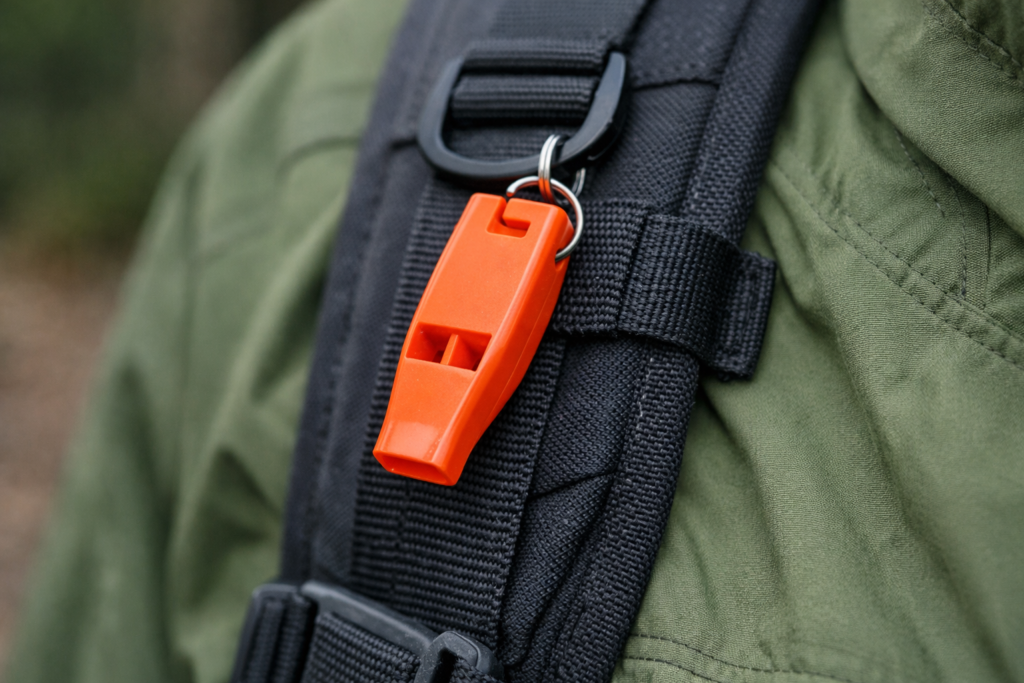
Shouting feels like the natural response when you are lost. It is also, unfortunately, not very effective. Your voice does not carry as far as you think it does, and it gives out fast — which is a problem if you need to signal for hours or days.
A whistle, on the other hand, produces a sharp, penetrating sound that carries significantly farther than the human voice, requires almost no energy to use, and will not damage your throat after sustained use. A quality survival whistle is one of the most valuable pieces of emergency kit available for its weight — which is roughly nothing.
- Three sharp blasts, then pause and listen for 30 seconds
- Repeat every 10-15 minutes — conserving energy matters if you need to signal for a long time
- Listen carefully during your pauses — rescuers may whistle back to signal their approach
- Blow as hard as you can: a hard, clear blast carries farther than multiple soft ones
Improvised Sound Signals from Natural Materials
No whistle? You can still create effective audible signals from what is around you. The pattern matters more than the volume.
- Strike two rocks together with a sharp, rhythmic pattern — three strikes, pause, repeat
- Bang metal cookware or water bottles together
- Snap thick dry branches — each break produces a sharp crack that carries well
- Use any available hard materials in a consistent three-signal rhythm
Three evenly spaced sounds, repeated regularly, will eventually attract attention even if the individual sounds are not particularly loud. Consistency is what gets noticed, not volume alone.
Emergency Signaling at Night: When Darkness Becomes Your Advantage
Darkness changes the signaling calculus in one important way: it makes light dramatically more visible. The fire that was one element of the landscape during the day becomes a beacon that can be spotted from miles away at night. If you have light and can spare the battery, darkness is your friend for signaling.
Flashlight SOS Signals and Strobe Modes
If your torch or headlamp has an SOS or strobe mode, use it. These features were designed specifically for emergency signaling and produce the most effective light pattern automatically.
For manual signaling: three short flashes, pause, three short flashes, pause, repeat. Aim upward or sweep across open terrain where it might be visible to distant searchers. Point toward any sound of aircraft or distant activity.
- Battery conservation is critical at night — signal periodically rather than continuously
- Save enough charge to signal when you actually hear or see rescuers approaching
- A headtorch pointed upward is a fixed signal you can maintain while resting
Fire as a Nighttime Beacon
Even a modest campfire is a visible beacon at night, potentially spotted from miles away. The key difference from daytime fire signaling: at night you want steady, consistent flame rather than thick smoke. A consistent light source is easier for rescuers to track than erratic flares.
- Keep your fire steady — add fuel regularly to maintain consistent light
- If you have enough materials, maintain your three-fire triangle pattern — it is even more distinctive at night
- Position your fire in the most open area you can safely access — a clearing, a ridgeline, a lakeside
Modern Technology for Wilderness Emergency Signaling
Technology has changed what is possible in wilderness emergency signaling — and the best of it is remarkably accessible. None of these tools replace the manual techniques in this guide, but the best ones make everything faster and more certain.
Personal Locator Beacons (PLBs): The Gold Standard
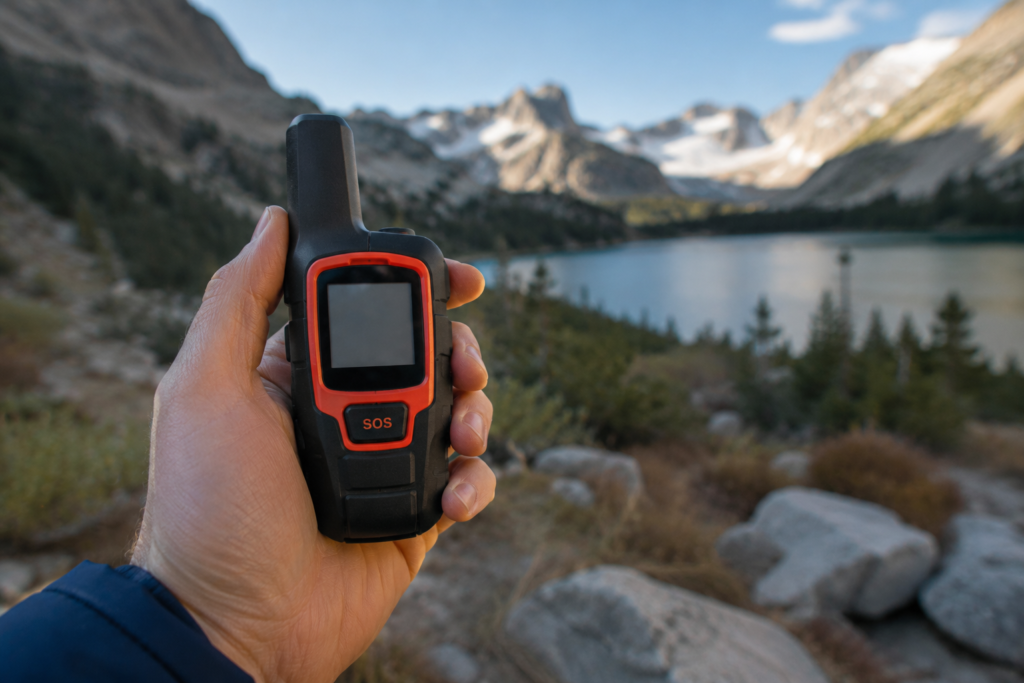
A Personal Locator Beacon is a purpose-built emergency device that transmits your exact GPS coordinates directly to rescue satellites monitored by government emergency services. One button. Your location. Professional rescue response. No subscription fee. No cell signal required.
- Works anywhere on Earth with open sky
- Waterproof and built for extreme conditions
- Communicates directly with COSPAS-SARSAT satellite system — monitored by government rescue coordination centres in most countries
- Battery life measured in days, not hours
- Must be registered before use — registration is free and links the beacon to your personal details
- Cost: quality PLBs run £200-400 / $250-400. For regular backcountry travel, this is one of the best investments available.
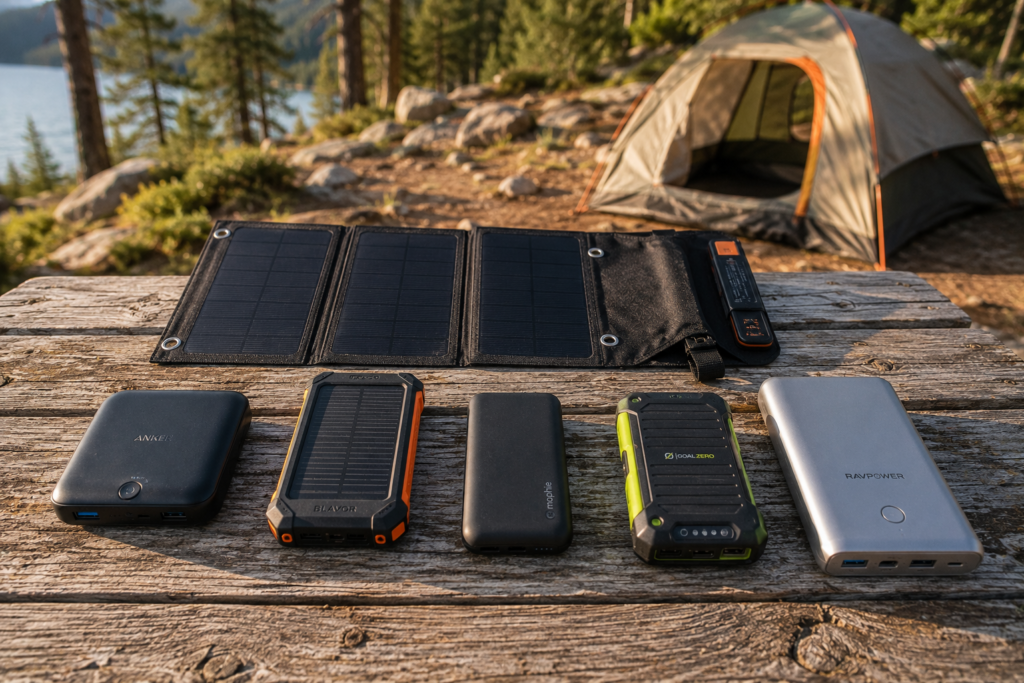
An emergency signal device with a dead battery is no signal device at all — our best camping power banks guide covers the most reliable backup power options for keeping communication gear charged in the backcountry.
Using Your Smartphone’s Emergency SOS Features
Modern smartphones have built-in emergency SOS features that can call for help and share your location — when you have signal. Do not rely on these in remote wilderness, but know how they work as a backup.
- Most smartphones: press the power button multiple times rapidly to trigger emergency SOS
- Enable aeroplane mode to preserve battery, turning it off briefly every few hours to check for signal
- Your phone can still be used for light signaling even without any service
- In the UK: 999 via text works in areas with very low signal where voice calls fail
- In areas with any signal at all — even one bar — try an emergency call before assuming it will not connect
Satellite Messengers: Two-Way Communication Anywhere
Devices like the Garmin inReach and SPOT messenger offer two-way satellite communication — you can send specific messages and receive confirmation that help is on the way. This is enormously valuable psychologically as well as practically: knowing that someone has received your SOS and is responding changes the experience of waiting completely.
- Garmin inReach Mini 2: two-way messaging, SOS, GPS tracking. The most versatile option.
- SPOT X: two-way messaging and SOS. Good value for regular users.
- Both require subscription plans (typically £10-25/month or annual prepay) in addition to device cost
- Both work in remote wilderness where cell phones cannot
Environmental Strategies to Amplify Your Signal
The landscape can work for you or against you. Two campers using identical signaling equipment can have dramatically different rescue outcomes based purely on where they are standing when they use it. Smart positioning is one of the most underrated wilderness distress signal skills available.
Choosing the Best Location for Maximum Visibility
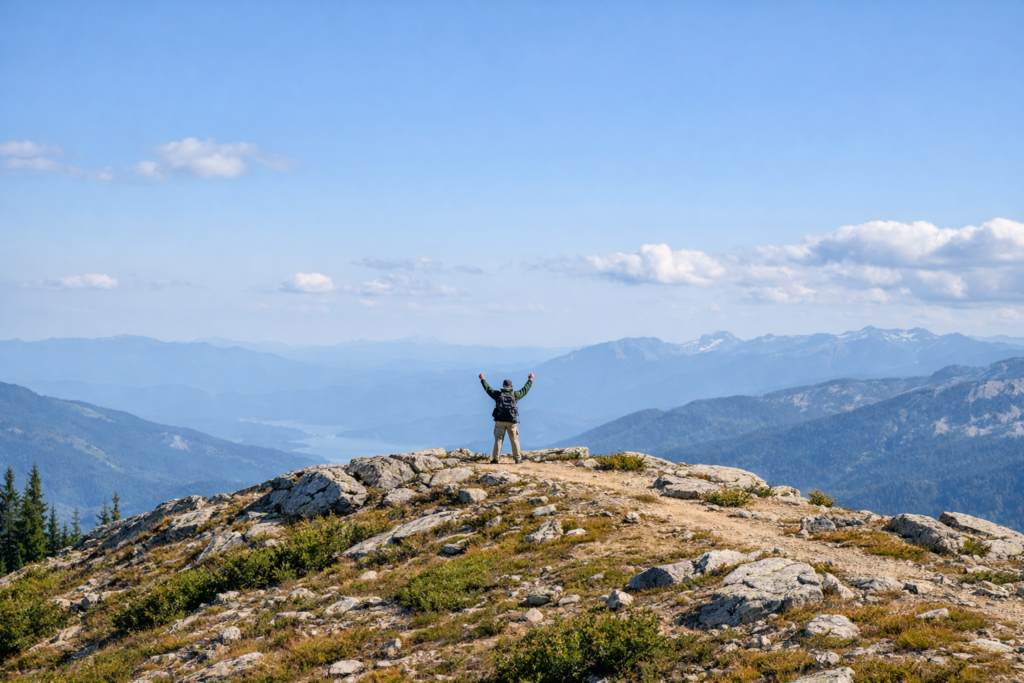
- Hilltops and ridgelines: Visible from greater distances in all directions. The first choice for signal fires and elevated flags.
- Open meadows and clearings: Excellent aerial visibility. Spread bright clothing here.
- Riverbanks and lakeshores: Often cleared of vegetation, easier to spot, and water surfaces reflect signal mirrors effectively.
- Rocky outcroppings above tree cover: Visibility plus a natural elevated position.
Avoid: dense forest with heavy canopy, deep valleys surrounded by hills, areas with thick brush obscuring your position from multiple angles. If you must stay in less-than-ideal terrain, get your signals above the obstruction — elevated fires, high-hanging bright clothing, moving to clearing edges.
Mountain terrain changes the signal positioning equation significantly. Our mountain camping for beginners guide covers high elevation navigation and safety planning that connects directly to your emergency signaling strategy.
Using Water and Terrain for Signal Reflection
Water surfaces reflect light exceptionally well, multiplying the effectiveness of mirror signals and fire light. If you are near a lake or river, position yourself where you can flash signals across the water surface — the reflection often doubles your visible range.
Light-coloured rock faces and sandy areas provide high-contrast backgrounds that make your signals more visible. An orange jacket against grey limestone is visible from much further than the same jacket against green forest.
Critical Mistakes That Prevent Rescue
Most signaling failures are not equipment failures. They are decision failures — choices that seem reasonable in the moment but actively delay rescue. Here are the ones worth knowing about before you are in the situation.
- Wandering instead of staying put: Creates a moving target. Exhausts you. Expands the search area with every step. Unless you are 100% certain of your direction, stop moving.
- Shouting until you are hoarse: Uses enormous energy, does not carry far, damages your voice. Use a whistle.
- Relying on only one signaling method: Use multiple methods simultaneously. Visual and audible together. Technology and manual methods together. Redundancy is survival.
- Signaling from under dense tree cover: Even the best efforts become invisible from the air. Move to open ground first, then signal.
- Giving up: Rescue can take longer than expected. The campers who get found are the ones who kept signaling consistently rather than assuming nobody was coming.
- Not conserving energy: You might need to signal for days. Signal on a schedule (every 10-15 minutes for whistle, every hour for visual checks) rather than constantly.
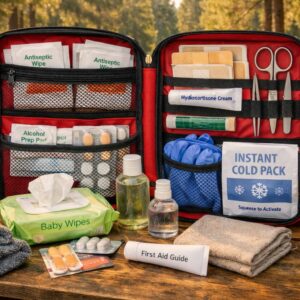
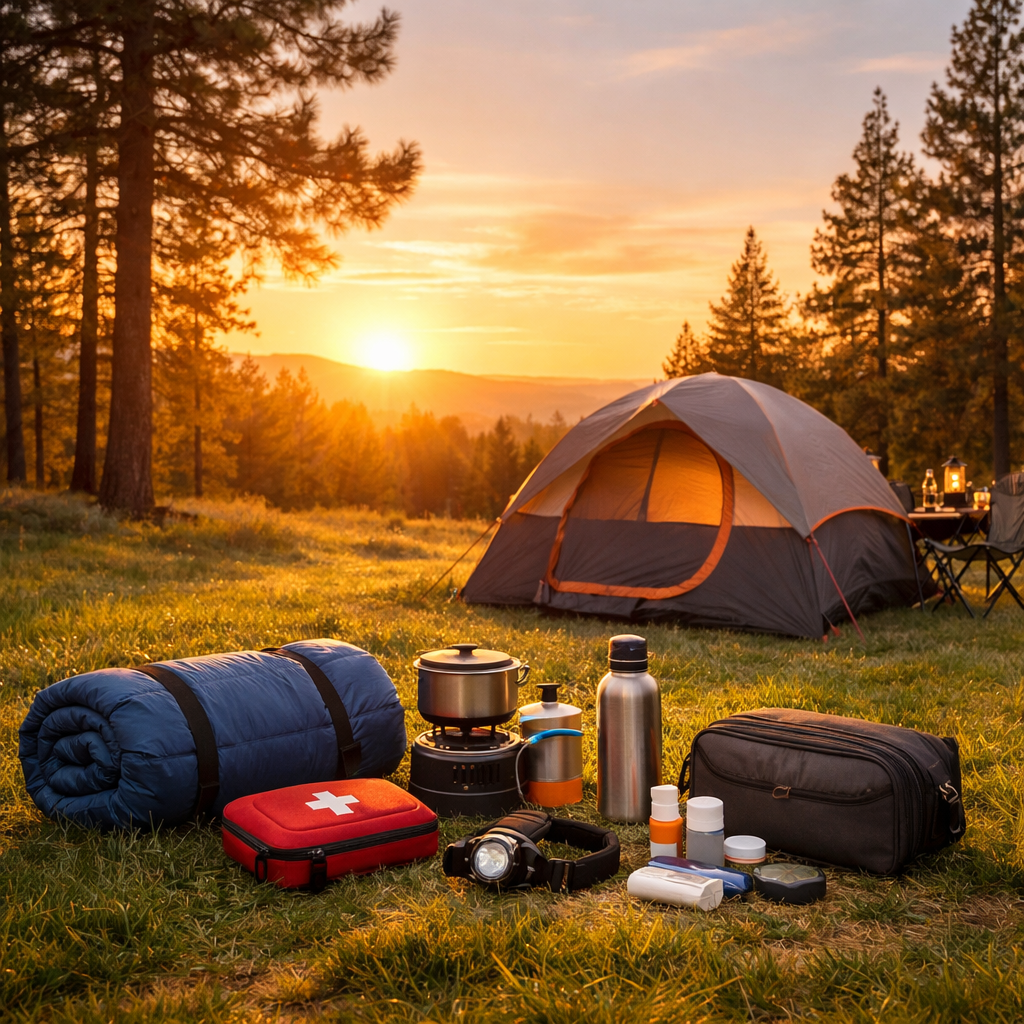
Your essential camping first aid kit takes care of you until rescuers arrive — make sure both your signaling kit and your first aid kit are packed before any trip into the wilderness.
Frequently Asked Questions About Emergency Signaling Tips for Lost Campers
What is the most effective emergency signal for lost campers?
The most effective approach is layering multiple signals at the same time rather than relying on one method alone. Use a whistle in three-blast bursts for audible signaling, maintain a signal fire or bright clothing in an open clearing for visual signaling, and activate a PLB or satellite communicator if you have one. Each method reaches different types of searchers — ground teams, air crews, and satellite systems — so using all three simultaneously gives you the best chance of being found quickly.
Should I stay put or keep moving if I am lost while camping?
Stay put unless you are completely certain of your direction. Moving when lost exhausts you, expands the search area with every step, and removes the one advantage rescuers have — a fixed last-known location to work from. Research from over 50,000 SAR cases shows that 75% of lost hikers are found within two miles of their last known point. The forest feels bigger than it is when you are frightened. Signal consistently, conserve your energy, and let the search come to you.
What is the Rule of Three and why does it matter for lost campers?
The Rule of Three is the international distress signal recognised by SAR teams, pilots, and outdoor professionals worldwide: three of anything means someone needs help. Three whistle blasts. Three flashes of light. Three signal fires arranged in a triangle. Three evenly spaced sounds of any kind. Patterns of three almost never occur naturally in the wilderness, which is exactly why they were chosen — when a search crew hears or sees three evenly spaced signals, they recognise it immediately as a human distress call rather than background noise.
How do I signal for help at night when I am lost camping?
At night, light signals become dramatically more visible than during the day. Use your torch or headlamp on SOS or strobe mode if it has one — three short flashes, pause, repeat. A campfire becomes a beacon visible from miles away after dark — keep it steady and consistent rather than letting it flare and die. Aim any light source upward or sweep it across open ground rather than pointing it into trees. Conserve battery by signaling on a schedule rather than continuously, and save enough charge to signal when you hear or see rescuers approaching.
What should I carry in my pack specifically for emergency signaling?
The four items that cover the most scenarios at the lowest weight: a quality survival whistle (pealess design, clips to your pack strap), a signal mirror (weighs almost nothing, visible up to ten miles in sunlight), a PLB or satellite communicator (works anywhere on Earth without cell signal), and a bright orange emergency bivy or tarp (visual signal and shelter combined). Beyond equipment, wearing bright clothing from the start of any camping trip means you are already a visual signal before you ever need to be found. These four items together weigh under 300 grams and cover visual, audible, and electronic signaling in every condition.
The Camper Who Gets Found Fastest Is the One Who Prepared Before Getting Lost
The best emergency signaling tips for lost campers are not the ones you deploy in the moment — they are the ones you set up before you leave. The trip plan you filed. The bright jacket you packed specifically because orange shows up against green. The whistle you clipped to your pack strap. The PLB you registered and tucked into your kit bag.
When things go wrong in the wilderness, every minute of preparation you did at home becomes a minute of advantage in the field. SAR teams move faster toward campers they already know are out there, in a specific area, overdue from a specific route. Your preparation shrinks their search area before they ever reach the trailhead.
Carry the whistle. Learn the Rule of Three. Know your mirror technique. Pack something bright. File the trip plan. And understand that the goal when you are lost is not to find your way — it is to be found.
A whistle, a signal mirror, and a PLB belong on every camper’s pre-trip list — not just adventure hikers. Add them to your complete camping checklist for new campers alongside your first aid kit and navigation tools.
And if you want to understand the full emergency preparedness picture — evacuation routes, go-bags, shelter-in-place strategies — our wilderness emergency evacuation guide covers everything that comes before and after the signaling moment.