The Complete Camping Checklist for New Campers

Latest Post
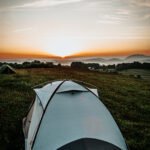

Your first camping trip should feel exciting — not stressful. A solid camping checklist for new campers is the single most important thing you can prepare before you ever load the car. Miss something critical and even a short overnight can feel like a survival exercise. Get it right, and you’ll be too busy enjoying the trees, the stars, and the campfire to worry about anything.
Whether you’re pitching a tent in the woods for the very first time, heading to a beach campsite for a weekend, or planning a longer wilderness adventure, this guide covers everything. Shelter, food, clothing, safety, hygiene, and a few extras that make the difference between a good trip and a great one. Let’s get you packed.
Why a Camping Checklist Is Your Best Friend on a First Trip
First-time campers almost always forget something. Not because they’re unprepared — because camping involves a genuinely wide range of gear categories that don’t exist in everyday life. A waterproof groundsheet. A fire starter. A water purification tablet. These aren’t things most people keep in their head.
A printed or digital camping checklist solves this immediately. It removes the mental load of trying to remember everything, lets you pack systematically by category, and gives you something to check against the night before you leave. Think of it as your trip insurance — it costs nothing and pays off every single time.
PRO-TIP : Print this checklist the night before you pack
Go through each section one at a time. Lay items out before putting them in bags. Check items off as they go in. This takes about 30 minutes and has saved many a camping trip from the dreaded ‘I forgot the…‘ moment three hours down the road.
Shelter Essentials: Tents and Accessories Every Camper Needs
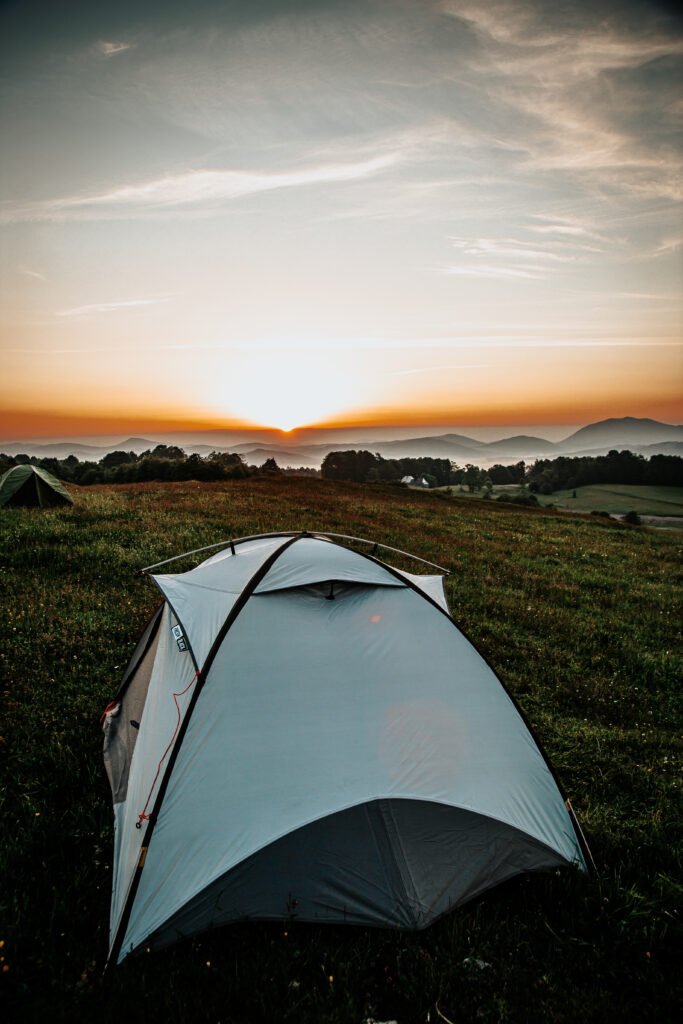
Your shelter is the foundation of your entire trip. Get this right and everything else becomes easier. Get it wrong — a leaking tent, missing poles, no ground sheet — and even a beautiful location becomes miserable fast. Here’s what every first-time camper needs to pack for shelter
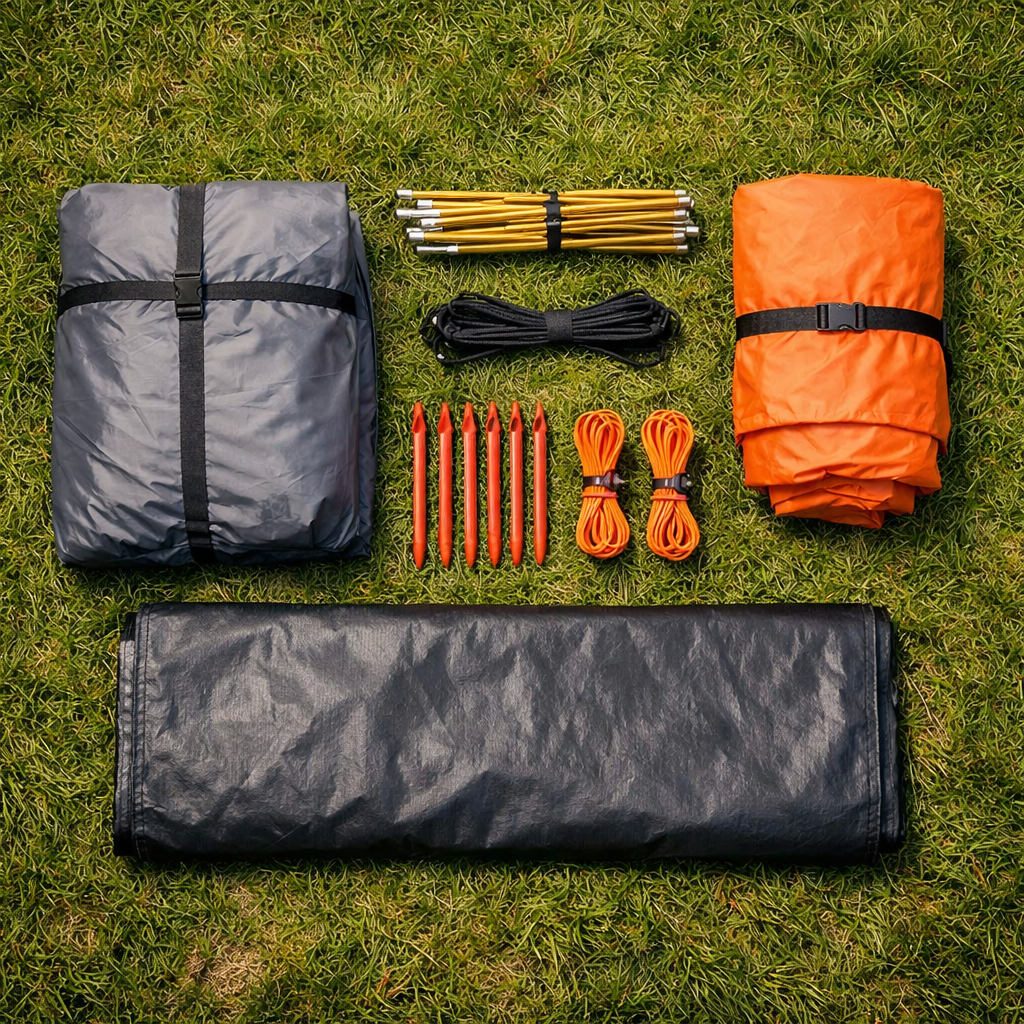
Tent Body, Poles, and Rainfly — The Core Shelter Setup
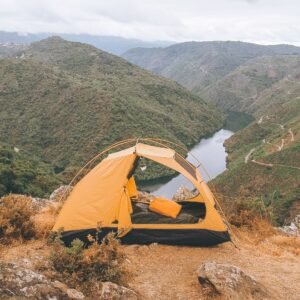
- Tent body — the main living structure; always check you have every component before leaving
- Tent poles — without these your tent is just a pile of nylon; double-check the bag
- Rainfly — attaches over the tent roof to channel rain away; never skip this even in ‘good’ weather
Ground Tarp, Stakes, and Guy Lines — Anchoring Your Shelter
- Ground Tarp – goes under the tent floor; protects from damp ground and rough terrain, extends tent life
- Stakes — drive into the ground at each corner to stop your tent shifting in wind; carry a few spares
- Guy lines — attach from tent body to stakes for extra stability in wind; critical in exposed locations
Tent Size Tip for First Timers:
Always go one size larger than your group. Sleeping two? Get a 3-person tent. The extra space is used instantly by gear, bags, and the simple reality that humans move around in their sleep. A cramped tent is a miserable tent.
Sleep Comfort: What to Pack Inside Your Tent for a Great Night’s Rest
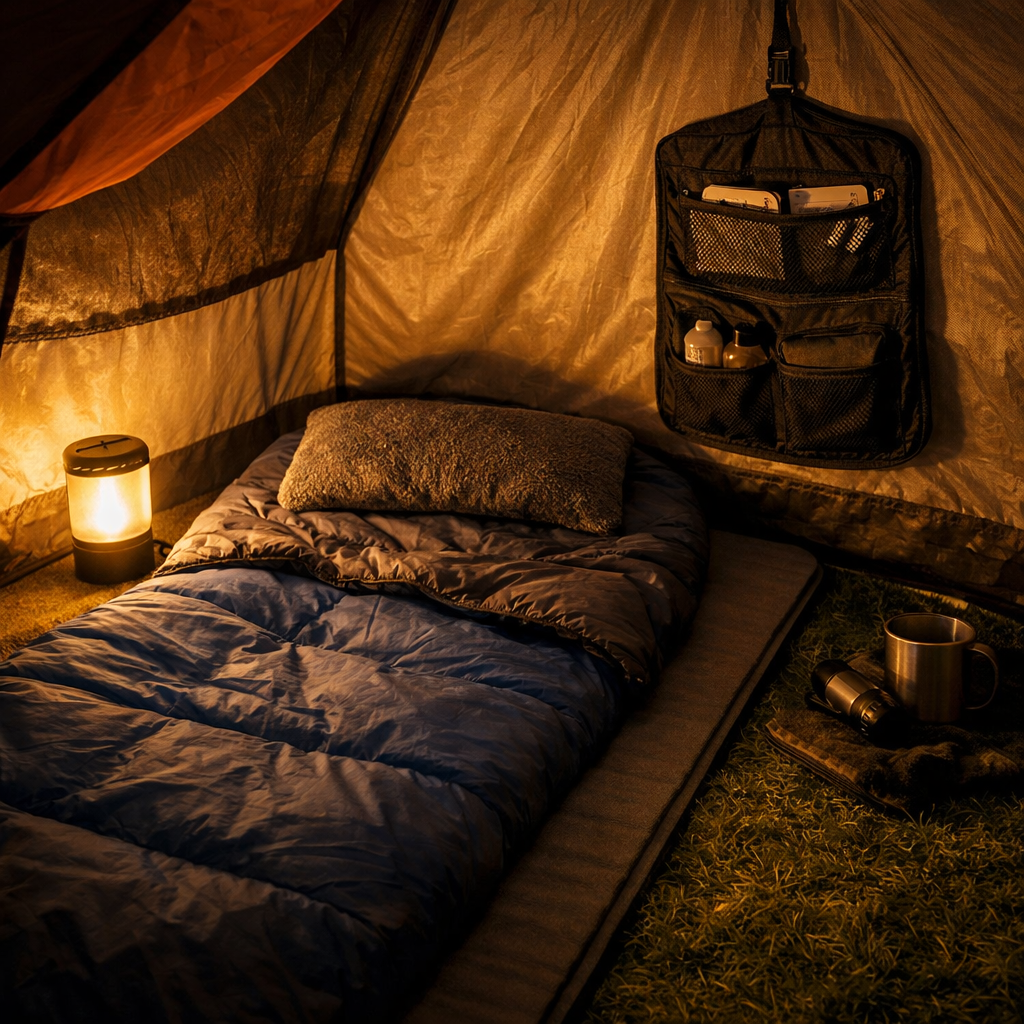
A bad night’s sleep ruins the next day faster than anything else. Don’t underestimate sleep comfort when packing. The ground is harder than you think, temperatures drop more than you expect, and the right sleeping setup makes an enormous difference.
- Sleeping bag — rated for the lowest expected temperature; check the season rating before buying
- Sleeping pad or inflatable mattress — insulates from the cold ground and adds critical cushioning
- Camping pillow — compact and compressible; a rolled jacket works but a proper pillow is far better
- Blankets — add a lightweight fleece for nights colder than expected; better safe than shivering
- LED lantern or solar lights — for reading, moving around at night, and general ambience inside the tent
- Backup torch or headlamp — essential for bathroom trips at night; hands-free headlamps are best
- Portable seating — a compact folding chair for sitting outside the tent door in the evening
- Small organiser pouch — keeps phone, keys, and torch within reach without searching through bags
Camping Food, Cooking Gear & Hydration: Fuel Your Adventure
Food at a campsite tastes better than almost anywhere else — there’s something about fresh air and open fire that makes even simple meals feel special. But running out of water, or arriving without a way to cook, can make a good trip go sideways fast. Here’s how to pack your camping kitchen properly.
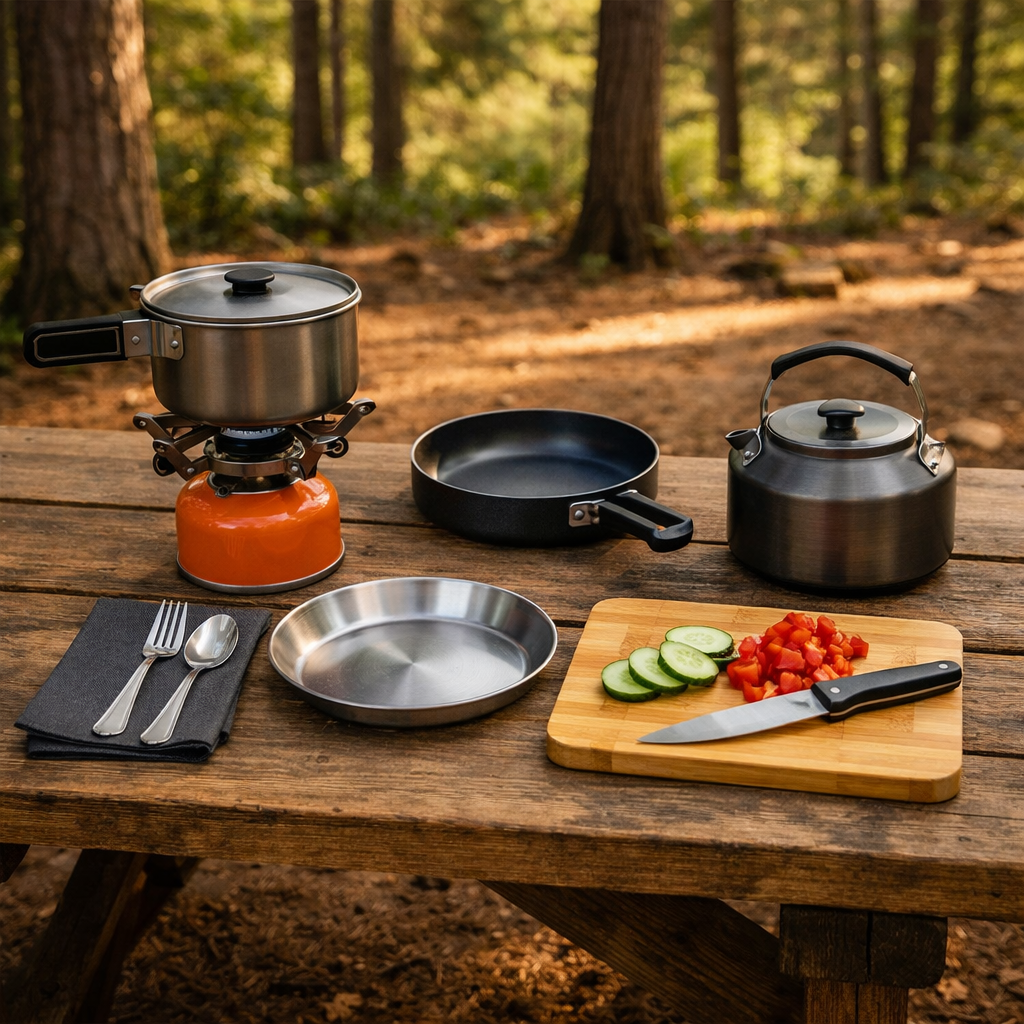
Camping Kitchen Essentials — Stove, Cookware & Utensils
- Camp stove — compact gas stove or multi-fuel stove; always bring more fuel than you think you need
- Pots and pans — one medium pot and a small pan covers most meals; lightweight aluminium or titanium
- Plates, bowls, and cutlery — opt for reusable camping sets; avoid single-use plastic
- Cutting board — a small flexible one takes almost no space and is used constantly
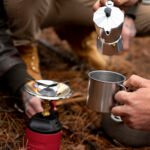
- Camp kettle — for boiling water for coffee, tea, and hot meals; a morning essential
- Biodegradable washing-up liquid — to clean cookware away from water sources
Camping Food Planning — What to Eat and When
- Water — carry more than you think you need; minimum 2 litres per person per day for drinking alone
- Water filter or purification tablets — if near a freshwater source, purify before drinking
- Day 1 meals — keep simple: sandwiches, wraps, pre-made salads; no cooking required after a long drive
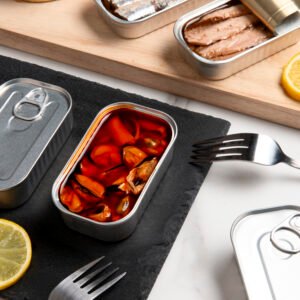
- Days 2+ — one-pot meals, canned food, pasta, rice; easy to cook on a camp stove with minimal cleanup
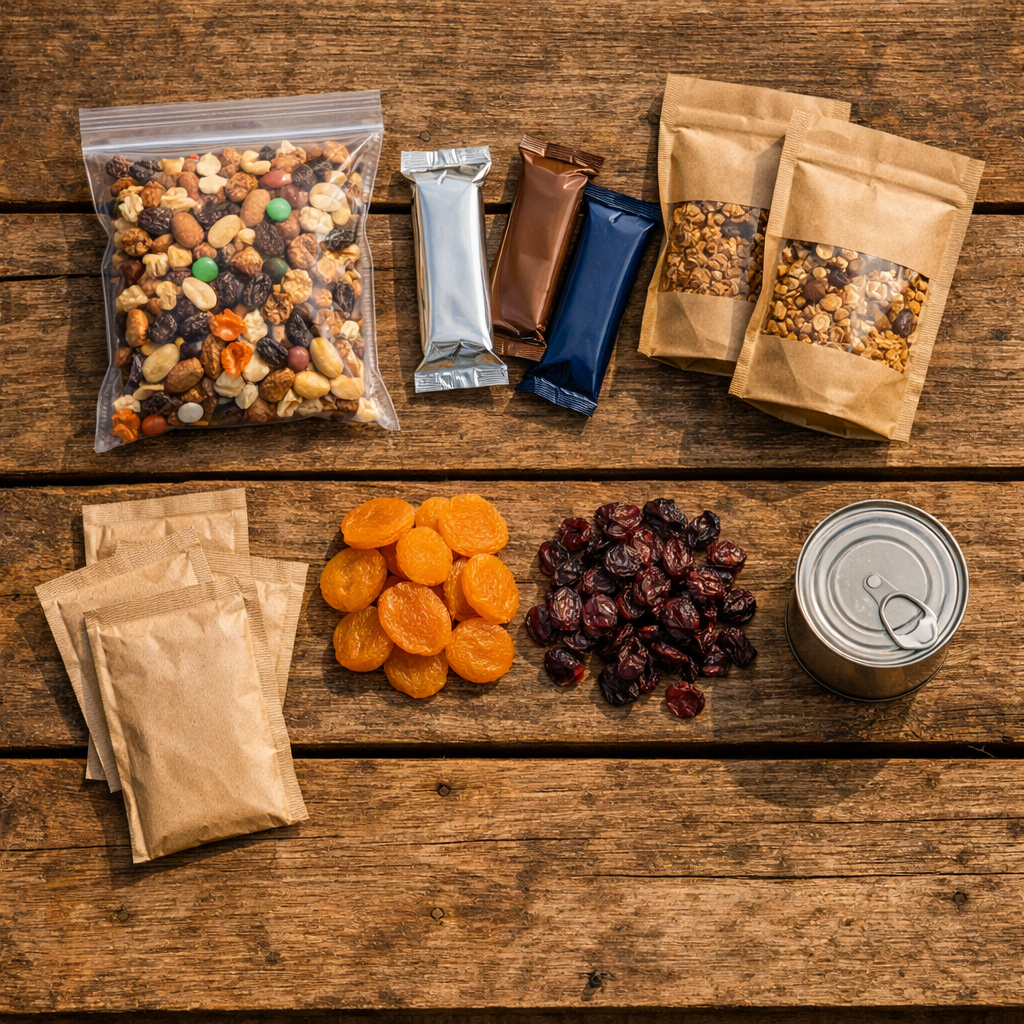
- Snacks — trail mix, energy bars, dried fruit, nuts, granola; carry more than you expect to eat
- Coffee/tea supplies — a morning brew makes everything better; instant coffee or a small cafetiere
Pro Tip: Meal Prep Before You Leave Home
Prepare and portion meals at home before the trip. Freeze meals like pasta bakes, chilli, or soup in zip-lock bags. They double as ice packs in the cooler, defrost by day two, and give you a hot dinner with almost no effort. Game-changer for multi-day trips.
Camping Clothing: How to Dress Smart for Any Weather
Clothing is the most personal item on any camping checklist — and the one most people either over-pack or get completely wrong. The golden rule: pack for the weather you expect AND the weather you don’t. Temperatures at campsites, especially in the evenings and early mornings, can drop dramatically even in summer.
Beach Camping Clothing Checklist
- Light, breathable clothing — cotton shirts, shorts, or linen; stays cool in heat
- Swimwear — pack two sets so one can dry while you wear the other
- Flip-flops or waterproof sandals — essential for beach and shower block use
- Light cover-up or long sleeves — for sun protection during peak afternoon hours
- Sun hat — wide brim for face and neck protection during long beach days
Wilderness Camping Clothing Checklist
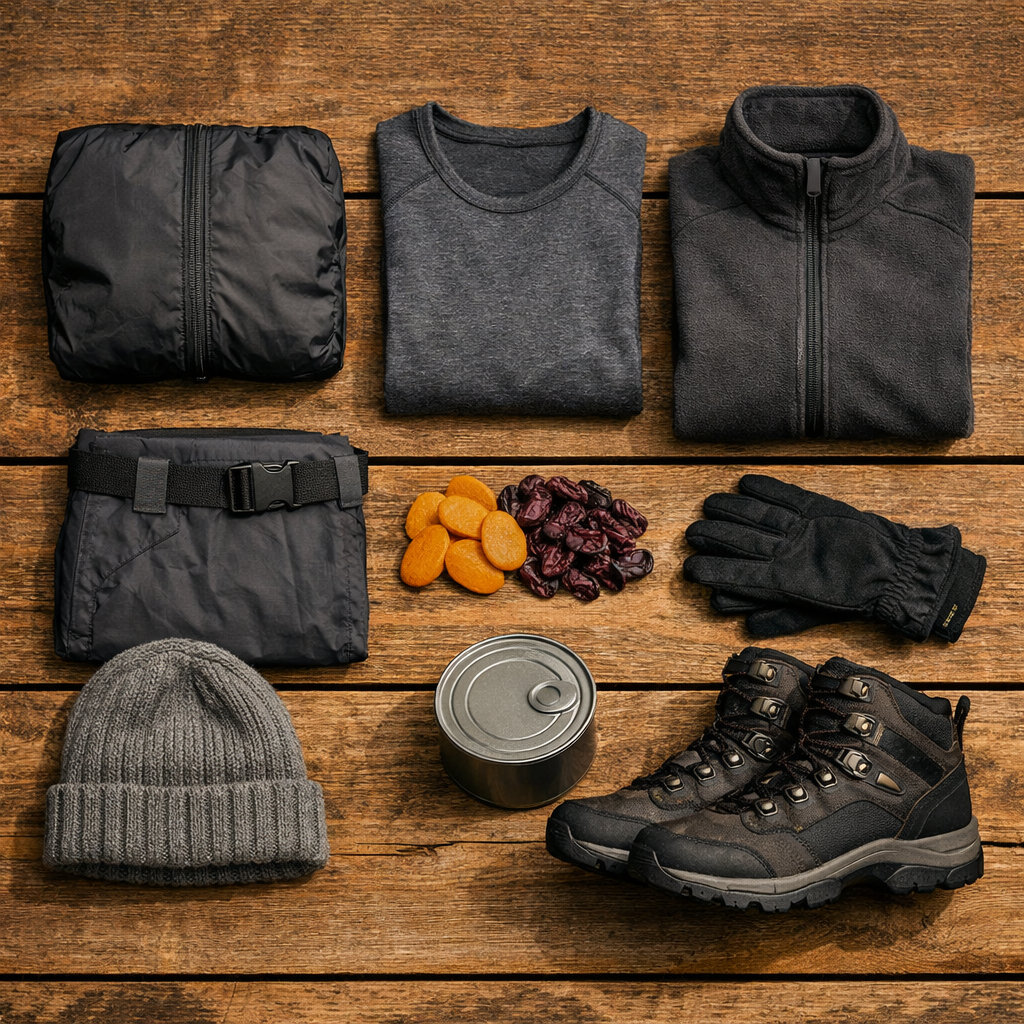
Layering for Cold Nights — What to Pack
- Moisture-wicking base layer — worn next to skin; draws sweat away; avoid cotton in cold conditions
- Fleece or insulating mid-layer — traps body heat; a zip-up fleece is versatile and packable
- Waterproof outer shell jacket — blocks wind and rain; your most important cold-weather layer
- Waterproof hiking trousers — essential if rain is possible; light enough to pack easily
- Sturdy waterproof boots — ankle support and waterproofing; broken-in before the trip, not new
- Warm hat and gloves — even in summer, carry these for cold mornings and evenings
- Wool or synthetic hiking socks — at least one pair per day; blisters start with damp cotton socks
USEFUL TIP: Check the Forecast the Night Before
Weather in the wild changes fast. Check a reliable outdoor weather app (e.g. Weather.com, Mountain Forecast) the evening before you leave and the morning you pack. If rain is forecast at any point, waterproof gear is non-negotiable — not optional.
Camping Safety and Navigation: Stay Found and Stay Safe
In the wilderness, safety gear isn’t optional — it’s the line between a minor inconvenience and a serious situation. First-time campers often under-pack this category. Don’t. It takes up very little space and weighs almost nothing relative to the peace of mind it brings.
First Aid Kit for Campers
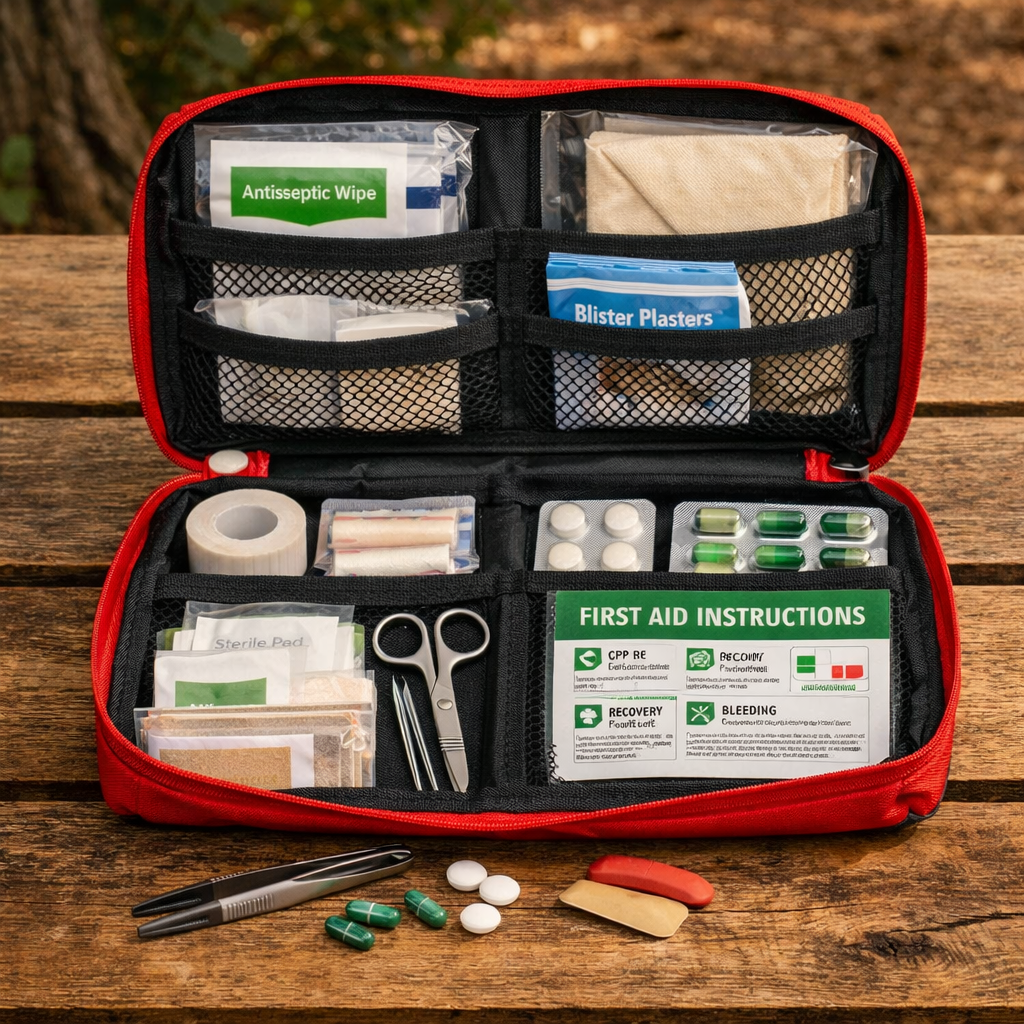
Building a Smart Campsite Safety Kit
- Adhesive bandages (assorted sizes) — for cuts, scrapes, and small wounds
- Antiseptic wipes and cream — clean wounds immediately to prevent infection
- Blister plasters and moleskin — critical for any hiker; treat hot spots before they become blisters
- Tweezers — for splinters, thorns, and tick removal
- Pain relief tablets — paracetamol and ibuprofen; cover both pain and inflammation
- Antihistamine tablets — for allergic reactions to insect stings, plant contact, or food
- Personal prescription medications — always carry extras in a waterproof bag
- Burn cream — for minor campfire or stove burns
After any day outdoors in long grass or woodland, do a full tick check before bed. Check behind knees, in hair, under arms, and in skin folds. Use tweezers to remove any tick — grip close to the skin and pull straight out without twisting. Never crush, burn, or apply petroleum jelly to a tick.
Communication Devices and Navigation Tools
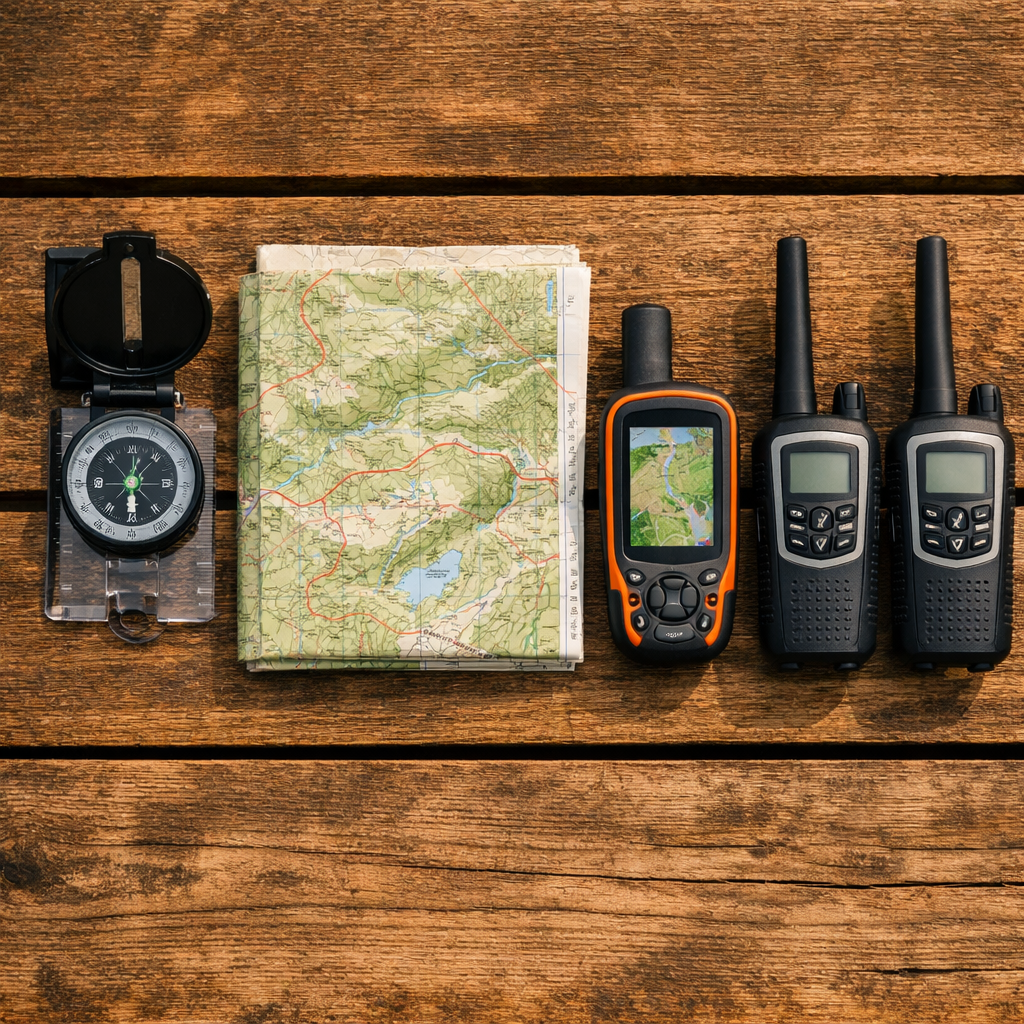
- Map and compass — learn to use these before the trip; don’t rely entirely on your phone battery
- GPS device or GPS app (downloaded offline) — handheld GPS devices are battery-efficient and accurate
- Fully charged power bank — your phone is a navigation tool; keep it charged
- Whistle — three sharp blasts is the universal distress signal; attach to a zipper for easy access
- Satellite communicator (e.g. Garmin inReach) — for remote areas with no mobile signal; worth every penny
- Walkie-talkies — for groups splitting up to explore; short-range, reliable, no signal needed
Personal Care and Campsite Essentials: The Extras That Matter
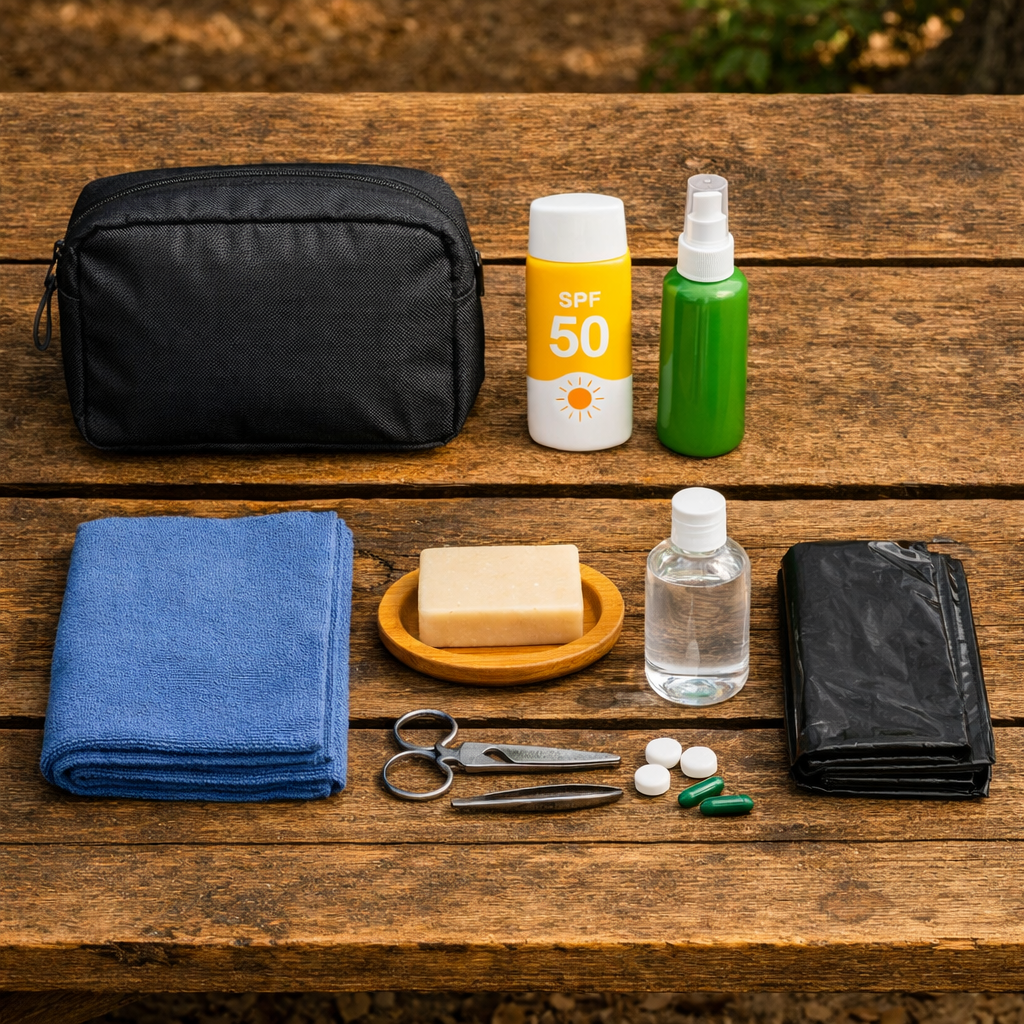
It’s the small things that make a campsite feel like home rather than a survival situation. Don’t leave personal care and comfort items off your camping packing list — they take up almost no space and make a real difference to everyone’s enjoyment.
- Biodegradable toiletries — toothbrush, toothpaste, biodegradable soap and shampoo; eco-friendly always
- Microfiber towels — dries fast, weighs nothing, takes up almost no bag space
- Unscented sunscreen (SPF 30+ minimum) — reapply every two hours; don’t skip this
- Insect repellent — DEET-based or picaridin for maximum effectiveness against mosquitoes and ticks
- Hand sanitizer — essential before cooking and after bathroom breaks away from facilities
- Toilet paper and small trowel — for backcountry camping where there are no facilities
- Trash bags — pack in, pack out; leave your site cleaner than you found it
- Fire starter or waterproof matches — never assume the wood will be dry; always carry your own
- Firewood (where permitted) — check local rules before collecting wood from the site
- Playing cards, books, or portable games — for quiet evenings when the fire has died down
LEAVE NO TRACE REMINDER
Always clean up after yourself. Pack out all trash — including food scraps. Bury human waste in a cat hole 6-8 inches deep, at least 200 feet from water. Use only biodegradable soap near or in natural water. Nature stays beautiful because campers like you make the effort.
‘Want to go deeper on eco-friendly practices? Our guide to sustainable camping and Leave No Trace has everything you need
Frequently Asked Questions About Camping Checklists
First-time campers always have questions. Here are the most common ones — answered honestly.
What is the most important thing to bring on a first camping trip?
Your shelter and sleep system — tent, sleeping bag, and sleeping pad. Everything else can be improvised or purchased nearby in a pinch. A leaking tent or a cold, sleepless night is the fastest way to put someone off camping forever. Get these three right first.
How do I pack light for camping without forgetting essentials?
Use a category-based checklist (exactly like this one). Lay everything out before packing. Ask yourself: ‘If I forget this, can I manage without it?’ If the answer is no, it goes in. If yes, reconsider whether you need it. Beginners almost always over-pack clothing and under-pack safety and cooking gear.
Do I need a camping stove or can I cook on a campfire?
Always bring a camping stove. Campfires are not always permitted (especially in dry conditions or national parks), and they take time to build, maintain, and cook on properly. A compact gas stove is the most reliable, fastest, and safest way to cook at a campsite, especially for beginners.
What food is best for a first camping trip?
Keep it simple for your first trip. Pre-made sandwiches and wraps for day one (no cooking required). One-pot pasta, instant noodles, or canned meals for days two and three. Lots of snacks — trail mix, energy bars, fruit. The goal is easy preparation, minimal cleanup, and reliable calories.
Is it safe to camp for the first time alone?
Yes, with the right preparation. Start with a well-established, serviced campsite rather than backcountry wilderness. Tell someone your exact location and expected return date. Carry a whistle, fully charged phone, and basic first aid kit. Go in good weather. Your first solo trip doesn’t need to be an adventure — it just needs to be a good experience.
Ready to Pack? Your Adventure Starts Here
With this complete camping checklist for new campers, you’re not just prepared — you’re set up for a genuinely great first trip. The goal isn’t to pack the most stuff. It’s to pack the right stuff, know why it’s there, and head out with confidence.
Camping gets better every time you go. Your first trip teaches you what you actually use and what was dead weight in the bag. Your second trip is leaner, smarter, and even more enjoyable. But none of that happens until you go for the first time. So get packing — the outdoors is waiting.