Outdoor Camping Activities: The Complete Guide to Fun Things to Do at Your Campsite
-
| Founder & Content Creator

Latest Posts
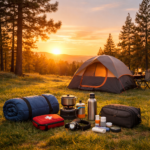
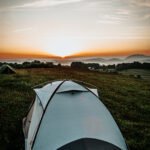
Setting up your tent is the start of a camping trip, not the point of it. The point — the reason you drove two hours, packed the cool box, and remembered to bring the torch — is everything that happens after the tent is up.
The best outdoor camping activities are not always the obvious ones. Hiking and campfires are excellent, and they are in this guide. But so is geocaching, which turns any trail into a treasure hunt. And foraging, which makes you look at a forest completely differently. And stargazing, which has been available to every camper throughout human history and still manages to stop people in their tracks every single time.
This guide covers every activity worth knowing about at a campsite — active and relaxed, social and solo, sunny day and rainy day — with practical tips on how to actually do each one well.
The activities you plan are only as good as the trip you pack for — our complete camping checklist for new campers covers all the gear, safety items, and planning steps that make everything in this guide possible.
Hiking and Exploring: The Heart of Any Camping Trip
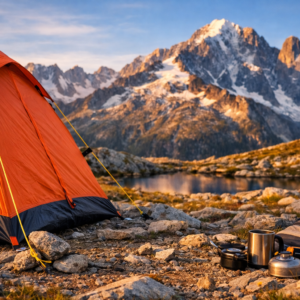
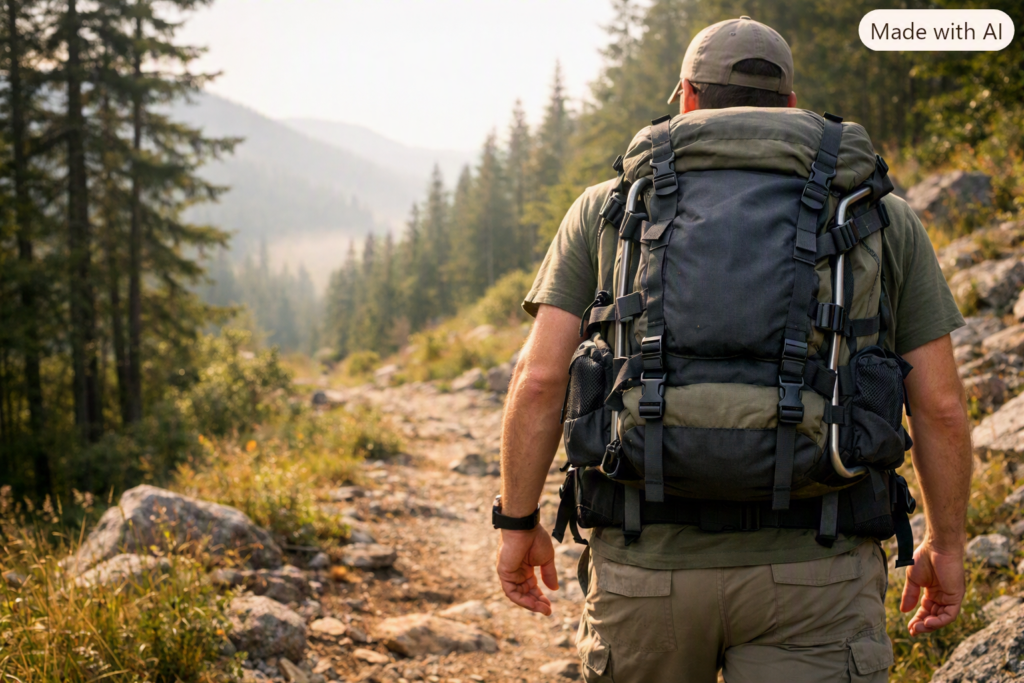
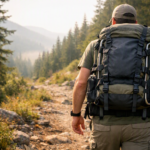
Hiking is the most natural outdoor camping activity there is — and after years of going on trails, experienced campers still get something from every one. The combination of physical effort, fresh air, changing scenery, and the absence of anything requiring a password is genuinely restorative in a way that is hard to replicate elsewhere.
How to Plan Your Hiking Day: Timing, Trails, and Tips
The most important hiking decision you will make at camp is not which trail to take — it is when to start walking.
- Start early — the first hours of the morning are almost always the best for hiking: cooler temperatures, emptier trails, better wildlife activity, and better light for photography
- Check the trail difficulty before you go — most national parks and trail apps give difficulty ratings, distance, and elevation gain. Match the trail to your group’s least experienced member, not the most
- Tell someone at camp where you are going and when you expect to be back — this costs nothing and matters if something goes wrong
- Pack more water than you think you need — a litre per person per hour of active hiking is a reasonable baseline in moderate conditions
- Download offline trail maps before you enter areas with patchy signal — apps like AllTrails and Gaia GPS allow this
If your camping trip involves high elevation trails, our mountain camping for beginners guide covers altitude acclimatisation, navigation, and safety on mountain terrain.
Nature Scavenger Hunts: Turning a Walk Into an Adventure
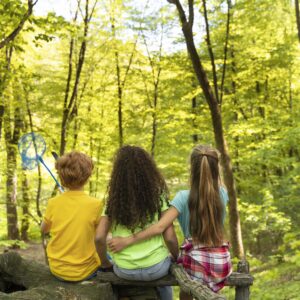
A nature scavenger hunt takes a standard walk and turns it into a game — and it works equally well for children who need something to focus on and adults who want a reason to pay closer attention to what is around them.
Before you leave camp, make a list of things to find along the trail: a feather, a certain shape of leaf, animal tracks in mud, a lichen-covered rock, a bird call you cannot identify, something that smells interesting, a seed pod, a spider’s web. The goal is observation, not collection — point and identify, photograph if you want, but leave everything where it is.
- Apps like iNaturalist and PlantNet help identify plants and fungi in real time using your phone camera
- Themed hunts work well: find five things that are green, find something an animal has made, find evidence of water
- For children: award a point for each find, give a small reward at the end — the prize is usually irrelevant; the competition is the point
Sunrise Hiking: Why the Early Riser Always Wins
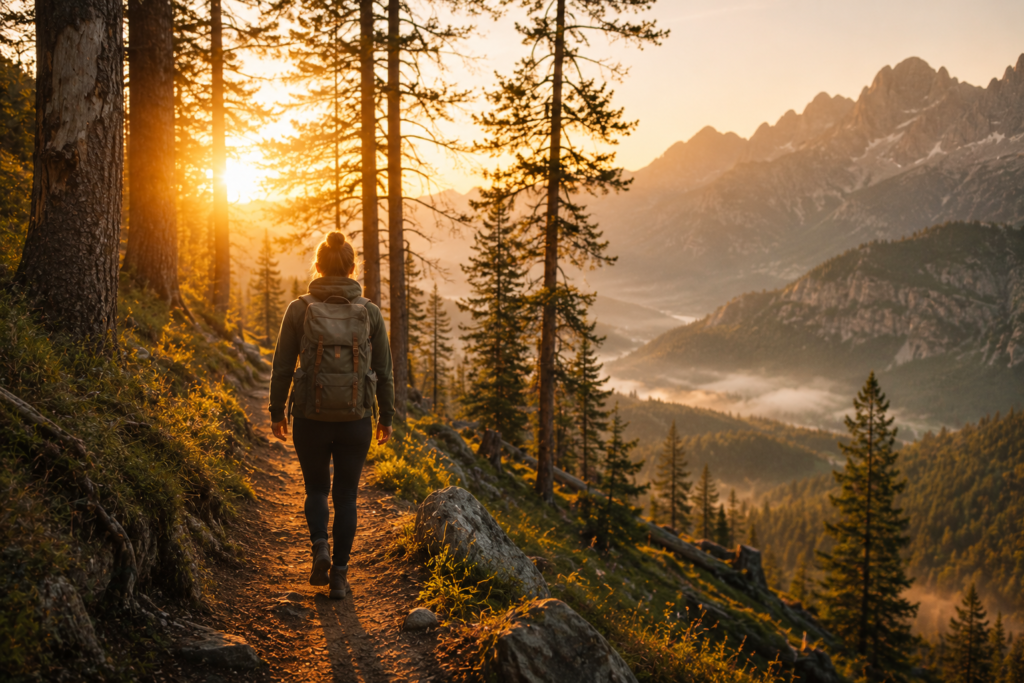
Ask experienced hikers which is better — sunrise or sunset on the trail — and the answer is almost universally sunrise. The light is extraordinary, the temperature is usually at its most comfortable, and the trails are typically empty. You have the forest or the mountain almost entirely to yourself.
Sunrise hiking requires exactly one thing: setting an alarm. Everything else — the views, the wildlife activity, the quality of the morning air, the satisfaction of having done something before most people have had breakfast — all of that is already waiting.
The hardest part of sunrise hiking is the same as the hardest part of any excellent idea: starting. Set the alarm the night before, put your hiking clothes where you will literally trip over them in the dark, and do not negotiate with yourself at 5am. The mountain will still be there at 9am. But it will not be empty.
Campfire Activities: More Than Just Starting a Fire
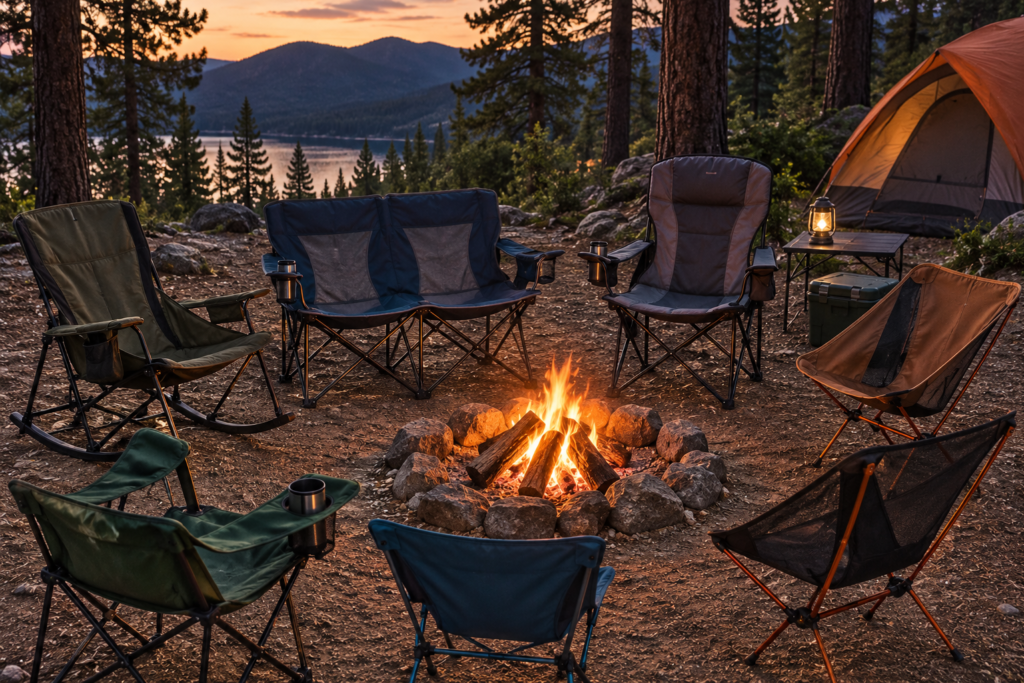
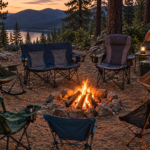
A campfire is not just a heat source — it is the social center of any fun things to do while camping evening. Everything that happens around a campfire is better than the same thing happening without one.
Campfire Cooking: The Activity Disguised as Dinner
Campfire cooking is genuinely an activity in itself — not just how you eat at camp but something people actively look forward to and plan around. There is something about cooking over fire that slows everything down and makes the whole process feel more deliberate and more satisfying.
- Foil packet meals: the most forgiving campfire cooking method — assemble at home or at camp, seal in heavy-duty foil, place on coals for 20-25 minutes. Sausage and vegetables, potato and cheese, fish with lemon — almost anything works
- Campfire pizza: flatbread or naan as the base, tomato paste, cheese, and toppings — placed directly on the grill grate for 5-8 minutes until the cheese melts
- Dutch oven: for car campers, a cast iron Dutch oven over campfire coals produces stews, soups, and even bread that are genuinely impressive. The cooking time is longer but the result is worth it
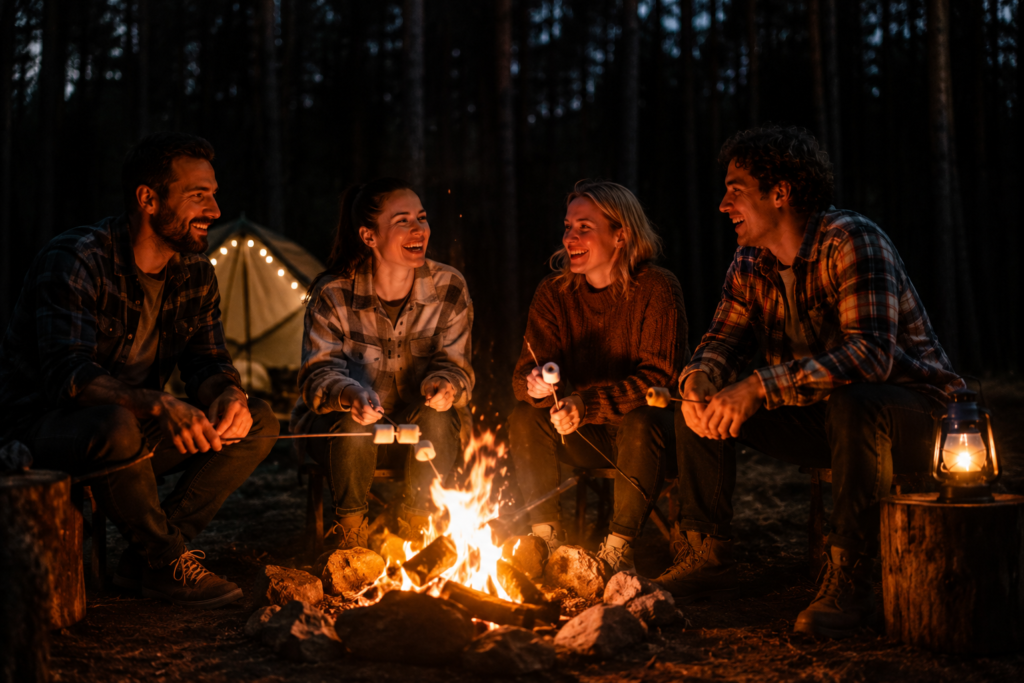
- S’mores as a communal ritual: the making and eating of a s’more is a social activity not a snack. Everyone has an opinion on toasting technique. Nobody is right. That is what makes it enjoyable.
For specific recipes and techniques, our easy camp cooking for beginners guide covers everything from one-pot pasta to foil packet meals and campfire pancakes — all with actual ingredients and method.
Campfire Stories and Games for Adults
Campfire storytelling is one of the oldest outdoor camping activities in human history — and it has not lost anything over the millennia. Something about firelight and darkness makes people better storytellers and better listeners simultaneously.
- Story chain: One person starts a story with a single sentence. The next person adds a sentence. Continue around the circle until the story reaches a natural (or absurd) conclusion. Excellent for groups of adults and older children.
- Two truths and a lie: Each person shares three statements about themselves — two true, one false. The group guesses which is the lie. Surprisingly revealing around a campfire.
- What would you do: Hypothetical scenarios with no right answers — ‘Would you rather spend a week in the wilderness alone or in a crowded city hotel?’ — produce genuinely interesting conversations.
- Ghost stories: Timeless. More effective in the dark. Most effective when someone in the group has a genuine talent for it.
S’mores, Songs, and Other Campfire Traditions
Some campfire activities do not need justification — they just need doing. Pack marshmallows. Bring a guitar or a portable Bluetooth speaker. Have someone who knows more than two songs. Bring enough s’mores ingredients that there is obviously too much, because at a campfire there is never actually too much.
Geocaching: The Treasure Hunt That Uses the Whole Forest
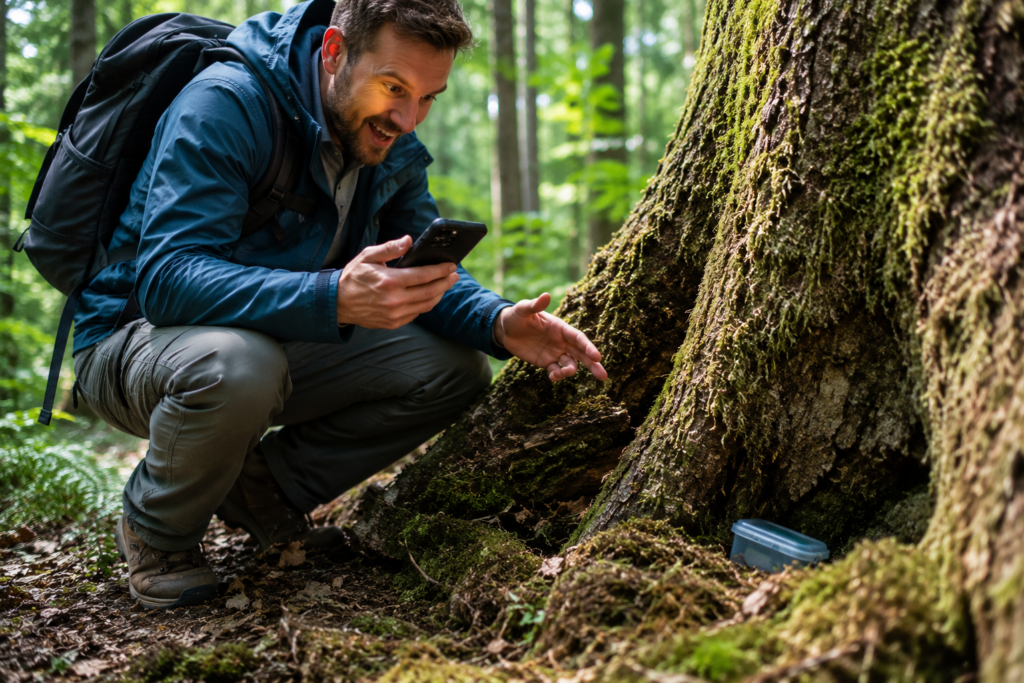
Geocaching is one of the most underrated camping activities for adults and families that exists — and one that very few camping guides ever mention despite being enormously popular. The concept is simple: people hide small weatherproof containers (caches) in locations around the world and post the GPS coordinates online. You use an app to navigate to the coordinates and find the cache.
There are currently over 3 million active geocaches hidden worldwide — in forests, near campgrounds, along trails, at viewpoints, and in places you would walk past a hundred times without noticing. Many national parks and campgrounds have caches specifically placed to send visitors to their best viewpoints and most interesting features.
- Download the Geocaching app (geocaching.com) before your trip — free basic membership gives access to millions of caches
- Filter by difficulty and terrain rating to match caches to your group’s ability
- Traditional caches contain a paper log to sign — bring a pencil
- If you take something from a cache (some contain small trinkets), you leave something of equal or greater value
- Kid-friendly: children are almost universally excellent at geocaching and find the treasure hunt format irresistible
FUN FACT: Geocaching was invented in 2000, just days after the US government turned off GPS accuracy restrictions for civilian use. Someone immediately hid a bucket in the Oregon woods and posted the coordinates online as a test. Within days, multiple people had found it. Twenty-five years later, the sport has over 6 million registered players worldwide. It turns out humans will travel significant distances to look in a hole in a tree if you frame it correctly.
Foraging and Plant Identification: Reading the Forest Around You
Foraging — finding and identifying edible plants, berries, fungi, and herbs in the wild — is one of those outdoor camping activities that changes how you see natural environments permanently. Once you know what a particular plant is, you notice it everywhere. Once you know what you can eat, a woodland walk becomes something different entirely.
A few important ground rules before getting started:
- Never eat anything you cannot identify with absolute certainty — this is the one rule that has no flexibility. Many edible plants have toxic lookalikes.
- Use a foraging guide specific to your region — plant species vary dramatically by location
- Apps like iNaturalist, PlantNet, and Seek help with identification but should be used as a starting point, not a final answer
- Start with unmistakable species: wild blackberries, elderflowers, nettles (cooked), dandelion leaves — things with no dangerous lookalikes in your region
- Check local regulations — foraging is restricted in some national parks and protected areas
Even without eating anything, plant identification is a deeply satisfying campsite activity. Knowing what is around you — which plants the deer have been browsing, which berries the birds prefer, which fungi indicate what kind of tree you are near — gives you a completely different relationship with the landscape.
Water Activities: Fishing, Swimming, Kayaking, and More
If your campsite is near a river, lake, or coastline, water activities become some of the most naturally enjoyable things to do at a campsite — and the options range from perfectly quiet to genuinely athletic.
Fishing at Camp: Getting Started
Camping and fishing go together in a way that most other sports and activities do not — both reward patience, both involve being in beautiful places, and neither requires you to be anywhere in particular at any particular time.
- Check local fishing regulations and licensing requirements before you fish — requirements vary significantly by location, water type, and species
- A basic rod, reel, line, and a selection of hooks and weights is enough to start — you do not need expensive specialist equipment for camping fishing
- Early morning and late evening are peak fishing times in most freshwater environments
- Practice catch and release where possible — it keeps fish populations healthy and the fishing good for every angler who comes after you
If you are fishing in natural water and want to be safe drinking or swimming in it too, our guide to purifying water in the wilderness covers every safe treatment method.
Paddling, Swimming, and Water Play
- Kayaking and canoeing: Many campgrounds near water offer rental equipment. Paddling is a genuine workout disguised as sightseeing — rivers, lakes, and coastal water look entirely different from a kayak than from the shore.
- Paddleboarding: Increasingly available at campground water-sport rental facilities. The standing balance aspect makes it more physically engaging than it initially appears.
- Wild swimming: One of the most exhilarating things you can do on a warm camping day. Research your swim spot in advance — check for currents, depth, and any restrictions. Cold water hits harder than you expect even in summer.
- Water photography: Lakes and rivers at golden hour produce some of the most visually striking camping photographs available. Set up near water 30 minutes before sunset.
Wildlife Watching and Bird Spotting: The Quiet Magic of Patience
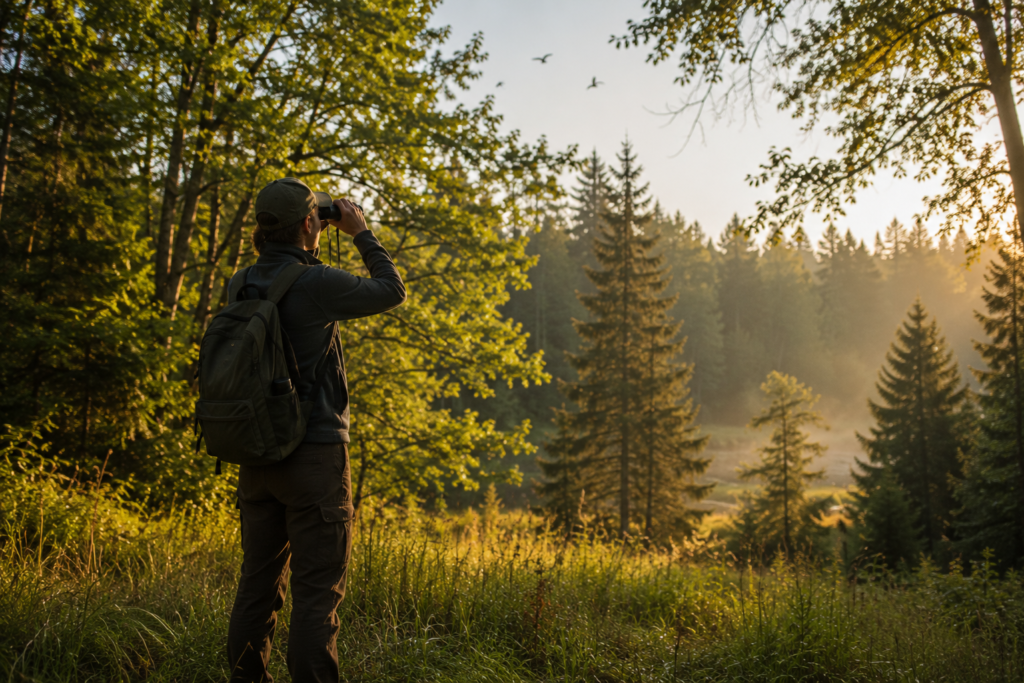
Wildlife watching requires nothing more than slowing down — which is, in itself, one of the more valuable things a camping trip can teach you.
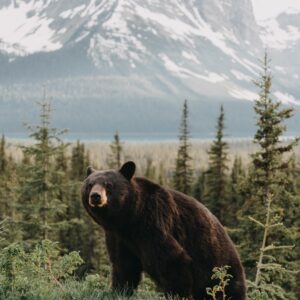
Getting closer to wildlife is one of the great joys of camping — but knowing how to observe safely matters. Our wildlife safety while camping guide covers how to read animal behaviour and what to do if an encounter gets unexpectedly close.
The Best Times of Day for Wildlife Watching
Most wildlife is most active at two points in the day: the hour after dawn and the hour before dusk. These are the times when light is low, temperature is comfortable, and animals that have been resting through the heat of the day emerge to feed and move.
- Dawn chorus: the period just after sunrise when bird calls reach their peak volume and variety. Set an alarm and sit quietly near the edge of any woodland or hedgerow.
- Dusk: deer, foxes, badgers, and nocturnal mammals begin moving as the light drops. Position yourself downwind with a good sightline to an open area or water source.
- Binoculars: worth bringing. Even basic 8×42 binoculars transform distant sightings into something genuinely detailed and rewarding.
- Apps: Merlin Bird ID (from the Cornell Lab of Ornithology) identifies bird calls in real time using your phone microphone — point it at any tree and it tells you what is singing.
Wildlife Tracking: Reading Signs on the Ground
Wildlife tracking is the art of reading what animals have left behind — footprints in mud, chewed bark, scratching posts, fur on wire, feathers, and droppings. You do not need to see the animal to know it was there, and learning to read these signs transforms a quiet woodland into a story that has been unfolding all night.
- Mud and soft ground near water: the best place to find clear footprints. Look in the early morning before other walkers disturb the ground.
- Fox prints: four toes, pointed, often in a neat line (foxes place their back feet precisely where their front feet were)
- Deer slots: two teardrop-shaped impressions pointing forward
- Rabbit pellets: small, round, often in clusters near burrow entrances
- A field guide to animal tracks for your region is one of the most useful and lightweight additions to any camping kit
Stargazing and Night Photography: When Darkness Is the Feature
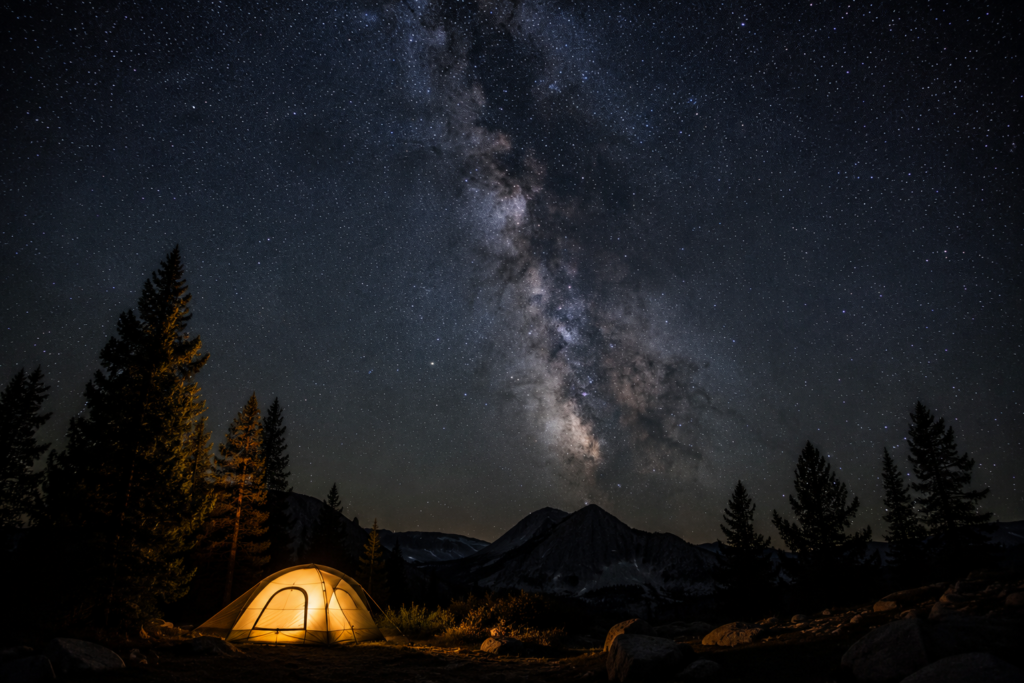
One of the most reliably wonderful outdoor camping activities requires no planning, no equipment, and no particular skill. You just have to go outside when it is dark and look up.
Getting Started With Stargazing at Camp
The key difference between stargazing at home and stargazing at camp is usually light pollution — and the difference is dramatic. In an area of genuinely dark sky, a clear night produces a view of the Milky Way that looks almost artificial. It takes about 20 minutes for your eyes to fully dark-adapt after any exposure to bright light.
- Give your eyes 20 minutes to adjust after leaving the campfire — and during this time avoid looking at phone screens
- Use a red-light headtorch if you need to navigate in the dark — red light does not destroy night vision the way white light does
- Lie flat on a sleeping mat or a blanket — lying down rather than standing reduces neck strain and gives you the full sky without restriction
- Stellarium is a free app that identifies constellations and planets in real time by pointing your phone at the sky — use it before dark-adapting to get your bearings, then put the phone away
- Shooting stars (meteors) are visible on any clear night but peak during annual meteor showers — the Perseid shower in August and the Geminid shower in December are the most reliable
The Milky Way contains between 100 and 400 billion stars. Estimates vary because counting them is, understandably, quite difficult. What is not difficult is lying on your back at a dark campsite on a clear night and understanding immediately why every ancient civilisation was obsessed with the sky. It is genuinely hard to look at it without thinking something bigger is going on.
Night Photography: Capturing the Sky
If you want to photograph the night sky at camp, a DSLR or mirrorless camera gives you the most control — but modern smartphone cameras with a night mode or pro manual settings can also produce remarkable results.
- Camera on a tripod: essential — even the slightest movement creates blur in long exposures
- Start with a 20-30 second exposure at ISO 1600-3200, f/2.8 or wider — adjust from there
- Manual focus set to infinity for stars
- Include a foreground element: your tent, a tree silhouette, a person looking up — this grounds the image and makes it feel human
- Shoot in RAW format if possible — much more flexible for editing than JPEG
Smartphone users: iOS and Android both have manual camera apps (ProCamera, Camera FV-5) that give you control over exposure time and ISO. Some newer flagship phones shoot excellent night sky images automatically in their built-in night mode.
Rainy Day Camping Activities: What to Do When the Weather Decides Otherwise
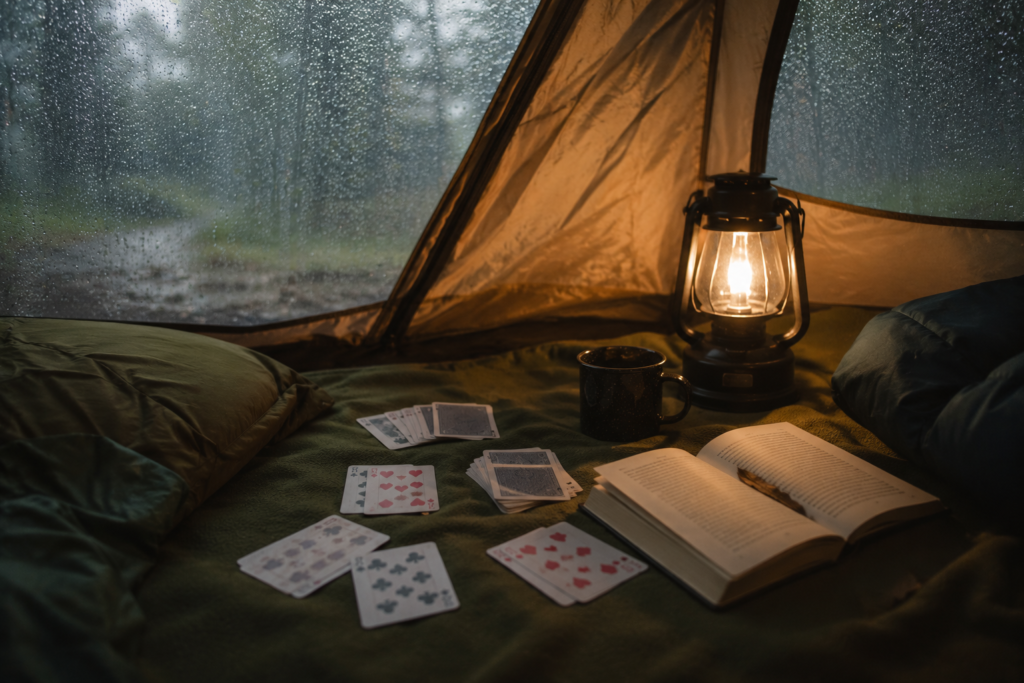
Every camping trip of more than two nights has at least one day where the weather makes the choice for you. The experienced camper’s secret is that rainy days at camp are not bad days — they are different days. Slower. Cosier. Often more memorable than the sunny ones.
Indoor Activities for a Wet Day at Camp
- Card games: A pack of playing cards weighs nothing, takes up no space, and provides hours of entertainment. Rummy, Cribbage, Gin, Snap, Poker, Go Fish — every group has a game that becomes the signature of that trip.
- Board games: Travel-sized versions of most popular board games are available and small enough to pack without guilt. Magnetic chess, folding cribbage board, mini Scrabble.
- Reading: A rainy afternoon in a tent with a good book is one of the most legitimately enjoyable ways to spend time that camping offers. No justification required.
- Journaling: Rainy days at camp produce unusually good writing conditions — you have time, you have quiet, and you have proximity to the thing you are writing about.
- Cooking something ambitious: If the campfire is sheltered or you have a tarp awning, a rainy day is an excellent time to attempt a more involved recipe. Fewer other activities competing for your attention.
- Napping: Rain on a tent roof is one of the most effective sleep sounds in the world. Use it.
The Case for Getting Outside Anyway
Mild rain and outdoor activity are not incompatible — they just require the right clothing. A proper waterproof jacket, waterproof trousers, and good footwear make light to moderate rain a complete non-issue on the trail. Forests smell extraordinary in the rain. Trails are empty. Rivers run full. The colors are more saturated.
The campers who look back on rainy camping days most fondly are almost always the ones who got their rain gear on and went out anyway. The ones who stayed in the tent all day tend to remember it as the wasted day of the trip. The choice is usually straightforward once you have the right kit.
Creative and Mindful Camping Activities
Not every camping activity for adults needs to be physical or competitive. Some of the most genuinely restorative things you can do at a campsite involve sitting still, paying attention, and producing something — even if that something is just a clearer head.
Nature Journaling and Outdoor Sketching
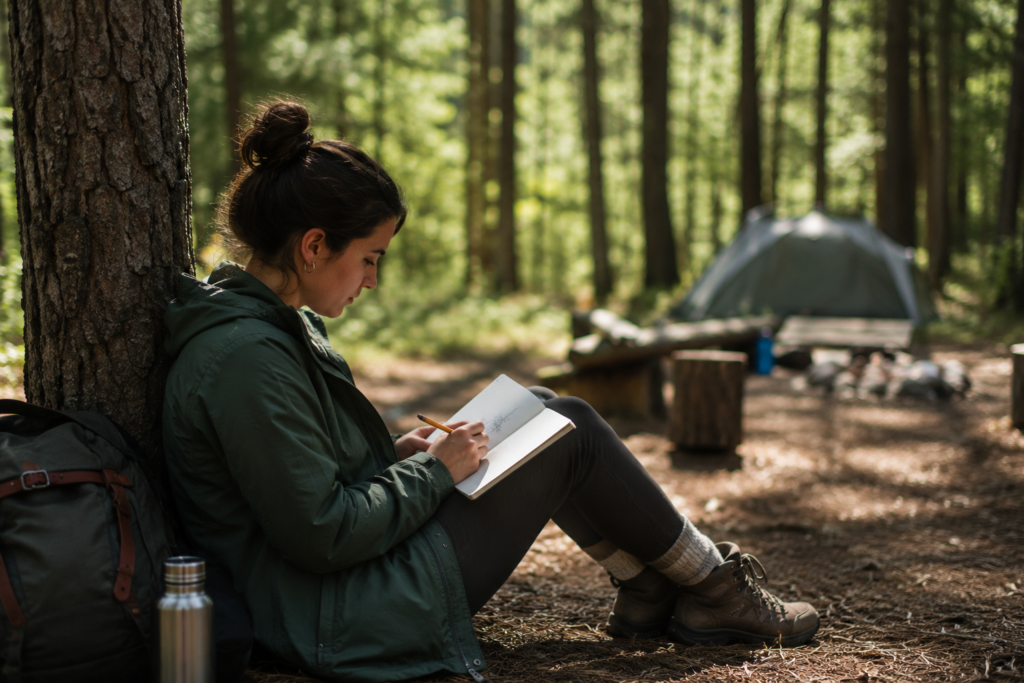
Nature journaling is not about producing art — it is about slowing down enough to actually look at things. A journal and a pencil are the only equipment you need, and neither requires skill to produce something worth keeping.
- Write about what you observe — sounds, smells, weather, wildlife sightings, the quality of the light at different times of day
- Sketch leaves, rocks, mushrooms, trees, or the view from your tent door — the act of trying to draw something accurately makes you look at it more carefully than you otherwise would
- Date your entries and note your location — years later, these details make the entries genuinely interesting to read back
- Combine with plant or wildlife identification — sketch what you find on a walk and identify it back at camp
Yoga, Meditation, and Breathwork in Nature
Outdoor yoga and meditation are a different experience from the same practices indoors — and the difference is not subtle. The combination of fresh air, natural sounds, and ground underfoot creates a quality of presence that most indoor environments cannot replicate.
- Morning yoga at camp: even 15-20 minutes of gentle movement before breakfast, while the air is still cool, sets the tone for the whole day
- Seated meditation near moving water — a stream, a river, or even a gentle breeze through trees — uses natural sound as a focus object more effectively than any app
- Breathwork: four counts in, hold four, out four, hold four — box breathing. Simple, evidence-based for stress reduction, and takes about three minutes to produce a noticeable effect
- Bring a yoga mat or a closed-cell foam sleeping pad — ground that is comfortable to sit on makes the whole thing significantly more accessible
Reading at Camp: The Ultimate Permission Slip
Reading at a campsite is different from reading at home, and the reason is simple: nobody needs anything from you. No emails to half-check. No background tasks generating low-level guilt. No interruptions dressed up as urgency.
Bring the book you have been meaning to read for months. Not a light holiday read — the proper one, the one that requires attention. A camping trip is one of the few situations where reading it cover-to-cover in two or three days is not ambitious. It is just what happens when you finally give yourself the time and quiet to do it.
Camping Activities by Group: What Works for Families, Adults, and Solo Campers
The best outdoor camping activities depend partly on who you are camping with. Here is a quick guide to matching the activity to the group.
Families with Children:
- Nature scavenger hunts — keeps children engaged and teaches observation
- Geocaching — the treasure hunt format is universally compelling for children
- Fishing — patient, competitive, and genuinely exciting when something bites
- Campfire cooking — giving children jobs at the campfire (stirring, timing, assembling) keeps them involved and builds a skill
- Wildlife spotting games — who sees the most different species gets to choose tomorrow morning’s activity
Our camping with kids guide covers everything that makes a family camping trip work — from packing and safety to keeping children genuinely engaged outdoors.
Groups of adults:
- Campfire storytelling and games — Two Truths and a Lie, story chains, campfire debates
- Sunrise hiking — easier to organise with adults than with children who may object to the alarm
- Geocaching — surprisingly competitive between adults once the app is downloaded
- Night photography — a shared creative project that produces something to talk about
- Campfire cooking competitions — assign each sub-group a foil packet meal or a campfire dish and judge the results
Solo Campers:
- Nature journaling and sketching — deeply satisfying solo activities with no requirement for an audience
- Birdwatching and wildlife tracking — solo observers are less likely to disturb animals
- Sunrise hiking — solo hiking in the early morning in a quiet landscape is a specific kind of excellent
- Reading — the most perfectly suited activity for solo camping time
- Photography — your schedule is your own; you can be at the viewpoint at exactly the right light
For everything that makes a solo camping trip work beyond the activities — gear choices, safety planning, managing fear, and building your confidence trip by trip — our solo camping tips for beginners guide covers the full picture.
If your little ones are under five, activities need to be shorter, simpler, and toddler-paced — our camping with toddlers guide covers exactly which activities work at this age and how to keep them genuinely engaged outdoors.
Frequently Asked Questions About Outdoor Camping Activities
What are the best camping activities for families with children?
The activities that work best with children tend to combine movement, discovery, and a competitive element. Nature scavenger hunts, geocaching, and fishing all hit this combination reliably. Campfire cooking gives children an active role in camp life rather than a spectator role. Wildlife spotting games work well on any walk. For rainy days: card games, travel board games, and letting children take charge of one meal plan are all reliable.
What can you do at a campsite when it rains?
Quite a lot. Card games, board games, reading, journaling, and ambitious campfire cooking (if you have a tarp over the cooking area) all work well in a tent or under shelter. If you have proper waterproof clothing, getting outside in light rain is always worth considering — forests are beautiful in rain and trails are empty. The rainy day is often the most memorable day of a camping trip for the people who engage with it rather than wait it out.
What is geocaching and how do I start while camping?
Geocaching is a global outdoor treasure hunt where people hide small waterproof containers and post their GPS coordinates online. You use the free Geocaching app to navigate to the coordinates and find the cache. To start: download the app, create a free account, search for caches near your campsite, filter by difficulty to find ones suited to your group, and go. Most campgrounds and trail areas have nearby caches specifically placed to show visitors good viewpoints or interesting features. Bring a pencil to sign the paper log inside each cache.
What is the best time of day for wildlife watching while camping?
The hour after dawn and the hour before dusk are consistently the most productive times for wildlife observation. Animals that rest during the heat of the day emerge to feed and move at low light. The dawn chorus — the peak of bird calling just after sunrise — is one of the most extraordinary natural events you can experience at a campsite and requires only sitting quietly near trees or hedgerows. Bring binoculars and use the Merlin Bird ID app to identify calls in real time.
How do I start stargazing at a campsite?
Give your eyes 20 minutes to adjust to darkness after leaving bright light — and during this time avoid looking at white phone screens. Lie on a sleeping mat rather than standing, to reduce neck strain and see the full sky. Use the free Stellarium app before dark-adapting to identify what you are looking at. Red-light headtorches preserve night vision for navigation. The Perseid meteor shower in August and Geminid in December are the most reliable annual events for shooting stars.
The Campsite Is Your Playground: Make Every Moment Count
Ask anyone about their best camping trip and they will almost never describe a day where everything went exactly to plan. They will tell you about the geocache they found by accident that led them to a viewpoint nobody else seemed to know about. Or the sunrise hike that required three alarm clocks and mild emotional pressure. Or the card game that started as a way to pass a rainy hour and somehow became the defining memory of the whole trip.
The best outdoor camping activities are rarely the ones you scheduled. They are the ones the place hands you when you stop looking at your phone and start paying attention to what is around you.
Before you leave: download the geocaching app, throw a pack of cards in the bag, and pack the binoculars. At camp: take the trail that looks more interesting rather than the one you already know. The campsite will do the rest.